
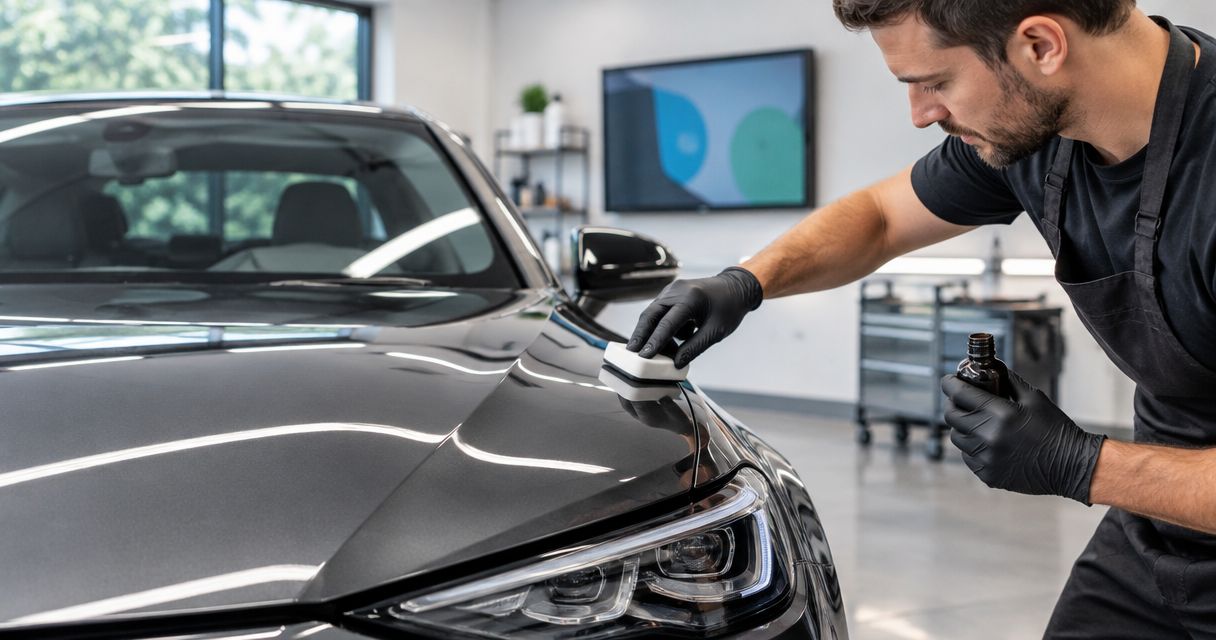
Yes, it is safe to ceramic coat a new car right away when its factory paint is sound and the surface has been properly prepared. You do not need to delay simply because the vehicle is new, but freshly repainted panels require clearance based on the refinishing system. The other condition is aftercare: you must protect the newly applied coating according to its manufacturer's instructions.
- Is it safe to ceramic coat a new car right away? Yes, after inspecting and preparing sound factory paint.
- Freshly repainted panels need refinisher approval before ceramic coating; delivery day alone does not determine readiness.
- New paint still needs inspection for contamination, dealer-applied products, and wash marks before protection.
- Kleandetail offers ceramic coating and paint correction for Oak Lawn car owners; choose preparation based on paint condition.
Is it safe to ceramic coat a new car right away?
Yes for properly prepared factory paint; wait for approval on fresh refinishing. A new-car purchase date does not tell you whether every panel has its original finish. Ask about repairs before scheduling protection, even when the odometer shows very little use.
Use the paint's condition and history to choose your next step:
| Paint condition | Coat right away? | Best for | Main benefit | Limitation or next step |
|---|---|---|---|---|
| Sound factory paint | Yes, after preparation | Owners protecting an undamaged new finish | Protection starts without an arbitrary waiting period | Inspect and remove contamination first |
| Factory paint with wash marks | After deciding on correction | Owners seeking a clearer finish before coating | Visible defects can be addressed beforehand | Polishing removes some clear coat and is not automatically necessary |
| Freshly repainted panel | Only after refinisher clearance | Owners whose vehicle received paint repairs | Respects the repair system's requirements | A new-car label does not establish coating readiness |
| Unknown dealer-applied treatment | After identifying and assessing it | Owners unsure what was applied before delivery | Avoids applying over an unsuitable surface | Extra preparation or treatment removal can be necessary |
For a vehicle delivered in 2026, ask about paint history rather than searching for a universal waiting period. Factory finishing and body-shop refinishing are different processes; the same calendar rule does not fit both.
Why this matters
Coating a car early is useful only if you are protecting a finish you want to keep. Ceramic coating does not replace cleaning, repair scratches, or make poor preparation irrelevant. Surface condition comes first.
Kleandetail provides ceramic coating, paint correction, paint protection film, window tinting, and full vehicle detailing in Oak Lawn, Illinois. For a new-car owner, the immediate decision is which preparation the paint actually needs—not how many days have passed since delivery.
Do not let a 2026 model-year badge substitute for an inspection. A recently purchased car can still have transport contamination, wash marks, or a repaired panel that changes the preparation plan.
Factory paint: prepare it rather than waiting by default
Factory paint is processed before the car reaches the dealership. Taking delivery does not restart its curing process. On sound original paint, the practical requirement is a clean, suitable surface and application conditions that meet the coating manufacturer's directions.
That does not mean applying coating straight over the delivery-day finish. Inspect the paint under suitable lighting after washing, and assess bonded contamination before choosing a removal method. Newness is not proof of cleanliness.
Best for: owners whose original paint is sound and who can follow the coating's initial care requirements. The benefit is protecting the finish early; the limitation is that preparation and careful washing still matter afterward.
Freshly repainted panels: get clearance before coating
A repainted bumper, door, or hood changes the answer. Refinishing materials and curing conditions differ, so the body shop's instructions and the paint-system requirements must determine when the surface is ready.
Ask the refinisher specifically about ceramic coating, not just washing or driving. Permission to collect the car does not necessarily answer whether the repaired surface is ready for a protective treatment.
Best for: owners with documented transport repairs, collision repairs, or recent cosmetic refinishing. Waiting protects the repair process, but it also means coordinating protection around the refinisher's guidance rather than choosing an arbitrary date.
If the vehicle has both original and repaired panels, tell the installer which areas were refinished. Do not assume one approval covers every surface.
Why ceramic-coating readiness varies
Readiness depends on the surface and the application requirements, not a fixed new-car countdown. These factors determine whether you should proceed or resolve something first:
- Paint history: Original factory paint and freshly refinished paint need different readiness checks.
- Surface contamination: Bonded particles and residues interfere with preparing a clean coating surface.
- Existing treatments: Dealer-applied waxes, sealants, or coatings affect the preparation plan.
- Visible defects: Swirls, scratches, and water spotting require a decision before coating, not after it.
- Application conditions: Temperature, humidity, and working conditions must meet the selected coating's instructions.
- Aftercare arrangements: Your parking and washing plans must accommodate the coating's initial restrictions.
For a 2026 delivery, put these questions in your booking notes. Clear information about repairs and existing treatments is more useful than the vehicle's age alone.
How should you prepare a new car for ceramic coating?
Use a condition-led sequence. The aim is a clean, suitable finish—not automatically giving every new car aggressive decontamination or extensive polishing.
- Check paint history. Ask whether the dealership repaired or refinished any panels and whether it applied a protective treatment. Pass that information to the installer before work begins.
- Wash and inspect. Remove loose dirt safely, then examine the finish under suitable lighting. Identify visible marks rather than assuming a glossy showroom finish is defect-free.
- Remove contamination. Choose chemical or mechanical decontamination according to what is present. Mechanical treatment can cause marring, so it should serve an identified need.
- Correct selectively. Agree on which defects warrant polishing and which should remain. Avoid removing clear coat solely to satisfy a standard package description.
- Prepare and apply. Complete the coating manufacturer's surface preparation, application, and initial care requirements. Get the handover instructions in writing.
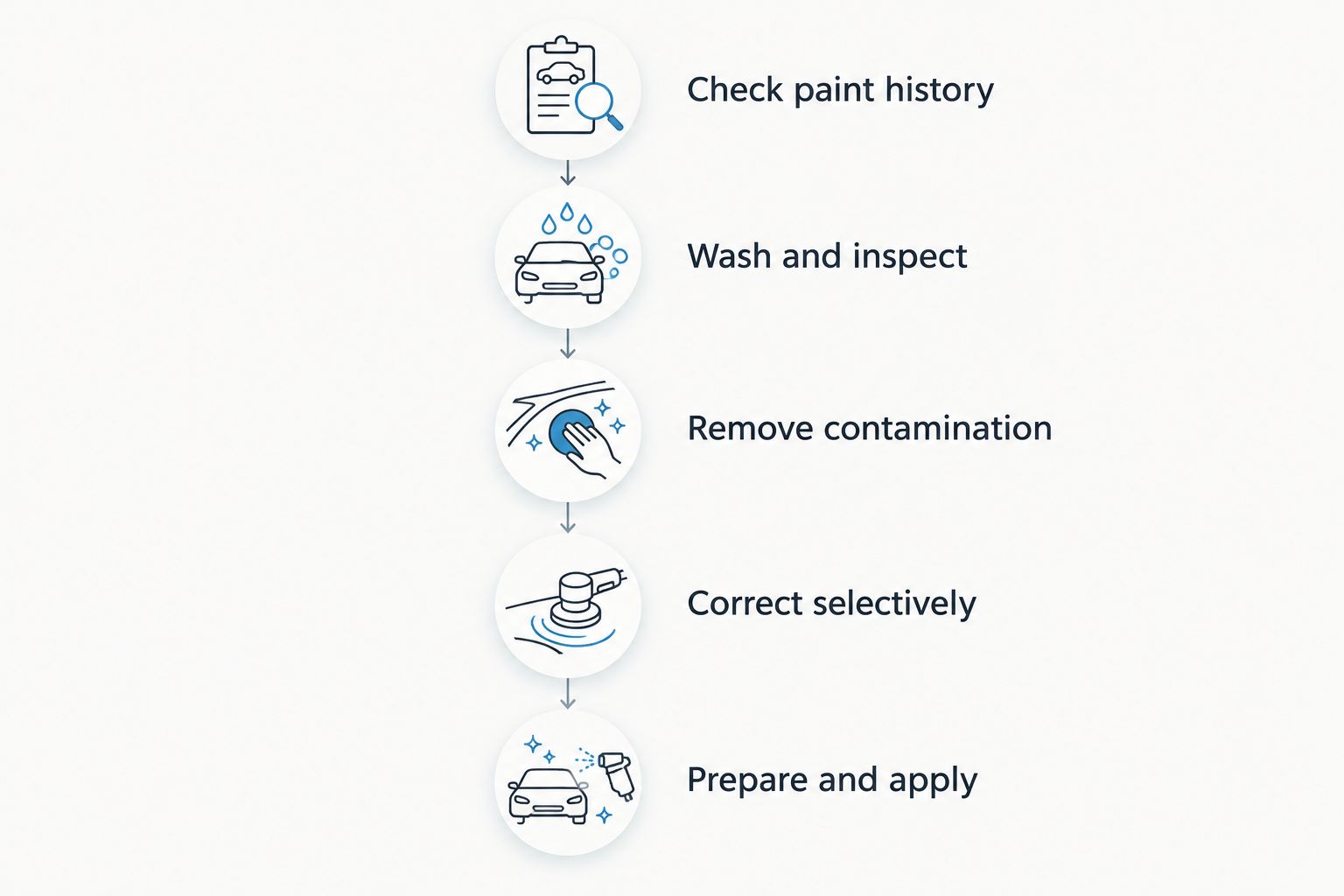
The important handoff happens before application: you and the installer should agree on the finish being protected. A coating is not the stage at which to discover that you wanted visible wash marks removed.
For the booking sequence, read the dealership delivery to ceramic coating workflow. Keep the delivery inspection separate from approval of the final prepared surface.
Does every new car need paint correction before coating?
No, every new car does not need paint correction. If inspection shows a finish you are satisfied with, do not request polishing simply because it appears in a coating package.
Paint correction uses abrasives to improve defects in the finish, which removes some material. Choose the least aggressive correction that meets your agreed appearance goal. Deep damage is not a reason to keep polishing without regard for the remaining clear coat.
Should you decline the dealership wash before coating?
You can ask the dealership to leave cosmetic washing and protective treatments to your chosen detailer. This makes it easier to control what touches the paint and what products are applied before coating.
A dealership wash is not automatically proof of damage, and declining one does not eliminate preparation. Inspect the actual finish either way, and document visible defects before accepting the vehicle.
Should you choose ceramic coating or paint protection film?
Choose by the problem you want to address. Ceramic coating supports easier cleaning and surface maintenance; paint protection film provides a physical barrier against impacts such as stone chips. Neither eliminates the need for care.
| Option | Best for | Main advantage | Main limitation |
|---|---|---|---|
| Ceramic coating | Owners prioritizing cleaning and maintenance | Helps contaminants release during appropriate washing | Does not provide stone-chip protection |
| Paint protection film | Owners prioritizing impact protection on exposed panels | Adds a physical protective layer | Installation quality and film condition still require attention |
| Film with a compatible coating | Owners wanting impact protection and easier surface care | Combines film's barrier with a suitable surface treatment | Compatibility and installation order must be confirmed |
Do not choose ceramic coating as a substitute for impact protection. If front-end stone chips are your main concern, settle the film decision before coating the areas involved. If combining treatments, confirm compatibility rather than assuming every coating belongs on every film.
This is also where a service appointment becomes more useful than choosing a product name alone. Kleandetail is a fit for Oak Lawn owners seeking ceramic coating and paint correction from an automotive detailing shop. Those services address protection and finish preparation; neither turns damaged paint into a repaired panel without appropriate corrective work.
What should you ask before booking in 2026?
Ask for a preparation plan tied to your vehicle. A useful answer explains what the paint needs, what the installer will leave alone, and what you must do after collection.
- Which visible defects will remain after preparation?
- Is polishing necessary, and what appearance goal does it serve?
- How will existing dealer-applied products be handled?
- What restrictions apply to rain exposure, washing, and cleaning chemicals?
- What should you do if the coating gets wet or develops spotting during initial care?
- If film is planned, what installation order and compatibility requirements apply?
Get the aftercare instructions before choosing the appointment date. If your parking or travel plans conflict with those instructions, adjust the booking rather than improvising after application.
Discuss your new car's protection
Ask about ceramic coating, paint correction, and paint protection film for your vehicle.
How soon can you drive or wash after ceramic coating?
Driving, getting wet, and washing are separate aftercare questions. Follow the selected coating manufacturer's instructions and the installer's handover guidance; do not transfer a waiting period from another product.
Before collection, explain whether the car will be parked outdoors or driven immediately. Ask when washing is permitted, which products are suitable, and how to handle accidental contamination without damaging the fresh application.
For your 2026 booking, plan the first wash as deliberately as the installation. A coating does not make abrasive brushes safe, and strong water beading is not permission to ignore maintenance.
FAQ
Is it safe to ceramic coat a new car right away?
Yes, it is safe to ceramic coat a new car right away when its factory paint is sound and properly prepared. Freshly repainted panels need clearance based on the refinishing system before coating.
Do I need to wait after buying a new car before ceramic coating?
You do not need to wait solely because you just bought the car. Paint history, surface preparation, application conditions, and aftercare requirements determine readiness.
Can ceramic coating damage fresh repainting?
Do not apply ceramic coating to fresh repainting without the refinisher's clearance. The paint system and curing conditions determine when the repaired surface is ready.
Does a brand new car need polishing before ceramic coating?
A brand new car needs polishing only when its condition and your appearance goals justify correction. Inspect the paint first and avoid unnecessary clear-coat removal.
Will ceramic coating hide dealer wash scratches?
Ceramic coating is not a reliable way to hide dealer wash scratches. Assess the marks and agree on any correction before applying the coating.
Can I park outside after getting ceramic coating?
Follow the selected coating's initial exposure instructions before parking outside. Tell the installer about your parking arrangements before booking so you can plan suitable aftercare.
Does ceramic coating stop rock chips on a new car?
Ceramic coating does not provide stone-chip protection. Consider paint protection film when impact protection is your priority, and confirm compatibility if combining film with coating.
Where can I discuss ceramic coating in Oak Lawn?
Kleandetail provides ceramic coating in Oak Lawn, Illinois, alongside paint correction and paint protection film. Discuss your paint condition and protection goals before selecting the work.
One last thing
Photograph the paint before the first preparation step. Clear images of existing scratches, spotting, and repaired areas give you a shared reference when discussing what should change and what will remain.
The best time to resolve an appearance concern is before the coating goes on. Early protection makes sense; rushing past inspection does not.


