
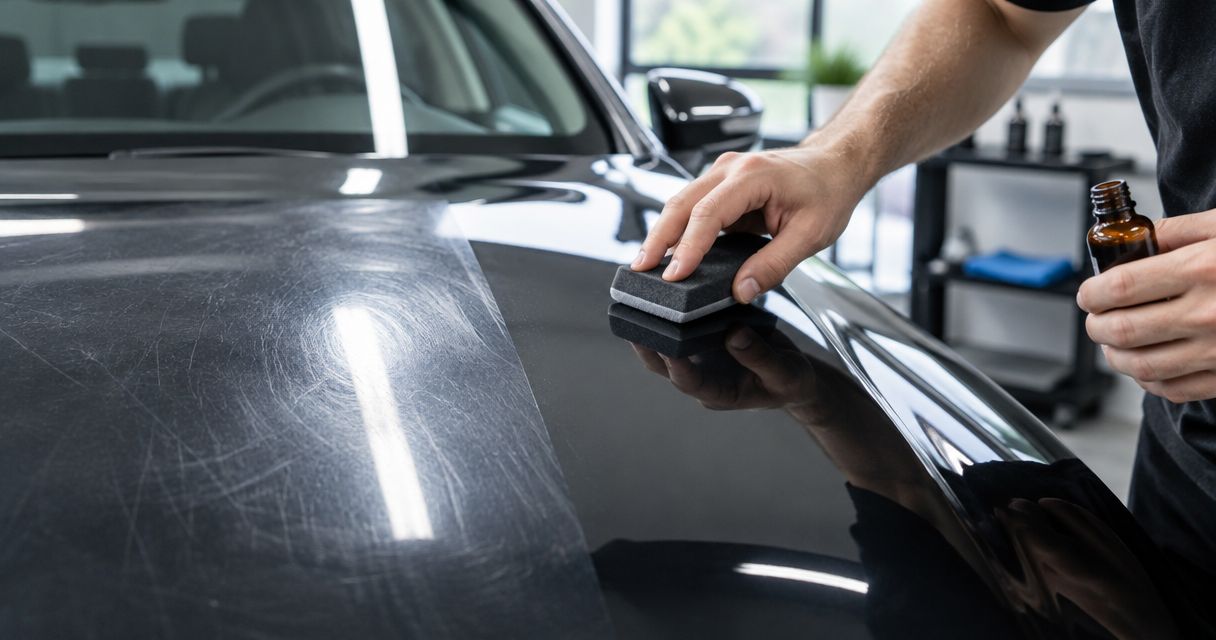
No—ceramic coating does not fix swirl marks or remove scratches; paint correction addresses suitable surface defects before coating. A coating adds surface protection, but it does not replace missing paint or level scratched clear coat. This guide explains how to separate correctable swirls from deeper damage and choose the right preparation before protecting your finish.
- Can ceramic coating fix swirl marks? No—paint correction addresses suitable defects before coating.
- Ceramic coating protects the prepared finish; it does not replace scratched or missing paint.
- Kleandetail offers paint correction and ceramic coating for car owners in Oak Lawn, Illinois.
- Inspect clean paint under direct light before deciding which marks to correct or leave alone.
Why this matters
Correct the finish you want to preserve before applying ceramic coating. Otherwise, you can end up with water-repellent paint that still shows the same circular scratches in sunlight. Gloss and defect removal are different results.
For your 2026 detailing plan, separate the appearance work from the protective treatment. Ask what paint correction includes rather than assuming it comes with coating preparation. Kleandetail offers both paint correction and ceramic coating in Oak Lawn, Illinois; discuss the condition of your paint and the intended finish before choosing the service scope.
Can ceramic coating fix minor swirl marks and scratches?
Ceramic coating does not abrasively level clear coat, so it cannot remove swirl marks by itself. Polishing uses abrasives to refine the paint surface and reduce suitable defects. Applying a coating afterward protects that prepared surface rather than performing the correction.
Some finishes look richer after coating, and changes in gloss can change how defects appear. That is not proof that a scratch has disappeared. Inspect the same panel under the same light before and after preparation to judge actual correction.
| Treatment | Best for | Main benefit | Main limitation |
|---|---|---|---|
| Paint correction | Owners addressing suitable clear-coat swirls | Refines the surface to reduce visible defects | Removes some paint material and requires a conservative approach |
| Ceramic coating | Owners protecting an already prepared finish | Adds a water-repellent protective surface | Does not remove existing scratches or prevent all future swirls |
| Glaze or filling polish | Owners seeking temporary visual improvement | Can reduce the appearance of fine marks through filling | Concealment is not permanent correction; coating compatibility needs checking |
| Paint repair | Owners addressing damage through the clear coat | Addresses damage that polishing cannot safely remove | Requires assessment beyond a coating application |
The practical distinction is simple: paint correction changes the scratched surface; ceramic coating covers the prepared surface. If a proposal promises swirl removal, ask which preparation step produces that result.
Minor swirl marks: inspect before polishing
Swirl marks commonly appear as circular patterns around a bright reflection. The scratches themselves do not need to be circular: a concentrated light source makes many fine scratches visible together. Washing and drying with contaminated materials can create this kind of marring.
Use 3 inspection checks before deciding that coating is the next step:
- Clean surface: Inspect washed, dry paint rather than judging through road film or water droplets.
- Direct light: Look at the reflection of a focused light source and move your viewing position across the panel.
- Multiple angles: Check the same area from different positions so a favorable reflection does not hide defects.
These checks identify what you can see; they do not establish how much clear coat is safe to remove. A professional assessment should consider paint history, panel condition, and the response to a test spot.
For a 2026 appointment, describe the result you want in visible terms: fewer wash swirls, clearer reflections, or improvement without chasing every isolated mark. That gives the discussion a useful target without demanding unnecessary abrasion.
Light scratches: improvement depends on remaining paint
A scratch confined to clear coat can sometimes be reduced through polishing, provided sufficient material remains for safe correction. The word minor is not a reliable diagnosis. A short scratch can still be deep, and a large area of fine marring can be comparatively shallow.
Use the least aggressive correction that achieves an acceptable finish. More polishing is not automatically better. Clear coat is a finite part of the paint system, and removing extra material just to eliminate an isolated mark creates a trade-off.
A test spot helps establish that trade-off before treating an entire panel. Inspect the result after polishing residue and any masking oils have been removed with a preparation method compatible with the planned coating.
Do not use a fingernail test as your only decision rule. Whether a nail catches does not measure remaining clear-coat thickness or prove that a scratch can be safely removed. Avoid repeatedly rubbing or probing damaged paint just to classify it.
Deep scratches and chips: coating is not paint repair
Ceramic coating cannot replace color coat, rebuild a chipped edge, or restore exposed substrate. If damage extends through the clear coat, removing surrounding material is not the same as repairing the damaged paint system.
Visible color loss, exposed material, peeling, or cracking calls for a repair assessment before protection. Coating over a defect does not reverse its cause. It also does not turn touch-up work into an invisible repair.
For your 2026 service decision, distinguish between accepting a stable cosmetic mark and repairing damaged paint. Both require a clear discussion, but they are not interchangeable service goals.
An owner who wants a daily driver to look cleaner does not necessarily need every isolated defect eliminated. The right endpoint balances appearance with paint preservation rather than treating flawless reflections as the only acceptable result.
What should happen before ceramic coating?
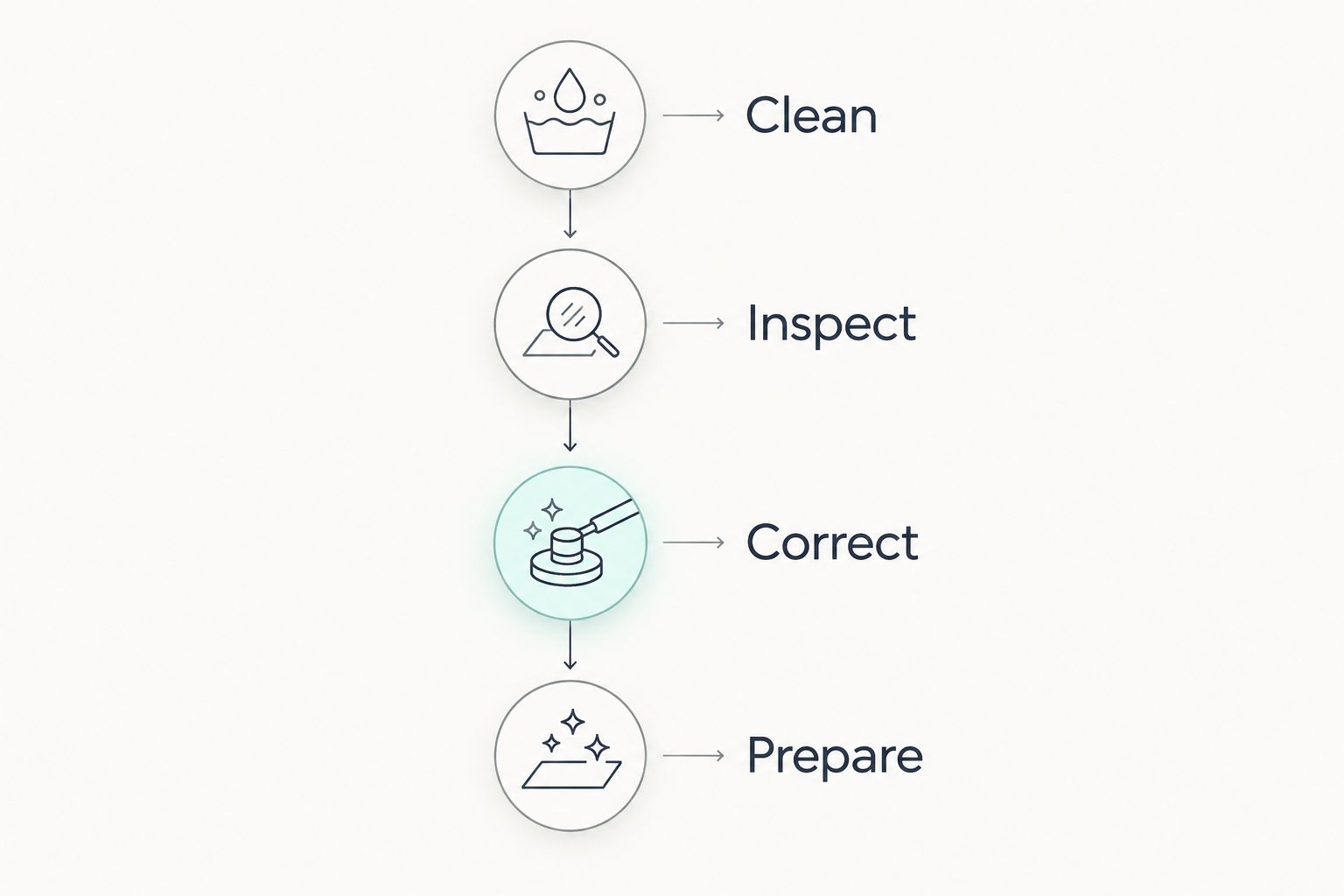
A sensible preparation plan has 4 stages: clean, inspect, correct, and prepare. The exact products and working methods depend on the vehicle, paint condition, and coating instructions—not a universal recipe.
- Clean: Wash the vehicle and address bonded contamination as appropriate. Contamination removal and swirl removal are different tasks.
- Inspect: Review visible defects, previous repairs, vulnerable edges, and available paint-condition information. Agree on the correction goal.
- Correct: Use a test spot to select an appropriate polishing approach. Leave defects that cannot be removed safely.
- Prepare: Remove polishing residue as required by the coating system, then inspect the finish before application.
The paint correction and ceramic coating workflow is useful when you want those stages considered together rather than treating coating as an isolated application.
Before booking, ask to review the finish at the preparation stage. Once you approve the remaining marks, the protection decision becomes straightforward: you are preserving an accepted result, not expecting the coating to create one.
Why swirl-removal results vary
The same polishing approach does not produce identical results on every vehicle. These factors explain why an inspection matters more than a blanket promise:
- Defect depth: Shallow marring and scratches through the clear coat require different responses. Coating does not change that distinction.
- Remaining paint: Previous correction and refinishing affect how conservatively a panel should be treated. Measurements inform the assessment but do not replace judgment.
- Paint response: Different finishes respond differently to combinations of abrasives, pads, and technique. A test spot establishes the working approach.
- Panel geometry: Edges, creases, and tight areas require particular care. A result that is appropriate on a broad panel is not automatically appropriate everywhere.
- Viewing conditions: Diffuse light hides marks that direct light exposes. Compare results under consistent lighting rather than relying on a flattering photograph.
In 2026, ask for a condition-based recommendation rather than a guarantee that every scratch will disappear. A responsible correction goal includes knowing which defects to leave alone.
Will ceramic coating hide swirl marks on a black car?
No—ceramic coating does not reliably hide swirl marks on black paint. Dark finishes make fine defects conspicuous under direct light, so the preparation standard matters if those marks bother you.
An increase in gloss does not establish that scratches were removed. Judge the finish after preparation, with the surface clean and under lighting that reveals the defects you originally noticed.
Keep 2 goals separate: improving paint appearance and making the surface easier to maintain. Polishing addresses the first goal when defects are suitable for correction; coating supports the second without making the paint scratch-proof.
Can you polish scratches out after ceramic coating?
Yes—polishing can address suitable scratches after coating, but abrasive correction also removes or compromises the coating in the treated area. Plan for surface preparation and renewed protection where correction takes place.
First establish whether you are seeing contamination, surface residue, or actual scratching. Abrasive polishing is not the first response to every visible mark, particularly when an appropriate cleaning method resolves the issue.
Do not assume that applying another coating layer will erase damage. If the defect is in the paint, adding protection above it does not level the underlying scratch.
Does ceramic coating stop new swirl marks?
No—ceramic coating does not make paint immune to swirl marks. Dirt dragged across the surface, contaminated towels, and abrasive washing contact can still cause marring.
For your 2026 maintenance routine, prioritize clean wash materials, adequate lubrication, and gentle drying. Keep towels used on heavily contaminated areas separate from those touching paint, and follow the coating manufacturer's care instructions.
Avoid judging coating condition from scratch visibility alone. New swirls describe surface damage; they do not, by themselves, establish whether every protective property has disappeared. Likewise, water beading does not prove the paint underneath is defect-free.
What should you ask a detailing shop before booking?
Kleandetail is a fit for Oak Lawn car owners seeking paint correction and ceramic coating services. The useful booking conversation concerns your vehicle's condition and the work included, not a promise that coating fixes everything.
Ask these questions before authorizing treatment:
- Does the proposed service include abrasive paint correction, or only cleaning and coating preparation?
- What result does the test spot show under direct light?
- Which scratches should remain to preserve the finish?
- How will the prepared paint be inspected before coating?
- What maintenance instructions apply to the coating being installed?
Ask Kleandetail to distinguish correction from protection in the proposed scope. That keeps expectations tied to the work: polishing improves suitable defects, while coating protects the finish you approve.
Discuss your paint correction goals
Ask about visible swirls, remaining scratches, and preparation before ceramic coating.
FAQ
Can ceramic coating fix swirl marks without polishing?
No—ceramic coating does not remove swirl marks without a correction step. A change in gloss or apparent visibility is not the same as leveling scratched clear coat.
Do I need paint correction before ceramic coating?
You need paint correction before coating if you want suitable existing defects reduced. Not every vehicle needs the same correction work, so inspect the clean paint and agree on the intended result first.
Will ceramic coating fill a small scratch?
Do not rely on ceramic coating to fill or repair a small scratch. Scratch depth and remaining paint determine whether polishing or a separate repair is appropriate.
Is ceramic coating better than polishing for swirl marks?
Polishing is the relevant treatment for suitable swirl marks; ceramic coating serves a different purpose. Polishing refines the surface, while coating adds protection afterward.
Can a new car need polishing before ceramic coating?
Yes—a new car can have visible marring that warrants assessment before coating. Judge the actual finish rather than assuming that a recently delivered vehicle is defect-free.
Can washing scratch a ceramic-coated car?
Yes—washing can scratch a ceramic-coated car when abrasive contamination moves against the surface. Clean materials and careful washing remain necessary after coating.
Should every scratch be removed before coating?
No—not every scratch should be removed before coating. Leave defects that require excessive material removal, and assess deeper damage for paint repair instead.
One last thing
Judge swirl removal before the coating goes on, not by the water beads afterward. Water behavior and scratch visibility answer different questions, so a dramatic rinse demonstration cannot substitute for inspecting the paint.
Choose a representative area with visible marks and agree on the result under consistent lighting. That simple checkpoint gives you a clearer standard than asking whether the entire car looks shinier.


