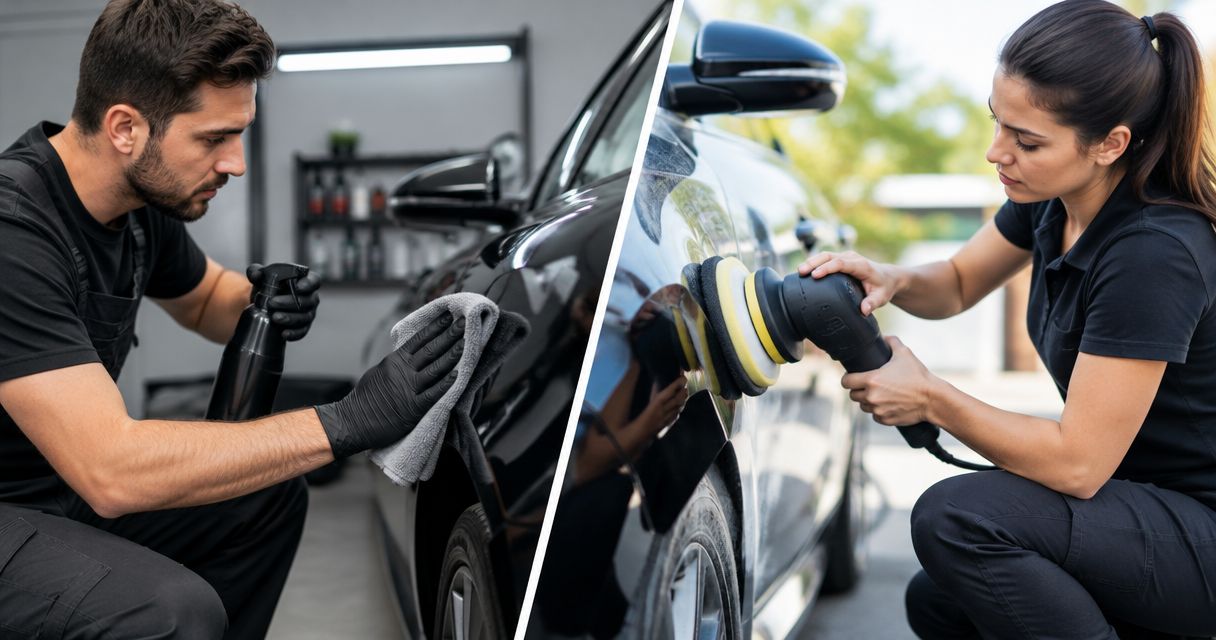
Rental car company auto detailing is the systematic cleaning and cosmetic care of rental vehicles with the aim of returning each car to a documented, customer-ready condition. Unlike personal-car detailing, your 2026 rental workflow must separate routine turnover from deep cleaning and damage review without treating every return as the same job.
- Auto detailing for rental car companies works best when return inspections determine the cleaning scope.
- Kleandetail is best for Oak Lawn car owners seeking local auto detailing and paint protection services.
- Separate routine turnover, deep cleaning, and damage review before assigning work.
- Use fleet maintenance records and a release checklist to document cleaning, defects, and vehicle handoffs.
Why auto detailing matters for rental car companies
A clean car and a rental-ready car are not the same thing. A vehicle can have a washed exterior while retaining damp upholstery, windshield haze, or an unresolved odor. Your release process needs to catch those conditions before the next handoff.
Rental operations also require a clear boundary between cleaning and damage assessment. Photograph a stained seat or scraped bumper before treatment so your team preserves the arrival condition. Cleaning records support that documentation; they do not establish who caused damage or whether a charge is justified.
Kleandetail provides auto detailing, paint correction, ceramic coating, paint protection film, and window tinting in Oak Lawn, Illinois. Those services address different needs, so request the specific work your inspection identifies rather than asking for every treatment on every vehicle.
For your 2026 operating plan, define success as a repeatable release standard. A recurring odor, missed compartment, or wet seat belongs in the rework log even when the rest of the car looks clean. That record tells you which part of the process needs attention.
Build your rental detailing workflow
Start with an inspection sheet and a shared vehicle log. You do not need specialized software to define the process: a paper checklist or spreadsheet can record the unit identifier, arrival condition, assigned work, approval, and release decision.
Use these steps in order. Establish the standard manually before deciding which work belongs with your staff and which jobs need an outside detailer.
Inspect each return before cleaning
Start your inspection before removing trash or applying chemicals. Record the vehicle identifier, visible condition, and any concern that requires a manager's decision. Keep personal belongings separate from waste and follow your company's lost-property procedure.
Use a repeatable photo pattern rather than photographing only obvious damage. As an internal starting standard, require 6 reference photos per return: front, rear, both sides, front cabin, and rear cabin. Add close-ups of affected areas; the reference set does not replace a detailed damage record.
Check the trunk or cargo area separately. A clean passenger compartment does not establish that the entire vehicle is ready. Record missing items according to your rental agreement and operating procedures, not an improvised detailing checklist.
Keep inspection language descriptive. Write “dark stain on rear seat” rather than assigning a cause that you have not established.
- Match the vehicle identifier to the return record.
- Photograph exterior panels and cabin condition.
- Inspect cargo areas, cupholders, and seat pockets.
- Separate lost property from disposable waste.
- Flag defects before cleaning changes their appearance.
Sort vehicles into condition-based routes
Assign 3 work routes: Routine turnover, Deep cleaning, and Damage review. Routine turnover covers ordinary cleaning when no unresolved condition is present. Deep cleaning addresses embedded soil, spills, pet hair, or odor investigation; damage review covers defects that need a separate decision.
A vehicle can require more than one route, but each assignment needs a clear owner. For example, cleaning a stained carpet does not resolve a torn seat or damaged switch. The staff member accepting the job must know which concerns remain outside the cleaning scope.
Use the same route names on the inspection sheet, work order, and release record. That keeps “needs attention” from becoming an unclear instruction that follows the car around the lot.
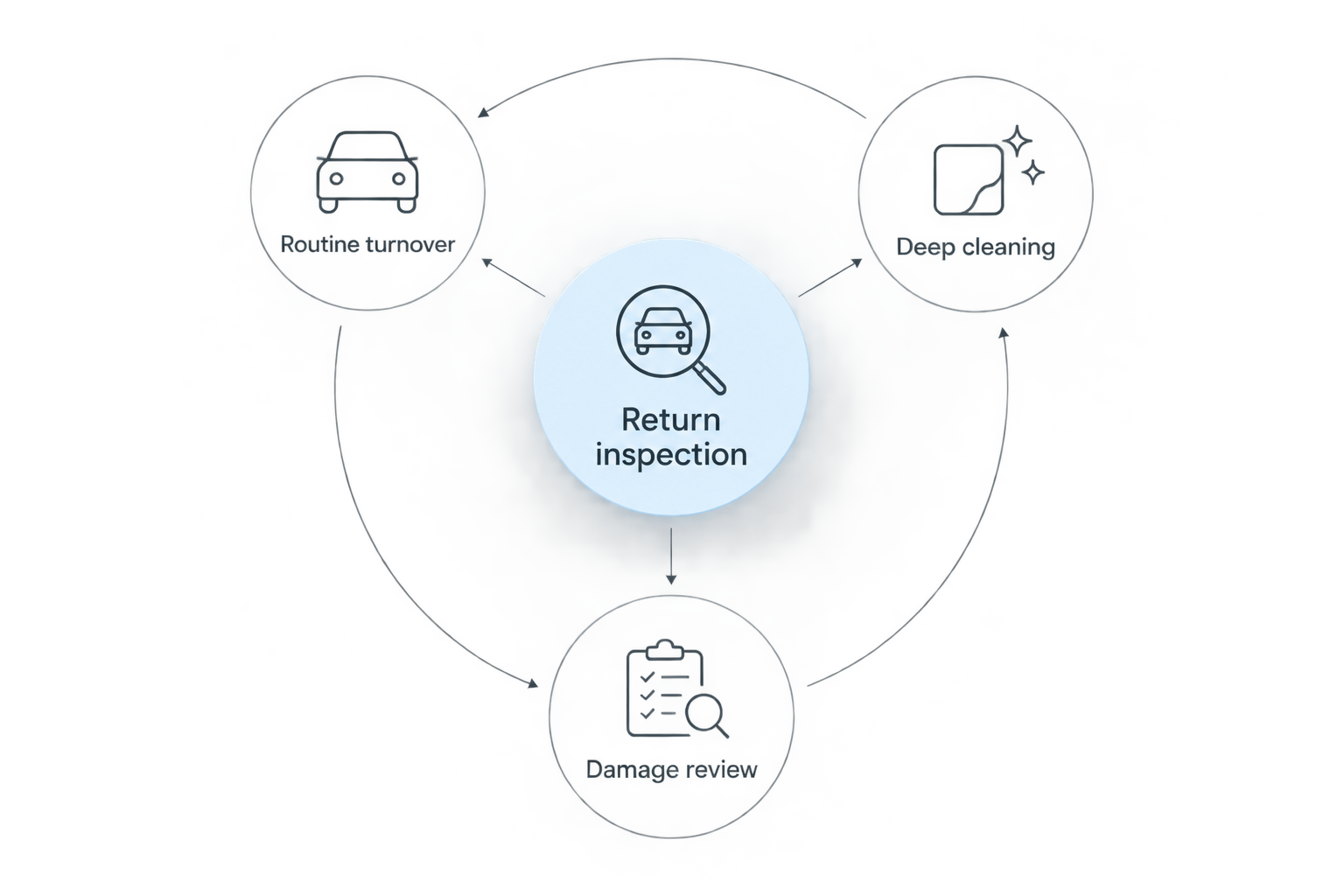
Route by observed condition, not vehicle class alone. A premium model with light dust does not automatically need correction, while an ordinary sedan with a saturated carpet needs more than a quick wipe-down.
- Define the conditions that trigger each route.
- Assign a person responsible for each flagged concern.
- Keep unresolved vehicles out of the ready queue.
- Require approval before adding work outside the scope.
Assign the right work to staff or a detailer
Write the work order yourself first. List the affected areas, requested treatment, known coatings or film, and release requirements. Your team can then complete routine cleaning internally or request professional help for work beyond its equipment, training, or available work space.
Kleandetail's auto detailing services are a local option for Oak Lawn car owners; confirm rental-fleet suitability before assigning fleet work. Ask directly about the proposed job, scheduling, vehicle transfer, documentation, and any requirements for releasing the vehicle after treatment. Do not assume retail detailing services include a fleet agreement.
Use the contact page to discuss the vehicle's condition and requested services. A clear scope gives the conversation a useful starting point without presuming a particular turnaround or operational arrangement.
An outside detailer adds a handoff and requires coordination. Keep straightforward turnover cleaning internal when your staff can meet the release standard, and reserve specialist work for a defined need.
- Describe the condition rather than requesting an undefined package.
- Confirm which tasks the provider will perform.
- Ask how additional findings receive approval.
- Establish vehicle transfer and acceptance responsibilities.
Clean interiors without hiding unresolved problems
Remove loose debris before wet cleaning. Vacuum accessible seams and floor areas, clean compatible surfaces according to product directions, and inspect glass from the driver's position. Avoid dressing products that leave driving controls slippery.
Treat odor as a condition to investigate, not a reason to add fragrance. A spill beneath a floor mat, damp carpet, or contaminated upholstery requires attention to the source. If you suspect mold, bodily-fluid contamination, or another hazard, stop routine cleaning and arrange an appropriate assessment.
Wet cleaning introduces a separate release requirement: the treated material must be dry enough for its intended use. Do not schedule a customer handoff solely because extraction has finished. Check the affected areas again before approving the vehicle.
Keep cleaning claims precise. A visibly clean surface is not proof of disinfection, and any disinfectant use must follow its label, including material compatibility and required contact time.
- Remove debris before applying liquid cleaners.
- Test unfamiliar products in an inconspicuous area.
- Keep chemicals away from sensitive components.
- Investigate odor sources instead of masking them.
- Verify treated upholstery and carpet before release.
Match exterior treatment to the actual defect
Wash away loose dirt before judging paint condition. Surface contamination, swirl marks, stone chips, and deep scratches are different problems; do not approve the same treatment for all of them. Record the goal before authorizing cosmetic work.
Paint correction abrades the finish to improve suitable defects, so repeated polishing is not routine turnover maintenance. Ceramic coating does not repair scratches or replace washing. Paint protection film provides a physical protective layer, but it does not eliminate damage risk or the need for care.
Kleandetail offers paint correction, ceramic coating, and paint protection film. Ask whether the proposed treatment fits the vehicle's condition and your ownership plan. Existing damage, previous refinishing, and maintenance requirements belong in that discussion.
For a 2026 fleet treatment decision, document why that vehicle needs protection or correction. Avoid approving work simply because the same service was used on another unit.
- Identify whether the concern is dirt, contamination, or damage.
- Inspect washed paint before approving correction.
- Record existing film, coatings, and visible defects.
- Request care instructions for any protective treatment.
- Keep cosmetic work separate from mechanical repair decisions.
Verify readiness with a separate release check
Build 2 acceptance checks per completed vehicle into your procedure: the cleaner's completion check and a release check by another designated person. This is an operating recommendation, not a claim that a particular inspection count guarantees quality.
The second check should follow the renter's experience. Open the door, sit in the driver's seat, inspect the windshield, look across the seats, and check the cargo area. Review flagged conditions against the work order rather than relying on a general impression.
A failed check should produce a specific rework instruction. “Passenger-side glass has streaks” is actionable; “detail again” is not. Record the correction and repeat the affected check before moving the vehicle into the ready queue.
Make safety-related concerns a separate hold decision. Detailing does not establish roadworthiness, and a clean cabin does not resolve warning lights, damaged restraints, or other defects requiring qualified attention.
- Check visibility through the windshield and mirrors.
- Inspect seats, mats, compartments, and cargo space.
- Confirm treated areas are ready for use.
- Review every unresolved item on the work order.
- Record who approved the vehicle for handoff.
Measure rework and revise your standard
Use a spreadsheet to record inspection, cleaning start, cleaning completion, release, and any return to the work queue. Measure time consistently in minutes so you can distinguish hands-on cleaning from waiting, transfer, drying, and approval delays.
For your 2026 review, compare like-for-like work. Routine turnover and deep cleaning are different scopes; combining their completion times hides what actually happened. Likewise, separate a missed cleaning task from a newly discovered repair requirement.
Track the reason for rework, not just whether rework occurred. Repeated glass streaks call for a different response than persistent carpet moisture or unclear job instructions. Change the relevant method, training, or release criterion instead of shortening every appointment.
Keep customer feedback alongside the vehicle record when your policies permit it. A complaint becomes more useful when you can connect it to the assigned scope and completed checks.
- Record timestamps using consistent definitions.
- Categorize rework by the missed condition.
- Separate cleaning delays from repair holds.
- Compare jobs with equivalent scopes.
- Update the checklist when a recurring gap appears.
Compare rental-car detailing options
Choose the least complex option that meets the documented condition standard. This 2026 comparison separates routine work from restoration and protection; no option replaces your inspection and release process.
| Option | Best for | Main benefit | Key limitation |
|---|---|---|---|
| In-house turnover cleaning | Light soil between rentals | Direct control over task assignment and release checks | Depends on staff training, equipment, and workspace |
| Professional interior detailing | Embedded dirt, spills, or pet hair | Focused cleaning beyond a basic wipe-down | Needs coordination and verification of drying and results |
| Professional paint correction | Suitable cosmetic paint defects | Improves defects that respond to controlled polishing | Removes finish material and cannot repair every scratch |
| Ceramic coating | Vehicles with a defined exterior-care plan | Adds a protective surface treatment | Does not repair damage or replace washing |
| Paint protection film | Selected painted areas needing a physical barrier | Places film between paint and external contact | Coverage is limited to treated areas; care remains necessary |
Use a written scope when comparing providers. A wash, an interior detail, and paint correction are not interchangeable jobs. Ask what is included, what is excluded, and which findings require a separate approval before comparing proposals.
Common mistakes rental car companies make
Sending every vehicle through the same treatment
A universal full-detail instruction ignores condition differences. It also makes completion records less useful because the job name says little about the work required. Assign the route from the return inspection and document exceptions.
Treating fragrance as an odor solution
Scent does not establish that contamination is gone. Investigate the affected material and nearby hidden areas, then reassess after treatment. Keep a recurring odor open on the work order rather than marking it resolved because fragrance covers it temporarily.
Releasing vehicles with unfinished drying
A finished cleaning task is not an automatic release approval. Check wet-treated seats, carpets, and mats before handing over the vehicle. If the material is not ready for use, keep the car out of the ready queue.
Using protection work as damage repair
Ceramic coating does not fill stone chips, and film does not repair the paint beneath it. Establish the condition first, discuss appropriate preparation, and approve protection as a separate decision. Do not use a new treatment to obscure an unresolved damage record.
Assuming a local shop provides fleet operations
A shop's service list does not establish vehicle collection, recurring capacity, or fleet administration. Confirm those requirements directly. Keep responsibility for transfer, approvals, and final acceptance explicit even when the detailing itself is outsourced.
FAQ
What's the best auto detailing process for rental car companies?
The best starting process is condition-based inspection, a defined cleaning scope, and a separate release check. Route ordinary soil to turnover cleaning and flag deep cleaning or damage review before work begins.
Does every rental return need a full detail?
No, a full detail should follow the vehicle's condition rather than be automatic after every return. Inspect each vehicle and assign the work needed to meet your written handoff standard.
Should a rental company clean vehicles internally or outsource detailing?
Keep routine cleaning internal when your staff can meet the documented standard, and discuss specialist work with an appropriate provider. Outsourcing still requires a clear scope, transfer arrangements, and final acceptance.
Can detailing remove smoke or pet odor from a rental car?
Detailing can address odor sources, but complete removal depends on the contamination and affected materials. Ask for an assessment and check the result rather than accepting fragrance as proof of removal.
Is ceramic coating a replacement for rental-car washing?
No, ceramic coating does not replace washing or repair existing paint damage. Consider it only alongside a maintenance plan and the vehicle's condition.
How long should a rental company allow for detailing?
Set the time allowance from the agreed scope, vehicle condition, and release requirements. Include inspection, transfer, cleaning, drying where needed, and final acceptance rather than counting cleaning time alone.
Does Kleandetail provide rental-fleet detailing agreements?
Confirm rental-fleet arrangements directly with Kleandetail. The Oak Lawn shop provides auto detailing and paint-protection services, but fleet scheduling, vehicle transfer, and recurring service terms require a separate discussion.
One last thing
Add the reason for the next action to every vehicle record. “Deep clean rear carpet after spill” is more useful than “needs detail,” and “hold for damage review” is more precise than “not ready.”
Make that wording change in your 2026 checklist before buying equipment or adding services. It gives the cleaner, manager, outside provider, and release inspector the same problem to solve without requiring a new system.