
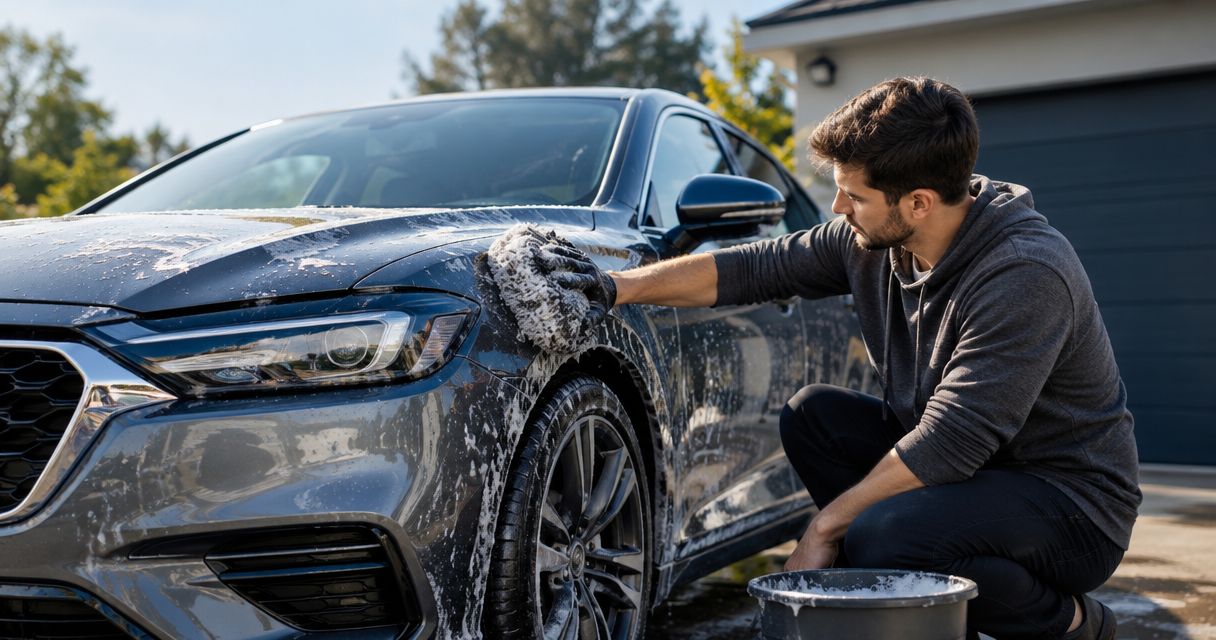
Wash your car only after the ceramic coating’s specified no-wash period has ended and your installer has cleared it for washing. Permission to drive the car or expose it to water does not automatically mean permission to use shampoo, wash mitts, or pressure equipment. For a coating applied in 2026, follow the product-specific aftercare instructions rather than a universal waiting period.
- How soon can you wash car after ceramic coating? Follow the coating’s written no-wash period and installer instructions.
- Water exposure, shampoo washing, and full curing are separate aftercare questions.
- Kleandetail provides ceramic coating and vehicle detailing services in Oak Lawn, Illinois.
- Report bird droppings or unexpected contamination promptly; do not scrub fresh coating to remove them.
Why this matters
A coating that looks finished is not necessarily ready for its first wash. Ceramic coatings cure after application, and the permitted exposure during that process depends on the coating system and its application instructions. Surface appearance alone does not establish that washing is safe.
The practical issue is not simply whether your car looks dirty. It is whether the cleaning method is appropriate for the coating’s current stage of cure. A routine wash introduces water, cleaning chemicals, physical contact, and drying—each of which needs to fit the aftercare instructions.
Kleandetail provides ceramic coating and vehicle detailing services in Oak Lawn, Illinois. Kleandetail ceramic coating services suit car owners seeking an Oak Lawn detailing shop. For your 2026 appointment, make the first-wash instructions part of the pickup conversation, not something you research after the car gets dirty.
How soon can you wash a car after ceramic coating?
The first safe wash date is the date allowed by the specific coating’s aftercare instructions, confirmed against your installation. Do not substitute another owner’s experience, a different coating’s instructions, or a generic online countdown.
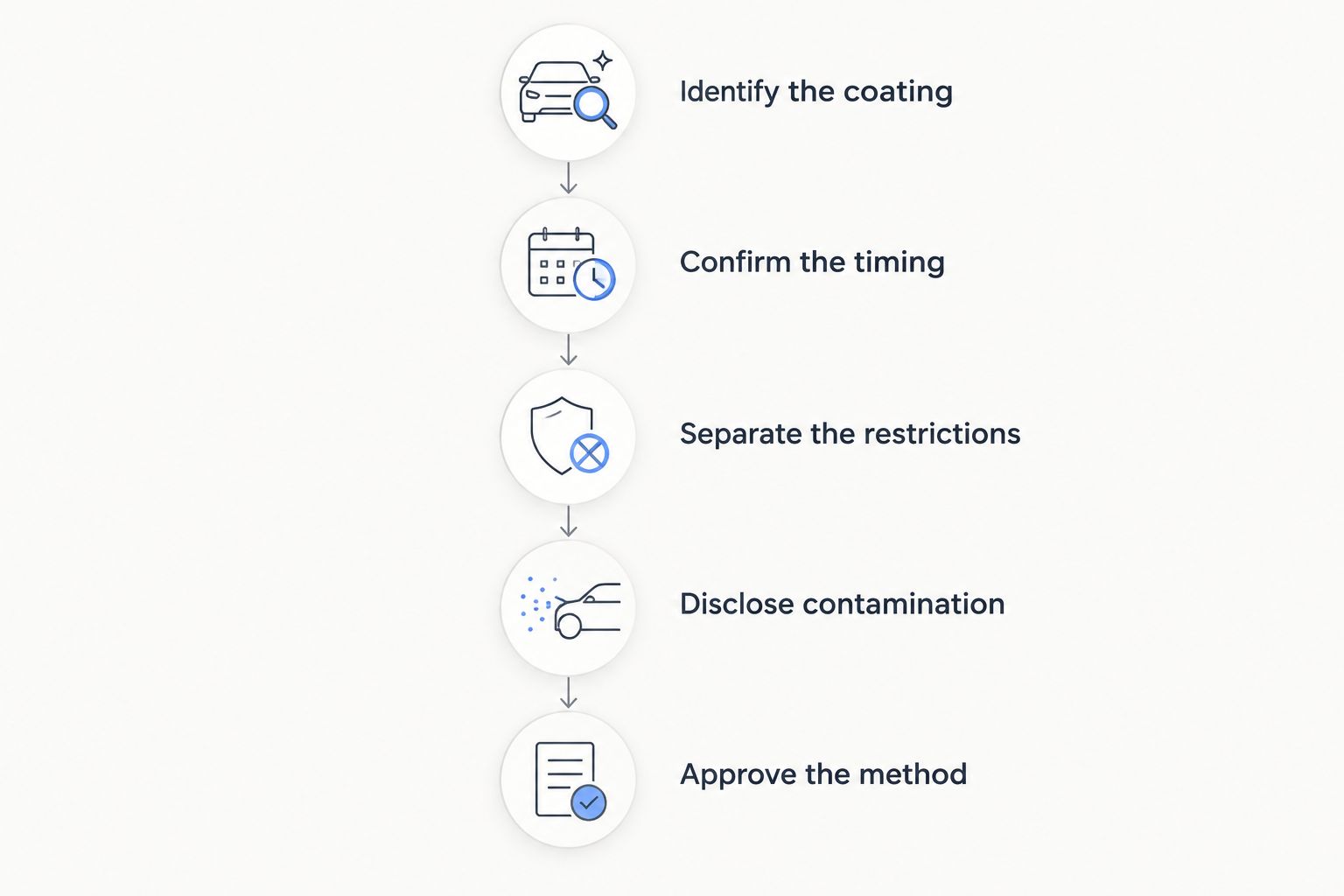
Use this sequence before scheduling the first wash:
- Identify the coating. Get the exact coating name and its written maintenance instructions. The general label ceramic coating does not identify a single curing schedule.
- Confirm the timing. Ask when the no-wash period starts and ends. Record an actual calendar date rather than relying on your memory of the conversation.
- Separate the restrictions. Ask about water exposure, detergent washing, pressure washing, and any restrictions that continue after the first wash becomes permissible.
- Disclose contamination. Tell the installer about rain, bird droppings, sap, or other contamination before deciding how to remove it.
- Approve the method. Confirm the shampoo, washing equipment, and drying method before cleaning the vehicle.
Do not assume the countdown begins when you collect the keys. Ask which point in the installation process determines the aftercare schedule, particularly when different areas received different treatments.
Your 2026 pickup checklist
Leave with instructions you can use without interpreting technical language. A clear handover should answer what you can do, what you must avoid, and whom to ask if the car gets contaminated.
- What is the earliest approved wash date?
- Does that date permit a normal maintenance wash or only a specified method?
- What should you do if the car gets wet before then?
- Which cleaners and drying methods are approved?
- What should you do about bird droppings or tree sap?
- Are there separate care instructions for coated wheels, glass, film, or trim?
Keep those answers with your appointment information. If someone else washes your vehicle, pass along the same restrictions rather than assuming that person knows how the coating was installed.
Why the waiting period varies
The waiting period belongs to the coating system and application instructions—not to ceramic coatings as a single category. These factors explain why a timing recommendation for another vehicle is not automatically suitable for yours:
- Coating formulation. Different coating products have different application and curing instructions. Use the instructions for the product actually applied.
- Temperature. Application and storage temperatures affect curing conditions. Tell the installer if the vehicle’s storage conditions will change after collection.
- Humidity. Moisture conditions matter during curing, but their effect depends on the coating chemistry. Do not assume every coating responds identically.
- Curing procedure. Follow the aftercare schedule associated with the completed installation, including any specified curing procedure. Do not shorten it yourself.
- Exposure and storage. Outdoor parking, rain, and contamination create different care decisions from sheltered storage. Explain your parking situation before leaving the shop.
These factors are reasons to obtain a specific instruction, not reasons to calculate a replacement waiting period yourself. Adding or subtracting time based on the weather is not a substitute for the coating’s directions.
Which washing method should you use first?
After the no-wash period ends, use an approved maintenance method—not simply the most convenient wash available. The end of the waiting period does not make every chemical, brush, or machine suitable.
| Cleaning option | Best for | Advantage | Limitation |
|---|---|---|---|
| Approved hand wash | Owners who can control products and technique | Lets you choose compatible shampoo and clean wash tools | Poor technique or dirty tools can still scratch paint |
| Professional maintenance wash | Owners who want someone else to manage the cleaning process | Lets you explain the coating’s care requirements before work begins | The provider must know and follow those requirements |
| Touchless automatic wash | Owners considering a wash without brushes | Avoids brush contact with the paint | Cleaning chemicals and operating settings still need approval |
| Brush automatic wash | Owners evaluating an existing wash membership | Provides automated washing | Brush contact creates a scratch risk; convenience does not establish suitability |
For the first wash, prioritize control and compatibility. An approved hand wash gives you control over the products and contact with the paint, but it is only appropriate when you can perform it correctly.
A professional wash also requires a conversation. Tell the provider that the coating is newly applied, give the approved wash date, and explain any continuing restrictions. Do not assume a service described as detailing automatically follows your coating’s maintenance instructions.
Planning your first wash in 2026
Once washing is approved, prepare before you wet the car. You should know which cleaner you will use, how you will remove loose contamination, and how you will dry the surface without rubbing trapped dirt across it.
Check the surface first
Look for bird droppings, sap, mineral deposits, and other localized contamination. These are not interchangeable problems, and ordinary shampoo does not necessarily address each one.
If something appears bonded to the surface, stop before escalating to a stronger chemical or more aggressive tool. Describe the contamination to the installer and ask for an approved treatment. A stain that resists gentle cleaning is not an invitation to scrub harder.
Use compatible cleaning products
Follow the coating’s maintenance instructions when choosing shampoo and other cleaners. Do not assume a product is suitable merely because its label mentions shine, protection, or ceramic ingredients.
Avoid adding waxes, sealants, or maintenance toppers unless the coating’s care instructions approve them. An extra layer is not automatically necessary, and it can change how you judge the coating’s water behavior.
Keep wash tools clean
Use clean equipment intended for automotive paint. Keep wheel-cleaning tools separate from tools used on painted body panels, and replace a wash mitt or towel if it picks up grit.
Pressure is not a substitute for cleaning. If debris remains, reassess the method rather than repeatedly rubbing the same spot. Ceramic coating does not make the underlying finish scratch-proof.
Dry without dragging dirt
Use an approved drying method and clean equipment. Inspect drying towels before they touch the vehicle, and avoid wiping panels that still carry visible contamination.
Do not treat air drying as a guarantee against water spots. Evaporating water can leave dissolved minerals behind, so water quality and drying technique remain relevant after coating.
What if the car gets dirty before washing is allowed?
Treat contamination as a separate aftercare question, not automatic permission for a full wash. Dry dust, bird droppings, and a sticky deposit require different decisions. Contact the installer with a description or photograph before choosing a cleaner.
For ordinary dust, avoid dry wiping. Moving a towel across dusty paint can drag particles over the finish, even when the vehicle has ceramic coating. Waiting for approved cleaning is different from polishing the dust away with a dry cloth.
For bird droppings or another potentially damaging deposit, ask promptly how to remove it safely during curing. Do not leave it indefinitely just to satisfy a generic waiting rule, but do not improvise with household cleaners, abrasive pads, or aggressive rubbing either.
Record what happened and what, if anything, touched the panel. That information helps the installer distinguish between contamination, residue, water spotting, and an issue that needs inspection.
Can rain ruin a fresh ceramic coating?
Rain exposure is not the same as a detergent wash, and getting wet does not by itself establish that the coating has failed. The correct response depends on the coating’s exposure restrictions and its stage of cure.
If rain reaches the vehicle during a restricted period, notify the installer. Ask whether drying or inspection is needed, and do not automatically wipe the car with whatever towel is available. Dirty towels and debris on wet paint introduce their own risks.
Can you use a pressure washer after ceramic coating?
Use a pressure washer only when the coating’s instructions permit it and with a technique appropriate for the vehicle’s surfaces. Approval to wash does not authorize every nozzle, distance, or spray setting.
Tell the person washing the car about paint protection film or other treated surfaces as well. Different materials on the same vehicle can carry different care requirements, so a paint-only instruction is not necessarily enough.
Does ceramic coating mean you can wash less carefully?
Ceramic coating does not replace careful washing or make the paint scratch-proof. You still need compatible chemicals, clean tools, and a method that avoids rubbing contamination into the finish.
Judge maintenance by the condition of the surface, not just water beading. Water behavior alone does not explain whether a panel is clean, contaminated, or ready for additional treatment. Avoid treating a single observation as a diagnosis.
Build a 2026 maintenance routine around the coating
After the first wash, keep using the product-specific care instructions. Save the coating name, approved cleaners, and any maintenance recommendations together so you do not have to reconstruct them at the next wash.
If you already have an automatic wash membership, check whether its process fits those instructions before returning. A subscription is a payment arrangement, not evidence that the wash is suitable for coated paint.
Before booking subsequent work with Kleandetail, explain that the vehicle has ceramic coating and describe any treatments applied since installation. That gives the shop relevant context without requiring you to diagnose the finish yourself.
FAQ
How soon can you wash a car after ceramic coating in 2026?
Wash after the specific coating’s no-wash period ends and the installer confirms the permitted method. Use the written aftercare instructions rather than a universal waiting period.
Can I wash my car as soon as the ceramic coating feels dry?
A dry-feeling surface does not establish that a ceramic coating is ready for washing. Follow the specified curing and aftercare instructions instead of judging by touch.
What should I do if bird droppings land on a fresh ceramic coating?
Contact the installer promptly for an approved removal method. Do not scrub the deposit or apply an unfamiliar cleaner while the coating is curing.
Is a touchless car wash safe for a newly coated car?
A touchless wash is not automatically safe for a newly coated car. The no-wash period must end first, and its cleaning chemicals and process must suit the coating’s instructions.
Can I use dish soap for the first wash after ceramic coating?
Use a cleaner approved by the coating’s maintenance instructions instead of substituting dish soap. Household cleaning suitability does not establish compatibility with an automotive coating system.
Should I wax my car after the first ceramic-coating wash?
Add wax only if the coating’s maintenance instructions approve it. Do not assume a freshly coated vehicle needs another protective product after its first wash.
Does Kleandetail offer ceramic coating in Oak Lawn?
Kleandetail offers ceramic coating and vehicle detailing services in Oak Lawn, Illinois. Ask for product-specific first-wash and maintenance instructions when arranging your service.
One last thing
Ask for the first-wash date as a calendar date, not just a waiting period. A written date, the approved wash method, and instructions for unexpected contamination are more useful than a vague instruction to be careful.
The same rule applies when someone else takes the car to a wash: hand over the instructions with the keys. Good aftercare depends on the person doing the cleaning knowing what the coating requires.


