
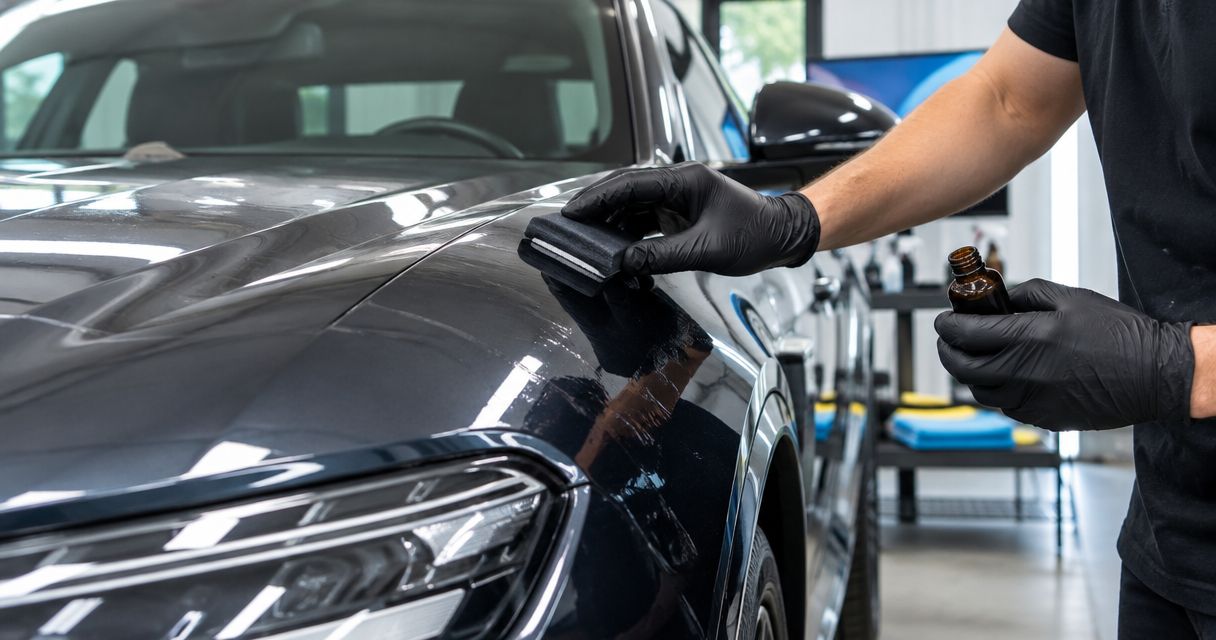
Yes, ceramic coating can be applied over paint protection film (PPF) when the coating is approved for that film and the surface is properly prepared. Install the film first, let it settle according to its manufacturer's instructions, and then apply the compatible coating. The coating adds water-repellent surface protection; it does not replace the film's physical barrier against road debris.
- Can ceramic coating be applied over PPF? Yes—confirm film compatibility before application.
- Paint protection film handles physical protection; ceramic coating adds water repellency and easier cleaning.
- Install PPF before ceramic coating, and follow both manufacturers' preparation and curing instructions.
- Kleandetail provides ceramic coating and paint protection film services for Oak Lawn car owners.
Why this matters
Film and coating solve different problems. Choosing both makes sense when you want the film's physical protection plus the coating's surface properties. Buying both without checking compatibility, however, skips the decision that matters most.
For your 2026 protection plan, start with the surface you have and the result you want—not a coating's advertised hardness alone. Kleandetail serves Oak Lawn, Illinois car owners with ceramic coating, paint protection film, paint correction, and detailing services.
Can ceramic coating be applied over paint protection film?
Yes, but compatibility and application order determine whether the combination is appropriate. A coating intended for automotive paint is not automatically suitable for every film topcoat, particularly on matte or satin finishes.
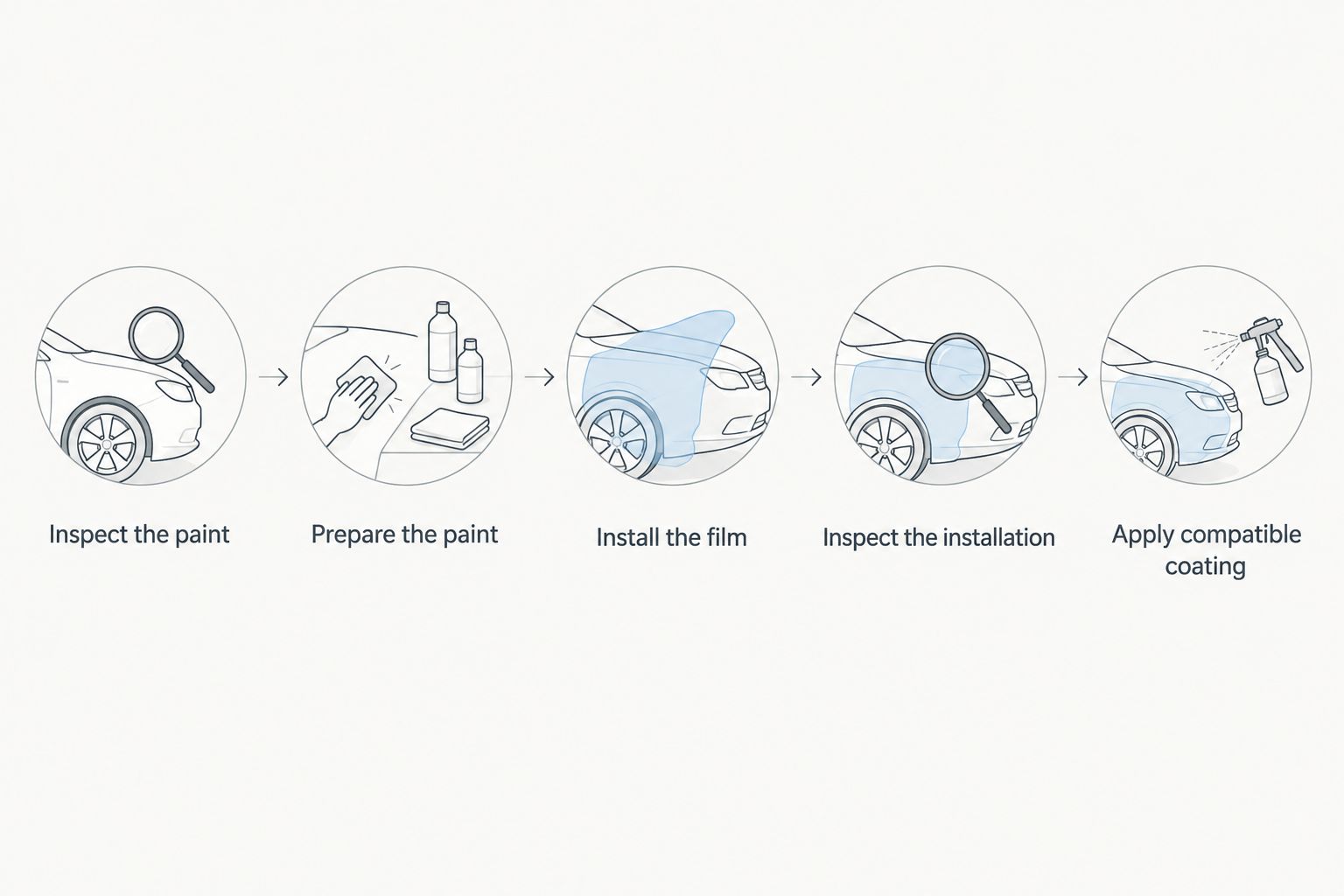
Use this sequence for a new installation:
- Inspect the paint. Identify defects, contamination, previous repairs, and existing protection before covering the surface.
- Prepare the paint. Complete any agreed paint correction before film installation. Coating over the finished film will not correct defects underneath it.
- Install the film. Apply PPF to the selected panels using the film manufacturer's installation requirements.
- Inspect the installation. Check edges, trapped contamination, and areas that need attention before adding another surface treatment.
- Apply a compatible coating. Follow the film and coating manufacturers' requirements for preparation, application, and curing.
The paint correction-to-PPF installation workflow explains the preparation sequence in more detail. Resolve paint defects before film; resolve film defects before coating. Reversing that order creates work instead of improving protection.
PPF alone: best for physical protection
Paint protection film is the relevant layer when your main concern is stone chips and surface abrasion on covered panels. Ceramic coating is not a substitute for that barrier.
Best for: drivers prioritizing protection on exposed bodywork, such as the front bumper and hood. The limitation is coverage: a panel without film does not gain the film's physical protection simply because another panel has it.
Film also needs washing and inspection. Its surface can collect contamination, and damage or lifting edges require attention rather than another layer of protection.
Ceramic coating alone: best for easier surface maintenance
Ceramic coating changes the surface properties of a compatible substrate, helping water release and making routine cleaning easier. It does not make paint immune to scratches, stone chips, bird droppings, or water spots.
Best for: drivers focused on water repellency and cleaning rather than a physical impact barrier. The trade-off is clear: coating alone does not provide PPF's protection against road debris.
Keep that distinction in your 2026 service brief. Ask for the protection your driving conditions require, rather than assuming the word ceramic describes every kind of protection.
Ceramic coating over PPF: best for combined protection
Coating over compatible PPF combines the film's physical role with the coating's surface role. This is a layered system, not a way to turn either material into something indestructible.
Best for: drivers who want film on selected panels and easier routine cleaning of those covered surfaces. The drawback is another application and maintenance requirement, plus the need to confirm compatibility between the materials.
Some films already have water-repellent topcoats. Check what your installed film provides before deciding that a separate coating adds something you need.
| Protection setup | Best for | Main benefit | Main limitation |
|---|---|---|---|
| PPF alone | Physical protection on covered panels | A film barrier against chips and abrasion | Still needs cleaning and damage inspection |
| Ceramic coating alone | Easier surface maintenance | Water repellency and easier cleaning | Does not replace an impact-resistant film barrier |
| Ceramic coating over PPF | Physical protection plus surface maintenance | Combines the roles of compatible film and coating | Requires compatibility checks and coordinated care |
Why the right coating-over-PPF approach varies
There is no universal application recipe for every film and coating combination. These factors determine the correct approach:
- Film finish: gloss, matte, and satin surfaces require products that preserve the intended appearance.
- Film topcoat: an existing surface treatment affects which additional products the manufacturer permits.
- Film condition: contamination, damaged areas, and lifting edges need evaluation before coating.
- Coating approval: the coating's technical instructions must identify an appropriate application for the surface.
- Installation stage: new film and previously installed film require different preparation decisions.
- Care requirements: washing, chemical exposure, and curing restrictions must work together across the system.
For a 2026 installation, ask for the current instructions for the exact materials—not a recommendation based only on another vehicle's results. Product names, film finishes, and written application guidance make the decision specific.
How do you check compatibility before application?
Start with the exact film identity, including its finish. Then check the coating manufacturer's technical guidance for use on paint protection film, and confirm any restrictions from the film manufacturer.
A label saying ceramic or professional does not establish compatibility. Neither does a demonstration of water beading on an unidentified surface.
Ask the installer these questions before approving the work:
- Does the coating manufacturer approve this product for this film surface?
- Does the film manufacturer permit the proposed preparation method?
- Will the coating preserve the intended gloss, matte, or satin appearance?
- Are there restrictions involving existing topcoats or maintenance products?
- What written aftercare instructions apply to the combined system?
Choose documented compatibility over a generic promise of protection. If the materials cannot be identified, establish what is already on the vehicle before authorizing another treatment.
Can you coat PPF that is already on your car?
Yes, existing PPF can receive a compatible ceramic coating if its condition and preparation requirements support the application. Age alone is not a complete inspection: examine the film's surface, edges, contamination, and visible damage.
Wash the vehicle using film-appropriate products, then assess what remains. Embedded contamination and residue need a removal method approved for the film; a preparation process intended for bare paint is not automatically suitable.
Do not treat coating as a repair for peeling edges, tears, discoloration, or trapped debris. Those conditions call for evaluation of the film itself.
Record the film's identity and any known surface treatments in your 2026 maintenance notes. That record helps the next detailer choose preparation products without guessing what is on the vehicle.
How long should you wait before coating new PPF?
Wait for the interval specified for the actual film, coating, and installation conditions. There is no single waiting period that applies to every system, and a dry-looking panel does not establish readiness on its own.
Ask the installer to distinguish film settling from coating curing. These are separate stages, and each can carry its own restrictions on washing, moisture exposure, and handling.
Before collecting the vehicle, get a clear handover plan covering:
- When the film is ready for the proposed coating.
- When the coated vehicle can be exposed to the conditions you expect.
- When washing can resume and which methods are permitted.
- What symptoms require an inspection rather than home treatment.
Do not replace that plan with a generic online waiting time. The instructions for your installed materials control the schedule.
What changes with matte or satin PPF?
Matte and satin PPF require a coating that preserves their intended appearance. Do not assume a coating selected for gloss paint will leave a low-sheen surface unchanged.
Make appearance part of the approval discussion before application. The goal is consistent finish across the vehicle, not stronger shine on a surface chosen specifically to avoid it.
Preparation matters here, too. Abrasive correction intended to increase gloss is not a routine solution for marks on matte film; use the film manufacturer's cleaning and repair guidance.
If you have mixed finishes, identify them separately in the work order. A gloss-painted panel and a matte-wrapped panel should not receive an identical process merely for convenience.
What ceramic coating will not fix on PPF
Coating does not repair damaged film or correct paint beneath it. It also does not make washing technique irrelevant.
Keep these limits separate from the benefits:
- A coating does not reattach a lifting film edge.
- A coating does not remove trapped contamination beneath the film.
- A coating does not fill a stone chip into an invisible repair.
- A coating does not guarantee freedom from water spots.
- A coating does not establish that a damaged film retains its original protective performance.
Some PPF products have self-healing surface properties under specified conditions. Do not assume every film has that feature, or that adding a coating improves it; confirm the guidance for the exact combination.
How should you maintain ceramic-coated PPF?
Wash coated PPF with products and methods approved for the installed system. Water beading is not permission to leave dirt, road film, or bird droppings on the vehicle.
Use clean wash media, avoid dragging grit across the surface, and follow the installer's directions around edges. Keep pressure-washer use within the film manufacturer's guidance rather than directing a concentrated jet at seams or lifting areas.
Dry the surface after washing instead of relying on water repellency alone. Minerals in remaining water can leave deposits as the water evaporates.
If water behavior changes, arrange a suitable cleaning and inspection before assuming the coating has failed. Contamination affects surface behavior, and aggressive polishing is not an appropriate default response on film.
Keep your 2026 care record simple: installed materials, application instructions, cleaning products, and any areas that need monitoring. That is more useful than judging the entire system from a single beading photo.
What should you ask a local installer?
Ask for a plan that separates paint preparation, film coverage, coating compatibility, and aftercare. Each decision should answer a different need.
Kleandetail is a local option for Oak Lawn car owners seeking ceramic coating and paint protection film. Before booking, explain whether your priority is chip protection, easier washing, preserving a matte finish, or treating film already installed on the car.
Request written confirmation of the actual materials and the approved care process. Do not infer warranty terms, film coverage, or coating suitability from the service category alone.
Discuss your vehicle protection plan
Review ceramic coating and paint protection film services for your Oak Lawn vehicle.
FAQ
Can ceramic coating be applied over PPF on a daily driver?
Yes, ceramic coating can be applied over PPF when the materials are compatible and the film is properly prepared. Continue routine washing; the coating does not make the surface maintenance-free.
Should ceramic coating go under or over paint protection film?
For a planned combined installation, apply PPF first and a compatible coating over it. If the paint already has a coating, follow the film manufacturer's preparation requirements before installing film.
Can I apply ceramic coating over matte PPF?
Yes, if the coating is approved for matte PPF and preserves its intended finish. Do not substitute a gloss-oriented preparation or coating process without confirming suitability.
Will ceramic coating stop rocks from damaging my PPF?
No, ceramic coating is not a replacement for the film's physical barrier. Road debris can still damage coated film, and damaged areas need inspection.
Do I need to polish PPF before ceramic coating?
Do not assume polishing is required or permitted before coating PPF. Use the preparation method approved for the exact film and coating, especially on matte or satin surfaces.
Can ceramic coating affect my PPF warranty?
Warranty treatment depends on the film manufacturer's written terms and the application used. Confirm the proposed coating and preparation process before authorizing the work.
Does Kleandetail offer both ceramic coating and paint protection film?
Kleandetail offers ceramic coating and paint protection film services in Oak Lawn, Illinois. Discuss your vehicle's existing protection and intended finish before choosing the work.
One last thing
Decide how you will maintain and eventually replace the protection before adding another layer. If a filmed panel later needs replacement, the coating on that removed film leaves with it; the replacement surface needs its own compatibility and application decision.
Keep the material names and care instructions with your vehicle records. Knowing exactly what is installed prevents the next cleaning or repair from becoming a guessing exercise.


