
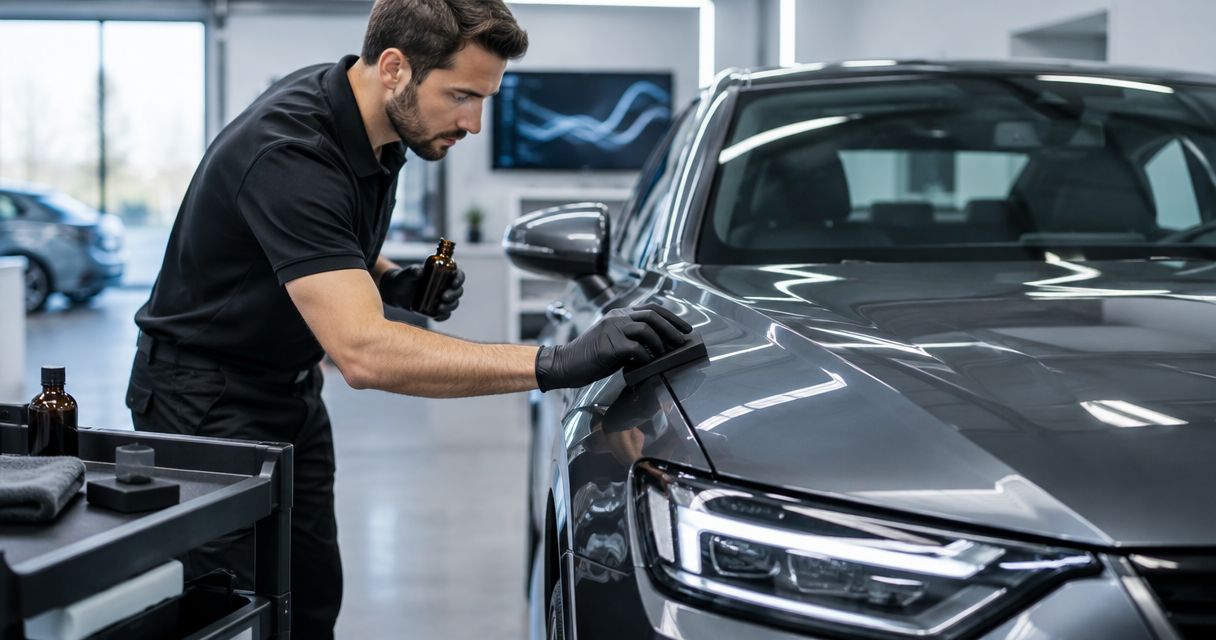
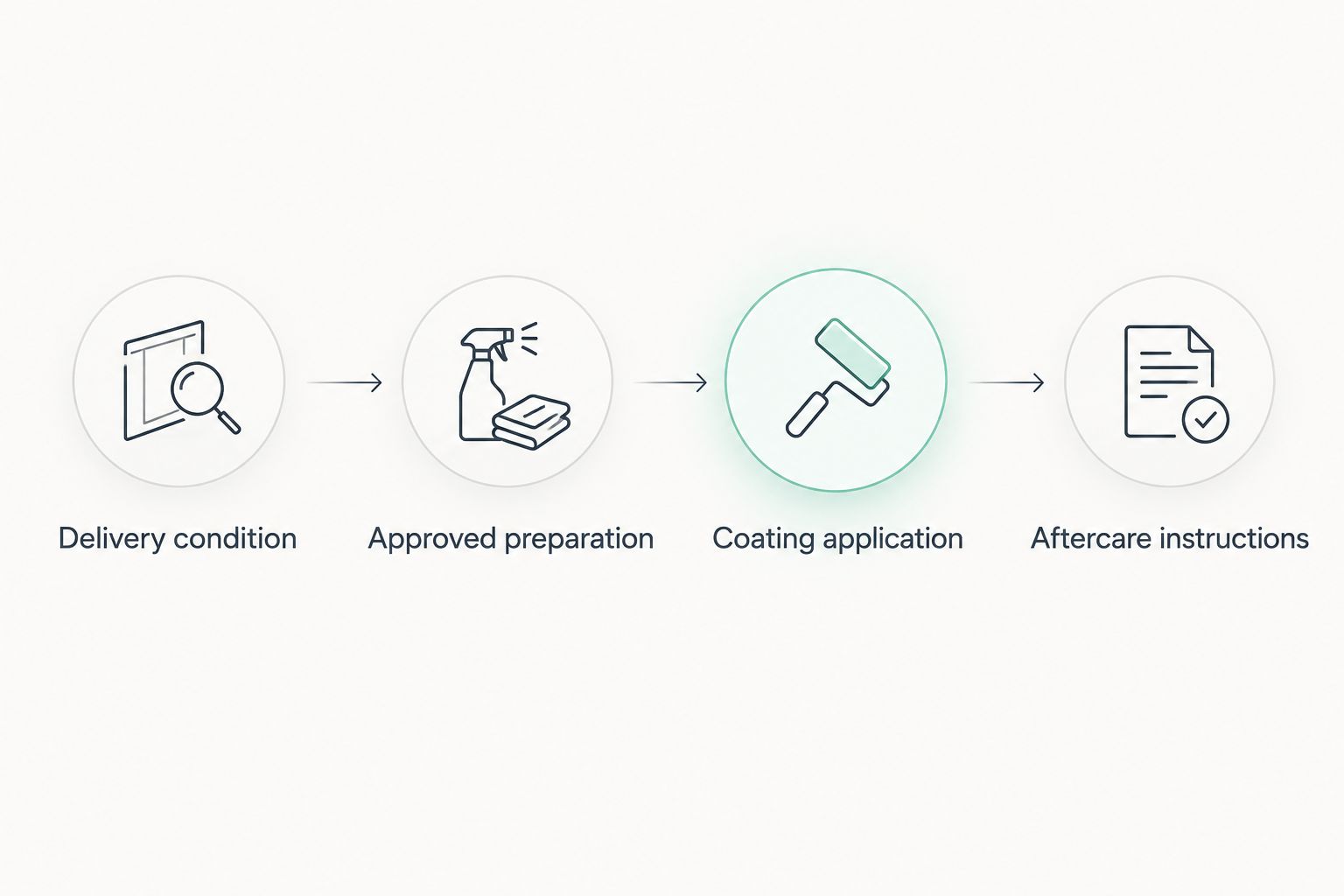
Instead of coordinating dealership prep and a detailer separately, arrange ceramic coating after buying new car around one handoff: document delivery condition, approve surface preparation, then follow the coating’s curing instructions. This 2026 workflow keeps responsibilities clear without treating new paint as automatically ready for coating.
- Plan ceramic coating after buying new car around inspection, surface preparation, application, and documented aftercare.
- Kleandetail provides ceramic coating and paint correction for car owners in Oak Lawn, Illinois.
- Ceramic coating supports easier cleaning; paint protection film addresses a different need: protection against stone chips.
- Use the installed coating’s instructions for curing and washing, not a generic waiting period.
Why this matters
A new car can arrive with bonded contamination, polishing residue, or wash marks. Coating does not remove those defects; cleaning and any necessary correction happen first. Approving the finish before application avoids discovering an unwanted swirl pattern beneath the coating.
Kleandetail is best for Oak Lawn car owners seeking professional ceramic coating rather than a do-it-yourself application. Its services also include paint correction and paint protection film, which address different needs during a new-car handoff. Start with Kleandetail when discussing which services belong in your plan.
The objective is not the shortest possible gap between delivery and coating. It is a clean, inspected surface and a handoff that fits the installed product’s requirements.
Before you start
- Confirm access and responsibility. Have your delivery contact, detailing appointment details, and permission to photograph the vehicle. Establish who will drive the car between locations and who will approve additional preparation.
- Bring the relevant records. Keep the dealership’s description of any applied protection, your delivery-condition photographs, and the detailer’s proposed scope together. Ask which products are already on the paint.
- Resolve the hidden conflict: overlapping protection. Dealer-applied wax, sealant, or coating changes the preparation discussion. Do not ask a detailer to apply another coating over an unidentified treatment without assessing compatibility and removal requirements.
A confirmed appointment is not the same as a confirmed completion time. Before delivery, ask how inspection, preparation, application, and the product’s curing requirements affect collection. Arrange transportation around that answer.
Delivery instructions and condition record
Use this first stage to establish what the dealer should do and what condition you actually receive. For a 2026 purchase, keep delivery instructions in the same message thread as your collection arrangements so they remain easy to find.
- Send preparation preferences before collection. Ask the dealership to confirm whether it can omit optional polishing, wax, sealant, or other paint treatments. Do not interfere with required vehicle inspections or safety preparation.
- Request existing-treatment details. Ask what has already been applied and obtain any supporting paperwork. If the answer is unknown, record that rather than assuming the paint is bare.
- Inspect before accepting cosmetic condition. Look at the hood, roof, doors, bumpers, and other painted surfaces in useful lighting. Photograph visible scratches, swirls, residue, or damaged areas before leaving.
- Separate delivery damage from detailing work. Report a delivery concern to the dealership before authorizing a detailer to alter that area. Agree on responsibility before correction begins.
- Record your own handoff fields. Use Delivery condition, Existing treatments, and Approved preparation as headings in your notes. These are suggested record labels, not dealership software settings.
Expected result: You have a dated condition record and a clear account of known treatments. The detailer receives facts rather than a general assurance that the car is new.
For useful photographs, take both a wider view identifying the panel and a closer view showing the concern. Reflections help reveal some defects, but a photograph does not replace an in-person paint inspection.
Protection scope and preparation approval
Decide what you want to prevent before approving the work. Ceramic coating, paint protection film, and paint correction serve different purposes; they are not interchangeable upgrades.
| Service | Best for | Main benefit | Limitation |
|---|---|---|---|
| Ceramic coating | Owners prioritizing easier routine cleaning | Creates a protective surface treatment with water-repellent properties | Does not make paint scratch-proof or stop stone chips |
| Paint protection film | Owners prioritizing chip-prone painted areas | Adds a physical protective film | Coverage and exposed edges need planning; film is not maintenance-free |
| Paint correction | Owners addressing visible swirls or paint defects | Improves the existing finish before protection | Removes some clear coat; not every defect should be chased |
- State your main concern. Distinguish cleaning effort from stone chips and existing paint defects. Ask the installer to match the service to that concern.
- Approve the inspection findings. Have the detailer explain contamination, existing treatments, and visible defects before choosing preparation. A new car does not automatically need aggressive polishing.
- Set the correction boundary. Agree which defects should be improved and which should remain. Deep damage requires a different decision from light wash marks.
- Define surfaces in writing. Clarify whether the work covers painted body panels only or includes other surfaces. Do not assume wheels, glass, trim, or film are included.
- Approve preparation before application. The surface must meet the coating manufacturer’s preparation requirements. Ask how existing protection and polishing residue will be addressed.
Expected result: Your scope names the surfaces, preparation, and intended result. You understand what the coating will not do.
For a 2026 protection plan that includes film, use the front bumper and hood paint protection film guide to frame the coverage discussion. Confirm film-and-coating compatibility before either service begins.
Application handoff and collection
Once the scope is approved, keep the installation handoff focused on condition, responsibility, and product-specific instructions. Avoid adding an unplanned wash or paint treatment between the final preparation and application.
- Share the delivery record. Give the installer the condition photographs and existing-treatment details. Point out any dealership issue that is still unresolved.
- Confirm the installed product. Request its name and the relevant care instructions. A general ceramic-coating label is not enough to determine curing restrictions.
- Approve scope changes explicitly. If inspection reveals additional contamination or defects, ask what must change before proceeding. Do not treat extra polishing as an automatic part of a new-car appointment.
- Inspect at collection. Review the finish with the installer under useful lighting. Ask about streaks, patchy reflections, residue, or areas that look different from adjacent panels.
- Collect written aftercare. Ask for the product’s restrictions on water exposure, washing, chemicals, and any required maintenance. Confirm what to do if rain or contamination reaches the car during curing.
Expected result: You leave with an inspected finish, the installed product’s identity, and instructions you can follow. Any concern has a named next action rather than an assumption that it will disappear.
Use a simple collection question in 2026: What must I avoid before the first permitted wash? Ask the installer to distinguish initial curing restrictions from normal long-term maintenance.
Aftercare routine and first wash
Curing and maintenance are part of the coating workflow, not an optional extra. A coating can simplify cleaning, but it does not eliminate dirt, mineral deposits, or the need for careful washing.
- Copy the restrictions into your calendar. Use the installer’s product-specific instructions to record the first permitted wash and any other required milestones. Do not substitute an online schedule for the installed coating’s documentation.
- Prepare for accidental exposure. Save the installer’s instructions for rain, bird droppings, and other contamination during curing. Ask before applying a cleaner that the instructions do not address.
- Choose compatible maintenance products. Follow the coating manufacturer’s guidance on shampoos and additional treatments. Avoid layering unrelated products simply because they promise more gloss.
- Use careful wash technique. Remove loose dirt before contact washing, keep wash materials clean, and dry without grinding contamination across the finish. Coating does not prevent wash-induced scratches.
- Keep a maintenance record. Note washing, unusual contamination, and any change in appearance. Use that record when asking the installer to assess a concern.
Expected result: Your first wash follows the coating’s requirements, and your regular routine supports the finish without relying on coating as a substitute for care.
Second workflow: film and coating together
If stone-chip protection is your priority, plan film coverage before treating the project as coating-only. Decide the protection layout first; confirm the installation sequence with the professionals doing the work.
For a combined 2026 appointment, give the film installer and coating installer the same scope. Ask which panels receive film, which surfaces receive coating, and whether the proposed coating is suitable for that film. Do not assume a paint coating belongs on every material.
- Best for chip-prone areas: Plan paint protection film coverage, then confirm compatible coating treatment and timing.
- Best for cleaning-focused care: Consider coating on properly prepared paint, accepting that it is not a physical chip barrier.
- Trade-off: Combining services adds coverage and compatibility decisions. Coating alone has a narrower scope but does not meet the same impact-protection goal.
Ask how future film repair or replacement affects the coating plan. That question connects today’s installation to later maintenance without assuming either protection layer lasts indefinitely.
Troubleshooting the handoff
The dealership already applied protection
Obtain the treatment name and paperwork, then give them to the detailer. Existing protection changes preparation; applying another product without assessing the surface is not a sound shortcut. Have the installer explain whether removal or another preparation method is required.
Delivery slips after the detailing appointment is arranged
Notify the detailer as soon as the dealership changes the handoff. Reconfirm the appointment and collection plan rather than compressing inspection or curing to preserve an outdated schedule. Keep transport arrangements flexible until vehicle delivery is confirmed.
The new paint has visible swirls
Document the condition and discuss it before coating. Ask whether limited correction meets your goal, and approve the scope rather than requesting maximum polishing by default. Coating is not a repair for existing scratches.
Rain is expected around collection
Ask the installer how the installed coating’s curing requirements affect collection and transport. Do not use a universal rain-safe waiting period. Follow the product-specific instructions and agree on a plan before leaving the vehicle.
The finish looks streaky after collection
Contact the installer with photographs and explain when you noticed the area. Uneven coating residue can require professional correction; do not immediately polish it or apply another treatment yourself. Have the installer identify the cause before choosing a fix.
Customize your workflow
Build the plan around 4 checkpoints: delivery condition, approved preparation, collection inspection, and aftercare instructions. Keep 2 records together: the vehicle-condition record and the installed coating’s care instructions. Those are organizational choices, not promises about installation duration.
Before your 2026 appointment, write down 3 questions: what is already on the paint, what preparation is necessary, and what restrictions apply after collection. Clear answers matter more than rushing directly from the dealership into application.
Kleandetail offers ceramic coating, paint correction, and paint protection film in Oak Lawn. Ask which services address your documented concerns, and keep optional work separate from necessary preparation.
Plan your new-car protection
Discuss ceramic coating, paint correction, and paint protection film for your new vehicle.
FAQ
Should I get ceramic coating immediately after buying a new car?
Arrange ceramic coating once the car can be inspected and properly prepared. The correct sequence matters more than applying it immediately after delivery, especially when existing treatments or delivery defects need attention.
Does a brand-new car need paint correction before ceramic coating?
A brand-new car needs paint correction only when its condition and your finish goals justify it. Inspect first, then approve a defined correction scope rather than assuming all new paint needs polishing.
Should I tell the dealership not to wash my new car?
Ask the dealership to confirm your preferred cosmetic preparation before collection. You can request that optional polishing or protection be omitted, but required inspections and safety preparation remain separate.
Can I drive home after ceramic coating?
Follow the installer’s instructions for the coating applied to your vehicle. Confirm collection timing, weather exposure, and transport requirements before the appointment rather than assuming immediate driving suits every product.
Is ceramic coating better than paint protection film for a new car?
Ceramic coating and paint protection film address different priorities. Coating supports easier cleaning, while film adds a physical barrier against stone chips; choose according to the damage or maintenance problem you want to address.
When can I wash my car after ceramic coating?
Wash the car when the installed coating’s instructions permit it. Obtain that guidance in writing, including compatible cleaning products and what to do about contamination before the first permitted wash.
Can Kleandetail help with new-car ceramic coating in Oak Lawn?
Kleandetail provides ceramic coating, paint correction, and paint protection film in Oak Lawn, Illinois. Discuss the vehicle’s condition, existing treatments, and desired protection before approving the work.
One last thing
Keep your delivery photographs after the coating appointment. They remain a useful baseline for distinguishing pre-existing defects from later concerns. Save them beside the approved scope and aftercare instructions, not buried in an unrelated message thread.


