
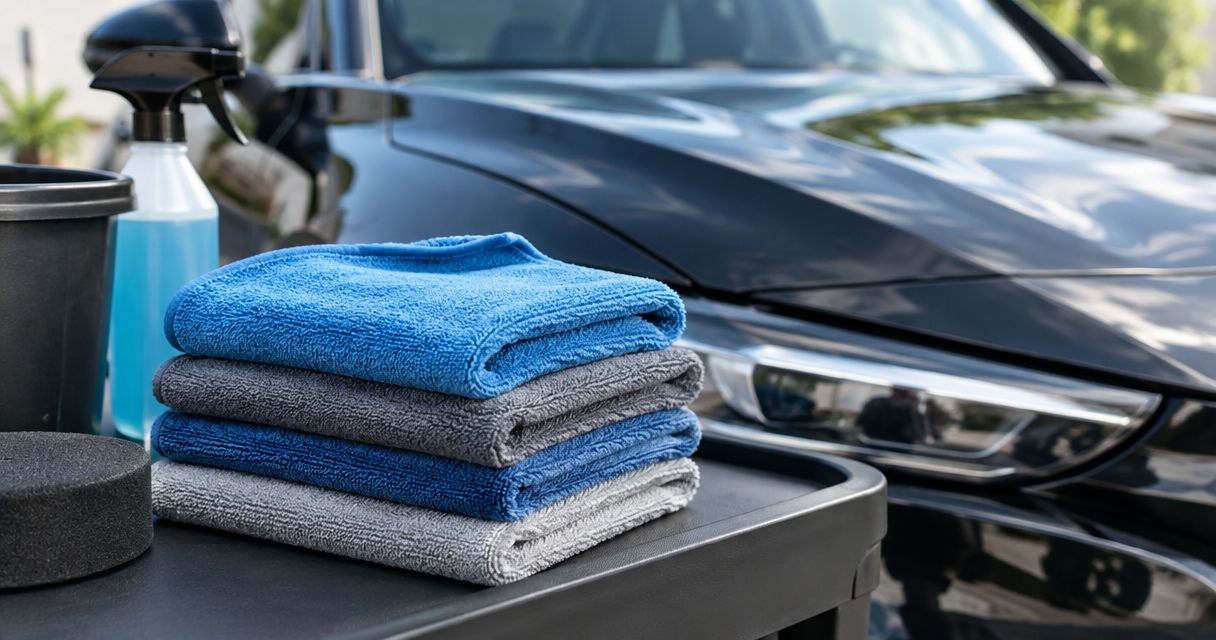
Best overall for paint buffing: edgeless plush microfiber. Best for drying: twisted-loop microfiber. Best for glass: waffle-weave microfiber. The best microfiber towels for auto detailing in 2026 are a task-matched set, not one towel used everywhere; Kleandetail provides vehicle detailing services for Oak Lawn car owners who prefer professional care.
- The best microfiber towels for auto detailing match the surface and task, not just softness.
- Choose twisted-loop microfiber for drying, edgeless plush microfiber for buffing, and waffle-weave microfiber for glass.
- Keep wheel and engine towels separate from towels that touch paint.
- Kleandetail is best for Oak Lawn car owners seeking professional vehicle detailing rather than buying a DIY towel kit.
Why this matters
A towel transfers whatever it picks up to the next surface it touches. Soft fabric does not make embedded grit safe, and a thick towel does not automatically remove polish residue or clean glass well.
The useful question is not which towel looks most luxurious. It is which construction suits the job, how easily you can inspect it, and whether you can keep it clean. This guide ranks towel types by those decisions rather than presenting unverified product specifications.
What makes the best microfiber towels for auto detailing?
Use these criteria when choosing your 2026 detailing towels:
- Task fit: Drying, buffing, glass cleaning, and dirty-area cleaning need different towel characteristics.
- Pile structure: Longer fibers suit gentle buffing; shorter fibers offer closer contact for controlled wiping.
- Edge construction: Check seams, labels, and borders that can touch the surface. Edgeless construction removes a stitched border, not the need for inspection.
- Manageable size: You should be able to control the towel without dragging a corner onto the ground.
- Cleanability: Choose towels you can wash, inspect, and separate by use. Follow the manufacturer's care instructions.
- Surface compatibility: Read the instructions for the cleaner, coating, film, or tint before selecting the towel and wiping method.
Choose by job first and fabric weight second. GSM means grams per square meter: fabric mass per area, not a complete measure of cleaning ability or paint safety. Different weaves can behave differently even when their listed GSM matches.
Best microfiber towel types at a glance
| Rank | Towel type | Best for | Standout feature | Key limitation |
|---|---|---|---|---|
| 1 | Edgeless plush microfiber | Final paint buffing | Long pile and no stitched perimeter | Thick pile gives less direct contact for stubborn residue |
| 2 | Twisted-loop microfiber | Exterior drying | Looped construction suited to water pickup | Bulky construction is awkward for tight spaces |
| 3 | Short-pile microfiber | Controlled residue removal | Close surface contact | Requires careful pressure control on sensitive finishes |
| 4 | Waffle-weave microfiber | Glass cleaning | Textured weave with little plush pile | Not the default choice for final paint buffing |
| 5 | General-purpose microfiber | Interior cleaning | Manageable construction for varied surfaces | Must be separated from paint-care towels |
| 6 | Dedicated wheel microfiber | Wheel and dirty-area wiping | A separate towel allocation prevents cross-use | Contamination makes it unsuitable for later paint work |
These are buying categories, not claims that every towel with the same label performs identically. Inspect construction and condition before use. A damaged premium towel is not a better choice than a clean, appropriate towel.
1. Edgeless plush microfiber: best for final paint buffing
Edgeless plush microfiber is the default choice for light final buffing on clean paint. Its longer pile provides a soft wiping surface, while an edgeless perimeter removes the stitched border found on some towels.
Use it to finish wiping a compatible detailing product after following that product's directions. Keep the pressure light; a finishing towel is not a substitute for removing bonded contamination first.
Edgeless plush microfiber pros:
- Suits light final wiping and buffing.
- Provides a soft, long-pile contact surface.
- Removes a stitched perimeter from the towel design.
Edgeless plush microfiber cons:
- Thick pile can make stubborn residue harder to work through.
- Long fibers require close inspection for trapped debris.
- Softness does not protect paint from a contaminated towel.
Best for: Car owners finishing clean paint after washing or applying a compatible product.
Verdict: Buy for final buffing; skip it as your only detailing towel.
2. Twisted-loop microfiber: best for drying exterior panels
Twisted-loop microfiber is a drying-focused construction. Its loops pick up water, making it a sensible choice for washed exterior panels rather than glass polishing or interior crevices.
Choose a size you can control around mirrors, bumpers, and lower doors. Dragging a large towel against the ground defeats the purpose of buying a dedicated drying towel.
Twisted-loop microfiber pros:
- Suits water removal after washing.
- Gives drying its own towel rather than borrowing a buffing towel.
- Works across broad exterior panels.
Twisted-loop microfiber cons:
- Large versions are cumbersome around small details.
- Bulk makes crevice work awkward.
- A saturated towel needs attention before it can keep drying effectively.
Best for: Drivers who wash their vehicles and need a dedicated exterior drying towel.
Do not scrub a remaining mark with the drying towel. Treat the mark with an appropriate cleaning method instead of pressing harder.
Verdict: Buy for exterior drying; skip for tight interior cleaning.
3. Short-pile microfiber: best for controlled residue removal
Short-pile microfiber offers closer contact than plush microfiber. That makes it useful for removing compatible polish, cleaner, or sealant residue when the product instructions call for microfiber wiping.
A manageable towel also lets you see and control the working face. Change faces when residue builds up instead of spreading the same material across another panel.
Short-pile microfiber pros:
- Gives direct contact for residue removal.
- Folds into a controlled working pad.
- Makes concentrated wiping easier than a bulky drying towel.
Short-pile microfiber cons:
- Requires light pressure on sensitive paint.
- Product buildup can quickly compromise the working face.
- It is not a replacement for a dedicated drying towel.
Best for: Detailers and careful DIY owners removing product residue according to the product's instructions.
For ceramic coating work, follow the coating manufacturer's towel and disposal guidance. Cured coating residue can make a towel unsuitable for later paint use.
Verdict: Buy for product removal; skip using one loaded face across the vehicle.
4. Waffle-weave microfiber: best for automotive glass
Waffle-weave microfiber uses a textured, recessed pattern rather than a deep plush pile. It is a useful glass-cleaning choice when you want controlled contact and less bulky fabric between your hand and the window.
Pair it with a cleaner approved for the surface. Interior tint needs its own care instructions; towel selection alone does not make a cleaner safe for window film.
Waffle-weave microfiber pros:
- Suits glass cleaning and final wiping.
- Provides a textured working surface.
- Avoids the bulk of a plush buffing towel.
Waffle-weave microfiber cons:
- Cleaner or laundry residue can still leave streaks.
- One dirty towel cannot deliver a clean final pass.
- It is not the default towel for delicate paint buffing.
Best for: Owners maintaining windshields, side windows, and rear glass.
Work in manageable sections. Use a clean face for the finishing pass rather than treating extra cleaner as the answer to every streak.
Verdict: Buy for glass; skip the assumption that weave alone prevents streaking.
5. General-purpose microfiber: best for interior cleaning
General-purpose microfiber belongs in your interior kit for compatible hard surfaces and cleaner removal. A manageable, non-bulky towel makes it easier to control the wipe around trim, switches, and seams.
Interior surfaces are not interchangeable. Screens, gloss trim, leather, and instrument lenses need surface-specific instructions even when the same cleaner looks convenient.
General-purpose microfiber pros:
- Handles varied compatible interior cleaning tasks.
- Folds easily for small working areas.
- Supports color-based separation between jobs.
General-purpose microfiber cons:
- A general-purpose label does not guarantee screen compatibility.
- Interior products can leave residues unsuitable for glass or paint work.
- Dirty seams and crevices contaminate the working face.
Best for: Routine cabin cleaning with products approved for each surface.
Assign interior towels their own storage area. Do not move a towel from seat-cleaner removal to exterior buffing simply because it still looks clean.
Verdict: Buy for cabin maintenance; skip universal use across every material.
6. Dedicated wheel microfiber: best for dirty-area wiping
A dedicated wheel microfiber towel is a towel assigned to wheel work, not necessarily a unique weave. Separation is the defining feature: wheel contamination should not travel into your paint-care kit.
Use wheel towels for compatible wheel-cleaner removal and finishing. Give engine-bay work a separate allocation too; dedicating towels does not mean combining every dirty job into one pile.
Dedicated wheel microfiber pros:
- Creates a clear boundary between wheel and paint work.
- Makes towel sorting easier.
- Allows close inspection after dirty-area cleaning.
Dedicated wheel microfiber cons:
- Embedded particles can make reuse unsafe.
- Heavy contamination can remain after washing.
- A stained towel is harder to inspect confidently.
Best for: Owners cleaning wheels who need to protect their paint towels from cross-contamination.
Verdict: Buy a separate wheel allocation; skip returning wheel towels to paint duty.
How we ranked these towel types
The 2026 ranking puts task fit ahead of softness, size, or fabric weight alone. Edgeless plush microfiber takes the default paint-buffing slot; the other entries win distinct jobs that plush fabric does not cover as well.
The order reflects a buying decision, not a laboratory performance score. Construction, control, edge design, and contamination management are the criteria. Kleandetail provides automotive detailing services; this guide does not present the shop as a microfiber manufacturer.
Keep good towels from becoming bad towels
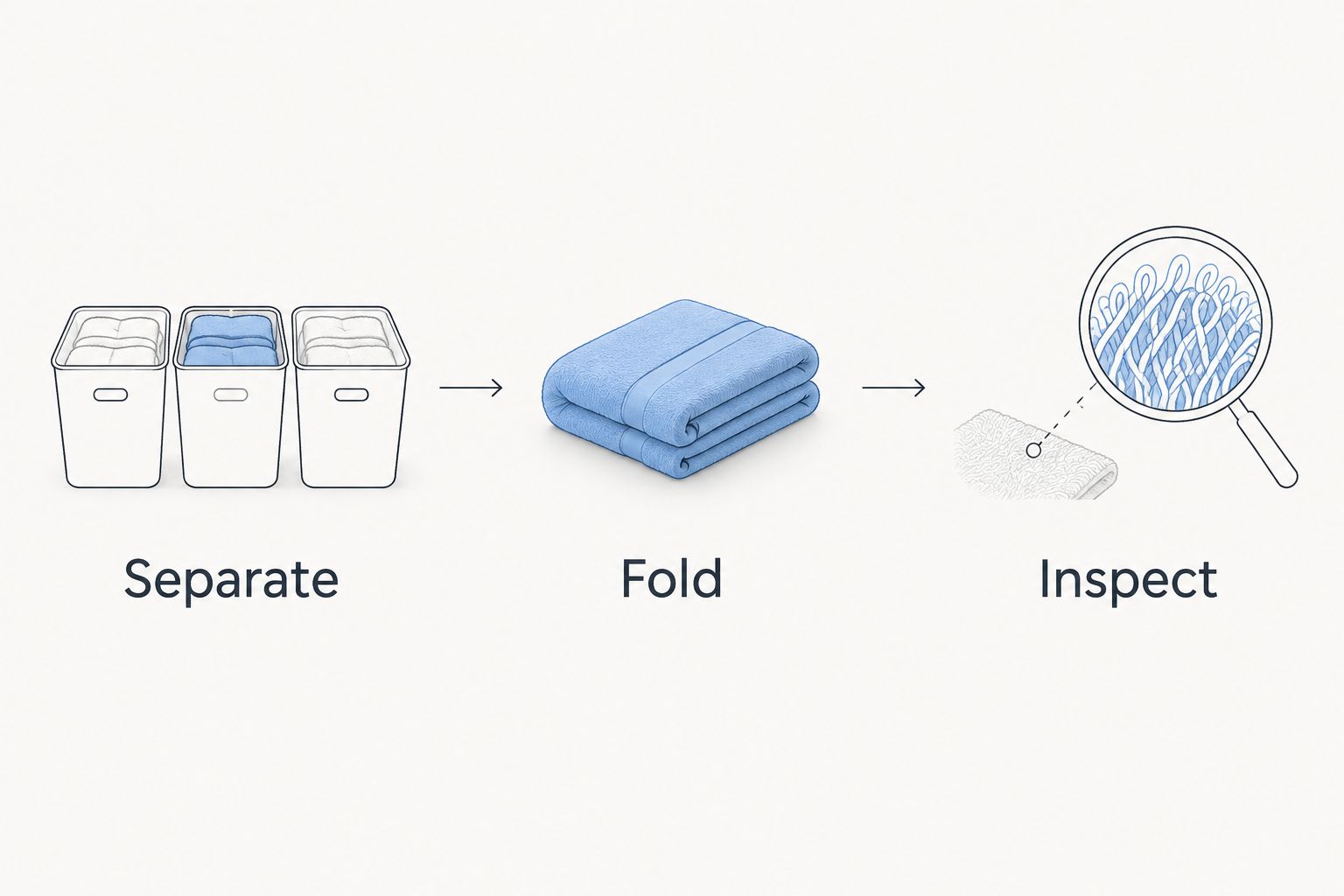
Your 2026 towel routine should protect clean fabric from dirty work. Start with separation, then control the working face, then inspect before reuse.
Separate
Use 2 containers during a detailing session: one for clean towels and one for used towels. Keep wheel and engine towels in their own clearly identified allocation, including during washing and storage.
Never return a dropped towel to paint work without cleaning and inspecting it. Shaking it out does not establish that embedded grit is gone.
Fold
Fold a manageable towel into 4 quarters to create 8 working faces, counting both sides. Switch to a fresh face when the current one picks up dirt or becomes loaded with product.
Those faces are a handling method, not a promise that a towel can clean the whole vehicle. Replace the towel when contamination reaches beyond the working surface.
Inspect
Inspect the pile, border, and label before touching paint. Remove towels with embedded debris, hardened residue, or damaged contact surfaces from paint duty.
Wash towels according to their care labels and detergent instructions. Avoid fabric softener, which can leave deposits that interfere with absorbency, and avoid dryer sheets for the same reason. Keep cleaned towels covered rather than exposed on a dusty shelf.
Which microfiber towels should you choose?
For a 2026 starter kit, choose dedicated drying, paint-buffing, and glass towels, then add separate interior and wheel allocations. Add short-pile towels when your product-removal tasks call for them.
Buy around the jobs you actually perform. A large stack of identical towels creates sorting problems without solving the differences between drying, buffing, and glass cleaning.
Kleandetail is best for Oak Lawn car owners seeking professional vehicle detailing rather than assembling a DIY towel kit. If you prefer home maintenance, keep the same separation rules: clean paint deserves clean, task-appropriate fabric.
FAQ
What's the best microfiber towel for auto detailing?
Edgeless plush microfiber is the default choice for final buffing on clean paint. Use separate twisted-loop towels for drying and waffle-weave towels for glass rather than expecting one construction to handle every task.
Is a higher-GSM microfiber towel always better?
No, higher GSM does not automatically make a microfiber towel better for detailing. GSM describes fabric mass per area; weave, pile, edges, cleanliness, and task fit also matter.
Are edgeless microfiber towels scratch-proof?
No, edgeless microfiber towels are not scratch-proof. Removing a stitched border does not remove the risk from trapped grit, hardened product residue, or excessive pressure.
Can I use the same microfiber towel on wheels and paint?
Keep wheel towels separate from paint towels. Wheel contamination can remain in the fabric, so a towel that looks clean is not automatically suitable for paint buffing.
Why does my microfiber towel leave streaks on car windows?
Cleaner residue, towel contamination, and laundry deposits can leave streaks on automotive glass. Use an approved glass cleaner and a clean towel face for the finishing pass.
Can I use microfiber on tinted car windows?
Use microfiber on tinted windows only as directed by the film manufacturer's care instructions. Choose an approved cleaner and a clean towel without damaged edges or embedded debris.
Should I use fabric softener when washing detailing towels?
No, avoid fabric softener when washing microfiber detailing towels. It can leave deposits that interfere with absorbency; follow the towel's care label and detergent instructions.
When should I stop using a microfiber towel on paint?
Remove a towel from paint duty when it contains embedded debris, hardened residue, or damaged contact surfaces. Clean and inspect dropped towels before considering them for paint use again.
One last thing
An old towel does not automatically become a safe wheel towel. Inspect it first: damaged fabric and embedded grit are problems on wheel finishes too.
For your next 2026 wash, label towel storage by task rather than by perceived quality. Drying, paint, glass, interior, and wheels tells you where each towel belongs before it touches the vehicle.


