
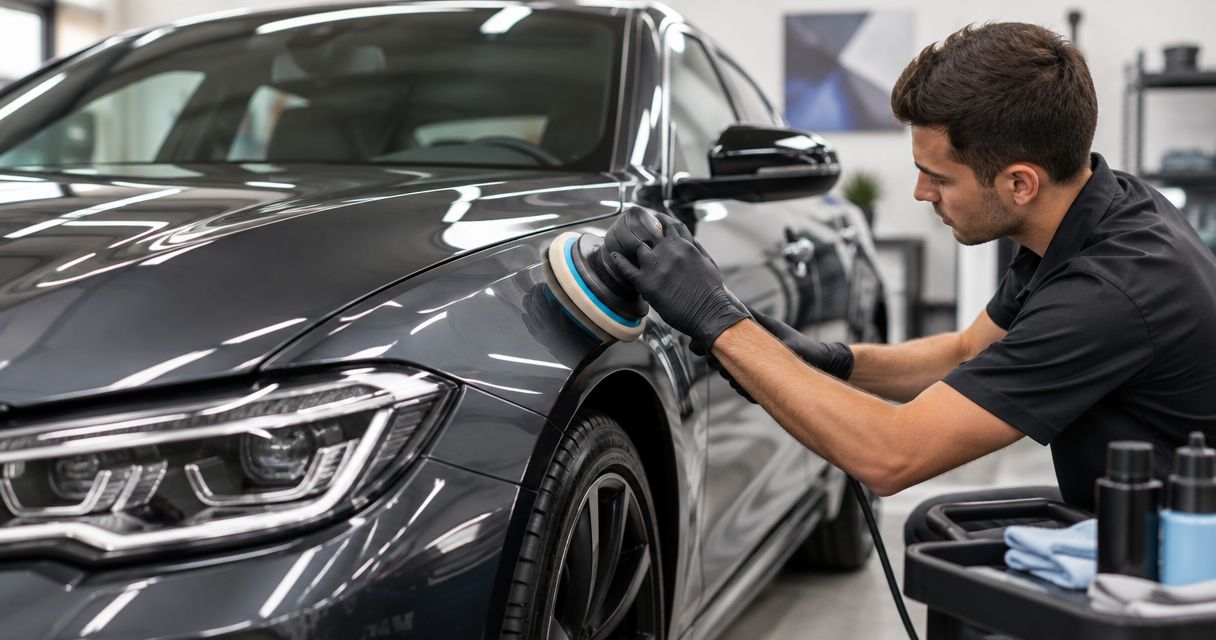
Instead of booking polishing and protection as separate jobs, arrange paint correction and ceramic coating in the same visit so the paint is corrected, inspected, and prepared before coating. Same-day application is possible when the correction work and coating instructions fit the schedule; same-day pickup is a separate decision.
- Paint correction and ceramic coating same day works only when preparation, application, and required curing fit the schedule.
- Klean Detail offers both automotive services in Oak Lawn, Illinois; confirm the combined appointment before booking.
- Approve the correction result before coating, because ceramic coating does not remove scratches.
- Confirm pickup, water exposure, and washing instructions for the actual coating applied.
Why this matters
Paint correction and ceramic coating solve different problems. Correction uses controlled polishing to reduce suitable paint defects; ceramic coating adds a protective surface layer after preparation. Reversing that order means polishing away coating to reach the paint underneath.
Klean Detail best fits Oak Lawn car owners seeking professional paint correction and ceramic coating. Start with Klean Detail to discuss both services together, rather than assuming separate service descriptions guarantee a combined appointment.
For a 2026 booking, ask for a coordinated work sequence, not simply a same-day promise. A vehicle can finish receiving its coating before it is ready for outdoor exposure, washing, or its normal parking routine.
Before you start
- Prepare the vehicle information. Provide the make, model, paint concerns, repaint history you know, and any existing wax, sealant, film, or coating. State whether your priority is improving visible swirls, addressing isolated defects, or protecting an already satisfactory finish.
- Arrange access and approval. Have the vehicle available for inspection and identify who can approve the correction result. Bring 4 photos as a starting point: the whole vehicle, the hood, a side panel, and the defect that concerns you most. Photos support the discussion; they do not replace inspection.
- Check the exposure plan before booking. The non-obvious constraint is what happens after application. Tell the shop whether the vehicle will encounter rain, outdoor parking, or an immediate wash, and request instructions specific to the coating used.
Do not choose a universal curing period from an unrelated product guide. Application conditions, waiting periods, and care requirements belong to the actual coating's instructions.
Vehicle assessment
Set the correction target
- Describe the finish you want in ordinary language: fewer wash swirls, clearer reflections, or improvement around a particular scratch. Separate appearance goals from expectations of complete defect removal.
- Ask the detailer to inspect the paint before confirming the combined schedule. Identify repainted areas, damaged clear coat, existing protection, and defects that need a different repair.
- Request 1 test section before approving extensive polishing. Use the result to judge whether the proposed correction meets your expectations without demanding unnecessary material removal.
- Confirm what remains visible after the test. A deep scratch that cannot be safely corrected should stay in the agreed scope as a remaining defect, not become an unspoken promise.
Expected result: You and the detailer agree on the finish target, remaining defects, and whether the planned correction leaves room for coating work.
For your 2026 appointment, make that agreement before treating the calendar date as fixed. Paint condition determines the work; the deadline should not determine how aggressively the paint is polished.
Compare the appointment routes
Choose the route after inspection, not from the vehicle's age alone. A new vehicle can still have visible defects, while an older vehicle does not automatically need extensive correction.
| Workflow | Best for | Advantage | Limitation |
|---|---|---|---|
| Single-stage correction followed by coating | Owners whose agreed finish target is achievable with a single polishing stage | Keeps correction and coating in one coordinated sequence | Does not address every defect or paint condition |
| Multi-stage correction followed by coating | Owners whose paint needs more refinement to reach the agreed target | Separates heavier defect reduction from final refinement | Adds work and can conflict with a same-day deadline |
| Correction and coating on separate appointments | Owners whose paint condition or schedule prevents a combined visit | Removes pressure to force both jobs into one appointment | Requires another handoff and renewed surface preparation |
These are planning routes, not confirmed Klean Detail packages. Choose the least aggressive correction that achieves the agreed result, then let the coating requirements determine the handoff.
Work sequence
Confirm the order of operations
- Have the vehicle washed and assessed for contamination before polishing. Dirt and bonded contamination interfere with inspection and preparation.
- Complete the approved correction work. Ask the detailer to reassess the result rather than proceeding automatically because coating was included in the booking.
- Inspect the corrected finish under suitable lighting. Check the original problem areas and look for remaining polishing haze or other defects that need attention.
- Complete the surface preparation required by the selected coating. Polishing residue and preparation products must be addressed according to that system's instructions.
- Apply and inspect the coating according to its directions. Keep final care instructions tied to that product rather than to a generic ceramic-coating checklist.
Expected result: The corrected finish passes inspection before coating begins, and the coating goes onto a surface prepared for that system.
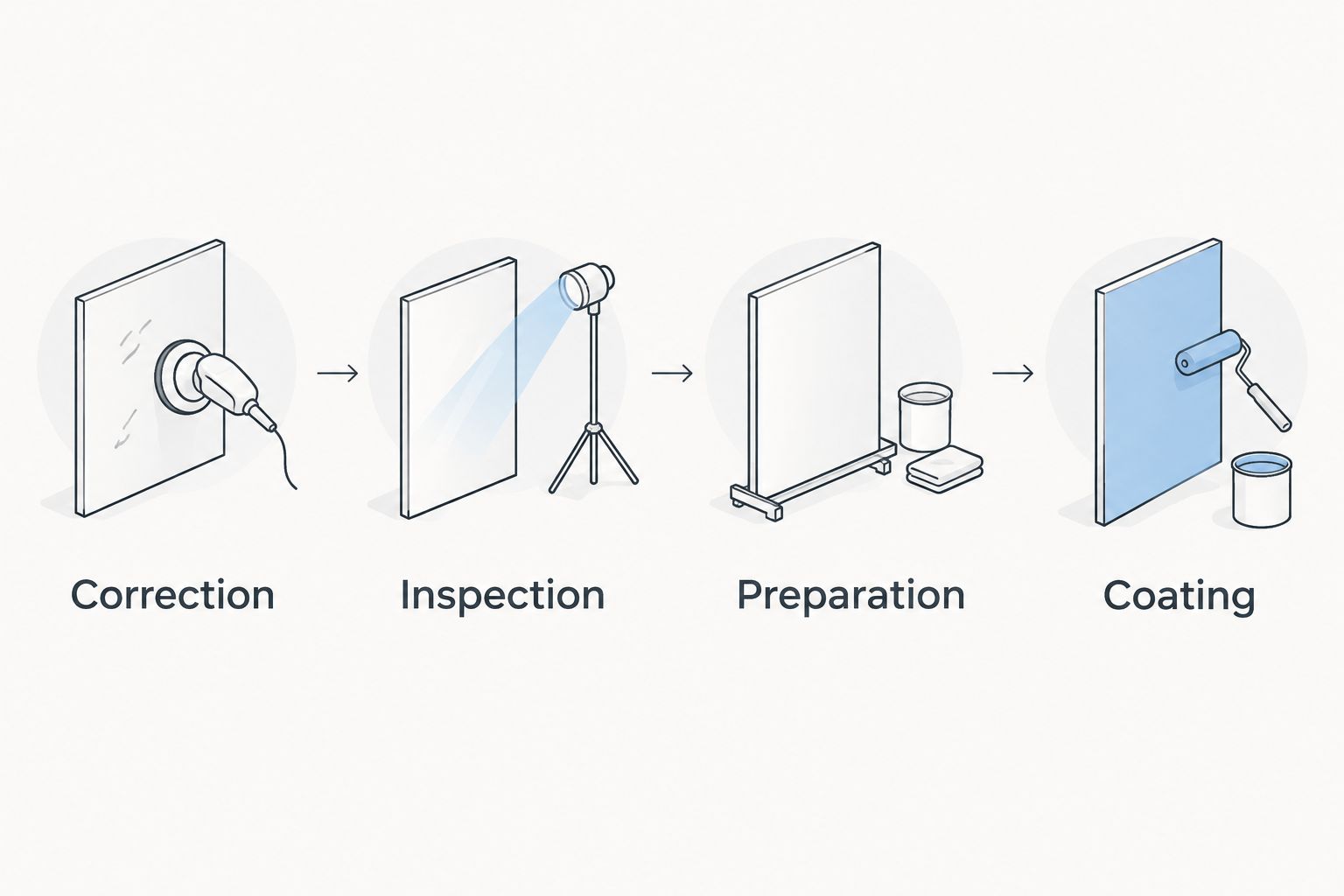
The sequence is simple: Correction, Inspection, Preparation, Coating. Inspection is the decision point, not an optional final glance after protection has already been applied.
You do not need to supervise every polishing pass. You need a clear approval point and an agreed way to handle defects that remain. If an in-person inspection is impractical, arrange how the shop will communicate the result before proceeding.
Schedule and handoff
Separate application from release
- Ask whether the proposed date covers correction and coating application, vehicle release, or both. Those are different commitments.
- Discuss transport and parking before drop-off. Explain any unavoidable outdoor exposure instead of revealing it when the keys are returned.
- Request the coating name and written care directions at handoff. These should explain relevant exposure restrictions and when washing can resume.
- Confirm what to do if the finish gets wet, develops visible spots, or shows a suspected application defect. Get advice before applying cleaners or attempting polishing.
Expected result: You know when you can collect the vehicle and what you must avoid afterward.
For a 2026 same-day booking, ask these 2 handoff questions: Is the vehicle ready to leave, and what restrictions still apply? A yes to collection does not answer the care question.
Do not substitute an arbitrary overnight wait for the coating's instructions. Equally, do not assume the car needs no further precautions because the surface looks glossy and feels dry.
Approval and documentation
Record what was completed
- Keep the agreed correction scope with your appointment details. Include any defects the detailer advised leaving in place.
- Inspect the vehicle at collection under suitable lighting. Compare the agreed concerns, rather than changing the target to a flawless finish after the work is complete.
- Record the coating identity and care instructions somewhere you can find before the next wash. Keep any written service terms supplied with the job.
- Ask how future polishing or body repairs affect the treated areas. Abrasive correction can remove coating, so later work needs a protection plan too.
Expected result: You leave with a documented finish target, a clear care routine, and a way to discuss any concern without guessing what was applied.
A useful 2026 service record describes the work and the aftercare, not just the appointment date. This matters if someone else washes the car or if a body shop later works on a treated panel.
Second workflow: protect an already-corrected vehicle
You can also arrange coating after correction performed at an earlier appointment. The important difference is that the surface needs fresh assessment; previous polishing does not prove the car is ready for immediate coating now.
- Tell the receiving detailer when the correction happened and what products were applied afterward, if known. Include any wax, sealant, or existing coating information.
- Have the current finish inspected for new contamination, wash marks, or defects. Driving and washing between appointments change the starting condition.
- Agree on whether the paint needs cleaning and preparation only or additional correction. Do not repeat polishing simply because the work happened elsewhere.
- Follow the selected coating's preparation and care requirements from that point onward.
Expected result: The coating appointment reflects the paint's current condition rather than relying on an old description of the finish.
This route suits an owner who already likes the corrected appearance but postponed protection. Its advantage is avoiding unnecessary repeat correction; its limitation is that another inspection and preparation stage still belongs in the plan.
Troubleshooting
The shop cannot fit both services into the day
Ask which requirement creates the conflict: correction scope, application work, or the required post-application conditions. Keep the finish target intact and change the schedule. Do not remove necessary preparation to preserve a pickup time.
Scratches are still visible after correction
Compare them with the approved test section and recorded limitations. Some defects require more material removal than is appropriate, and others need repair rather than polishing. Ceramic coating does not turn an unresolved scratch into corrected paint.
The paint looks hazy before coating
Pause the sequence and have the detailer inspect the finish. Residue and polishing defects require different responses, so adding coating is not the diagnostic step. Resolve the appearance concern before proceeding.
Rain threatens the planned pickup
Tell the shop before collection and compare the exposure plan with the applied coating's instructions. Discuss a different collection arrangement if the planned exposure conflicts with those requirements. Do not assume every coating has identical water restrictions.
A patch looks smeared after collection
Contact the installer before scrubbing, using solvents, or machine polishing. Describe the location and lighting conditions, and send a clear photo. An inspection can distinguish residue, contamination, and an application issue without adding damage through guesswork.
Customize your workflow
Build the appointment around the car's actual use. Tell Klean Detail whether you park outdoors, use an automatic wash, share the vehicle, or expect body repairs; those details belong in the correction and aftercare discussion.
For a 2026 daily driver, prioritize an achievable finish and a washing routine you can maintain. Coating does not eliminate washing, prevent every scratch, or replace physical protection against stone impacts.
Keep extra services from obscuring the main approval point. If you also want interior detailing or window tinting, ask how that work fits around the paint sequence without assuming it changes the coating's care requirements.
FAQ
Can paint correction and ceramic coating be done the same day?
Yes, paint correction and ceramic coating can be completed in the same day when the correction scope and coating instructions allow it. Confirm vehicle release separately, because application completion does not remove aftercare restrictions.
Does ceramic coating remove scratches left after polishing?
No, ceramic coating does not remove scratches left after polishing. Approve the corrected finish before coating and record any defects that will remain.
Do I need paint correction before coating a new car?
A new car needs paint inspection before coating, not automatic correction. Approve polishing only when the finish has defects you want addressed and correction is appropriate for the paint.
Can I drive home immediately after ceramic coating?
Collect the vehicle only when the installer confirms it is ready for release under the applied coating's instructions. Ask separately about rain, parking, washing, and other exposure restrictions.
Can I get ceramic coating after another shop corrected the paint?
Yes, previously corrected paint can be assessed for ceramic coating. The receiving detailer still needs to inspect its current condition and complete the preparation required by the selected coating.
Is single-stage or multi-stage correction better before coating?
The better route is the least aggressive correction that achieves your agreed finish target. A test section helps establish whether a single polishing stage is sufficient or further refinement is justified.
What should I ask when booking both services in 2026?
Ask whether the appointment includes correction, coating application, and vehicle release on the same date. Also confirm the approval point before coating and the written aftercare instructions you will receive.
One last thing
The most useful question is not whether everything can happen today; it is when the corrected paint gets approved. Put that checkpoint before coating. It protects your ability to address appearance concerns without first removing newly applied protection.


