
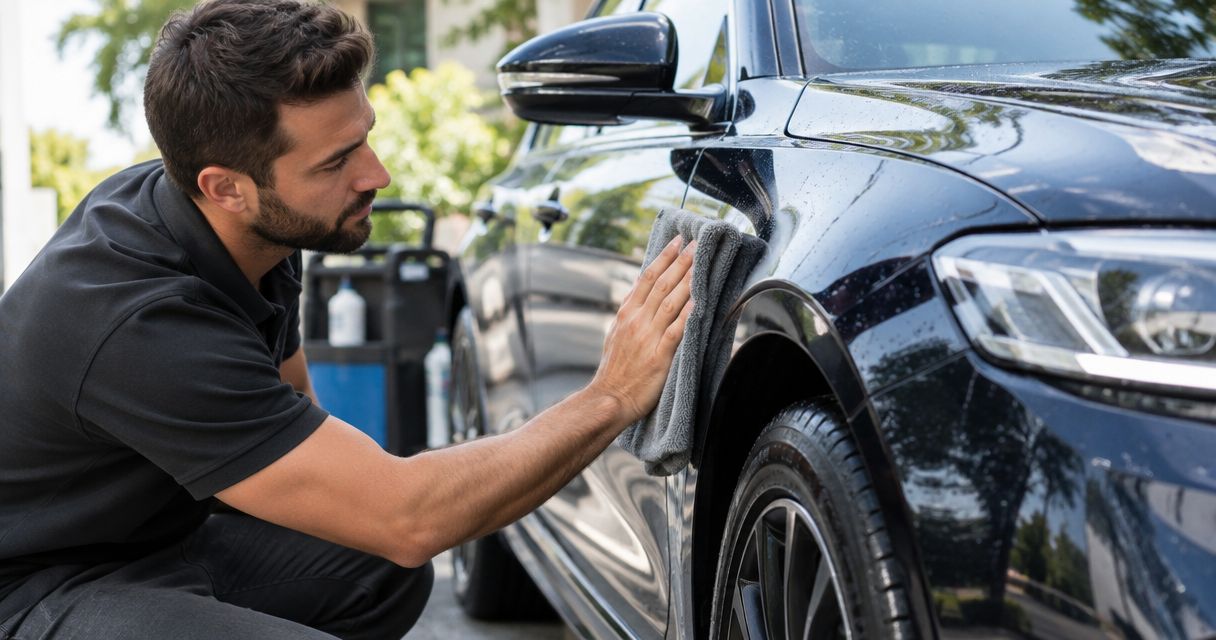
Instead of deciding how to wash your coated car at every visit, connect your car wash membership to ceramic coating maintenance with a written routine: verify the wash process, follow your coating’s aftercare instructions, and inspect the finish afterward. In 2026, the membership belongs in your care plan only if its actual wash method fits the coating—not because the package includes a ceramic-sounding treatment.
- Car wash membership ceramic coating maintenance starts with checking wash methods against your coating’s written aftercare instructions.
- Kleandetail serves Oak Lawn drivers seeking professional ceramic coating and vehicle detailing services.
- Touchless washing avoids brushes, but cleaning chemistry and drying still need review.
- Keep a wash record and investigate new spotting, scratches, or uneven water behavior before adding treatments.
Why this matters
A ceramic coating does not make paint scratch-proof or eliminate washing. Dirt, road film, mineral deposits, and contaminated wash materials still need attention. A membership makes repeat visits convenient; it does not establish that those visits suit your coating.
The right connection is an approved maintenance routine, not a special membership badge. You need to match the wash equipment, chemicals, optional treatments, and drying method to the instructions for the coating actually installed on your vehicle.
Kleandetail is best for Oak Lawn drivers seeking in-person ceramic coating and detailing services. Professional care provides an alternative when a membership wash cannot meet your aftercare requirements; the trade-off is that you must arrange a separate service rather than depend entirely on the wash lane.
For your 2026 care plan, separate convenience from suitability. A process you can repeat safely matters more than how often you can enter the wash.
Before you start
- Gather your coating records. Find the coating name, installation date, written aftercare instructions, and any warranty maintenance requirements. Ask the installer to clarify anything missing before the first membership wash.
- Get the wash process, not just the package name. Ask about brush contact, cleaning chemicals, optional waxes or sealants, wheel products, underbody washing, and towel drying. Have clean drying materials ready if you will finish the vehicle yourself.
- Check the curing restriction first. A newly applied coating can have specific restrictions on washing, water exposure, and chemicals. Do not assume that collection from the installer means every wash process is already permitted.
The non-obvious trap is an automatic finishing treatment. A wash marketed as ceramic can apply a separate surface product; that name alone does not demonstrate compatibility with your installed coating or replace its maintenance instructions.
Wash-method selection
Compare the actual cleaning process
Choose the method before choosing the membership. Ask staff to describe what touches the paint from entry to exit, including any hand drying after the machine finishes.
| Wash method | Best for | Main advantage | Main limitation | Decision rule |
|---|---|---|---|---|
| Controlled hand wash | Owners prioritizing control over paint contact | You can manage tools, technique, and drying | Poor technique or dirty materials can still scratch paint | Use clean materials and coating-compatible products |
| Touchless automatic wash | Owners seeking automated washing without brushes | Avoids brush contact with the paint | Chemistry needs checking, and road film can remain | Confirm compatibility and inspect before drying |
| Friction automatic wash | Owners considering an existing brush or cloth membership | Automates contact cleaning | Contact media can carry contamination and introduce scratches | Do not assume a coating prevents wash marks |
A hand wash is not automatically careful, and a touchless wash is not automatically compatible. Judge the complete process, including the final towel pass. A clean-looking exit does not reveal every choice made inside the wash.
Establish the wash requirements
- Read the coating’s maintenance instructions and note the permitted cleaning products and methods. Keep the original document rather than relying on memory.
- Ask the wash operator which chemicals and contact equipment the selected package uses. If staff cannot answer, request clarification before putting the coated vehicle through it.
- Compare optional treatments with the aftercare instructions. Ask whether you can omit an unapproved finishing product; do not assume the membership allows changes.
- Confirm how the vehicle dries. Decline drying with a visibly dirty or dropped towel, and never rub remaining grit across the finish.
Expected result: You can explain what cleans the paint, what touches it, what remains on it, and how it dries. An unanswered compatibility question means the wash is not yet cleared for your routine.
Membership care record
Create the maintenance record
Use a notebook or your existing notes app; no account connection is required. This is a physical maintenance workflow, not an integration between the car wash and your coating installer.
- Create a record titled 2026 coating care. Add the vehicle, coating name, installation date, and installer’s instructions.
- Add a Wash method entry describing the location, selected process, drying method, and any optional treatments. These are your own record labels, not names of car wash controls.
- Add Aftercare restrictions and copy the relevant requirements from the actual coating documentation. Include inspection or maintenance obligations only when those documents specify them.
- Take 2 reference photographs, one of the hood and one of a side panel, on clean paint in consistent lighting. These provide a comparison for visible changes, not a measurement of coating thickness or durability.
- Record the first permitted wash and your inspection afterward. Note spotting, visible residue, new marks, or areas that did not clean properly.
Expected result: You have one reference point for the coating and one repeatable wash process. You no longer need to reconstruct the vehicle’s wash history when a problem appears.
Set the review trigger
Tie the routine to events you can observe: each wash, a change in wash package, or a change in the vehicle’s finish. Follow any maintenance interval stated by the coating manufacturer or installer rather than inventing a universal schedule.
Make 3 checks after each wash: cleanliness, visible marks, and drying residue. This is an inspection checklist, not a claim that three checks prove the coating is healthy.
Repeat-wash routine
Follow the same inspection sequence
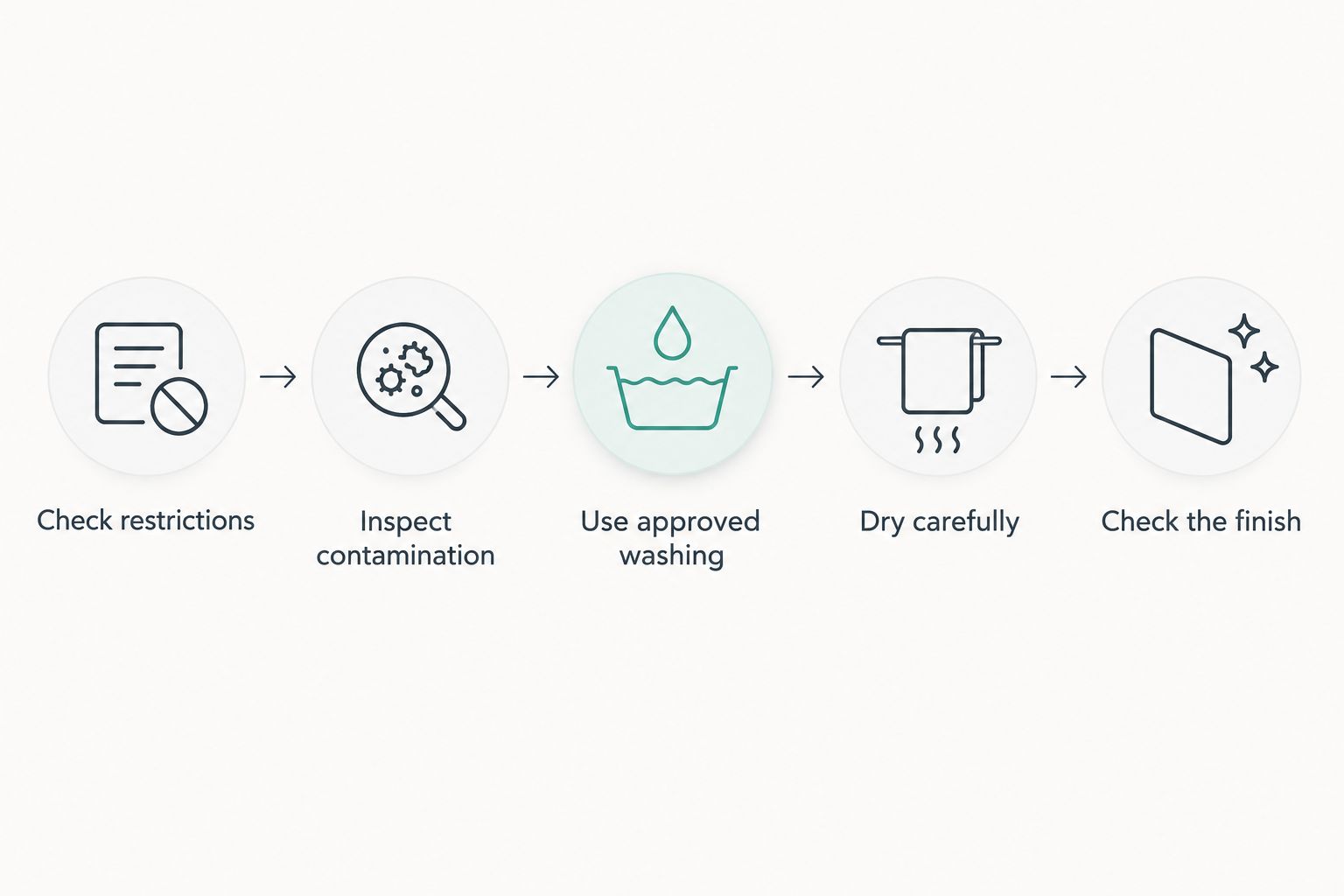
- Check restrictions. Confirm the vehicle is past any relevant curing restriction and that the wash process has not changed since your last visit.
- Inspect contamination. Look for heavy grit, bird droppings, tree sap, or other localized deposits. Arrange appropriate removal rather than scrubbing stubborn contamination with whatever is at hand.
- Use approved washing. Select the verified process and avoid unapproved extras. A staff recommendation does not replace the coating’s written requirements.
- Dry carefully. Follow the coating guidance and use clean materials where contact drying is appropriate. If road film remains, do not wipe it away as though the surface were clean.
- Check the finish. Inspect the hood, upper surfaces, and a side panel under useful lighting. Record anything new before adding another product.
Expected result: Each visit ends with a checked finish and a short record, rather than an assumption that passing through the wash completed maintenance.
An inspection needs a clean surface and suitable light. Water behavior alone is not enough: surface contamination or an added wash treatment can change what you see without establishing the condition of the underlying coating.
When the wash package or vehicle condition changes
A second workflow handles changes rather than repeat visits. Use it when the operator changes chemicals, you select another package, the vehicle receives fresh coating, or unfamiliar residue appears.
- Pause the established routine and record what changed. Keep the explanation specific, such as a different drying process or newly added finishing treatment.
- Recheck compatibility against the coating documentation. A membership renewal in 2026 does not establish that the equipment and products are unchanged.
- Ask the installer about unexplained finish changes before applying a booster, abrasive cleaner, or polish. Each addresses a different issue; none is a universal reset.
- Resume the routine only after resolving the compatibility question. Add the revised method to your care record so the next visit follows the same decision.
Expected result: A change starts a review instead of silently becoming part of the maintenance plan.
If new scratches require professional assessment, read the guide to connecting paint correction and ceramic coating in one visit. Paint correction removes defects through abrasion; it is not a routine cleaning substitute, and affected coating protection needs assessment afterward.
Troubleshooting
Water no longer beads as expected
Do not diagnose coating failure from beading alone. Contamination, residue, and additional surface treatments can change water behavior. Follow the approved cleaning procedure, document the result, and ask the installer to assess persistent changes before adding a topper.
The wash leaves a film on lower panels
Do not dry the remaining film by rubbing harder. Return to an appropriate cleaning process that removes the contamination before contact drying. If the membership repeatedly leaves road film, it is not completing the cleaning your vehicle needs.
New swirls appear after visits
Stop repeating the same process while you investigate. Check brush contact, wash materials, and drying towels against your reference photographs and records. A ceramic coating does not prevent every scratch, and another pass through the wash will not remove swirl marks.
Spots remain after the car dries
Avoid applying a stronger chemical without identifying the problem. Mineral deposits and etched marks do not necessarily need the same treatment. Ask for an assessment when approved cleaning does not remove the spots, especially before using abrasives.
Staff cannot identify the wash chemicals
Treat compatibility as unresolved. Obtain the product information or choose a process you can verify. A verbal promise that a wash is safe for every coating is not a substitute for instructions specific to yours.
Customize your workflow
Build the routine around the vehicle’s actual condition, not a fixed visit quota. After unusual contamination, inspect sooner; after a change in the wash process, repeat the compatibility check. Unlimited visits are permission to use a service, not a maintenance requirement.
Kleandetail provides ceramic coating, paint correction, paint protection film, window tinting, and full vehicle detailing in Oak Lawn, Illinois. Use professional assessment when the issue moves beyond routine washing; a membership wash does not perform paint correction or establish why a coating behaves differently.
The useful boundary is simple: handle repeatable cleaning through a verified process, and escalate unexplained defects rather than experimenting on the finish.
Review your vehicle care needs
Explore ceramic coating and detailing services in Oak Lawn, Illinois.
FAQ
Can I use a car wash membership with ceramic coating?
Yes, when the wash method and products meet your coating’s aftercare requirements. Verify contact equipment, chemicals, optional treatments, and drying before making it your regular routine.
Is a touchless car wash safe for ceramic coating?
Touchless washing avoids brush contact, but that does not establish chemical compatibility. Check the installed coating’s instructions and inspect for remaining road film before contact drying.
Does a ceramic wash package maintain my professional coating?
The package name does not prove that it maintains your installed coating. Find out what treatment it applies and whether your coating’s instructions permit it.
How soon can I use my membership after ceramic coating?
Use the coating manufacturer’s and installer’s curing instructions to determine the first permitted wash. There is no single waiting period that applies to every coating and installation.
How often should I wash a ceramic-coated car in 2026?
Follow the coating’s maintenance instructions and respond to the vehicle’s contamination and use. A membership’s visit allowance is not a washing schedule.
Does weak water beading mean my ceramic coating has failed?
Weak beading alone does not prove coating failure. Residue, contamination, or another surface treatment can affect water behavior, so clean as directed and seek assessment if the change persists.
Can Kleandetail help with ceramic coating and paint correction?
Kleandetail offers ceramic coating and paint correction services in Oak Lawn, Illinois. Discuss the vehicle’s condition and existing coating before deciding which service addresses the problem.
One last thing
Your membership’s final drying step deserves the same scrutiny as its wash equipment. An otherwise suitable process still involves paint contact if someone finishes the car with a towel.
For the rest of 2026, record that final step alongside the wash method. Knowing what last touched the finish gives you a specific place to investigate when new marks appear.


