
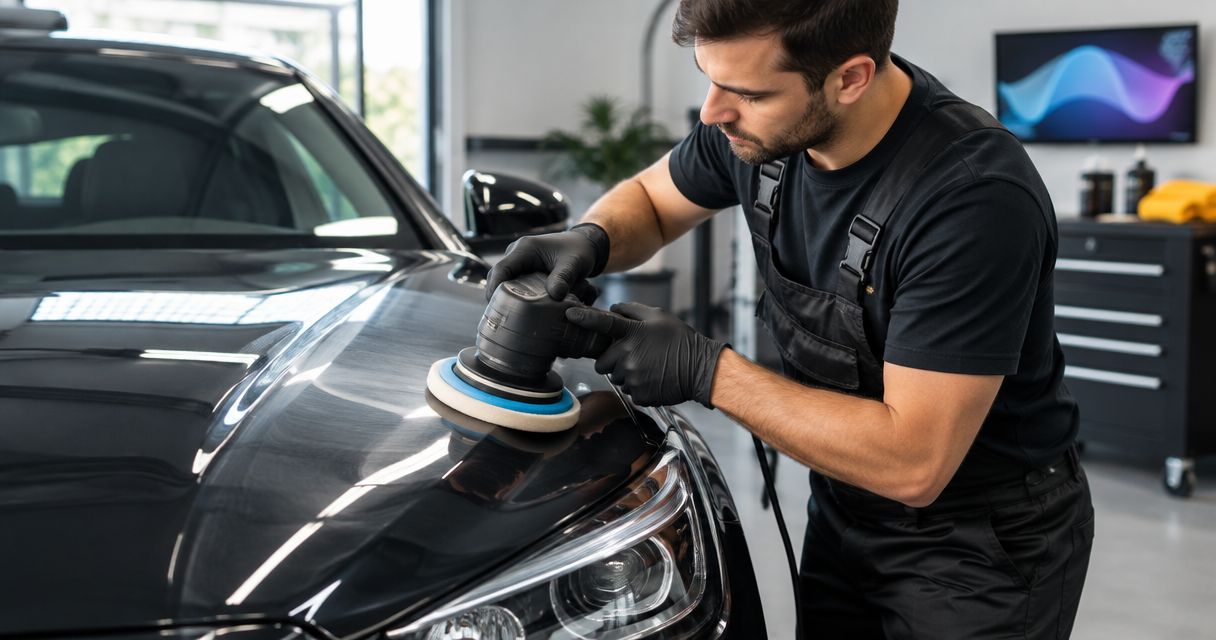
Paint correction cost depends on your vehicle’s paint condition, the area being corrected, and the finish you want; an inspection-based quote is the right basis for your budget in 2026. Ask whether the quote includes preparation, polishing, and protection, because ceramic coating, paint protection film, and repair of deeper damage are separate decisions unless explicitly included.
- Compare paint correction cost by preparation, polishing scope, and finish expectations—not package names alone.
- Kleandetail offers paint correction for Oak Lawn car owners; discuss existing damage before choosing protection.
- Single-stage polishing suits lighter defects; multi-stage correction adds separate cutting and finishing work.
- Paint correction improves the existing finish; it does not replace missing paint or repair peeling clear coat.
How much does paint correction cost?
Budget for the work your paint needs, not a package name. A useful paint correction quote explains the preparation, correction area, polishing process, and expected remaining defects. Without that scope, you cannot tell whether competing estimates cover equivalent work.
For local service, Kleandetail offers paint correction in Oak Lawn, Illinois. Start the conversation with your vehicle’s condition and your goal: cleaner reflections, fewer wash marks, or preparation for protective treatment.
Use this breakdown when comparing paint correction estimates in 2026:
| Quote component | What to clarify | Why it changes the comparison |
|---|---|---|
| Surface preparation | Washing, contamination removal, and any existing protection | Polishing needs a clean surface; preparation should not be an undefined extra |
| Correction area | Whole vehicle, selected panels, or isolated defects | A hood-only estimate is not equivalent to whole-vehicle correction |
| Polishing process | Single-stage polishing or separate cutting and finishing | Different processes address different defect levels |
| Finish target | Improved gloss, reduced swirls, or more extensive defect removal | The expected result determines the work being authorized |
| Final protection | Whether protection is included and what type | Correction and protection serve different purposes |
| Exclusions | Deep scratches, chips, failing clear coat, or body repairs | Polishing cannot solve every visible paint problem |
A written scope matters more than an impressive package label. Ask the shop to distinguish what it expects to improve from what it recommends leaving alone.
Why this matters
Paint correction removes a small amount of the existing surface through abrasive polishing. That makes the decision different from buying a wash: the goal is to improve appearance while preserving enough finish for the vehicle’s future.
A cheaper estimate is not automatically poor work, and a more expensive estimate does not automatically mean a better result. The meaningful comparison is appropriate correction versus unnecessary correction, with realistic expectations on both sides.
Before approving a 2026 appointment, decide which defects actually bother you in normal viewing conditions. A daily driver with scattered deeper scratches does not necessarily need an attempt to remove every mark.
Single-stage polishing: best for lighter defects
Single-stage polishing uses a polishing stage to improve gloss and address suitable light defects. It is a reasonable option when your priority is a cleaner-looking finish rather than extensive correction of deeper damage.
Best for: owners seeking an appearance improvement on paint with lighter swirls or haze. The benefit is a more limited correction scope; the trade-off is that stronger defects can remain visible.
Ask how the proposed polish will perform on your specific paint. Paint hardness, existing damage, and the condition of individual panels affect what a polishing stage can safely accomplish.
Do not read “single-stage” as a guaranteed level of scratch removal. The term describes an approach, not a universal result across every vehicle.
Multi-stage correction: best for more involved defects
Multi-stage correction separates stronger defect removal from subsequent refinement. A cutting stage addresses suitable defects, while finishing work refines the surface left by that process.
Best for: owners whose paint requires more correction than a lighter polishing approach can deliver. The advantage is greater flexibility in addressing defects; the limitation is more involved work and the need to respect the remaining finish.
Not every panel needs identical treatment. Ask whether the proposed process reflects the actual paint condition or simply applies the same approach everywhere.
The right stopping point is not always the point at which every scratch disappears. Preserving the finish can justify leaving an isolated mark rather than removing additional material around it.
Which correction approach should you choose?
| Approach | Best for | Main benefit | Main limitation |
|---|---|---|---|
| Single-stage polishing | Lighter swirls and gloss improvement | Addresses suitable light defects with a narrower process | Deeper defects can remain |
| Multi-stage correction | More involved defects that the paint can safely tolerate correcting | Separates defect removal from finishing | Requires more work and careful control of material removal |
| Targeted correction | A problem concentrated on selected panels | Focuses work where the concern exists | Corrected and uncorrected areas need an agreed appearance target |
Choose the least aggressive process that achieves an acceptable finish. Ask for the recommendation to be explained in terms of your paint, not just the package hierarchy.
Why paint correction cost varies
Your 2026 paint correction estimate should connect the proposed work to visible conditions. These factors explain why superficially similar vehicles can need different scopes:
- Defect severity. Fine wash marks, heavier scratches, and etched spots do not respond identically. More visible damage also does not automatically mean more polishing is safe.
- Surface area and access. Correcting selected panels differs from correcting the entire exterior. Tight contours and delicate edges also require attention to technique.
- Paint condition and history. Repainted panels, previous correction, and deteriorating finishes affect the appropriate process. Tell the shop about known repairs before work begins.
- Preparation needs. Bonded contamination and existing surface treatments affect preparation. Clarify what the shop must remove before evaluating or polishing the finish.
- Your finish target. A noticeable improvement and a highly refined appearance are different objectives. Agree on which defects matter most before authorizing work.
- Protection afterward. Ceramic coating or film adds a different service scope. Compare correction separately before evaluating a combined treatment.
Avoid comparing totals while ignoring these differences. A quote that includes preparation and a clearly defined finish target tells you more than a bare package name.
How do you compare paint correction quotes fairly?
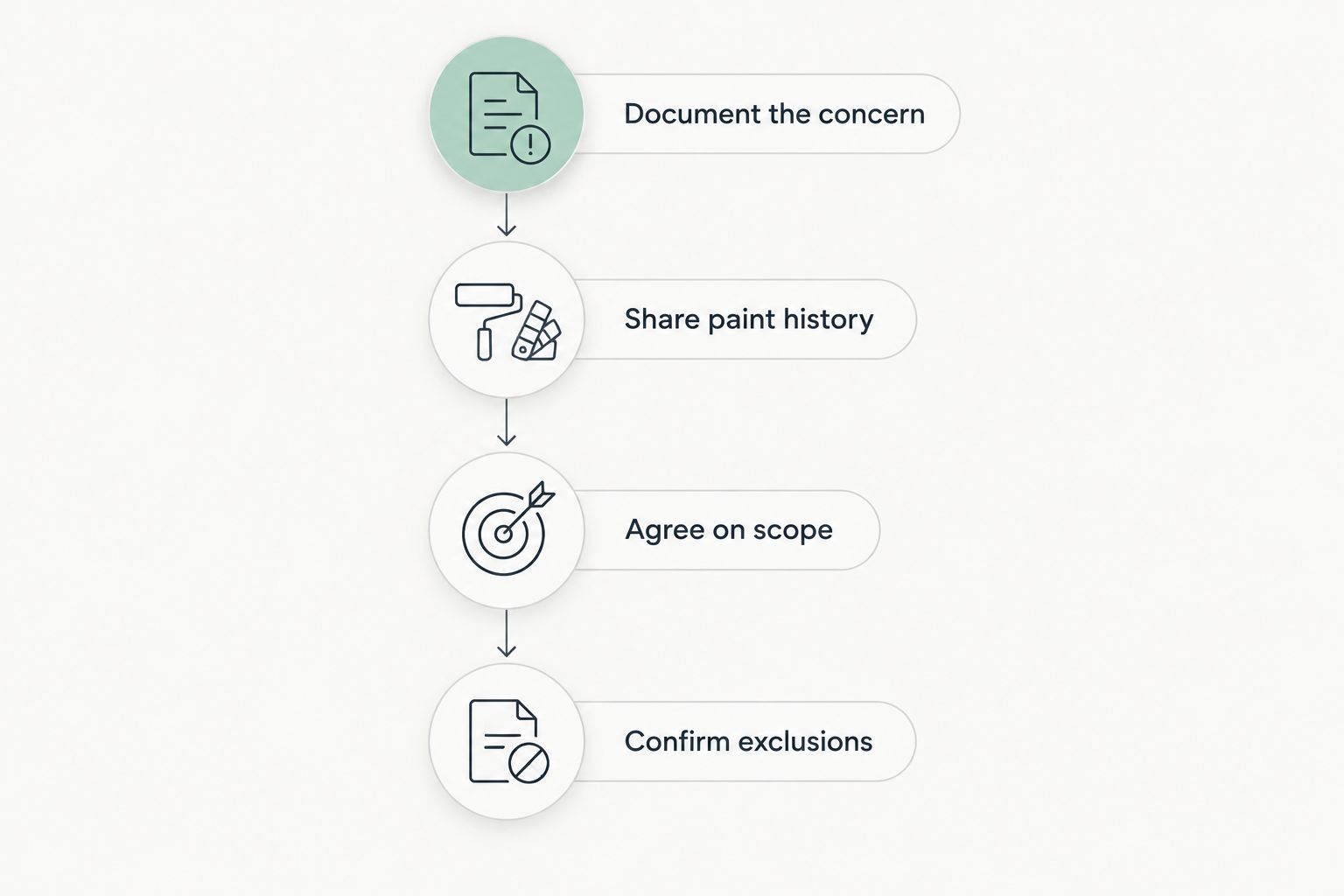
Compare written scopes before comparing totals. For a 2026 booking, bring the same information to each shop so the recommendations address the same vehicle and objective.
- Document the concern. Photograph the panels that bother you in lighting that shows the defects. Include wider views as well as close-ups so the location is clear.
- Share paint history. Identify known repainting, previous polishing, existing film, and any coating you know about. Do not assume every panel has the same history.
- Agree on scope. Specify whole-vehicle or selected-panel work and explain your intended result. Ask whether a representative test area would help establish expectations.
- Confirm exclusions. Get clarity on defects expected to remain, protection afterward, and anything requiring separate repair. Request approval before additional work is added.
Use the same questions even when a shop recommends a different process. Different recommendations are easier to assess when each explains the condition being treated and the result being pursued.
A useful estimate should also distinguish correction from repair. Ask what happens if inspection reveals a defect that polishing should not address, rather than assuming it falls within the original scope.
Can paint correction remove deep scratches?
Paint correction cannot replace missing paint or safely eliminate every deep scratch. Abrasive polishing levels the surrounding surface, so the depth of the damage and the available finish limit what should be attempted.
A scratch that catches your fingernail deserves closer inspection, but that observation alone does not establish a safe repair method. Chips, exposed underlying layers, and peeling clear coat require a different assessment from ordinary swirl marks.
Do not approve aggressive polishing solely to make an isolated scratch disappear. Ask whether reducing its visibility is a better outcome than pursuing complete removal.
Is ceramic coating included in paint correction?
Ceramic coating is a separate protection service unless your written quote includes it. Correction improves the existing surface; coating does not substitute for correcting the defects you want removed.
Kleandetail provides paint correction and ceramic coating services, so Oak Lawn owners can discuss both needs without treating them as the same job. Ask for the correction scope to remain clear even when the services are quoted together.
If you want protection after polishing, decide what you want that protection to do. Do not buy an additional treatment simply because it appears beside the correction package.
Is paint correction worth it for a daily driver?
Paint correction is worth considering when visible defects bother you and the existing paint can safely support improvement. It is a weaker choice when you expect polishing to repair missing paint, erase every deep scratch, or prevent future wash damage.
For a daily driver, define an acceptable finish before discussing the most extensive process. Reducing distracting swirls while leaving isolated deeper marks can be a sensible outcome.
Kleandetail is a local paint correction option for Oak Lawn car owners. Its stated services include correction and protective treatments; your vehicle still needs an individual assessment, and no service category alone establishes the right correction scope.
What should you confirm before booking?
Before booking paint correction in 2026, ask how the finish will be inspected and how the expected result will be explained. A clear conversation should leave you knowing what you are authorizing, not simply which package you selected.
Use these questions to close the gaps:
- Which panels and exterior surfaces are included?
- What preparation is included before polishing begins?
- Which visible defects are expected to improve, and which should remain?
- Is final protection included or quoted separately?
- How will additional work be approved if the original scope changes?
Ask about collection and care instructions as well. The correct instructions depend on the work actually performed and any protection applied afterward; generic advice should not replace the shop’s treatment-specific directions.
Keep a copy of the agreed scope. It gives you a practical reference when you inspect the completed vehicle and discuss any areas that were intentionally left unchanged.
Discuss your paint correction needs
Explain your vehicle’s condition and finish goals before choosing a correction scope.
FAQ
How do I get an accurate paint correction cost for my car?
Get an inspection-based quote that identifies preparation, correction area, polishing approach, expected results, and protection. Compare estimates only after confirming they cover equivalent work.
Is single-stage paint correction enough for swirl marks?
Single-stage polishing can address suitable light swirl marks, but the result depends on the paint and defect severity. Ask what the shop expects to improve on your vehicle rather than relying on the package name.
Does a higher paint correction cost mean every scratch will disappear?
A higher paint correction cost does not guarantee complete scratch removal. Deep damage and the amount of finish available for safe polishing limit the result.
Can I get paint correction without ceramic coating?
Paint correction and ceramic coating are different services, so ask for a correction-only scope if that is your goal. Confirm what protection, if any, will remain on the vehicle afterward.
Should I choose whole-car correction or just correct one panel?
Choose the scope that matches the location of the defects and your desired appearance. Targeted correction focuses on affected panels, but you should discuss how the finish will compare with adjacent areas.
Will paint correction stop swirl marks from coming back?
Paint correction does not prevent future swirl marks. Washing technique, clean tools, and subsequent care remain important after the existing defects are reduced.
Can paint correction fix peeling clear coat?
Paint correction cannot repair peeling clear coat. Have the failing finish assessed for an appropriate repair instead of treating it as an ordinary polishing job.
One last thing
The scratch a detailer recommends leaving alone can be evidence of a sensible stopping point. Removing more finish is irreversible, while accepting a less noticeable mark preserves material that future care may need.
At collection, inspect the vehicle with the agreed scope in hand. Look at the panels that prompted the appointment, ask about any remaining defects, and confirm the care instructions for the finish you actually received.


