
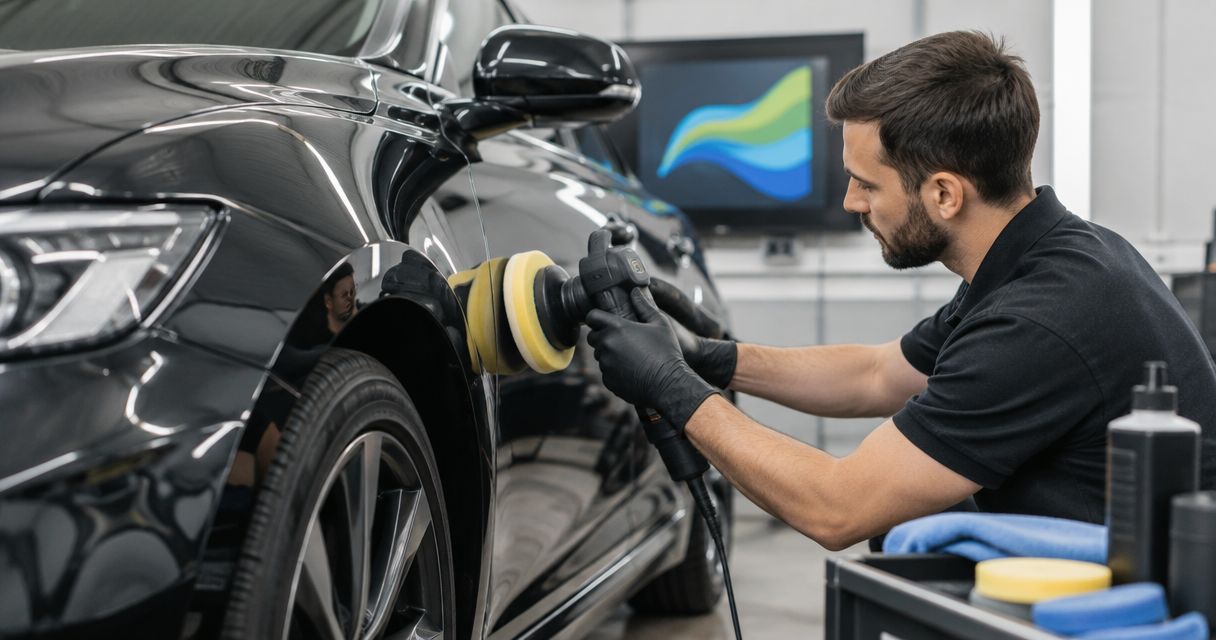
Paint correction takes as long as the paint condition, vehicle size, and agreed finish require; a reliable pickup time starts with an inspection and test spot, not a fixed promise for every car. Your total time without the vehicle also includes preparation, final inspection, and any separately scheduled ceramic coating or paint protection film work.
- How long does paint correction take? Separate polishing time from preparation, inspection, and any added protection work.
- A single-stage polish prioritizes improvement; multi-stage correction adds separate cutting and finishing work.
- Kleandetail offers paint correction in Oak Lawn for car owners considering detailing, ceramic coating, or paint protection film.
- Agree on the finish, defects to leave, and pickup conditions before authorizing paint correction.
Why this matters
A polishing estimate and a pickup commitment answer different questions. The first describes work on the paint; the second tells you when you can drive away. Confusing them makes it difficult to arrange transportation or coordinate another service.
For a 2026 appointment, ask for the complete work sequence rather than an isolated polishing duration. If you are considering Kleandetail, name the services you want together so your scheduling question covers the whole visit.
Book against an agreed scope and release time, not the shortest advertised polishing window. A clear estimate identifies what happens before correction, what finish you are buying, and what happens afterward.
How long does paint correction take?
Paint correction has no universal completion time because the amount of polishing is specific to the surface and the result you authorize. Light surface defects and a modest improvement target require a different approach from visible defects that need cutting followed by refinement.
The useful answer is a sequence. Each part contributes to the appointment, even when it does not involve a polishing machine.
- Inspect the finish. Identify swirl marks, scratches, existing damage, and signs of previous paintwork. Establish which areas need attention and which need caution.
- Prepare the surface. Wash and remove contamination as needed. Clean paint allows the detailer to assess defects without dirt or bonded material interfering.
- Test the approach. Polish a small representative area, inspect the result, and decide whether the proposed process meets your expectations.
- Correct the paint. Work through the agreed panels and polishing stages. Difficult areas and different paint responses change the work involved.
- Check the finish. Remove polishing residue and inspect for remaining defects, haze, and areas needing refinement.
- Complete the handoff. Finish any agreed protection work and explain care instructions before releasing the vehicle.
Ask which of these steps the quoted duration includes. An estimate covering machine polishing alone is not a complete drop-off-to-pickup schedule.
Single-stage polishing: improvement with fewer process steps
Best for: Owners seeking a noticeable improvement in gloss and lighter defects without requesting extensive correction.
A single-stage approach uses a polishing process selected to balance defect reduction and finish quality. It does not mean a single sweep across each panel, and it does not promise that every scratch disappears.
Its advantage is a simpler correction sequence. Its limitation is the amount of defect removal that process can achieve while still leaving an acceptable finish.
Ask the detailer to show the test area before treating the entire vehicle. The question is not whether the surface looks perfect under every light; it is whether the improvement matches the result you agreed to buy.
For your 2026 booking, describe your goal plainly: cleaner reflections, reduced wash marks, or preparation for protection. Those goals are more useful than asking for the fastest package name.
Multi-stage correction: separate cutting and refinement
Best for: Owners whose paint condition and finish expectations justify separate defect-removal and finishing processes.
Multi-stage correction separates more aggressive polishing from the refinement needed afterward. Cutting addresses suitable defects; finishing addresses the appearance left by the cutting process.
The advantage is greater control over defect removal and final clarity. The trade-off is additional work across the treated surfaces, plus inspection between processes.
More stages do not make every defect safe to remove. Polishing removes paint material, so a responsible stopping point matters more than chasing a scratch through an unsuitable amount of clear coat.
Choose the least aggressive process that achieves the agreed finish. Adding stages without a clear reason increases the work without defining a better outcome.
How do the correction options compare?
Choose the approach by its objective, not by an assumed completion time. These are general service approaches, not named packages or scheduling promises from any particular shop.
| Approach | Best for | Main advantage | Main limitation | Scheduling question |
|---|---|---|---|---|
| Single-stage polishing | Broad improvement of lighter defects | Combines correction and finishing goals in a simpler process | Leaves defects that need a different approach | Does the estimate include preparation and final inspection? |
| Multi-stage correction | Defects requiring separate cutting and refinement | Allows distinct defect-removal and finishing steps | Adds work and still has paint-safety limits | Which stages are included, and what triggers extra work? |
| Localized correction | A defined affected panel or area | Focuses work on the agreed problem | Does not improve unrelated areas | Is surrounding paint included for appearance consistency? |
A localized job is not automatically quick. An isolated defect can require careful assessment, and the surrounding finish still affects how the repaired area looks.
Use the table to define the result first. Then ask the shop to attach a schedule to that specific scope.
Why paint correction time varies
The work changes with the vehicle in front of the detailer. These factors explain why a useful estimate follows inspection rather than a generic promise.
- Paint condition: Light wash marks, deeper scratches, and widespread defects call for different amounts of assessment and polishing.
- Paint response: The same pad and polish combination does not produce identical results on every finish. A test spot establishes an appropriate approach.
- Vehicle size and shape: More painted surface adds work. Tight contours, edges, and restricted areas require different handling from broad, accessible panels.
- Preparation needs: Bonded contamination and existing surface residues must be addressed before correction where they interfere with the process.
- Finish expectations: Improving a daily driver's appearance is a different scope from pursuing a highly refined finish under close inspection.
- Additional services: Ceramic coating, paint protection film, and other detailing work add their own preparation, application, and release requirements.
Ask which factor controls your estimate. That answer tells you more than a broad duration that treats every vehicle alike.
Does adding ceramic coating or film extend the appointment?
Adding protection adds work beyond polishing. Correction improves the finish; ceramic coating and paint protection film serve different protective purposes and require their own application procedures.
Neither service should be treated as a way to erase defects that remain underneath. Decide which marks to correct before applying protection rather than expecting the next service to conceal them.
For a combined 2026 appointment, ask whether the pickup commitment includes application and the relevant product's release instructions. Application completion and unrestricted washing are not the same milestone.
The guide to connecting paint correction and ceramic coating in one visit addresses that combined sequence. Keep the correction result, protection choice, and handoff instructions together when discussing the booking.
What should you confirm before leaving your car?
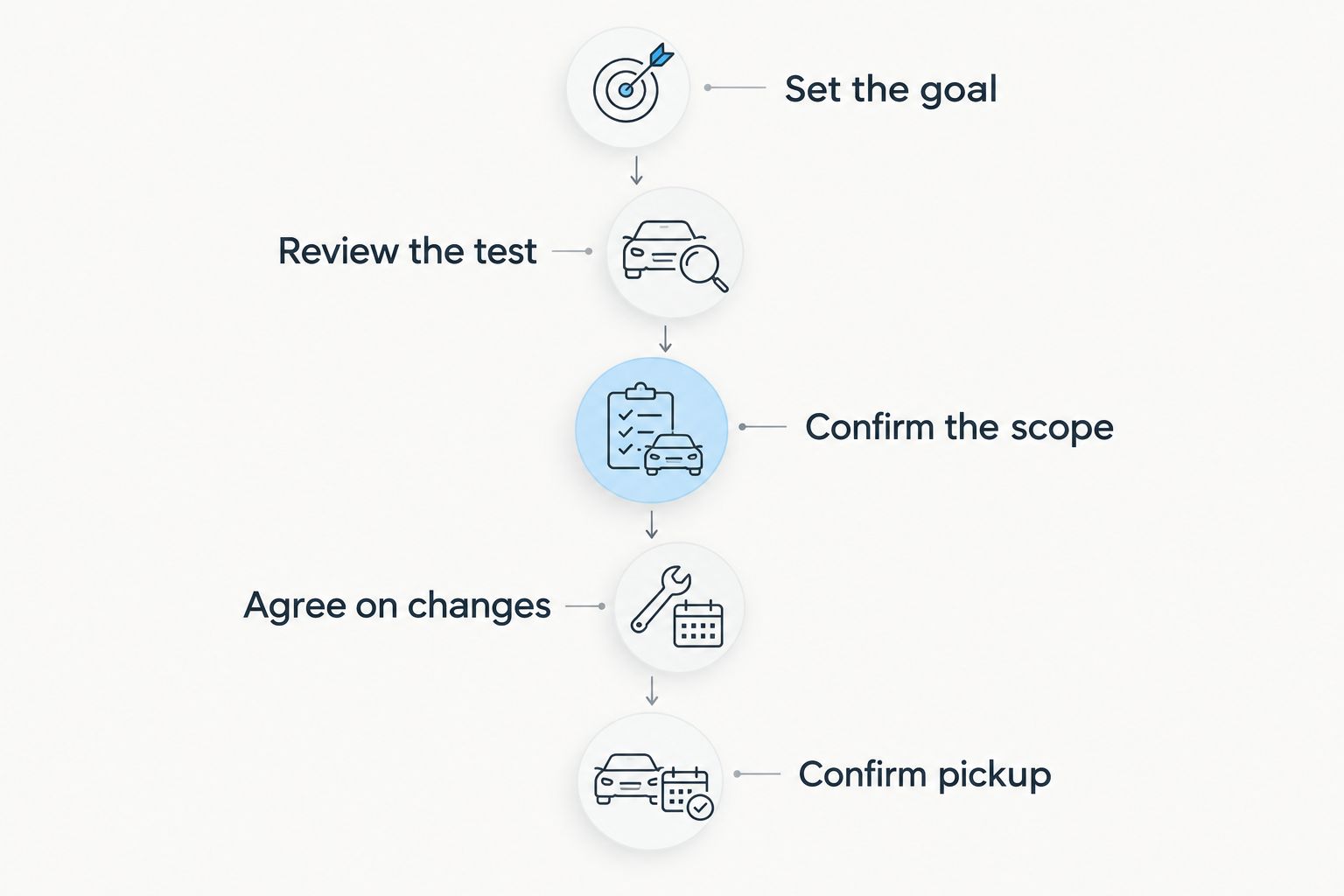
A clear handoff prevents disagreements about both the finish and the schedule. Use this sequence when comparing estimates or arranging transportation.
- Set the goal. Describe the visible problem and the improvement you want. Avoid asking for perfection without agreeing on what it means.
- Review the test. Ask how the proposed process was selected and what the representative area shows.
- Confirm the scope. Identify included panels, polishing stages, preparation, and protection work.
- Agree on changes. Establish how the shop will contact you if inspection reveals work outside the original scope.
- Confirm pickup. Ask when the vehicle will be ready to leave and what care restrictions apply afterward.
Send clear photographs when arranging an assessment, but expect lighting and camera angles to affect what they reveal. Photographs support the conversation; they do not replace an examination of the actual paint.
Keep the vehicle's history in the conversation too. Mention known repainting, previous correction, existing film, and damage so the assessment starts with relevant information.
When is leaving a scratch the better decision?
Leaving a scratch is the better decision when removing it would require an unsuitable amount of paint removal. Correction is controlled abrasion, not a replacement for missing paint or a repair for every kind of damage.
Ask the detailer to distinguish defects targeted for removal from defects targeted only for improvement. That distinction protects your expectations and gives the work a sensible endpoint.
A scratch left for paint-safety reasons is not proof that the appointment was too short. Additional polishing is not automatically better workmanship.
For a 2026 estimate, request a clear explanation of excluded damage before approving the job. You should know whether the recommendation is correction, acceptance of the remaining mark, or assessment by a paint-repair specialist.
Who is Kleandetail best for?
Kleandetail is best for Oak Lawn car owners seeking paint correction alongside detailing, ceramic coating, or paint protection film services. Those services match the shop's stated offering.
That service range is useful when you want to discuss correction and protection together. It does not establish a turnaround time, a particular package structure, or a promise that every defect can be removed.
When discussing paint correction with Kleandetail, bring your finish priorities and transportation deadline. Ask for a vehicle-specific assessment rather than treating a general guide as the shop's booking commitment.
Can I drive immediately after paint correction?
Driving after polishing depends on the completed service and the shop's release instructions. If the visit also includes ceramic coating or film, follow the instructions for that applied protection rather than assuming polishing rules cover everything.
Confirm driving, weather exposure, and washing separately. A vehicle being ready for pickup does not mean every aftercare restriction has ended.
Is a faster paint correction necessarily worse?
A faster completion is not necessarily worse because the agreed scope and paint condition determine the work. A lighter enhancement and an extensive correction are not equivalent jobs.
Compare included preparation, correction stages, inspection, and expected finish. Speed alone does not tell you whether those tasks were completed properly.
FAQ
How long does paint correction take on my car?
Paint correction time depends on your car's paint condition, surface area, correction scope, and any added services. Ask for a pickup commitment after inspection and a representative test spot.
Can paint correction be completed while I wait?
Do not plan to wait unless the shop confirms that arrangement for your specific job. Preparation, polishing, inspection, and added protection all belong in the scheduling discussion.
Does multi-stage paint correction take more work than single-stage polishing?
Multi-stage paint correction adds separate cutting and finishing processes compared with a single-stage approach. The vehicle's condition and included preparation still determine the complete appointment.
Will paint correction remove every scratch?
Paint correction will not safely remove every scratch. Deep damage and defects that require excessive paint removal need a different decision from ordinary surface polishing.
Does ceramic coating fix scratches left after polishing?
Ceramic coating is not a substitute for correcting scratches. Agree on the paint's appearance before coating application rather than expecting the coating to erase remaining defects.
What should a paint correction time estimate include?
A paint correction time estimate should identify preparation, the agreed polishing process, final inspection, and any added protection work. Confirm whether the stated time means active work or the complete period before pickup.
Should I book paint correction and protection together in 2026?
Book paint correction and protection together in 2026 when both services match your goals and the shop confirms the combined sequence. Keep the correction scope, application requirements, and pickup instructions in the same booking conversation.
One last thing
Ask what the detailer intends to leave alone. The answer reveals whether the plan has a paint-safety boundary or simply promises more polishing.
A useful correction plan defines both the improvement and the stopping point. That is the detail to settle before arranging your ride home.


