
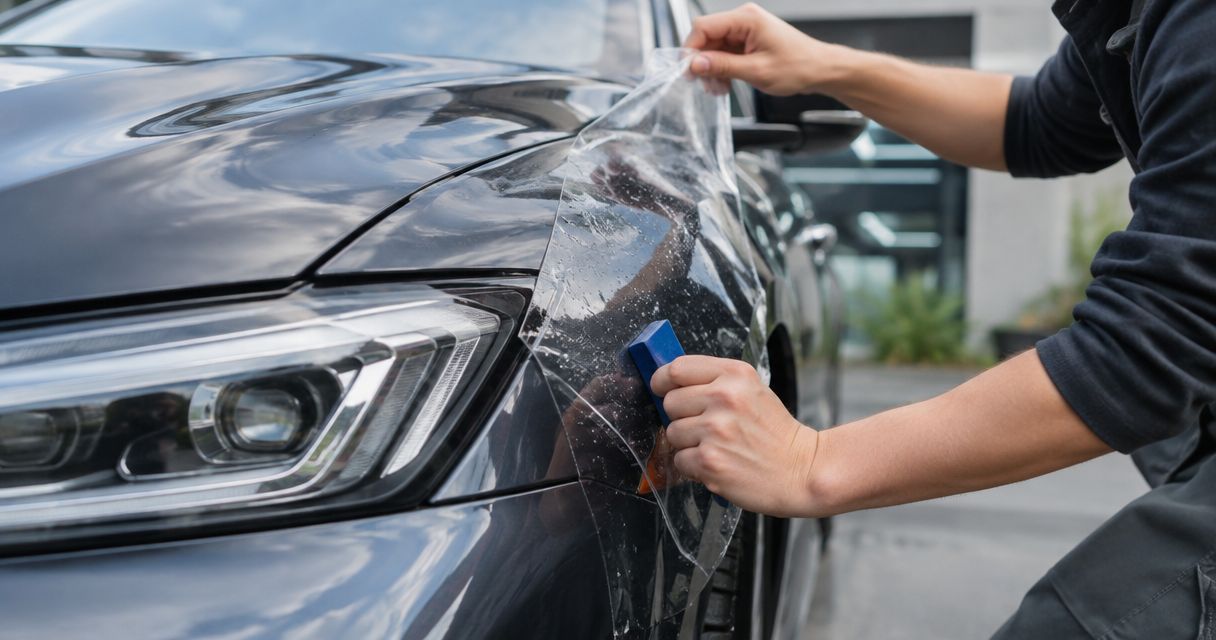
Paint protection film has no universal replacement age: its usable life depends on the film, installation, exposure, maintenance, and physical damage. For a 2026 installation, use the exact product’s written documentation as your starting point, then judge replacement by condition—not a warranty deadline alone.
- How long does paint protection film last? Follow product-specific guidance and inspect condition rather than assuming a universal lifespan.
- A paint protection film warranty is not a promise that every damaged panel qualifies for replacement.
- Replace torn, peeling, or deteriorating PPF after an installer assesses the affected area.
- Kleandetail serves Oak Lawn car owners seeking paint protection film and vehicle detailing services.
How long does paint protection film last?
Paint protection film lasts as long as it remains serviceable under its manufacturer’s guidance; the warranty period and replacement date are different things. A clear-looking hood does not establish the condition of the bumper, and the age of an installation does not explain every defect.
Use these distinctions when assessing existing film or comparing installation proposals:
| What you are assessing | What it tells you | What it does not establish |
|---|---|---|
| Written warranty | Coverage period, covered defects, and exclusions | A guaranteed replacement schedule |
| Film appearance | Whether discoloration, cloudiness, or surface damage is visible | The condition of every edge or underlying surface |
| Film adhesion | Whether edges and sections remain attached | Whether an impact has damaged another area |
| Impact damage | Where the protective layer has been cut or punctured | Whether unaffected panels need replacement |
| Installation records | Product identity, installer, and installation date | Current condition without an inspection |
If you are still deciding whether to install film, start with whether paint protection film is worth it. The useful question is whether you want a sacrificial protective layer and accept its inspection, care, and eventual replacement needs.
Why this matters
A lifespan claim combines several different expectations: how long film looks clear, how long it stays attached, and how long you are willing to keep a visibly damaged section. Those are not interchangeable. Your replacement decision should identify which expectation the film no longer meets.
You also need to separate film damage from paint damage. A mark on the film does not automatically mean the paint underneath needs correction, while intact-looking film is not proof that an impact left the underlying finish untouched.
Inspect the affected area before authorizing polishing, removal, or replacement. Treating the wrong surface creates unnecessary work and leaves the original problem unresolved.
Warranty length is not usable lifespan
For a 2026 purchase, ask for the warranty attached to the exact film being installed. A verbal description such as long-lasting protection does not explain what happens if an edge lifts or the surface changes appearance.
Read the coverage categories and exclusions. Material defects, installation issues, accidental damage, and improper care are separate subjects; do not assume that coverage for one includes the others. Ask who handles a claim and which documents you need to retain.
The warranty also does not set your personal appearance standard. You might want a heavily marked bumper section replaced while the rest of the installation remains acceptable, even when no warranty claim applies.
Keep the invoice, product identification, installation date, care instructions, and warranty together. If ownership changes, check the written transfer terms instead of assuming coverage follows the vehicle automatically.
Does an expired warranty mean you must remove PPF?
An expired warranty does not, by itself, establish that paint protection film needs removal. Assess adhesion, clarity, surface integrity, and the manufacturer’s removal guidance before deciding what stays on the vehicle.
Does a warranty cover rock-chip damage?
A warranty does not automatically cover rock-chip damage. Read the impact-damage exclusions and ask the installer to distinguish damage from a material or installation defect.
Can different panels need replacement at different times?
Different panels can need replacement at different times because damage and exposure are not uniform across a vehicle. Inspect each covered panel instead of assigning the whole installation the condition of its worst section.
Why paint protection film lifespan varies
For a 2026 care plan, focus on the conditions your vehicle actually experiences. These factors explain why a product’s written guidance matters more than a generic age estimate:
- Film construction: Use the specific manufacturer’s documentation for care limits and expected performance. Do not transfer claims from another film to yours.
- Installation quality: Contamination, poor adhesion, and problematic edges need assessment. Extra washing does not correct an installation defect.
- Sun and weather exposure: Outdoor exposure affects polymer materials. Parking conditions belong in your discussion about care and inspection.
- Impact exposure: Road debris can cut or puncture a sacrificial film layer. An isolated impact can create a replacement need unrelated to overall age.
- Cleaning methods: Abrasive tools, incompatible chemicals, and pressure directed at edges can damage film. Follow instructions for the installed product.
- Contamination: Bird droppings, insects, sap, and road residue require appropriate cleaning. Leaving contamination in place complicates surface care.
You cannot change the vehicle’s installation history, but you can document its present condition. Photograph questionable areas on clean, dry film so an installer can distinguish an isolated mark from a broader pattern.
Signs your PPF needs inspection or replacement
Visible deterioration deserves an inspection, not an automatic whole-car replacement. Start with the affected panel and ask whether cleaning, an installation assessment, or replacement addresses the actual fault.
Lifting edges
An edge that separates from the panel needs attention. Avoid picking at it or trying to force adhesive back into place; trapped contamination and damaged adhesive require an installer’s assessment.
A dark line at an edge is not necessarily proof of lifting. Clean the area using approved methods, then check whether the edge is attached or visibly separated.
Discoloration or persistent cloudiness
Inspect the film after washing and drying. Surface contamination, residue, and changes within the film are different problems, so appearance alone should not determine the treatment.
If cleaning does not resolve the issue, ask the installer to assess it against the product documentation. Aggressive polishing is not a substitute for identifying the cause.
Cuts, punctures, and missing film
A cut or missing section interrupts the protective layer at that location. Have the affected area checked, including the paint beneath it, before deciding whether to replace that section.
Do not assume a protective film makes the vehicle immune to stone chips. Film reduces exposure to certain physical damage; it does not make every impact harmless.
Cracking or widespread deterioration
Cracking and broad surface breakdown call for professional assessment. Discuss removal as well as replacement, especially when the installation history or underlying paint condition is uncertain.
Avoid pulling a deteriorated section to see how easily it comes off. That experiment does not establish whether the rest of the panel can be removed safely.
How to check existing film before making a decision
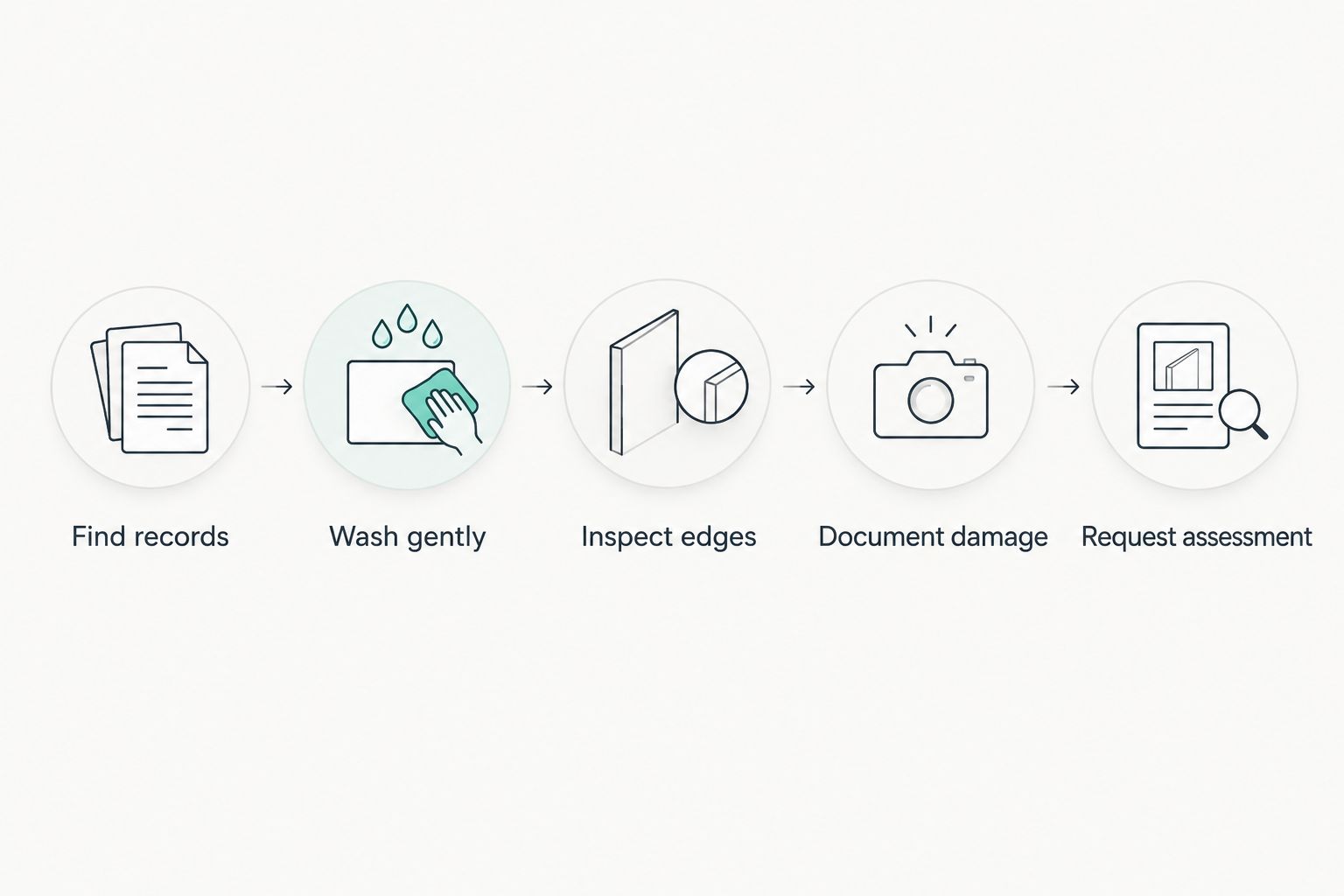
Use this inspection sequence in 2026 whether you installed the film yourself, bought a vehicle with existing coverage, or are preparing to speak with a shop. The goal is to identify the problem—not to diagnose adhesive chemistry at home.
- Find records. Identify the film, installation date, installer, and any known paint repairs. Record unknown history rather than filling gaps with assumptions.
- Wash gently. Follow the film’s care instructions and remove surface dirt before judging clarity or discoloration. Do not inspect through a layer of road grime.
- Inspect edges. Check panel boundaries, openings, and exposed edges for separation, damage, or contamination. Keep your hands off loose material.
- Document damage. Photograph cuts, cloudiness, lifting, and other concerns. Include a wider view showing where each issue sits on the panel.
- Request assessment. Ask whether the problem concerns contamination, film condition, installation, or underlying paint. Get the proposed remedy tied to that finding.
Bring your records and photographs to the appointment. Ask the installer to explain the condition of each affected panel and whether the proposed work addresses a protective failure, an appearance concern, or both.
Kleandetail is best suited to Oak Lawn car owners seeking local paint protection film and detailing services. Before booking, confirm the film being proposed, its care requirements, and the scope of any removal or surface preparation.
Discuss your vehicle’s paint protection
Ask about paint protection film, existing film condition, and preparation for your vehicle.
How to care for PPF without creating new damage
Follow the installed film’s instructions rather than combining advice intended for unrelated products. Care guidance should address washing after installation, approved cleaners, pressure washing, contamination removal, and any compatible protective products.
Keep washing tools clean and avoid abrasive scrubbing. If contamination resists normal washing, stop and ask which treatment is suitable. Stronger chemistry is not automatically a safer or more effective answer.
Pay particular attention to exposed edges when washing. Do not aim pressure into a loose edge, and do not use a fingernail or tool to scrape contamination from the film. An existing adhesion problem needs assessment rather than more force.
Ask for guidance before machine polishing. A technique intended for automotive clear coat is not automatically suitable for a film’s top surface, and removing material does not restore a cut protective layer.
If you add a ceramic coating, confirm compatibility with the film. A coating can change surface-care behavior, but it does not repair peeling edges, replace missing film, or renew an expired warranty.
Repair, replace a section, or remove the installation?
Choose the remedy by condition and scope. An isolated damaged section and widespread deterioration are different jobs, and neither should be diagnosed from installation age alone.
| Route | Best for | Benefit | Limitation |
|---|---|---|---|
| Approved cleaning | Surface contamination on otherwise sound film | Addresses residue without unnecessary replacement | Does not repair torn or deteriorated film |
| Section replacement | Damage confined to a particular covered area | Targets the affected portion | Requires assessment of adjacent film and underlying paint |
| Broader removal | Widespread deterioration or a planned change in coverage | Allows assessment of the uncovered surface | Removal method must account for film and paint condition |
Tell the installer about repainting or body repairs before removal begins. Adhesion and paint history matter, and the appearance of the film does not establish the strength of the finish underneath.
Kleandetail offers paint protection film and paint correction services, but those services solve different problems. Ask for a diagnosis before choosing the service: replacing film addresses the protective layer; paint correction addresses suitable defects in the paint finish.
If you plan to sell the vehicle, disclose the installation history you know. Do not describe film as new, warrantied, or defect-free without records that support the statement.
Questions to settle before a new installation
Your 2026 installation decision should leave you with clear instructions, not just a promise about longevity. Ask these questions before approving the work:
- What exact film will be installed, and which written warranty applies?
- Which panels and edges are included in the agreed coverage?
- Does existing film need removal before preparation begins?
- How will known repainting or existing paint defects affect the work?
- What aftercare instructions apply to this specific installation?
- Who should assess a suspected defect or damaged section?
A satisfactory answer explains both the protection and its limits. PPF provides a sacrificial barrier, but it adds a surface that needs care and eventually removal or replacement. That trade-off belongs in the decision from the start.
FAQ
How do I know when my paint protection film needs replacing?
Paint protection film needs assessment when it shows lifting edges, cuts, persistent discoloration, cracking, or other deterioration. An installer should determine whether the affected section needs cleaning, replacement, or removal.
Does paint protection film last as long as its warranty?
A paint protection film warranty is a coverage agreement, not a guaranteed service-life deadline. Read the specific terms and assess the film’s current condition separately.
Can I replace the film on just my front bumper?
A front-bumper film section can be assessed separately from the rest of the installation. The installer should check the affected film, adjacent coverage, and underlying paint before proposing replacement.
Does ceramic coating make old PPF new again?
Ceramic coating does not restore deteriorated paint protection film. It cannot repair tears, reattach lifting edges, or replace a damaged protective layer.
Is peeling paint protection film something I can fix myself?
Peeling paint protection film should be assessed by an installer rather than pressed, glued, or pulled at home. The cause and adhesive condition determine the appropriate remedy.
Should I remove PPF before selling my car?
Selling a car does not automatically require PPF removal. Assess appearance, adhesion, damage, and documentation, then disclose the installation history you know.
Can Kleandetail help with paint protection film in Oak Lawn?
Kleandetail offers paint protection film and vehicle detailing services in Oak Lawn, Illinois. Ask about the specific film, preparation requirements, written coverage, and aftercare before booking.
One last thing
Keep a panel-by-panel record, not just an installation date. A replacement bumper section and an original hood section no longer share the same service history, even though both are on the same vehicle.
For your 2026 records, save the affected panel, work performed, product identification, and invoice together. That small administrative step makes the next inspection more useful than a generic lifespan estimate.


