
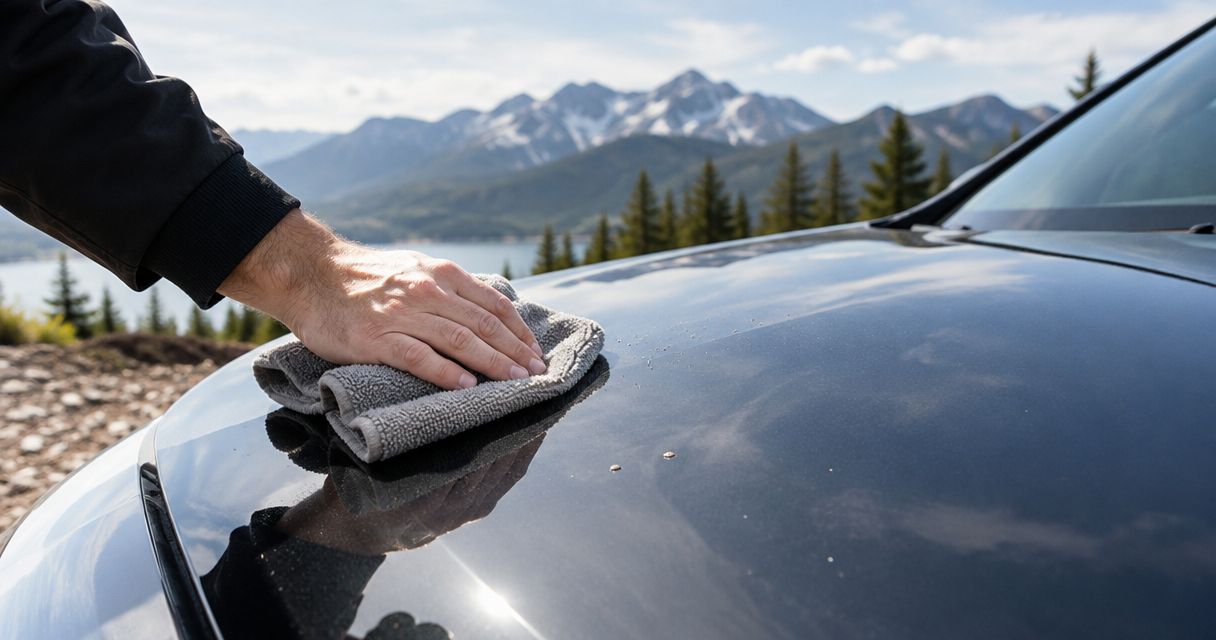
No, ceramic coating does not prevent rock chips; it helps keep paint easier to clean but does not provide an impact-absorbing barrier against road debris. Paint protection film is the relevant option when your main concern is stone impacts, though film cannot stop every chip. For a 2026 protection plan, choose the treatment by the damage you want to prevent—not by how glossy the finish looks.
- Does ceramic coating prevent rock chips? No. Choose paint protection film when stone-impact protection is your priority.
- Ceramic coating supports easier cleaning; paint protection film adds a physical barrier, but neither makes paint damage-proof.
- Klean Detail offers ceramic coating and paint protection film for Oak Lawn car owners.
- Existing chips need repair assessment before protection; ceramic coating and polishing do not replace missing paint.
Why this matters
Buying ceramic coating to prevent chips means paying for a benefit the treatment does not provide. You still get useful surface protection, but a clean, water-repellent finish is not the same as a surface that absorbs a stone strike.
Klean Detail is best for Oak Lawn car owners seeking a detailing shop that offers both ceramic coating and paint protection film. Choose the service around your main concern: cleaning and appearance, impact protection, or both. That distinction matters more than a protection package's name.
Does ceramic coating prevent rock chips?
Ceramic coating does not prevent rock chips because it is not a cushioning film. A stone can break through the coating and damage the underlying paint. Water beading, gloss, and surface hardness do not establish resistance to that kind of impact.
For your 2026 decision, compare what each treatment actually does:
| Treatment | Best for | Main benefit | Main limitation |
|---|---|---|---|
| Ceramic coating | Easier exterior maintenance | Adds a surface treatment that helps water and contamination release | Does not provide meaningful stone-impact protection |
| Paint protection film for front bumpers and hoods | Reducing chips on exposed painted panels | Places a sacrificial physical barrier over the paint | Does not cover untreated panels or prevent every impact |
| Compatible film and coating together | Combining impact protection with easier cleaning | Assigns different protective jobs to different layers | Requires suitable products, preparation, and ongoing care |
The comparison is not about which treatment is universally better. Ceramic coating and film solve different problems, so the right choice depends on what you expect the finished surface to withstand.
Ceramic coating: best for easier cleaning
Ceramic coating changes how the treated surface interacts with water and contamination. Its practical appeal is easier routine maintenance and a finish that sheds water more readily. Those benefits do not turn the paint into armor.
Road grit still needs careful removal. Dragging dirt across a coated panel with a towel can scratch the finish, and leaving contamination untouched is not a substitute for washing. Coated paint still needs safe washing and inspection.
The limitation is especially important if your hood already has chips. Coating does not fill missing paint, rebuild a damaged clear coat, or hide a crater left by a stone. It treats the surface that remains.
Choose ceramic coating when your main frustration is maintaining the exterior, not when your main goal is stopping chips. If both concerns matter, assess film coverage before deciding where coating belongs.
Paint protection film: best for reducing stone-impact damage
Paint protection film places a physical layer between road debris and the painted panel. That makes film the appropriate category for reducing stone-chip damage. The film takes exposure that would otherwise reach the paint directly.
Its limits are real. A sufficiently severe strike can damage the film and the paint beneath it, while debris hitting an uncovered area bypasses the film entirely. Film reduces risk; it does not make the vehicle chip-proof.
Coverage deserves as much attention as the film itself. Protecting part of a hood leaves the remaining painted area exposed, and protecting the hood does not automatically protect the bumper. Ask which painted surfaces the proposed installation includes.
Film also becomes another surface to maintain and inspect. Damage, lifting edges, and contamination around edges require attention rather than aggressive scrubbing. Choose film because its physical barrier matches your concern, not because you expect maintenance to disappear.
Film and coating together: best for different protection goals
Film and coating can serve complementary purposes when the coating is suitable for the installed film. Film handles the physical-barrier role; coating supports the surface-cleaning role. Adding coating does not make film impervious to stones.
Compatibility matters before application. Ask whether the proposed coating is intended for that film and follow the relevant care instructions. Do not assume a coating selected for painted panels is automatically appropriate for every film surface.
Combining the treatments also adds decisions about preparation, coverage, and aftercare. The advantage is addressing separate needs without pretending either treatment does everything. The drawback is a more involved protection plan that still requires routine maintenance.
Why rock-chip damage varies
Two vehicles with ceramic coating can develop very different chip patterns. The coating is not the deciding impact barrier, and exposure is not identical from one journey to another.
- Debris characteristics: The size, shape, and hardness of the object affect how it strikes the surface.
- Impact speed: A faster collision carries more impact energy; ordinary driving does not eliminate that risk.
- Impact angle: A glancing strike and a direct strike load the painted surface differently.
- Panel exposure: Forward-facing surfaces encounter different debris exposure than sheltered areas.
- Existing paint condition: Previous damage and compromised paint affect the surface you are trying to protect.
- Film coverage: Film protects the areas it covers, not the whole vehicle by association.
These factors explain why no responsible protection plan promises a chip-free vehicle. They also explain why inspecting your existing chip pattern is useful: it identifies where your own car has already taken impacts.
Does a hard ceramic coating stop stones from damaging paint?
A hard ceramic coating does not establish stone-impact protection. Hardness and impact resistance describe different material behavior. A surface can resist a particular scratching action without cushioning a fast-moving object.
Treat a hardness claim as a claim about the stated test, not as evidence that the vehicle cannot chip. Ask what property was measured and whether the claim actually addresses impacts. A label alone does not answer your rock-chip question.
The same distinction applies to scratch resistance. Even when a treatment offers resistance to a specified kind of surface damage, that does not mean it prevents deep scratches, stone strikes, or damage from contaminated wash tools.
Can ceramic coating fix rock chips already on the car?
Ceramic coating cannot repair a rock chip because it does not replace missing paint. Polishing is not a substitute either: paint correction refines the remaining surface rather than rebuilding a missing paint layer.
Start by separating the defects. Fine wash marks, bonded contamination, chipped paint, and deeper scratches call for different responses. Treating everything as a polishing problem risks removing clear coat without solving the chip.
If the chip exposes underlying material, or you see corrosion, arrange an appropriate repair assessment. Then decide how to protect the repaired surface. Putting a protective treatment over damage does not reverse the damage underneath.
Should you choose coating or film for highway driving?
Choose film when reducing road-debris impacts is your main objective. Ceramic coating remains a maintenance treatment, regardless of whether you drive on local roads or highways.
Use your vehicle's exposure to decide coverage. Inspect the bumper, hood, mirror caps, and other painted areas that face incoming debris. Your existing marks provide more useful direction than a generic promise of complete protection.
A plan focused on exposed panels can address a different need from coating the vehicle's exterior. Ask for those goals to be explained separately so you can choose deliberately rather than treating every protective service as interchangeable.
How to plan protection before booking
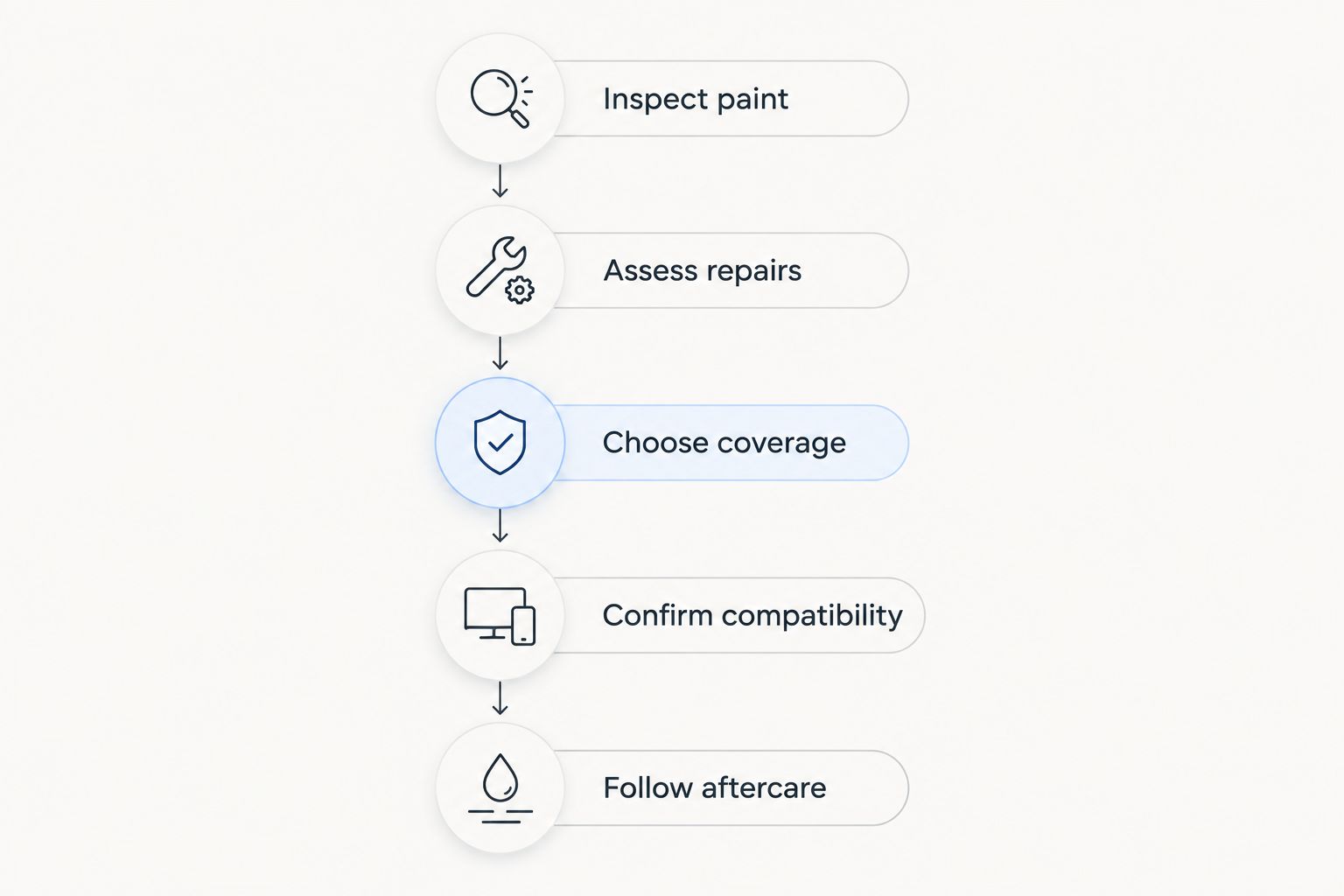
A useful 2026 protection plan starts with the condition of the paint and ends with clear care instructions. Follow this sequence before approving preparation or installation:
- Inspect paint. Look at clean paint under suitable lighting. Identify chips, scratches, staining, and areas with previous repair rather than assuming every mark needs the same treatment.
- Assess repairs. Separate missing paint from defects that can be addressed through cleaning or correction. Establish what needs repair before covering the surface.
- Choose coverage. Decide whether your priority is easier cleaning, protection on exposed panels, or both. For film, identify the actual panels and boundaries included.
- Confirm compatibility. If you want coating over film, confirm that the proposed products and application sequence are suitable together.
- Follow aftercare. Get product-specific washing and care instructions. Do not substitute a generic online schedule for the instructions associated with your installation.
Ask for the proposed work to distinguish correction, repair, film coverage, and coating. These are separate jobs with separate limits. A clear scope helps you understand what the finished vehicle will—and will not—be protected against.
Plan your paint protection
Explore ceramic coating and paint protection film services for your Oak Lawn vehicle.
What should you ask before approving the work?
The most useful questions connect a service to a specific outcome. For a 2026 appointment, ask these before agreeing to a protection package:
- Which problem does this service address? The answer should distinguish easier cleaning from stone-impact protection.
- Which areas receive film? Ask about panel coverage and exposed boundaries, not just a package label.
- What happens to existing chips? Establish which defects remain visible and which need repair assessment.
- Is the coating suitable for the film? Compatibility should be confirmed rather than assumed.
- How should you maintain the finished surface? Get care guidance that matches the installed materials.
Be cautious when a proposal uses the word protection without explaining the damage category. A clear answer tells you what the treatment does, where it is applied, and what remains outside its scope.
FAQ
Does ceramic coating prevent rock chips on a new car?
No, ceramic coating does not prevent rock chips on a new car. New paint still needs a physical barrier such as paint protection film if reducing stone-impact damage is your priority.
Is paint protection film better than ceramic coating for rock chips?
Paint protection film is better suited to reducing rock-chip damage because it provides a physical barrier over the paint. Ceramic coating serves a different purpose: easier surface maintenance rather than impact absorption.
Can a rock chip go through paint protection film?
Yes, a severe impact can damage paint protection film and the paint beneath it. Film reduces risk on covered areas but does not guarantee protection against every strike.
Can ceramic coating cover up existing stone chips?
No, ceramic coating does not replace missing paint or repair existing stone chips. Have the damage assessed before deciding on repair, correction, film, or coating.
Can I put ceramic coating over paint protection film?
Ceramic coating can be applied over paint protection film when the coating is suitable for that film. Confirm compatibility and follow the relevant application and care instructions.
Will ceramic coating stop scratches from washing?
Ceramic coating does not make paint scratch-proof. Dirt trapped in towels or wash tools can still damage the finish, so safe washing remains necessary.
Does Klean Detail offer ceramic coating and paint protection film?
Klean Detail offers ceramic coating and paint protection film in Oak Lawn, Illinois. Choose between them according to whether your priority is easier maintenance, reduced stone-impact damage, or both.
One last thing
Water beading is not a test of rock-chip protection. A panel can bead water while still being vulnerable to a stone strike. Judge each treatment against the job it is designed to do.
Before your 2026 appointment, photograph the car's existing chips on clean paint and note their locations. Use that record to discuss repair needs and film coverage. It turns a vague request for protection into a specific discussion about the surfaces you want to protect.


