
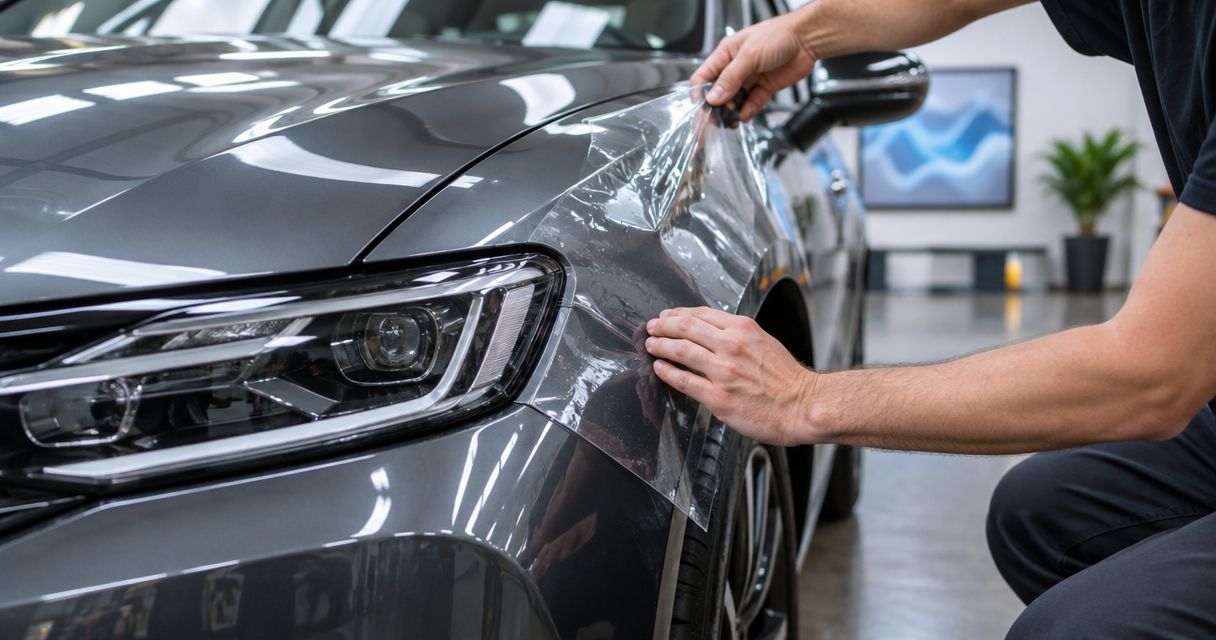
Paint protection film is worth it when preventing stone chips and preserving your car’s paint matter more to you than the installation and ongoing care it requires. It is not a guaranteed financial return: film can need repair or replacement, and it does not make a vehicle immune to damage. For your 2026 decision, match coverage to the panels you want to protect rather than assuming every car needs a full wrap.
- Is paint protection film worth it? Yes for owners prioritizing chip protection, not guaranteed resale returns.
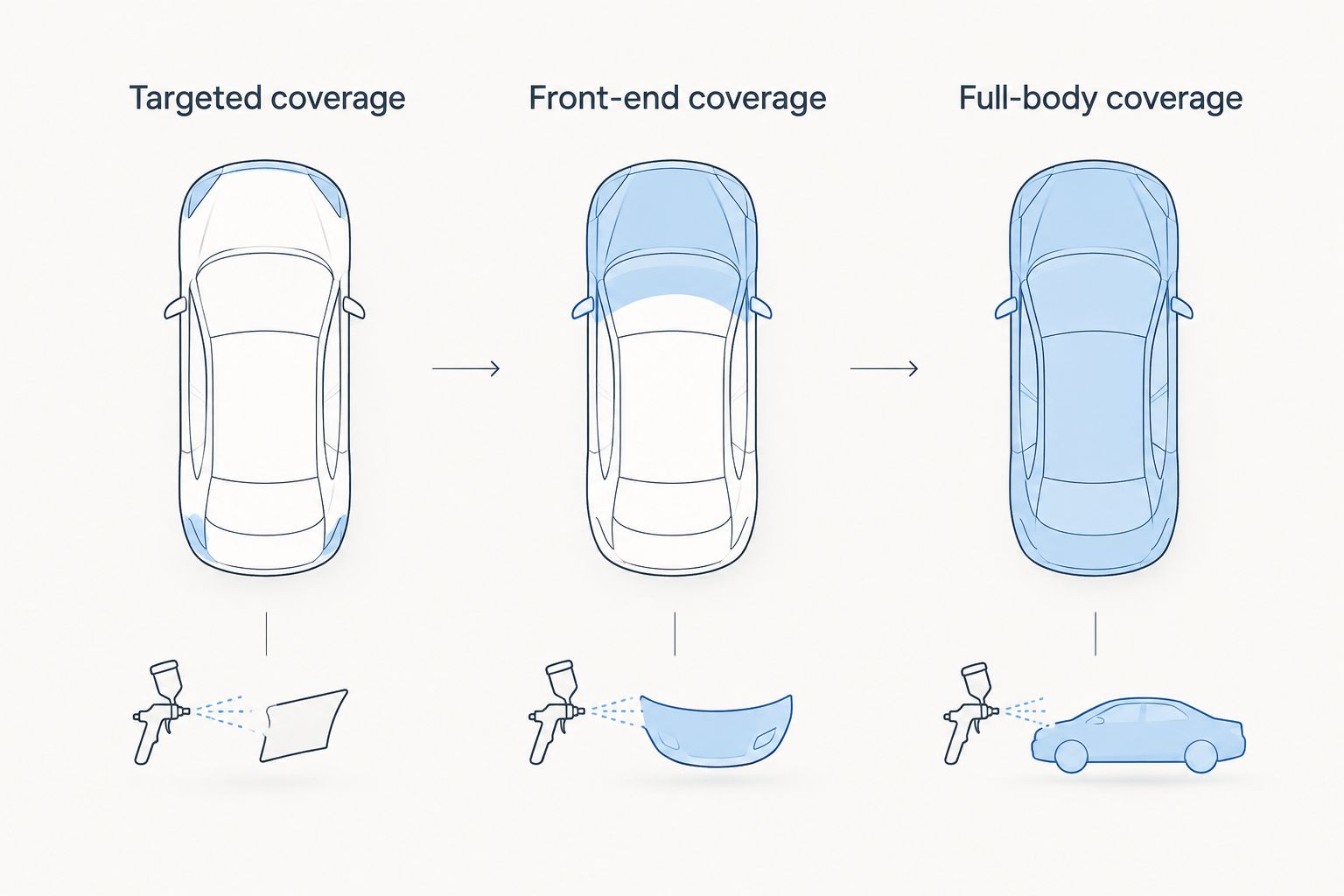
- Front-end coverage protects selected impact areas; full-body coverage extends protection but requires more installation work.
- Ceramic coating helps with surface care; it does not replace paint protection film’s physical barrier.
- Klean Detail offers paint protection film and paint correction for car owners in Oak Lawn, Illinois.
Why this matters
A stone chip and a dirty paint surface are different problems. Choosing protection without separating those problems can leave you with a service that does not address your main concern.
Start with the damage you want to avoid. If road debris hitting your bumper and hood is the issue, explore paint protection film for front bumpers and hoods; if easier cleaning is the priority, compare surface-care options instead.
The useful question in 2026 is not whether film is good in the abstract. It is whether protecting particular panels fits your driving, your expectations, and the condition of your paint.
Is paint protection film worth it in 2026?
Paint protection film earns its place through physical protection, not a promise that installation will pay for itself. It places a sacrificial layer over painted panels, helping shield the finish from stone impacts and light abrasion. Damage severe enough to penetrate the film can still reach the paint.
Compare the job each option actually performs before choosing a service.
| Option | Best for | Main advantage | Main limitation |
|---|---|---|---|
| Paint protection film | Owners prioritizing protection from stone chips and light abrasion | Adds a physical barrier over selected panels | Film can be damaged and requires suitable care |
| Ceramic coating | Owners prioritizing easier cleaning and water repellency | Changes surface behavior to help with maintenance | Does not provide equivalent stone-chip protection |
| Paint correction | Owners addressing suitable existing swirls and surface defects | Improves the appearance of correctable paint defects | Does not add a protective film or repair missing paint |
| Routine washing without added protection | Owners comfortable accepting ordinary cosmetic wear | Keeps maintenance focused on cleanliness | Leaves paint without an added sacrificial film |
These options are not interchangeable. Paint correction addresses existing defects; film protects the surface beneath it; ceramic coating serves a different maintenance role.
Your decision should also account for ownership plans. Protecting paint you intend to enjoy has personal value, but do not treat that value as a documented increase in a future sale or trade-in offer.
Targeted coverage: best for a specific damage concern
Targeted coverage makes sense when you can identify the areas you want protected. Examples include a bumper exposed to road debris or a painted loading area subject to repeated contact.
The advantage is focus: you protect the surfaces that concern you rather than choosing broader coverage automatically. The limitation is equally clear—uncovered paint remains exposed, and a boundary between covered and uncovered areas can be visible depending on placement and lighting.
Ask the installer to identify the exact coverage boundary on your vehicle. Terms such as partial coverage do not tell you where a film edge will sit or which adjacent surfaces remain unprotected.
Choose targeted coverage when your concern is specific and you accept protection gaps elsewhere. Do not mistake a protected panel for a protected vehicle.
Front-end coverage: best for prioritizing forward-facing panels
Front-end coverage is worth considering when your main concern is debris striking the front of the car. Discuss the bumper, hood, fenders, and mirrors individually rather than assuming a package name includes them all.
The benefit is concentrating protection where your stated concern lies. The trade-off is that doors, rear panels, and other excluded surfaces still face their own sources of damage.
A proposal should distinguish complete-panel coverage from partial-panel coverage. That distinction affects the location of film boundaries and the amount of painted surface protected.
For a 2026 installation, compare proposals by their panel lists and edge treatment—not simply by whether both use the phrase front end. Two descriptions can sound similar while covering different areas.
Full-body coverage: best for protecting paint across the vehicle
Full-body coverage suits owners who want a protective layer across the vehicle’s painted exterior rather than only selected impact areas. It broadens the protected area, but it also expands the installation and the amount of film you must maintain.
Its main advantage is coverage beyond the front of the car. Its limitation is that broader coverage still cannot prevent every scratch, dent, collision impact, or instance of paint damage.
Clarify what full body means in the proposed work. Painted trim, complex recesses, edges, and other details need an explicit discussion rather than an assumption that every visible surface is included.
Choose full-body coverage because you want broader paint protection, not because a shop presents it as mandatory. A smaller coverage plan remains a valid choice when it matches your priorities.
Why paint protection film’s value varies
There is no universal coverage plan that fits every owner. These factors determine whether the protection addresses a problem you actually have:
- Driving exposure: Consider where debris contacts your car and which panels already show impact wear. Use your vehicle’s condition as evidence instead of assuming all driving creates the same exposure.
- Paint condition: Film does not repair chips, peeling paint, or existing scratches. Inspect the surface before deciding what preparation belongs in the installation.
- Coverage boundaries: Protection applies where film is installed. Partial-panel coverage and complete-panel coverage leave different areas exposed.
- Ownership priorities: Preserving an original finish for your own enjoyment is different from expecting a higher resale offer. Keep those goals separate.
- Installation details: Surface preparation, alignment, edges, and contamination affect the finished appearance. Ask how the installer handles these details on your vehicle.
- Care expectations: Film remains an exterior surface that needs cleaning and inspection. Choose it only if you accept that responsibility alongside the protection.
In 2026, use these factors to compare written scopes of work. A proposal that clearly defines preparation and coverage gives you something concrete to evaluate; a broad promise of protection does not.
What should you check before approving an installation?
Before committing, turn the discussion into a defined scope. You should understand what condition the paint is in, what will be covered, and what you will need to do afterward.
- Inspect the paint. Identify chips, scratches, previous repairs, peeling areas, and defects you want addressed. Distinguish appearance concerns from surfaces that need repair.
- Define the coverage. Request a panel-by-panel description, including whether the hood and fenders receive partial or complete coverage. Confirm any exclusions.
- Discuss the preparation. Ask what cleaning and corrective work the installer recommends, and why. Do not approve paint correction solely because it appears in a package.
- Review the finish details. Discuss visible edges, seams, difficult contours, and the appearance you should expect. Ask to see examples that illustrate those details.
- Get care and removal guidance. Request instructions for washing, inspecting damaged film, and arranging removal. Read any product or workmanship terms rather than relying on a verbal summary.
Klean Detail is a local paint protection film option for Oak Lawn car owners who also need paint correction services. The service range is relevant when existing paint condition and future protection need to be considered together, but your vehicle still needs an individual scope of work.
You can review Klean Detail before discussing those needs. Confirm the proposed film, preparation, coverage, and care requirements rather than assuming a particular package or policy applies.
Discuss your paint protection needs
Match paint protection film coverage and preparation to your vehicle’s condition and your priorities.
Is paint protection film better than ceramic coating?
Paint protection film is better for stone-chip protection; ceramic coating serves a different surface-care purpose. Choose according to the problem you want to solve rather than treating the services as competing versions of the same treatment.
Film adds a physical layer. Ceramic coating does not turn paint into an impact-resistant surface, so easier washing should not be confused with protection against flying debris.
Using both requires checking compatibility and following the relevant care instructions. Do not assume every coating is suitable for every film, or that adding a coating eliminates film maintenance.
Does paint protection film increase resale value?
Paint protection film does not guarantee a higher resale value. Preserved paint can matter to a buyer, but that does not establish that the installation expense will be recovered.
Keep your justification grounded in the protection and appearance you want during ownership. If your only goal is a better trade-in result, assess the vehicle’s present condition and the appraisal process before deciding on additional work.
Is paint protection film worth it on a used car?
Paint protection film can be worth it on a used car when the paint is suitable and you want to preserve its current condition. Existing chips and defects remain unless separately addressed; covering them is not the same as repairing them.
Inspect repaired or repainted panels before installation and discuss removal risks with the installer. The important distinction is sound versus compromised paint, not simply new versus used.
What paint protection film will not do
Paint protection film is not collision protection, a dent-prevention system, or a substitute for repairing failing paint. A hard enough impact can damage both the film and the panel beneath it.
Film also does not make careless washing harmless. Dirt trapped against the surface, unsuitable cleaning methods, and neglected contamination can affect the finish you are trying to preserve.
Some films have self-healing properties for certain light surface marks under specified conditions. That does not mean a torn film, a deep cut, or missing material will repair itself; check the actual product documentation before relying on the term.
For your 2026 decision, define success realistically: fewer direct exposures to the protected paint, not a permanently flawless car. That expectation makes it easier to judge whether the coverage is doing the job you bought it for.
FAQ
Is paint protection film worth it for a daily driver?
Paint protection film is worth considering for a daily driver when stone-chip protection is a priority. Match coverage to the panels you want protected and accept that uncovered areas remain exposed.
Should I protect the whole car or just the front?
Protect the front if forward-facing panels are your main concern; choose broader coverage if you want protection across the painted exterior. Confirm the actual panel list because package names do not define coverage precisely.
Will paint protection film hide scratches?
Paint protection film does not repair scratches or missing paint. Inspect existing defects and decide what corrective or repair work is appropriate before installation.
Can paint protection film damage paint when removed?
Film removal carries a risk of paint damage, particularly where paint is compromised or has been repaired. Discuss the vehicle’s paint history and suitable removal methods with the installer.
Can I stop washing my car after getting paint protection film?
Paint protection film does not eliminate washing. Follow the film’s care instructions and inspect damaged or lifting areas rather than treating the surface as maintenance-free.
Is paint protection film guaranteed to prevent stone chips?
Paint protection film is not guaranteed to prevent every stone chip. Impact severity and whether the affected area is covered determine whether damage can reach the paint.
Where can I discuss paint protection film in Oak Lawn?
Klean Detail provides paint protection film and paint correction services in Oak Lawn, Illinois. Discuss your paint condition, desired coverage, and care expectations before approving an installation.
One last thing
The most useful question is: which damage would make you regret leaving this panel unprotected? Answer it for the bumper, hood, and other areas you care about before choosing coverage.
For 2026, build your decision around that answer—not an assumed resale gain or a promise of maintenance-free paint. Film is easier to justify when its job is specific and its limits are understood.


