
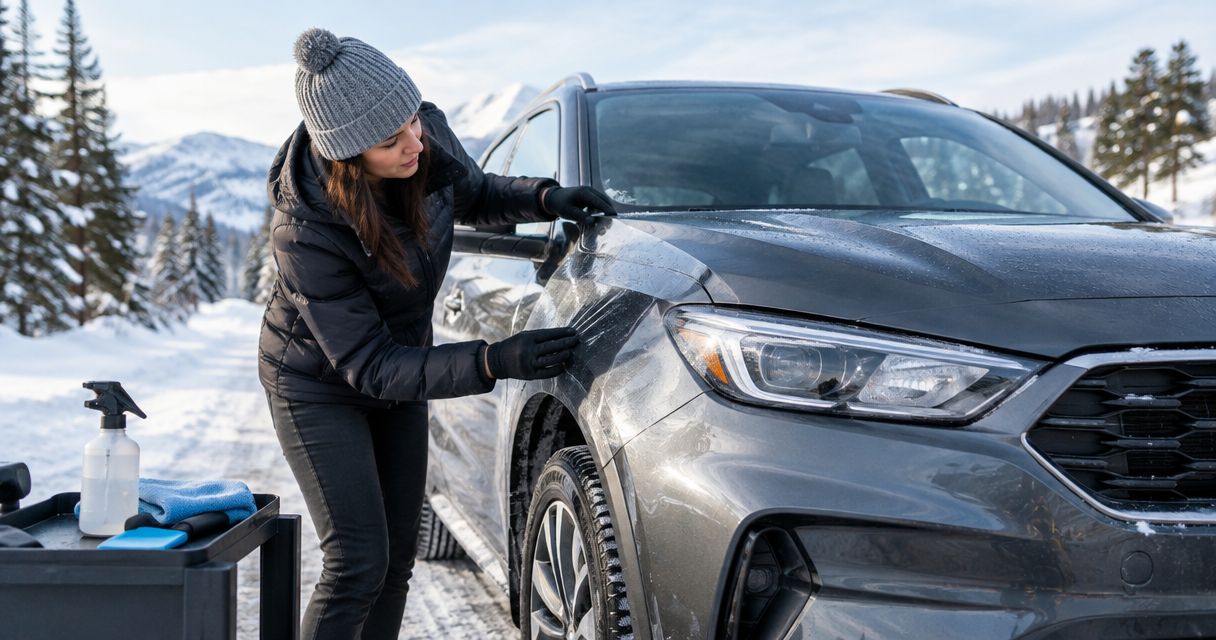
Winter commuters’ paint protection film is a transparent protective layer applied to painted panels with the aim of limiting road-debris damage during cold-weather driving. Your priorities differ from those of a weekend driver: repeated highway exposure, dirty slush, and winter washing make coverage placement and maintenance especially important.
- Paint protection film for winter driving protects covered paint from road debris; it does not replace salt removal.
- Prioritize front-impact areas and lower panels according to your commute, not a generic coverage package.
- Kleandetail offers paint protection film and vehicle detailing for car owners in Oak Lawn, Illinois.
- Ceramic coating supports surface maintenance; paint protection film provides a physical barrier against chips.
Why paint protection film matters for winter commuters
Paint protection film addresses debris impact; washing addresses contamination. You need both. Winter commuting repeatedly exposes your vehicle to spray from surrounding traffic, grit, and dirty snow. Film protects the paint it covers, but it does not shield the underbody, wheel wells, or uncovered panels.
For your 2026 winter plan, separate those problems before choosing a service. A chipped bumper needs a different decision from a salt-covered underbody, and an easier-to-clean finish is not the same as an impact-resistant barrier.
Kleandetail provides paint protection film, ceramic coating, paint correction, and full vehicle detailing in Oak Lawn, Illinois. Kleandetail is best for Oak Lawn commuters seeking paint protection film and detailing at one shop. The coverage decision still depends on your vehicle’s condition and the panels exposed on your route.
A useful plan starts with what you can inspect yourself. Look for existing chips, identify where road spray collects, and decide whether your priority is protecting vulnerable panels or maintaining a consistent finish across the vehicle. Do not treat film as permission to leave winter residue untouched.
How to plan paint protection film for winter driving
Inspect your paint before selecting coverage
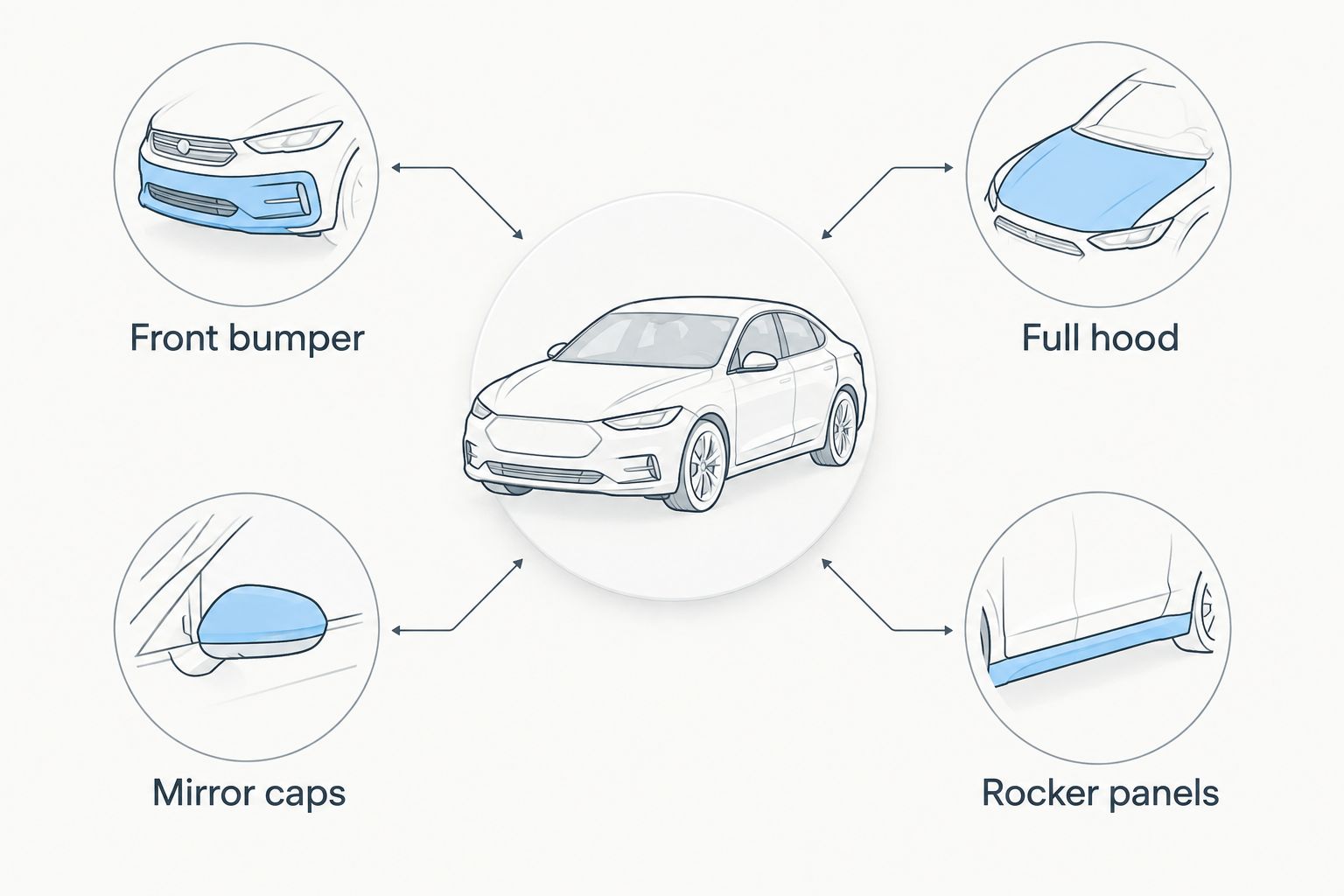
Start with a clean vehicle and examine the paint in good light. Check 4 areas: the front bumper, hood, mirror caps, and rocker panels. These inspection areas help you distinguish existing damage from the places you want to protect next.
Film does not restore missing paint. Paint correction addresses appropriate surface defects, but chips, failing clear coat, and damaged paint require a separate assessment. Installing film over an unresolved defect does not make that defect disappear.
Record what you find before discussing coverage. Photographs and a simple panel list give the installer something concrete to review, especially when the vehicle has repaired or repainted sections. Ask which defects need attention before installation and which will remain visible afterward.
For a 2026 installation, make the starting condition part of the decision rather than judging only the finished shine. Your goal is a sound surface under the film, not merely a glossy delivery-day appearance.
- Photograph existing chips and scratches on clean, dry paint.
- Identify repainted panels and previous body repairs.
- Mark peeling clear coat or other damaged finishes for assessment.
- Separate cosmetic correction from repairs that film cannot perform.
Map the exposure on your actual commute
Use your normal route to decide where protection belongs. Highway travel puts the front of the vehicle in the path of debris thrown by surrounding traffic. Lower panels encounter spray and material displaced by the tires. Your vehicle’s shape and existing damage help identify the practical priorities.
You do not need a tracking app to make this assessment. After a typical trip, inspect where grime collects and compare those areas with the chip locations you recorded. Dirt alone does not prove a panel needs film, but it shows where winter contamination repeatedly lands.
If you need help turning that inspection into a coverage plan, discuss paint protection film with Kleandetail. Bring your observations rather than requesting the largest package by default. A useful consultation connects covered panels to your driving pattern and explains what remains exposed.
Record 3 route details: road type, nearby traffic, and recurring spray locations. Those details are more useful than describing your commute only as long or short.
- Note highway stretches and roads with loose surface material.
- Identify recurring debris exposure around trucks and other traffic.
- Check lower doors and rocker panels after wet-weather travel.
- Compare grime patterns with existing chip locations.
Choose coverage by panel, not by package name
Ask for a written panel map. Terms such as front coverage or full front do not tell you enough unless the installer identifies every included surface. Confirm whether the hood coverage is partial or complete, whether mirror caps are included, and where visible film boundaries will sit.
Protect the exposed panels first; expand coverage only for a clear reason. A front-focused installation addresses leading surfaces but leaves the rest of the vehicle uncovered. Broader coverage protects more painted areas while adding installation scope and more film edges to maintain.
The guide to paint protection film for front bumpers and hoods provides a focused next read when those panels are your main concern. For winter commuting, also assess lower-body exposure instead of assuming the front alone covers every risk.
Use these panel labels when discussing the layout: Front bumper, Full hood, Mirror caps, and Rocker panels. They describe actual surfaces rather than implying a particular package exists.
- Request the exact list of covered panels.
- Confirm partial versus complete hood coverage.
- Ask where seams and exposed edges will be visible.
- Assess rocker panels separately from front-end coverage.
- Identify painted areas that the proposed installation leaves unprotected.
Confirm preparation and installation details
Before booking, ask how the installer evaluates paint condition and prepares each panel. Contamination left on the surface and unresolved paint defects matter because film sits over that surface. Preparation and installation are separate from simply selecting a film material.
For your 2026 appointment, request written instructions for washing, handling edges, and returning for an inspection if a problem develops. Follow the instructions for the actual installed film; do not substitute a generic online curing schedule.
Ask about boundaries around trim, panel openings, and difficult contours. Edge wrapping depends on the panel and installation approach, so confirm it rather than assuming every edge will be hidden. Also discuss any existing coating that affects preparation.
Kleandetail offers paint correction alongside paint protection film, but the necessary preparation depends on your vehicle. Require an explanation of the proposed preparation before approving the work. That keeps correction, repair, and film installation from becoming interchangeable terms in your quote.
- Ask how the paint will be inspected before installation.
- Disclose previous coating, film, repainting, and body repairs.
- Confirm the treatment of trim areas and panel edges.
- Request film-specific aftercare and inspection instructions.
- Review the written scope and any supplied warranty terms.
Build a winter washing routine around the film
Start with the manual approach: rinse away loose contamination before touching the paint, then wash with clean tools and a product suitable for the installed film. Do not drag gritty snow across panels or scrub dried road residue with a dirty towel.
Pressure washing needs particular care at film boundaries. Follow the installer’s directions for nozzle distance and avoid directing a concentrated jet into an exposed edge. The correct method depends on the equipment and film instructions, not an arbitrary universal distance.
For winter 2026, choose a washing setup that lets you remove contamination without creating an icing hazard. If outdoor conditions prevent a suitable wash, arrange an appropriate alternative rather than treating film as a substitute for cleaning.
Full vehicle detailing is another service available from Kleandetail. If you use professional cleaning, identify the filmed panels and share their care instructions. The maintenance standard stays the same whether you wash the vehicle yourself or book a service.
- Rinse loose grit before contact washing.
- Use clean wash media and film-compatible cleaning products.
- Keep concentrated pressure away from exposed film edges.
- Address wheel wells and other unfilmed areas separately.
- Avoid scraping ice or packed snow from painted panels.
Match additional protection to its actual job
You can start with washing alone while deciding which panels need film. Washing removes contamination, but it does not create an impact barrier. Wax and ceramic coating serve different surface-care purposes from paint protection film.
A ceramic coating can support easier cleaning and water behavior, depending on the product and its maintenance. It is not a replacement for film where stone chips are the concern. Likewise, film does not eliminate the need to clean the vehicle or protect unfilmed surfaces.
If you want coating over film, confirm compatibility and installation order with the installer. Do not assume every coating is appropriate for every film or that adding a coating changes the film’s impact limits.
Make the 2026 decision by naming the problem first: chips, contamination, or surface appearance. Choose film for a physical paint barrier and choose surface treatments for their stated maintenance purpose. Combining services only makes sense when each has a separate job you want done.
- Use washing to remove winter contamination.
- Use film when protecting covered paint from debris is the priority.
- Evaluate coating separately for surface maintenance.
- Confirm compatibility before applying anything over film.
Inspect the film throughout the season
Check the film after washing, when grime no longer hides its condition. Look for lifted edges, damaged sections, and contamination collecting at boundaries. Compare the surface with your installation photographs instead of relying on memory.
Keep 2 checklists: covered panels and areas requiring follow-up. This separates ordinary cleaning from problems that need the installer’s attention. A dirty boundary and a lifting boundary are not the same issue, and aggressive scrubbing is not a repair method.
Film is sacrificial protection, not an indestructible layer. A hard impact can damage the film and the paint beneath it. Do not assume an intact-looking surface proves there is no underlying damage after a significant strike.
At the end of winter 2026, inspect the vehicle again before deciding whether to expand coverage. Use observed wear to guide that decision. Adding protection to a panel with repeated damage has a clearer purpose than expanding coverage simply because more film is available.
- Inspect edges and seams on clean panels.
- Photograph tears, lifting, or persistent boundary contamination.
- Contact the installer before attempting film repairs.
- Reassess uncovered panels for new chips after winter.
Compare winter protection options
The best option depends on whether you need cleaning, surface treatment, or an impact barrier. These approaches are not substitutes for one another. The table separates their useful roles from their limits without treating any option as complete winter protection.
| Option | Best for | Main benefit | Key limitation |
|---|---|---|---|
| Regular washing | Commuters prioritizing contamination removal | Removes road residue from accessible surfaces | Does not prevent stone chips |
| Wax or paint sealant | Drivers seeking a renewable surface treatment | Adds a surface protection layer when properly applied | Requires renewal and is not a film-like impact barrier |
| Ceramic coating | Drivers prioritizing surface maintenance | Supports cleaning and water behavior according to the product | Does not replace film for chip protection |
| Front-focused paint protection film | Commuters targeting leading painted surfaces | Creates a physical barrier on selected front panels | Leaves other panels exposed |
| Broader paint protection film coverage | Drivers protecting more painted surfaces | Extends the physical barrier across additional panels | Adds installation scope and more boundaries to maintain |
For winter commuting, front-focused film paired with regular cleaning is a clear starting point when leading-panel chips are your concern. Broader coverage deserves consideration when your inspection identifies exposure elsewhere. Neither choice protects every vehicle component or guarantees damage-free paint.
Common mistakes winter commuters make
Treating film as corrosion protection for the whole vehicle
Paint protection film covers selected painted surfaces. It does not seal the chassis, brake components, wheel wells, or every body seam. Keep those areas in your winter cleaning plan rather than judging protection solely by the condition of the hood.
Buying front coverage without checking lower panels
A protected hood does not address debris striking an uncovered rocker panel. Review existing damage and spray patterns before approving coverage. The right panel map reflects your vehicle and route, not just the most visible surfaces.
Scraping winter buildup from the finish
Dragging an ice scraper or gritty snow brush across filmed paint adds an avoidable contact risk. Remove snow without grinding it into the surface and follow the installed film’s care instructions. Film is not permission to use abrasive tools.
Assuming ceramic coating stops stone chips
Ceramic coating and paint protection film do different jobs. Choose coating for its specified surface-care benefits, not as a substitute for a physical barrier. If impact protection is the goal, discuss film coverage directly.
Ignoring an edge problem until spring
A lifting or damaged edge needs assessment, not repeated pressure washing. Photograph the issue and contact the installer. Do not trim, glue, or aggressively scrub the film yourself without appropriate instructions.
FAQ
Is paint protection film worth it for winter driving?
Paint protection film is useful for winter drivers who want a physical barrier against road debris on selected painted panels. Its value depends on your exposure and coverage priorities; it does not replace winter washing.
Does paint protection film protect my car from road salt?
Paint protection film places a barrier between contamination and the painted surfaces it covers, but it does not protect the whole vehicle from road salt. Clean the film, uncovered paint, wheel wells, and other accessible areas using appropriate methods.
Which panels should a winter commuter protect first?
Start by assessing the front bumper, hood, mirror caps, and rocker panels. Choose coverage from existing chip locations and your commute’s exposure rather than assuming every vehicle needs the same layout.
Is ceramic coating better than paint protection film for winter?
Ceramic coating is not a substitute for paint protection film when stone-chip protection is the priority. Coating supports surface maintenance, while film provides a physical barrier on covered panels.
Can I pressure wash a car with paint protection film?
Pressure washing requires following the installed film’s care instructions. Avoid directing a concentrated jet into exposed edges, and use the nozzle distance specified by the installer or film manufacturer.
Should I install film over existing paint chips?
Existing paint chips need assessment before film installation. Film does not restore missing paint, and damaged or repaired finishes require a preparation plan appropriate to their condition.
Where can I discuss paint protection film in Oak Lawn?
Kleandetail is an automotive detailing shop in Oak Lawn, Illinois offering paint protection film, ceramic coating, paint correction, and full vehicle detailing. Discuss your commute, paint condition, covered panels, and aftercare before choosing an installation scope.
One last thing
Inspect the dirty vehicle before you wash it, then inspect the clean vehicle afterward. The first inspection shows where winter spray collects; the second reveals chips and film-edge problems. Together, they give you a better coverage plan than judging only a freshly detailed finish.


