
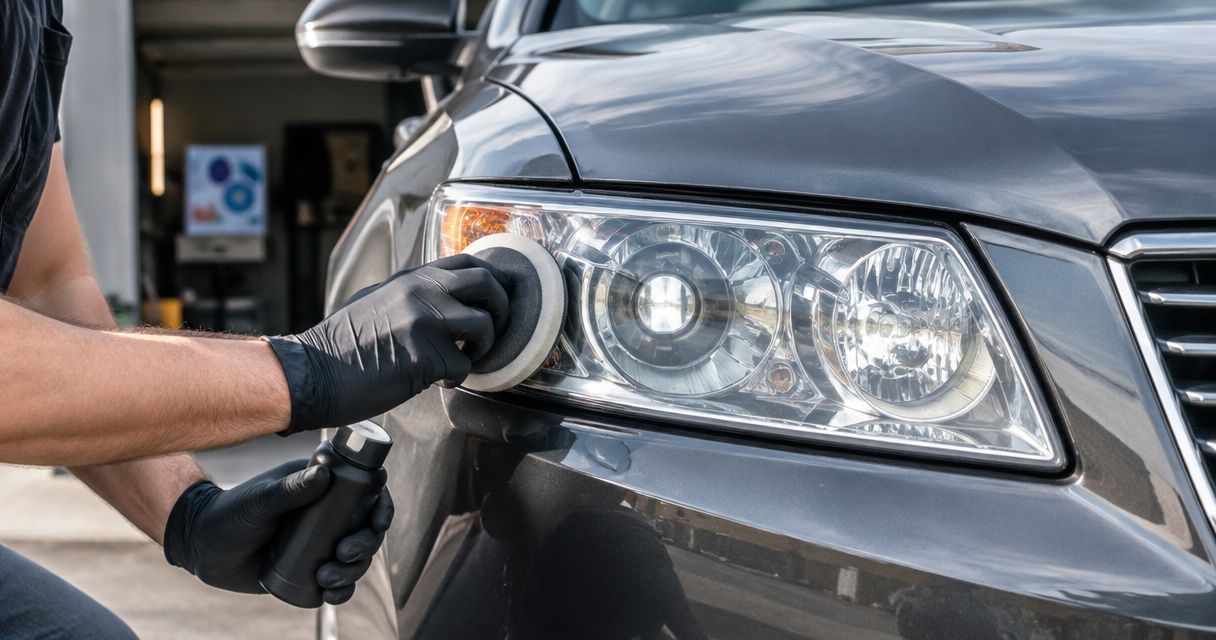
Yes, headlight restoration lasts, but it is not permanent: durability depends on the lens condition, the restoration process, and the protective finish applied afterward. Polishing away haze without restoring suitable UV protection leaves the lens exposed to renewed deterioration. This 2026 guide explains what makes a restoration hold up and when replacement is the better decision.
- Does headlight restoration last? Yes, but restored clarity needs suitable UV protection to resist renewed deterioration.
- Polycarbonate headlight lenses with exterior oxidation are restoration candidates; cracks and internal damage require a different repair.
- Choose a complete preparation-and-protection process, not polishing alone.
- Judge results after the lens dries, then follow the protective product’s curing and maintenance instructions.
Does headlight restoration last?
Headlight restoration lasts when the repair addresses both surface deterioration and the protective layer. Removing oxidation improves clarity; protecting the newly exposed surface helps preserve that improvement. Neither step repairs a cracked housing, a failing bulb, or damage inside the assembly.
Before choosing a treatment, establish where the cloudiness sits. A hazy exterior and moisture behind the lens require different work, even when both make a headlight look cloudy.
For broader vehicle appearance care in Oak Lawn, Kleandetail provides detailing, paint correction, ceramic coating, paint protection film, and window tinting. Keep the headlight decision separate from paint care: a product suitable for painted bodywork is not automatically suitable for a headlight lens.
| Approach | Best for | Main benefit | Main limitation |
|---|---|---|---|
| Exterior restoration with suitable UV protection | Structurally sound lenses with exterior deterioration | Addresses haze and adds protection afterward | Cannot repair internal or structural damage |
| Polishing alone | Surface refinement within a complete restoration process | Improves exterior clarity | Does not replace a suitable protective finish |
| Headlight assembly replacement | Cracked assemblies or damage that restoration cannot address | Replaces damaged components | Requires correct fitment and attention to installation and aim |
These are different repair scopes, not interchangeable packages. Choose the approach that matches the defect, rather than the one that produces the glossiest demonstration.
Why this matters
A headlight can look clearer immediately after treatment without receiving a complete restoration. The improvement you see establishes appearance, not how well the surface will resist future exposure.
Many modern headlight lenses use polycarbonate with a protective exterior coating. Sunlight and environmental exposure degrade that surface over time. Restoration removes deteriorated material; the finishing system must then address protection rather than appearance alone.
For your 2026 maintenance decisions, separate 2 questions: is the lens clearer, and what protects it now? A before-and-after photograph answers the first. The specified finishing product and its application instructions answer the second.
Better-looking lenses also do not prove that the lighting system is functioning correctly. Persistent poor nighttime visibility warrants a check of the bulbs, electrical system, headlight aim, and assembly condition.
Restoration with UV protection: the complete approach
Best for: intact lenses with deterioration on the outside. A complete restoration removes the damaged exterior material, refines the surface as required, and applies a protective system intended for the lens material.
The preparation and finishing stages must work together. Some systems require a particular sanded surface before coating; others use a different preparation sequence. Follow the chosen system rather than combining unrelated instructions.
The advantage is that this approach addresses the reason a freshly polished lens needs protection. The limitation is that even a properly applied finish remains subject to wear, environmental exposure, and maintenance requirements.
Ask what product will provide the final UV protection and whether its manufacturer specifies use on headlight lenses. A general promise of a coating does not establish material compatibility or a supported service life.
Do not request additional polishing simply because a prepared surface looks different before the final finish. The correct stopping point depends on the restoration system, not a universal requirement for maximum gloss at every stage.
Polishing alone: clarity without a complete protection plan
Best for: a surface-refinement step within a specified restoration system. Polishing removes fine surface defects and improves transparency, but polishing by itself is not the same as replacing the lens’s protective finish.
The benefit is visible improvement in exterior haze when polishing is appropriate for the defect. The drawback is that a clear-looking lens can still lack suitable protection against renewed UV damage.
This distinction matters when comparing DIY instructions or service descriptions. A process that ends with buffing needs an explanation of what happens next. Do not infer UV protection from gloss, water beading, or a generic detailing label.
For a 2026 restoration project, reject polishing alone as the complete durability strategy. It can be part of the repair, but the final protection must be identified separately.
Replacement: when restoration cannot fix the problem
Best for: cracked assemblies, internal deterioration, or other damage that exterior treatment cannot resolve. Replacement addresses problems that sanding and polishing the outside cannot reach.
Inspect the assembly before buying restoration supplies. Exterior work cannot remove contamination behind a sealed lens, repair a broken mounting point, or correct a damaged internal reflector.
Replacement has its own requirements. The assembly must be appropriate for the vehicle, installed correctly, and checked for proper aim. Clear plastic alone is not proof that the completed lighting repair is correct.
The practical limitation is a larger repair scope than exterior refinishing. Still, repeated polishing is the wrong response when the defect is inside the lamp or the housing is structurally damaged.
Why headlight restoration durability varies
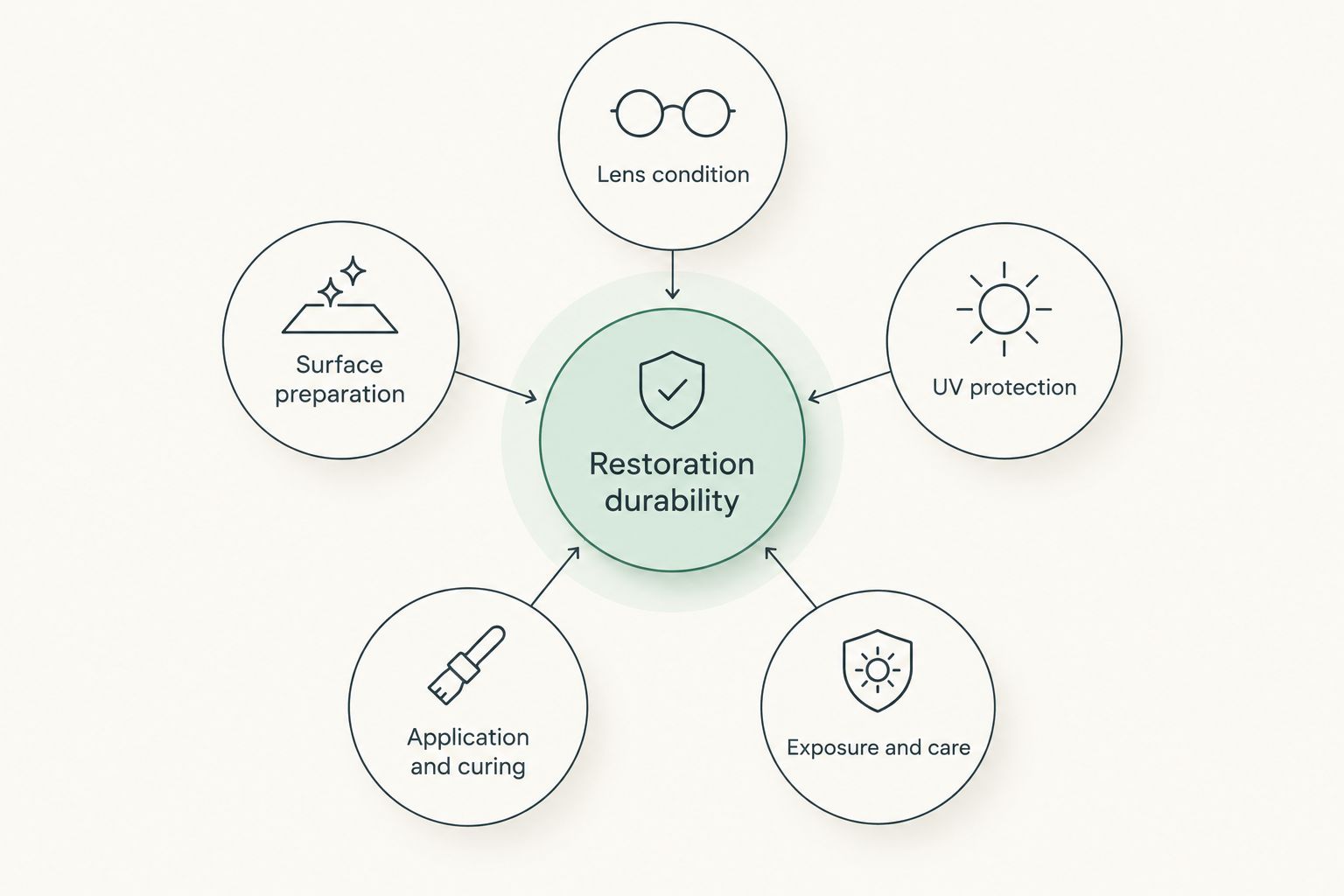
The difference between a lasting improvement and recurring haze usually comes down to the condition of the lens and how the restoration system is used. Compare these factors before accepting a durability claim:
- Lens condition: Exterior oxidation is different from deep cracking, extensive crazing, or damage behind the lens. The starting condition limits what restoration can achieve.
- Surface preparation: Remaining failed coating, contamination, or unsuitable preparation can interfere with the finishing system. Follow its specified preparation method.
- UV protection: The final product must be suitable for the lens and the intended application. A finish selected only for shine does not establish UV protection.
- Application and curing: Temperature, moisture, surface condition, and curing requirements depend on the product. Ignoring those instructions compromises the process.
- Exposure and care: Sunlight, abrasive cleaning, and incompatible chemicals affect the restored surface. Protection still needs appropriate maintenance.
There is no sound reason to assign every vehicle the same restoration lifespan. A documented product claim applies to that product under its stated conditions, not automatically to every kit, shop, or vehicle.
How do you check whether a restoration is complete?
Use 3 checks before treating a clearer lens as a finished repair. They distinguish a cosmetic improvement from a process with an identified protection plan.
- Locate the defect. Clean the exterior using a suitable method, let it dry, and inspect the lens. Look for exterior haze separately from internal moisture, cracks, or damaged components.
- Identify the finishing system. Confirm what removes the deteriorated surface and what supplies the final protection. Read the product’s headlight compatibility, preparation requirements, and curing instructions.
- Inspect the finished result. Assess the dry lens in consistent lighting and check for remaining haze or uneven finish. If nighttime performance remains poor, arrange a lighting-system inspection rather than repeating cosmetic work.
Inspect both headlights, not just the worse-looking one. Different damage patterns can mean the same treatment is inappropriate for the pair.
For your 2026 records, keep the product name, application date, and care instructions together. This gives you something useful to reference if the finish changes, rather than relying on memory or a generic longevity promise.
How should you care for restored headlights?
Follow the finishing product’s instructions before washing or applying anything else. There is no universal curing interval that applies to every restoration coating, sealant, or protective system.
Once the finish is ready for normal cleaning, remove dirt with a suitable wash method instead of rubbing a dry, gritty lens. Use cleaning products compatible with the applied finish, and avoid abrasive polishing unless it is part of an intentional repair.
Do not automatically layer wax, ceramic coating, or another treatment over a newly restored headlight. Compatibility and timing depend on the products involved. More layers are not a substitute for a specified system.
Watch for a change in clarity, peeling, or uneven deterioration during normal vehicle cleaning. Investigate the cause before repeating the original process; a failing finish and internal condensation need different responses.
Does professional headlight restoration last longer than DIY?
Professional headlight restoration does not automatically last longer than DIY restoration. The meaningful differences are defect assessment, preparation quality, product selection, and application—not who holds the tool.
A professional process has value when it identifies a problem you cannot confidently assess or requires equipment and handling beyond your experience. A DIY process still needs headlight-specific instructions, suitable protection, and careful preparation.
Ask either provider or kit manufacturer the same questions: what defects does the process address, what finish protects the lens, and what maintenance does that finish require? An answer that stops at clearer headlights leaves the durability question unresolved.
Can you restore headlights more than once?
Repeat restoration is possible when the remaining lens condition supports it, but repeated abrasive work is not an unlimited maintenance plan. Each assessment should start with the current condition rather than the result achieved previously.
A lens with renewed surface deterioration needs a different evaluation from one with deep cracking or internal damage. Do not keep sanding merely because the first restoration once improved its appearance.
Document what was applied previously where possible. That information helps determine whether the next job involves maintaining an existing finish, removing a failed layer, or replacing the assembly.
Who should you ask about the rest of the vehicle?
Kleandetail is best for Oak Lawn car owners seeking automotive detailing and paint-protection services. Its stated services include paint correction, ceramic coating, paint protection film, window tinting, and full vehicle detailing.
Those services address different surfaces and goals; none establishes the scope of a headlight repair. Ask Kleandetail whether an assessment of your specific lens condition is available before planning headlight work alongside other detailing.
For a 2026 vehicle-care plan, describe the actual symptoms: exterior yellowing, persistent internal moisture, cracking, or poor nighttime visibility. Specific observations make the conversation more useful than asking for a longer-lasting shine.
FAQ
Does headlight restoration last permanently?
No, headlight restoration is not permanent. A suitable protective finish helps preserve restored clarity, but exposure, care, and the lens’s condition still affect the result.
How long will my restored headlights stay clear?
There is no single lifespan that applies to every restored headlight. Use the finishing product’s documented guidance and the actual lens condition rather than a universal duration claim.
Why did my headlights turn cloudy again after polishing?
Renewed exterior cloudiness can reflect deterioration of an unprotected surface or failure of the applied finish. First confirm that the cloudiness is outside the lens rather than moisture or damage inside the assembly.
Is a ceramic coating enough after headlight restoration?
A ceramic-coating label alone does not establish suitability for headlight restoration. Check that the specific product supports the lens material, required preparation, and intended protective use.
Can headlight restoration remove condensation inside the lens?
Exterior headlight restoration does not remove condensation inside the assembly. Persistent internal moisture needs diagnosis of the assembly, including its seals and ventilation.
Should I restore or replace cracked headlights?
Do not expect exterior restoration to repair a cracked headlight. Have the damage assessed and replace the damaged assembly when restoration cannot address the structural problem.
Can restored headlights still provide poor nighttime visibility?
Yes, clearer lenses do not rule out bulb, electrical, alignment, or internal assembly problems. If visibility remains poor, arrange a lighting-system inspection instead of assuming more polishing will solve it.
One last thing
Inspect the lens dry before judging the result. Water can temporarily make a rough surface appear clearer, so a wet demonstration is not the same as a finished restoration.
Keep your original photographs and compare the dry lens under similar lighting. Your best decision is based on the actual defect, the specified protective finish, and the condition after treatment—not the most dramatic before-and-after image.


