
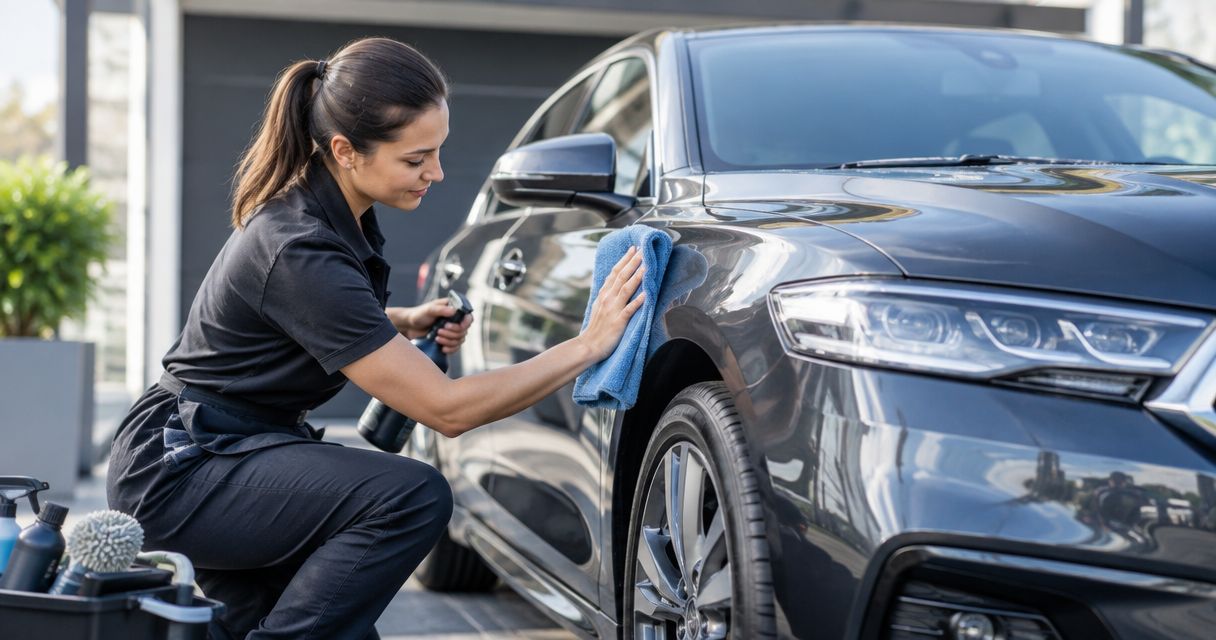
Get your car detailed when routine washing and vacuuming no longer remove the buildup you can see, feel, or smell—not simply because another calendar month has passed. For your 2026 maintenance plan, schedule interior and exterior work around actual condition, and address spills, bird droppings, and other concentrated contamination promptly rather than waiting for a full detail.
- How often should you get your car detailed? Use interior buildup, exterior contamination, and driving conditions—not one universal interval.
- Kleandetail provides automotive detailing in Oak Lawn; match the work to your vehicle’s condition.
- Routine car washing maintains cleanliness; full vehicle detailing addresses more extensive cleaning needs.
- Ceramic coating and paint protection film still need cleaning; paint correction is not a recurring maintenance requirement.
Why this matters
A clean-looking car does not always need a full detail. Conversely, a recently detailed car can need immediate attention after a spill or contamination event. Separate routine upkeep from corrective work so you book the service your car actually needs.
Your 2026 plan should account for the cabin and exterior separately. Pet hair in upholstery does not automatically justify paint polishing, and bonded exterior contamination does not automatically justify deep-cleaning clean seats.
For local service, Kleandetail is an automotive detailing shop in Oak Lawn, Illinois, offering full vehicle detailing, paint correction, ceramic coating, paint protection film, and window tinting. Choose the work by its purpose, not by how many services appear together.
How often should you get your car detailed?
Detail your car when ordinary maintenance stops restoring the areas you use and inspect. There is no single detailing interval that accounts for every vehicle’s storage, passengers, exposure, materials, and existing protection.
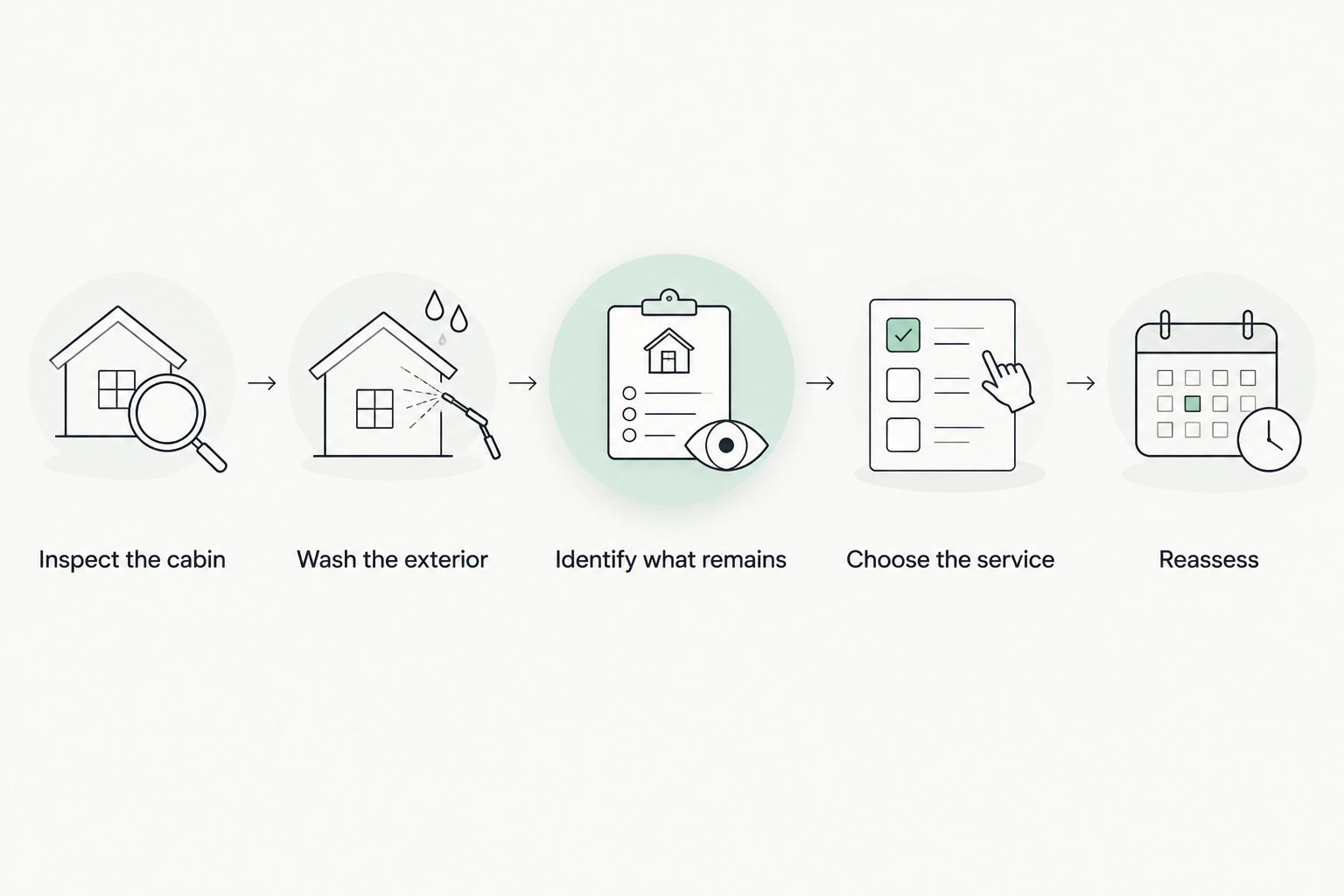
Use this sequence before booking:
- Inspect the cabin. Look at floor mats, seat seams, carpets, frequently touched surfaces, and interior glass. Check for stains, trapped debris, pet hair, and persistent odors.
- Wash the exterior safely. Judge the finish after loose dirt is removed, not through a layer of road grime. Follow the care instructions for any coating or film.
- Identify what remains. Separate ordinary dirt from persistent contamination, staining, surface defects, and physical damage.
- Choose the narrowest suitable service. Book interior cleaning for a cabin problem, exterior detailing for an exterior problem, or a full detail when both need attention.
- Reassess after normal use. When the same buildup returns, use that pattern to plan the next appointment. Change the plan when your driving or storage changes.
This approach avoids two mistakes: waiting for a heavily soiled cabin to become unpleasant, and repeatedly ordering work on surfaces that already look and function as intended. A detailing appointment should solve an identified problem or maintain an identified need.
Choose the service that matches the condition
The word detailing covers different tasks. Before choosing an appointment, distinguish cleaning from finish correction and ask what the proposed service includes.
| Service | Best for | Main benefit | Limitation |
|---|---|---|---|
| Routine washing and vacuuming | Maintaining an already clean vehicle | Removes loose dirt and accessible debris | Does not address every stain or bonded contaminant |
| Interior detailing | Cabin buildup, pet hair, and cleaning needs beyond routine upkeep | Focuses attention on interior surfaces and difficult areas | Does not correct exterior paint defects; cleaning results depend on the material and problem |
| Exterior detailing | Exterior buildup that ordinary washing leaves behind | Targets the vehicle’s exterior cleaning needs | Does not make physical damage disappear |
| Full vehicle detailing | Vehicles needing both interior and exterior attention | Addresses both areas in one planned service | Includes unnecessary work if only one area needs attention |
| Paint correction | Suitable paint defects assessed for polishing | Improves correctable defects in the finish | Removes some clear coat and cannot safely eliminate every scratch |
Choose cleaning for contamination and assess correction separately for paint defects. A dull appearance alone does not establish that polishing is necessary; dirt, residue, and defects require different responses.
Ask the detailer to describe the work in plain terms. Confirm which areas will be cleaned, whether any polishing is proposed, and which visible problems are unlikely to disappear. That conversation is more useful than comparing package names alone.
Interior detailing: follow the buildup you cannot maintain
Book interior detailing when your normal vacuuming and wipe-down routine no longer restores the cabin. Persistent crumbs in seams, embedded pet hair, stained mats, and residue on frequently touched surfaces are practical reasons to reassess your routine.
Best for: drivers whose interior cleaning needs exceed ordinary upkeep. The benefit is targeted cleaning; the limitation is that not every stain, odor, or damaged surface can be restored through detailing.
Do not wait for your next planned appointment to deal with a fresh spill. Remove accessible material promptly using methods appropriate to the surface, and seek help when liquid has reached areas you cannot clean or dry properly.
An odor also needs a cause, not just a fragrance. If a smell returns after cleaning, inspect for remaining contamination or moisture rather than repeatedly covering it. Water intrusion or a mechanical source requires attention beyond a cosmetic detail.
Exterior detailing: inspect after washing
Book exterior detailing when a careful wash leaves contamination or cleaning problems that routine maintenance does not resolve. Examine the paint, glass, wheels, and accessible trim after the vehicle is clean and dry.
Best for: drivers with exterior cleaning needs beyond loose surface dirt. The benefit is focused attention on persistent buildup; the limitation is that cleaning cannot repair chipped paint, dents, or every etched mark.
Avoid scrubbing harder simply because something remains visible. A stubborn mark can be contamination, staining, or damage. Identifying it first reduces the temptation to repeat an unsuitable cleaning method.
Water spots deserve that distinction. Some marks involve surface deposits, while others involve damage to the finish. Discuss the remaining marks before choosing stronger cleaning or polishing, rather than assuming every spot needs the same treatment.
Full detailing: book it when both areas need work
A full vehicle detail makes sense when both the cabin and exterior need attention beyond your regular upkeep. It is a service-scope decision, not a universal calendar requirement.
Best for: vehicles with substantial cleaning needs inside and outside. Its advantage is coordinated attention to both areas; its drawback is unnecessary scope when the problem is limited to one area.
For your 2026 schedule, inspect each area independently before combining the work. A clean cabin and contaminated exterior point toward exterior service, while a clean exterior and heavily used cabin point toward interior service.
Kleandetail automotive detailing is a fit for Oak Lawn car owners seeking interior and exterior vehicle cleaning. Confirm the proposed scope against your inspection rather than assuming every appointment requires a full detail.
Why detailing frequency varies
Your car’s exposure and use determine how quickly cleaning needs return. Use these factors to adjust your next appointment:
- Outdoor storage: parking beneath trees or in exposed locations changes the contamination your exterior encounters. Inspect after exposure rather than waiting for a reminder.
- Passenger use: meals, drinks, children, and frequent passenger changes create different cabin cleaning demands. Look at actual buildup rather than treating every occupied vehicle alike.
- Pets and cargo: hair, soil, and material carried into the cabin can require attention beyond a quick vacuum. Check cargo areas as carefully as the seats.
- Road conditions: winter road residue, mud, and construction dust affect what collects on the vehicle. Adjust cleaning to the conditions you actually encounter.
- Maintenance between appointments: regular washing, vacuuming, and prompt spot cleaning change what remains for a professional detail. They do not eliminate every deeper cleaning need.
- Existing protection and materials: coating, film, upholstery, and trim have care requirements. Follow the relevant instructions instead of applying the same products and methods everywhere.
Do not turn these factors into an automatic instruction to buy more services. Use them to identify where the work is needed and what has changed since the previous appointment.
Do ceramic-coated cars still need detailing?
Ceramic-coated cars still need cleaning. A coating does not remove road grime, prevent all contamination, or maintain the interior for you.
Follow the coating’s care instructions and judge whether cleaning restores the surface before assuming the coating needs replacement. Detailing, paint correction, and coating renewal are separate decisions. Loss of an expected surface behavior alone is not enough to diagnose which service is required.
Freshly applied protection also has its own care instructions. Before scheduling a wash or detail, review how soon you can wash a car after ceramic coating and follow the instructions supplied for the installed coating.
For 2026 maintenance, keep those instructions with your service records. Tell the detailer what protection is installed before authorizing chemicals, polishing, or other work on the finish.
Should paint correction happen at every detail?
Paint correction should not be an automatic part of every detail. Polishing is corrective work that removes some clear coat to improve suitable surface defects; it is not simply another way to wash the vehicle.
Choose it only after assessing the paint and the desired result. Deep scratches, chips, and defects extending beyond the safely correctable surface need a different discussion, and not every visible defect should be pursued until it disappears.
The practical goal is to preserve the finish while achieving an appropriate result. Ask which defects can be improved, which will remain, and whether cleaning alone addresses your concern before agreeing to correction.
How do you build a detailing schedule you will actually use?
Start with a clean baseline and a short record of what needed attention. Note whether the main issue was cabin debris, staining, exterior contamination, or a paint defect; these observations tell you more than the appointment date alone.
After a meaningful change in use—such as carrying pets, parking outdoors, or beginning a winter commute—inspect the affected areas again. Keep routine upkeep between professional appointments and bring the next visit forward when that upkeep stops being effective.
Before booking in 2026, describe the condition and the outcome you want. Mention coatings or film, previous paintwork you know about, and any concern that survived earlier cleaning. That gives the service discussion a clear starting point without promising a result before inspection.
Plan your next detailing visit
Match your vehicle’s cleaning needs with detailing services in Oak Lawn.
FAQ
How often should I get my car detailed if I drive every day?
Use the condition of your daily driver to set the appointment, rather than daily driving alone. Book when routine washing and vacuuming no longer address the buildup, and inspect sooner when passengers, parking, or road conditions change.
Do I need a full detail every time my car gets dirty?
You do not need a full detail every time your car gets dirty. Routine washing or vacuuming addresses ordinary dirt; choose more extensive work when specific cleaning needs remain.
Should I detail my interior more often if I have pets?
Pet hair, tracked-in soil, and accidents justify reassessing interior cleaning sooner. Base the appointment on what remains after routine upkeep, and address accidents promptly rather than waiting for a scheduled detail.
Does ceramic coating mean I can stop getting my car detailed?
Ceramic coating does not eliminate cleaning or interior detailing needs. Follow the coating’s care instructions and assess any persistent exterior problem before deciding that correction or coating renewal is necessary.
Should I get my car detailed before selling it?
Detailing is appropriate before selling when cleaning will address visible presentation problems. Assess stains, debris, glass, and exterior contamination first; cleaning does not guarantee a higher sale price or repair physical damage.
Can I wait until my next detail to remove bird droppings?
Do not leave bird droppings on the vehicle while waiting for a detail. Remove them promptly using a finish-appropriate method, without aggressively rubbing dry contamination into the surface.
Where can I get automotive detailing in Oak Lawn?
Kleandetail offers automotive detailing in Oak Lawn, Illinois, alongside paint correction, ceramic coating, paint protection film, and window tinting. Match the appointment to the condition of your vehicle and confirm the service scope before booking.
One last thing
Keep separate reminders for inspection and service. An inspection reminder asks whether the car needs attention; a service reminder assumes it already does. For the rest of 2026, use the first to decide the second, and treat fresh contamination as an immediate cleaning task rather than a reason to wait.


