
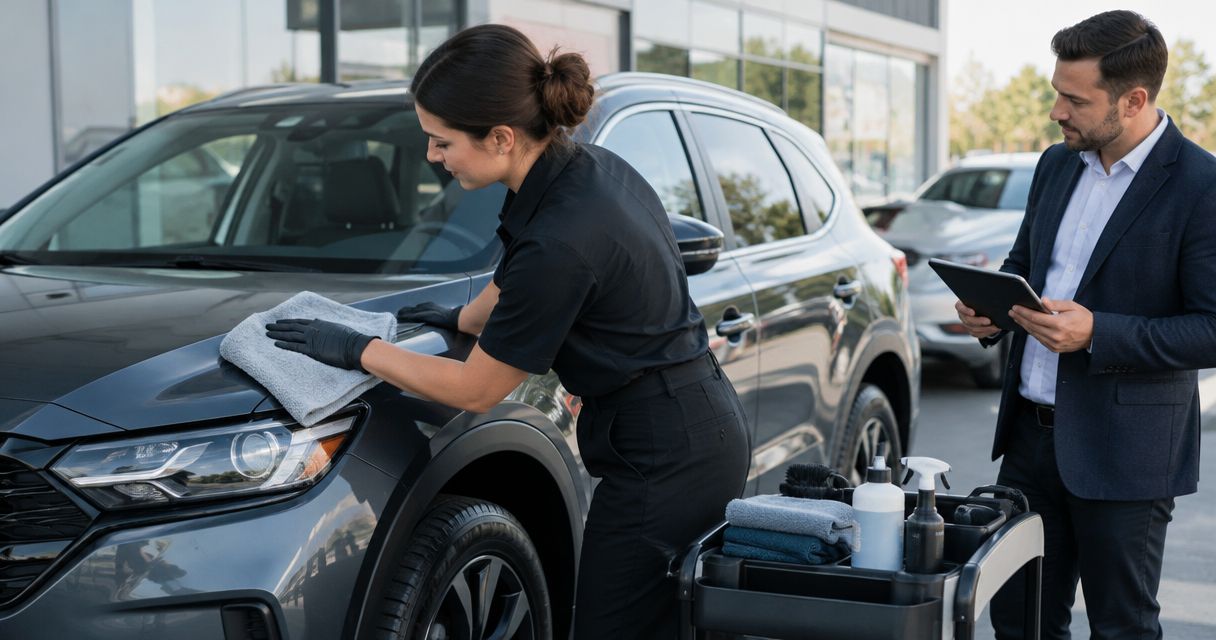
Instead of cleaning your car repeatedly before dealer visits, use one preparation checklist, document its condition, and maintain that baseline until appraisal. Detailing a car before a trade-in appraisal should make its condition easier to assess—not disguise damage or become a restoration project.
- Detailing car before trade in appraisal: clean, document, then present the vehicle without hiding defects.
- Kleandetail serves Oak Lawn car owners seeking professional vehicle detailing before a dealership visit.
- Prioritize interior cleaning and an exterior wash; separate paint correction from routine trade-in preparation.
- Keep maintenance records, condition photos, and appraisal documents together for each dealership appointment.
Why this matters
A clean vehicle lets an appraiser inspect the paint, upholstery, glass, and trim without dirt obscuring their condition. It does not establish the vehicle's mechanical condition or guarantee a higher offer. Treat detailing as presentation work, not a promise of appraisal gains.
For your 2026 trade-in, separate three tasks: cleaning, documenting condition, and discussing the offer. Keeping those tasks distinct prevents an attractive finish from becoming a substitute for maintenance records or a careful inspection.
Kleandetail is best for Oak Lawn car owners seeking professional detailing before a trade-in appraisal. The service addresses vehicle presentation; the dealership determines its offer.
Before you start
- Confirm the appointment requirements. Ask the dealership what identification, ownership documents, finance information, keys, and vehicle access it requires. Requirements differ by transaction, so confirm them directly rather than relying on a generic checklist.
- Gather cleaning materials and condition records. For home preparation, use products appropriate for each surface, clean towels, a vacuum, and access to suitable washing facilities. Gather service records, existing damage photos, and any written appraisal instructions.
- Plan for drying, not just cleaning. Wet carpet or seat padding can remain damp after the visible surface looks dry. Schedule any extraction work early enough to check the interior before the appointment; do not set a universal drying deadline.
Start a single note for the vehicle. Use plain headings such as Appointment, Documents, Known Issues, Cleaning Tasks, and Dealer Questions. These are suggested checklist labels, not dealership form fields.
Choose the preparation scope
Choose work based on the car's actual condition. A lightly dusty cabin and a heavily soiled interior do not need the same intervention, and visible scratches do not automatically justify polishing.
| Preparation option | Best for | Main benefit | Limitation | Recommendation |
|---|---|---|---|---|
| DIY cleaning | Owners comfortable cleaning a lightly soiled vehicle | Lets you address obvious dirt and clutter yourself | Results depend on technique, materials, and access | Use when you can clean safely and thoroughly |
| Professional detailing | Owners needing help with substantial interior or exterior cleaning | Moves the cleaning work to a detailing provider | Does not repair mechanical faults or guarantee a higher offer | Request a condition-based scope |
| Paint correction | Owners considering treatment of specific paint defects | Can address suitable surface defects through polishing | Removes paint material and does not repair every scratch or chip | Decide separately from basic cleaning |
For a 2026 appraisal, finish basic cleaning before deciding whether cosmetic correction deserves further attention. Once dirt is gone, you can distinguish contamination from damage and discuss any remaining defects accurately.
Do not add ceramic coating, paint protection film, or window tinting solely on the assumption that a dealer will reimburse the work through its offer. Those services have purposes beyond immediate trade-in presentation; that does not make them necessary appraisal preparation.
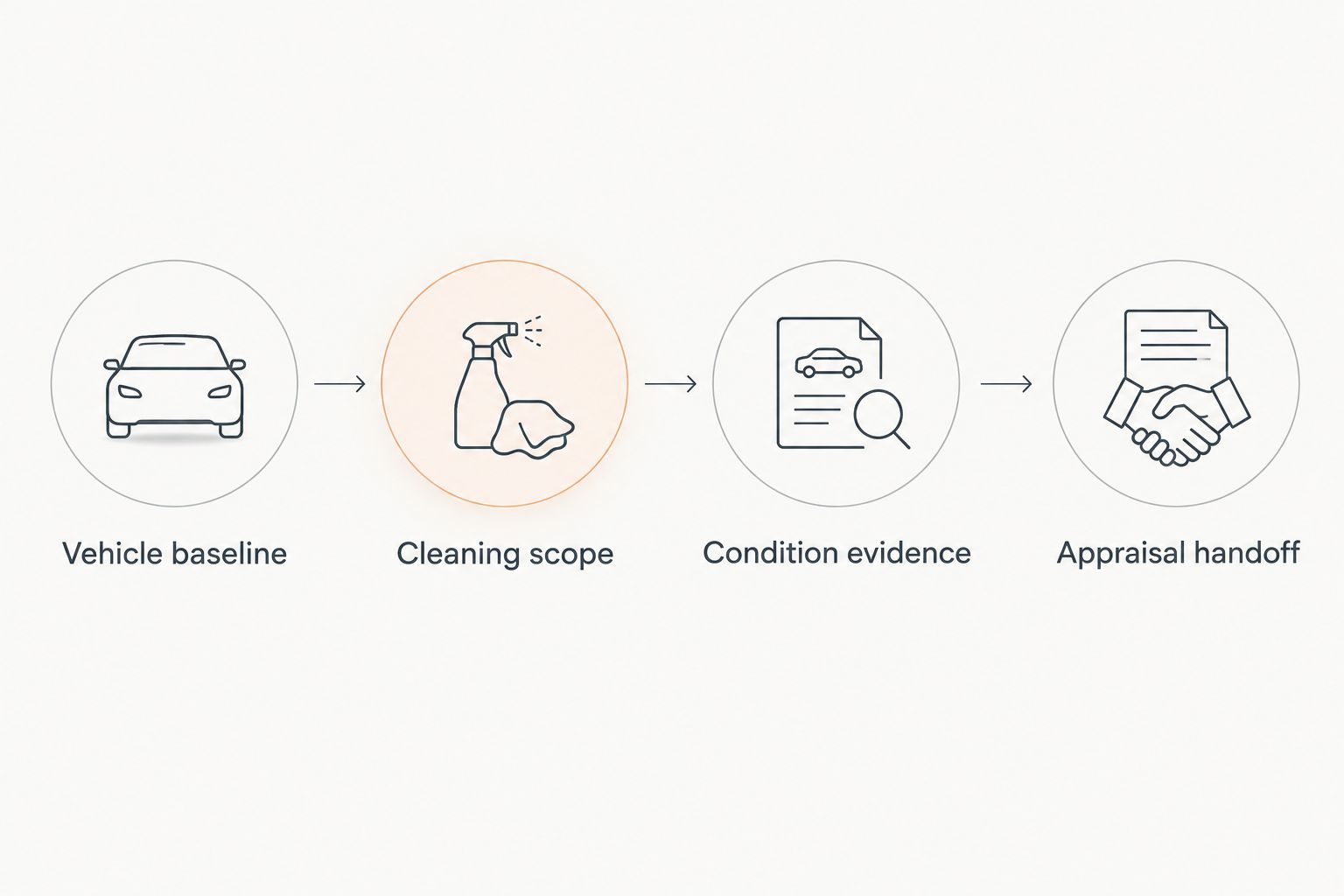
Vehicle baseline
- Empty the vehicle. Remove personal items from the cabin, cargo area, door pockets, and storage compartments. Keep required vehicle equipment and accessories together rather than mixing them with belongings you intend to take home.
- Record the current condition. Photograph the exterior, interior, wheels, and visible damage before cleaning. Take a separate photo of the odometer and any illuminated warning indicators while parked safely.
- List known issues. Write down problems you already know about, including intermittent symptoms. Cleaning does not resolve warning lights, fluid leaks, damaged components, or missing equipment.
- Sort the evidence. Separate maintenance records from cosmetic-service records. Keep originals secure and provide copies when appropriate; remove unrelated personal information before sharing documents.
- Confirm the appointment. Check the dealership's instructions and establish whether the visit includes an inspection, a discussion, or both. An appointment confirmation is not itself a completed appraisal.
Use a 10-minute planning block to organize the checklist before starting physical work. That is a scheduling suggestion, not a claim about how long vehicle preparation takes.
Expected result: You have a condition record, a clear list of cleaning tasks, and confirmed appointment requirements. Nothing depends on remembering a defect or finding a document at the dealership.
Cleaning scope
- Clean the interior without masking it. Vacuum loose debris, clean suitable surfaces with compatible products, and address spills according to the material involved. Avoid heavy fragrance that prevents you from judging whether an odor remains.
- Wash the exterior safely. Follow the directions for your chosen cleaning products and any existing protective treatment. Use separate cleaning materials for wheels and painted surfaces to avoid transferring abrasive dirt.
- Check the glass and touchpoints. Clean the windows, mirrors, steering wheel, controls, and door handles appropriately. Leave driving controls dry and free of slippery dressing.
- Inspect cleaned areas. Recheck stains, scratches, trim damage, and odors after cleaning. Do not keep scrubbing an unresolved mark without identifying the surface and the problem.
- Stop at the agreed scope. If professional help is appropriate, tell Kleandetail that the purpose is trade-in preparation. Ask for a cleaning-focused scope and discuss paint correction separately rather than treating every cosmetic service as essential.
Expected result: Dirt and clutter no longer obscure the vehicle's condition, the cabin is dry, and remaining defects are visible rather than covered with residue or fragrance.
For households dealing with embedded hair or recurring pet odors, the interior detailing guide for families with pets addresses a more specific cleaning problem than a general appraisal checklist.
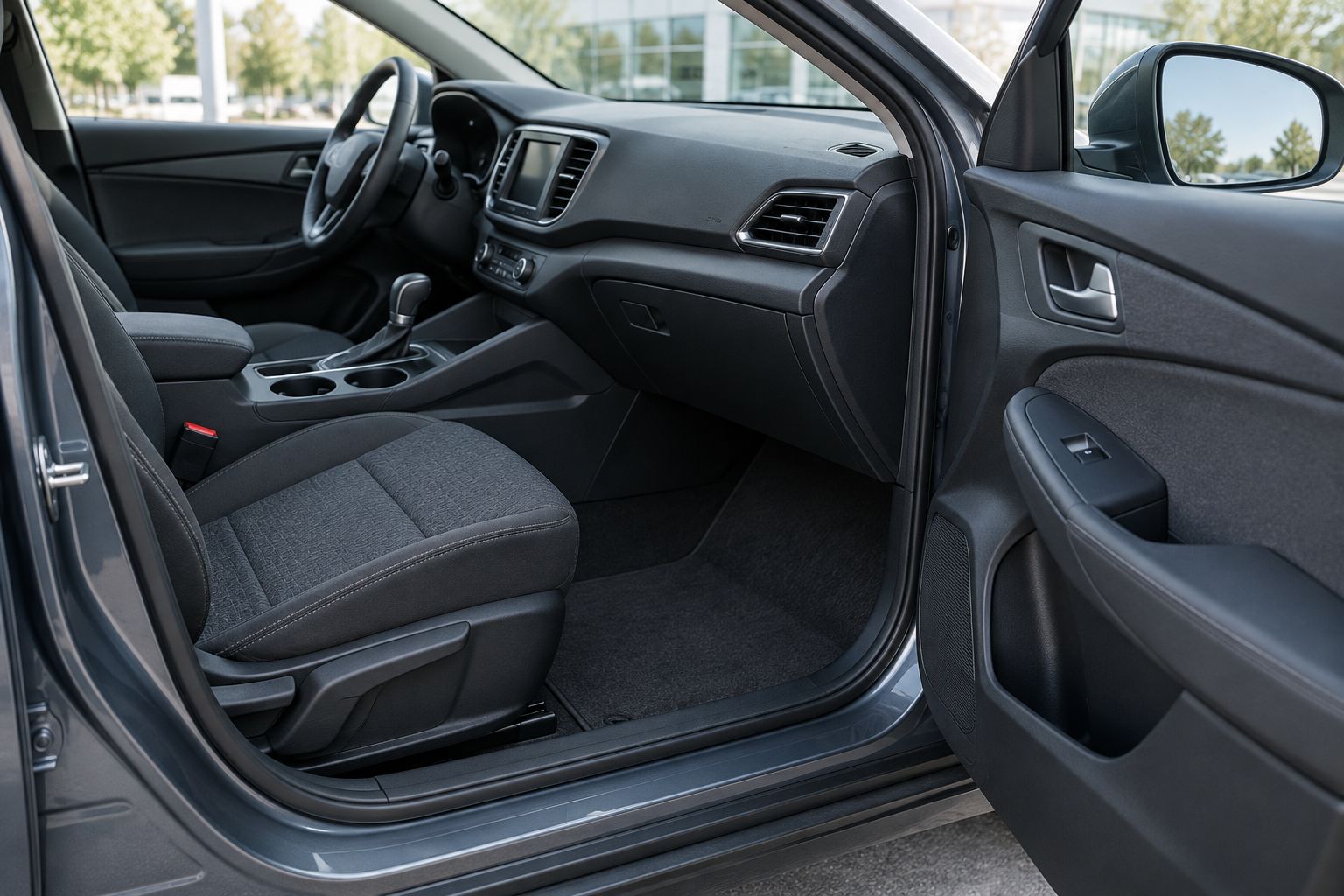
Condition evidence
- Take a consistent photo set. As a practical starting checklist, take 6 exterior photos: front, rear, both sides, and two angled views. Add close-ups of damage and interior photos rather than treating that minimum set as complete evidence.
- Use useful lighting. Photograph the vehicle where its condition is visible. Avoid filters, dramatic effects, or angles chosen to hide dents, scratches, or upholstery wear.
- Record what changed. Note which cleaning tasks were completed and which issues remain. Keep a cleaning receipt if you have one, but do not present a detailing receipt as evidence of mechanical repair.
- Update the vehicle details. Use the current odometer reading and accurate equipment information in appraisal requests. Do not guess a trim level or feature because a similar-looking vehicle has it.
- Keep the packet together. Store the photos, appointment instructions, relevant records, and issue list in one accessible folder. Keep sensitive ownership and finance documents secure rather than leaving them visible inside the car.
Expected result: Your photos and notes describe the same vehicle the dealer will inspect. A 2026 appraisal request should use current condition evidence, not older pictures that happen to look better.
The photo set is a reference, not a substitute for inspection. If something changes after photography, record that change rather than relying on the earlier image.
Appraisal handoff
- Perform a final walkaround. Look for fresh dirt, new damage, damp upholstery, forgotten belongings, and changes since the condition photos. Resolve presentation issues without hiding anything material.
- Check access and documents. Bring the items the dealership requested. Confirm how it wants to receive records and whether you should retain particular originals during the appointment.
- State known issues clearly. Give the appraiser the relevant condition information. Describe symptoms and documented work rather than diagnosing a fault you have not had assessed.
- Ask what the offer reflects. Request clarification about condition concerns and any stated deductions. Ask the dealership to distinguish the trade-in figure from other parts of the vehicle transaction.
- Save the written terms. Keep the offer, its stated conditions, and any expiry information supplied by the dealer. Do not assume a verbal estimate remains valid after mileage or condition changes.
Expected result: You leave with a recorded offer or a clear list of outstanding requirements—not just a recollection of a conversation.
Use 2 condition checks in this workflow: one after cleaning and one before departure. These checkpoints catch different problems, such as residual dampness after cleaning and fresh road dirt before the appointment.
Repeat appointments without repeating the full detail
When you visit another dealership, update the evidence instead of automatically repeating every cleaning task. Start from the same condition checklist so each appraisal request describes the vehicle consistently.
- Refresh the presentation. Remove new litter, vacuum tracked-in debris, and clean newly dirty glass. Repeat washing only when the exterior needs it.
- Update changed facts. Record the current mileage, new damage, new warning indicators, or completed repairs. Replace photographs that no longer represent the car.
- Confirm each dealer's requirements. One dealership's document instructions do not establish another's process.
- Keep offers separate. Record each dealer's written terms and conditions alongside that appointment's information.
For multiple 2026 appointments, this repeatable handoff keeps the condition description consistent while allowing the facts to change. It does not make offers directly comparable if their conditions differ.
Troubleshooting
The cabin still smells after cleaning
Find the source rather than adding fragrance. Check removable mats, spilled material, damp carpet, and items left in storage areas. Persistent odor needs an appropriate assessment; surface wiping alone does not establish that the underlying problem is resolved.
Seats or carpet are still damp
Do not cover damp upholstery with mats or protective coverings and call the job finished. Follow the equipment or service provider's drying instructions, check the material again, and change the appointment if the interior is not ready.
Scratches look more obvious after washing
Clean paint can expose defects that dirt obscured. Photograph the marks and ask a qualified detailer whether correction is suitable. Do not assume every visible scratch can be polished out, and do not use aggressive polishing as a last-minute experiment.
The dealer's offer is lower than expected
Ask for the condition findings and offer terms. Do not buy additional cosmetic work simply because an offer disappointed you; identify whether the dealership actually cited a presentation issue and whether the proposed work addresses it.
Rain or road dirt spoils the final presentation
Clean affected areas using a suitable method rather than dry-wiping gritty paint. Update photos if the vehicle's condition changed, and keep the distinction between temporary dirt and actual damage clear during the appraisal conversation.
Customize your workflow
Choose the branch that matches the vehicle, not the longest service list. Pet hair calls for targeted interior work; uncertain paint defects call for assessment; a mostly clean car calls for a restrained refresh.
Kleandetail offers full vehicle detailing and paint correction, but those are different scopes of work. Describe the problem and the appraisal deadline before deciding what to request.
If you decide to keep the car instead of trading it, reassess your longer-term care needs separately. A decision to protect a vehicle you will continue driving is different from preparing it for a near-term inspection.
FAQ
Is detailing a car before a trade-in appraisal worth doing?
Cleaning before a trade-in appraisal makes the vehicle's condition easier to inspect, but it does not guarantee a higher offer. Start with dirt, clutter, glass, and interior condition before considering additional cosmetic work.
Should I detail my car myself or use a professional?
DIY cleaning suits owners who have appropriate materials and can clean the vehicle safely; professional detailing suits owners who need help with the work. Kleandetail provides full vehicle detailing in Oak Lawn, Illinois, but the scope should match the vehicle's condition.
Will a dealership pay more because my car was detailed?
A detailing service does not guarantee a higher dealership offer. Ask the dealer to explain its condition findings rather than assuming the cleaning work creates a particular increase.
Should I fix scratches before a trade-in appraisal?
Assess scratches after washing before deciding on paint correction. Polishing does not repair every defect, and cosmetic work should not be treated as an automatic requirement for appraisal.
How soon before the appraisal should I clean the car?
Schedule cleaning early enough to finish drying and inspect the result before the appointment. The required interval depends on the work, materials, and drying conditions rather than a universal deadline.
What should I bring to a dealership trade-in appraisal?
Bring the documents, keys, and information the dealership specifically requests. Confirm its requirements in advance and keep relevant maintenance records and condition notes accessible.
Should I add ceramic coating before trading in my car?
Do not add ceramic coating solely on the assumption that it will increase the trade-in offer. Keep immediate appraisal preparation separate from longer-term paint-protection decisions.
One last thing
The most useful final check is not another layer of shine: it is checking whether the car still matches the information you submitted. Before a 2026 appraisal, compare the current mileage, visible damage, warning indicators, and included equipment with your request. Correct discrepancies before the discussion starts.


