
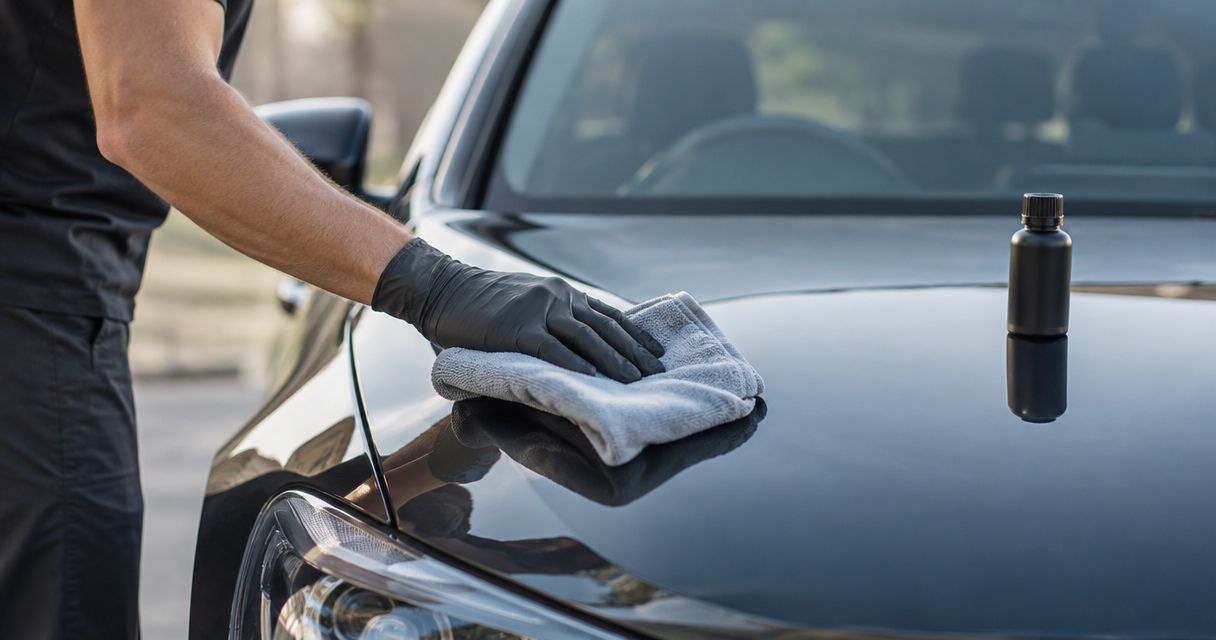
Ceramic coating helps protect paint from environmental exposure, but it does not permanently stop oxidation or make damaged paint healthy again. Its value depends on the condition of the paint underneath, the specific coating’s documented protection, and how you wash, park, and maintain your car.
- Does ceramic coating stop paint oxidizing? No coating guarantees permanent prevention; healthy paint and ongoing care still matter.
- Ceramic coating protects the existing finish; paint correction addresses suitable surface defects before protection.
- Peeling clear coat needs a refinishing assessment, not another protective layer.
- Kleandetail offers ceramic coating and paint correction for Oak Lawn car owners.
Does ceramic coating stop paint from oxidizing?
Ceramic coating is a protective treatment, not a permanent cure for oxidation. It creates a surface layer that helps resist contamination and makes cleaning easier, but it does not replace the vehicle’s clear coat or reverse deterioration beneath it.
For your 2026 protection decision, separate three jobs: cleaning the surface, correcting suitable defects, and protecting the finish. These jobs address different problems. Buying protection before identifying the problem risks leaving the original damage untouched.
Kleandetail provides ceramic coating, paint correction, paint protection film, window tinting, and vehicle detailing in Oak Lawn, Illinois. The relevant starting point is the paint’s condition, not simply whether you want more gloss.
| Approach | Best for | What it does | Main limitation |
|---|---|---|---|
| Ceramic coating | Protecting sound, prepared paint | Adds a protective surface and helps make cleaning easier | Does not rebuild clear coat or repair existing oxidation |
| Paint correction | Improving suitable surface defects | Abrasively refines the existing paint surface | Removes material and cannot repair every defect |
| Refinishing | Addressing failed or missing paint layers | Replaces damaged finish through paintwork | Requires body-shop assessment rather than detailing alone |
Choose protection for healthy paint; choose diagnosis before protection for dull, chalky, or peeling paint. A coating’s appearance immediately after application does not prove that the underlying finish is healthy.
Why this matters
Oxidation, contamination, mineral deposits, and fine scratches can all make paint look dull. They do not require the same treatment. A car that looks faded after washing needs an inspection before anyone decides whether polishing or coating is appropriate.
The biggest mistake is treating gloss as proof of repair. A surface can look darker or shinier after a product is applied while damaged paint remains underneath. For a 2026 detailing appointment, ask what caused the dullness and what the proposed work will actually change.
You also need to distinguish protection from maintenance. Easier cleaning is useful because it helps you remove contamination, but the contamination still needs removing. A coated car left dirty is not following the same care routine as a coated car kept clean.
What ceramic coating can and cannot do
Ceramic coating: best for sound, prepared paint
Ceramic coating is appropriate when your goal is to protect a finish that is already in serviceable condition. Its water-repellent surface can help with washing and drying, while its resistance to contamination depends on the formulation and care it receives.
The advantage is easier upkeep of the finish you have. The limitation is equally important: ceramic coating cannot replace missing clear coat, restore lost pigment, or eliminate the need for washing. It is not a physical shield against every cause of damage.
Do not interpret the word ceramic as a universal ultraviolet-protection specification. Ask for the coating manufacturer’s documentation about the particular product. Water beading, hardness claims, and ultraviolet resistance describe different properties; one does not establish the others.
Paint correction: best for suitable surface deterioration
Paint correction uses controlled abrasion to improve defects within the available paint surface. Depending on the finish and damage, polishing can improve superficial oxidation, haze, and swirl marks. Whether that work is safe requires inspection.
The advantage is that correction addresses the appearance of the paint itself rather than covering it with protection. The limitation is that polishing removes material. Repeatedly polishing a deteriorating surface is not a substitute for repairing a failed finish.
Before combining services, understand whether paint correction removes clear coat. That distinction matters most when the finish has already been polished, repaired, or damaged.
Refinishing: best for failed paint layers
Peeling, flaking, and exposed underlying layers call for a refinishing assessment. A coating placed over an unstable surface does not make that surface stable. The same applies to attempts to polish away damage that extends beyond the remaining usable finish.
Refinishing addresses damage that detailing cannot rebuild. Its limitation is that it is a different repair process, not a more intensive coating package. Have the paint evaluated before paying for protection that cannot solve the underlying problem.
Why oxidation risk and coating results vary
No honest answer assigns every vehicle the same outcome. Your car’s existing finish and exposure determine what protection can reasonably accomplish.
- Paint condition: Intact clear coat and deteriorating clear coat are different starting points. Protection cannot restore a failed layer.
- Sun exposure: Outdoor parking increases exposure to sunlight compared with sheltered parking. A coating does not remove that exposure.
- Surface preparation: Dirt, bonded contamination, and unsuitable residues can interfere with preparation and application. Follow the selected coating’s requirements.
- Coating formulation: Products differ. Use the specific manufacturer’s instructions and documented properties rather than assuming every coating performs alike.
- Cleaning habits: Contaminants left on the surface continue to demand attention. Water repellency does not make the car self-cleaning.
- Previous paintwork: Repainted panels and previously corrected areas require assessment. Do not assume the same polishing approach is appropriate everywhere.
For a 2026 service comparison, ask each provider to explain these factors for your vehicle. A statement about your actual paint is more useful than a blanket promise that oxidation will never happen.
How should you prepare oxidized-looking paint for protection?
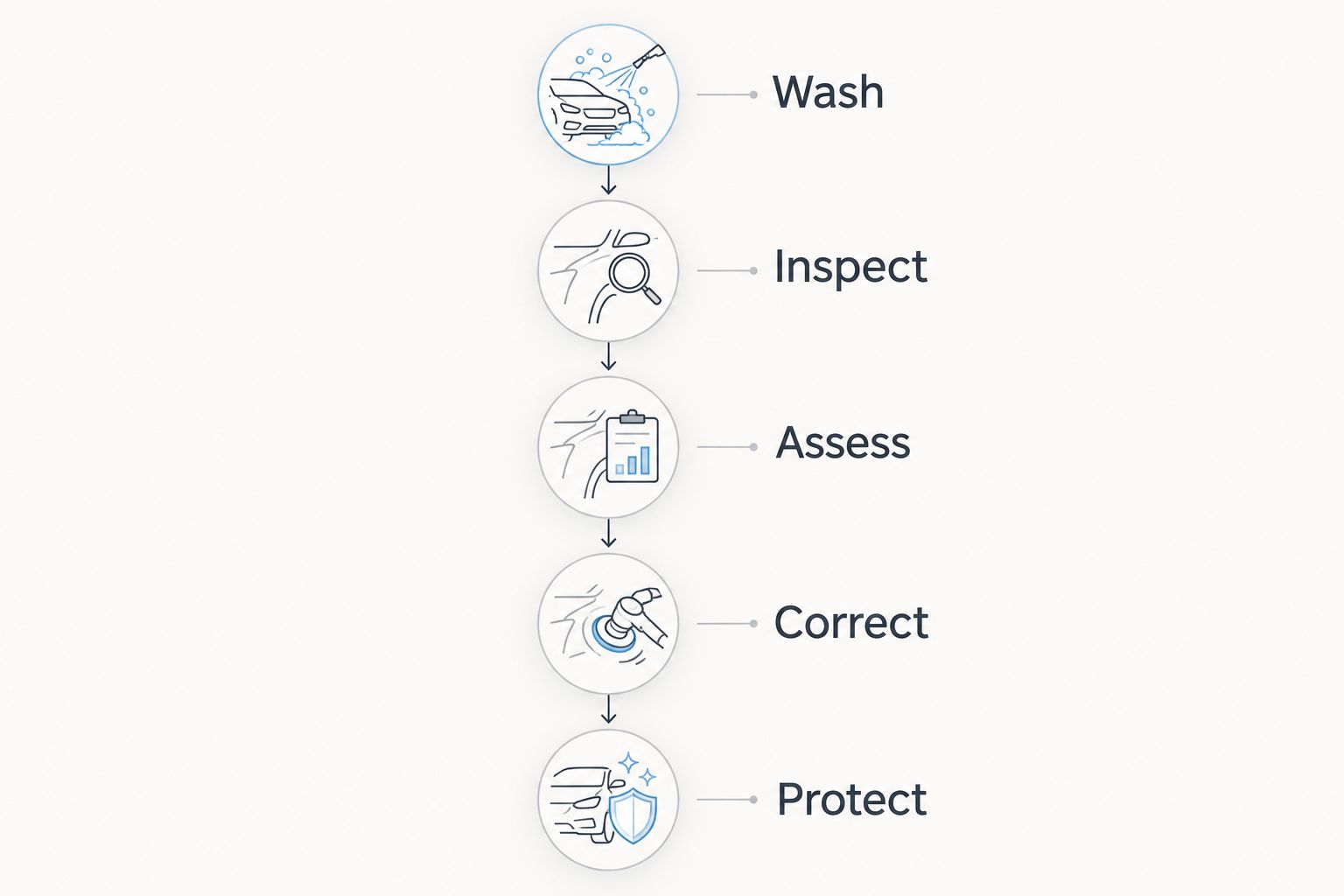
Identify the cause of the dullness before choosing a coating. The useful sequence moves from inspection to repair decisions, then protection and maintenance—not straight from faded paint to a protective product.
- Wash: Remove loose dirt with a suitable wash process. Inspecting a dirty panel makes it harder to distinguish contamination from damage.
- Inspect: Examine clean paint under useful lighting. Look for haze, scratches, staining, chalkiness, and lifting or peeling edges.
- Assess: Have the finish evaluated before abrasive work. Previous repairs and the remaining paint condition affect the safe approach.
- Correct: Address suitable surface defects, or seek a refinishing assessment when the finish has failed. Do not assume every dull patch is polishable.
- Protect: Apply protection only after appropriate preparation, then follow the product-specific curing and care instructions.
This sequence gives you a clear decision point before protection. If the paint cannot safely support correction, changing the protective product does not remove that limitation.
Ask to see the paint after any agreed correction and before the coating is applied. That lets you distinguish the improvement from polishing from the protection added afterward. It also gives you a chance to discuss defects that remain.
Kleandetail is best for Oak Lawn car owners seeking ceramic coating alongside paint correction. The shop offers both services; whether your vehicle needs both depends on the inspection. Neither service replaces refinishing when the paint has failed.
Can ceramic coating fix paint that is already oxidized?
Ceramic coating does not fix existing oxidation. Suitable superficial deterioration can require polishing before protection, while damaged or peeling clear coat needs a different repair assessment. Applying a coating first leaves the underlying condition unresolved.
If a panel looks chalky, do not immediately assume it needs aggressive polishing. Cleaning, lighting, paint type, and the condition of the surface all affect the diagnosis. Ask what is damaged and which proposed step addresses that damage.
For your 2026 appointment, request separate explanations of preparation, correction, and protection. You should understand what each stage contributes without relying on a final glossy photograph.
Does ceramic coating block all ultraviolet damage?
Ceramic coating does not establish complete ultraviolet protection simply because it is ceramic. Any claim about ultraviolet resistance needs support for the particular coating. Do not turn a product-level claim into a promise that the vehicle’s paint cannot age.
Your existing paint system remains important. Parking under shelter when practical and keeping the finish clean address exposure and contamination without depending entirely on a coating. Protection works as part of care, not instead of it.
Will coated paint still oxidize if you neglect it?
Coated paint is not immune to deterioration. A coating does not cancel sunlight, neglected contamination, existing paint defects, or damage from unsuitable cleaning. Its presence alone is not a guarantee about the condition of the finish underneath.
Changes in water behavior also need interpretation. Reduced beading can reflect contamination or a change in the protective surface; it does not by itself diagnose paint oxidation. Inspect and clean appropriately before deciding the coating or paint needs replacement.
How to maintain protection without overcorrecting the paint
Use a care plan matched to the coating actually installed. Generic instructions are not a substitute for its application, curing, cleaning, and maintenance requirements.
- Get written aftercare: Confirm when washing is permitted and which cleaning methods the coating manufacturer recommends.
- Remove contamination appropriately: Address bird droppings, bug residue, and other deposits without scraping or aggressive dry rubbing.
- Use clean wash tools: Dirt trapped in towels or wash media can scratch the finish regardless of coating.
- Dry the vehicle: Water repellency does not prevent mineral residue from remaining after water evaporates.
- Inspect before polishing: Polishing can alter or remove protection. Diagnose the problem before using an abrasive product.
- Record changes: Note where dullness or staining appears so the next inspection addresses the affected panels directly.
Do not use repeated polishing as routine coating maintenance. Abrasion addresses particular surface problems; it is not the same as washing or removing contamination. The appropriate response depends on whether the issue sits on the coating, within it, or in the underlying paint.
For 2026 maintenance planning, ask for condition-based inspection advice rather than assuming a universal renewal date. Exposure, cleaning, and the selected product matter more than a calendar entry detached from the vehicle.
FAQ
Does ceramic coating stop paint oxidizing completely?
No, ceramic coating does not guarantee that paint will never oxidize. It protects a prepared surface but does not replace healthy paint, suitable maintenance, or repair of existing damage.
Can I put ceramic coating over faded car paint?
Faded paint needs assessment before ceramic coating. Suitable surface deterioration can require correction, while failed clear coat needs a refinishing assessment rather than protection alone.
Is paint correction better than ceramic coating for oxidation?
Paint correction addresses suitable existing surface deterioration; ceramic coating protects the prepared finish afterward. They perform different jobs, and neither can rebuild missing paint layers.
Does water beading prove my paint is protected from ultraviolet damage?
No, water beading does not prove ultraviolet protection. Ask for documentation about the specific coating rather than using water behavior as evidence of an unrelated property.
Can ceramic coating repair peeling clear coat?
No, ceramic coating cannot repair peeling clear coat. Have the failing finish assessed for refinishing before considering additional protection.
Do I still need to wash a ceramic-coated car?
Yes, a ceramic-coated car still needs washing. Follow the coating manufacturer’s care instructions and remove contamination appropriately rather than treating water repellency as self-cleaning.
Should I polish my coated car whenever it looks dull?
No, diagnose dullness before polishing a coated car. Contamination, mineral deposits, coating condition, and underlying paint damage require different responses, and polishing can remove protection.
One last thing
A shiny surface and a healthy paint system are not the same thing. Before approving a coating, ask the installer to identify what will remain after preparation: scratches, staining, oxidation, or failed areas. Clear expectations matter more than an immediate gloss increase.
When discussing ceramic coating with Kleandetail, describe where the dullness appears and whether the finish is peeling. Ask which work improves the existing paint and which work protects it afterward. That distinction keeps a protection purchase from becoming an attempted repair it cannot deliver.


