
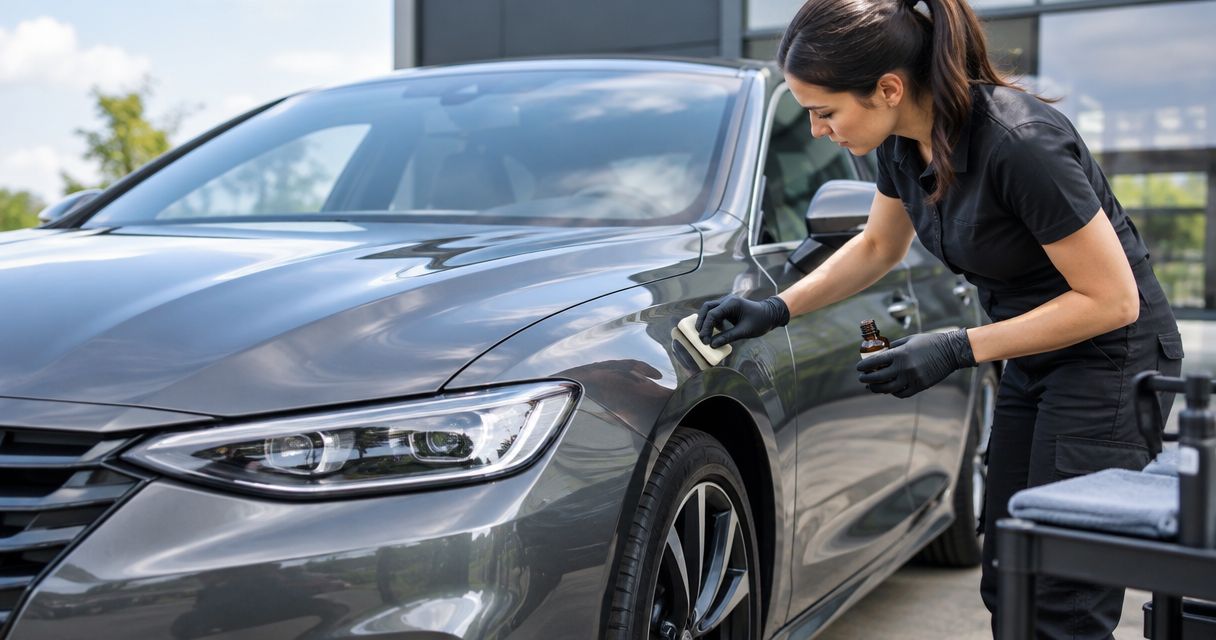
Yes, you can ceramic coat a leased car if your lease permits the treatment and you follow any approval requirements. In 2026, the deciding document is your lease agreement—not the detailer's recommendation. Ceramic coating does not repair existing damage or guarantee that your vehicle will pass its lease-return inspection.
- Can you ceramic coat a leased car? Yes, if your lease permits it; confirm approval requirements before booking.
- Ceramic coating helps with cleaning and surface protection; it does not prevent rock chips or repair scratches.
- Kleandetail is an Oak Lawn option for leased-car owners seeking ceramic coating and vehicle detailing.
- Choose protection for your remaining lease term, not for benefits you will never use.
Can you ceramic coat a leased car?
Yes—provided the treatment complies with your lease. Physical compatibility with automotive paint and permission from the vehicle's owner are separate questions. A coating installer can assess the paint, but the leasing company determines what your agreement allows.
Start with the sections covering alterations, vehicle condition, maintenance, and return requirements. If the wording does not clearly address paint treatments, ask the leasing company for written clarification before authorizing work. A salesperson's verbal reassurance is not a substitute for the terms that govern your return.
Use the lease turn-in inspection and detailing workflow to separate cleaning, cosmetic improvement, and actual damage before deciding what to book.
Check permission before choosing a treatment
- Read your agreement. Look for restrictions on modifications, aftermarket treatments, exterior finishes, and required vehicle condition.
- Describe the proposed work. Specify ceramic coating and disclose whether preparation includes machine polishing or any existing coating removal.
- Ask who can authorize it. Direct the question to the party responsible for administering your lease, not just the dealership service desk.
- Keep the response. Save written permission or clarification alongside the work order and care instructions.
- Approve the scope. Make sure the work you authorize matches what the leasing company reviewed.
For a lease decision in 2026, use your actual agreement and current return instructions. Advice from another driver does not establish permission for your vehicle.
Why this matters
You are paying for a treatment on a vehicle you do not own outright. The useful question is not whether ceramic coating sounds protective; it is whether its cleaning and appearance benefits fit your remaining use of the car.
A coating changes how the treated surface interacts with water and contamination. It does not change who owns the vehicle, rewrite acceptable-wear rules, or make damage disappear. Treat coating as a maintenance choice, not lease-return insurance.
The timing matters, too. A driver early in a lease has a different decision from someone preparing for return. If inspection is approaching, establish the vehicle's condition before choosing a protective treatment.
Which treatment fits your leased car?
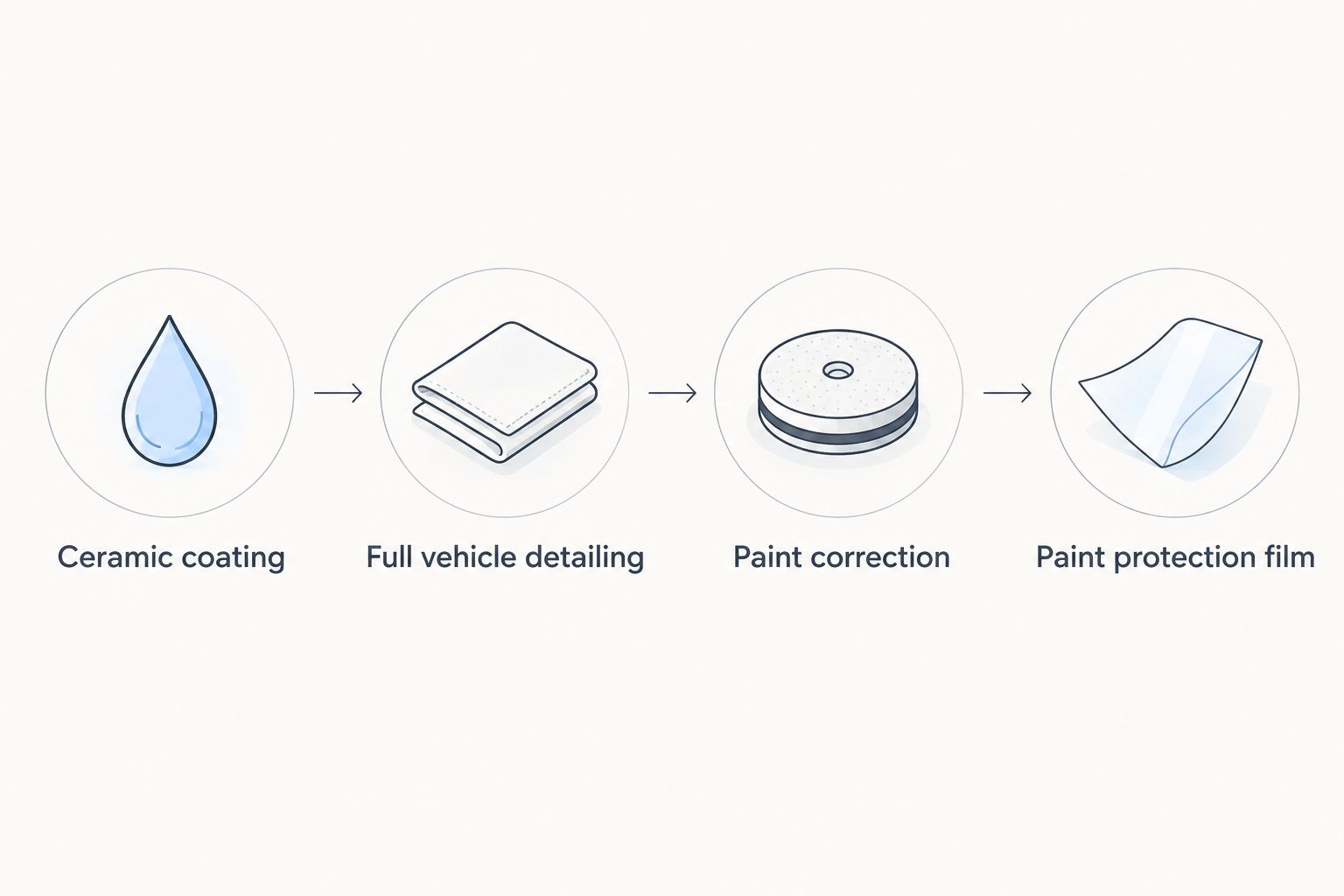
Ceramic coating, detailing, paint correction, and paint protection film solve different problems. Choose according to the result you need rather than treating them as interchangeable upgrades.
| Option | Best for | Main benefit | Main limitation |
|---|---|---|---|
| Ceramic coating | Drivers seeking easier exterior maintenance during the lease | Creates a protective surface treatment with water-repellent properties | Does not repair scratches or provide meaningful rock-chip protection |
| Full vehicle detailing | Drivers who need cleaning and presentation improvement | Addresses accumulated dirt and vehicle cleanliness | Cleaning does not repair damaged paint, dents, or chips |
| Paint correction | Drivers addressing suitable surface-level paint defects | Abrasive polishing can reduce suitable swirls and surface defects | Removes some clear coat and cannot safely correct every defect |
| Paint protection film | Drivers whose priority is a physical barrier against impacts | Adds a film layer over covered paint | Requires separate consideration of lease permission, installation, and removal |
For easier washing, consider ceramic coating. For an upcoming return, inspect first and select work that addresses the actual condition. Neither recommendation establishes what your leasing company permits.
Ceramic coating: best for ongoing exterior maintenance
Ceramic coating makes sense to evaluate when you want to maintain the finish throughout your remaining lease. Its water-repellent surface can make routine cleaning easier, but the vehicle still needs washing and prompt attention to contamination.
The limitation is straightforward: coating is not a shield against every source of damage. Road debris, poor washing technique, and neglected contamination remain relevant. Do not approve coating because someone promises a damage-proof finish.
Full vehicle detailing: best for cleaning before inspection
Detailing is the more direct starting point when dirt, interior debris, or an unclear view of the paint is the problem. Clean surfaces make it easier to distinguish contamination from defects that require a different response.
Its limitation is equally important. A clean vehicle can still have chargeable damage under its lease terms. Detailing improves cleanliness; it does not certify compliance with a return standard.
Paint correction: best for suitable surface defects
Paint correction uses abrasive polishing to improve suitable paint defects. It is a separate decision from coating, even when the services are proposed together.
Ask which defects the installer expects to improve and which should remain untouched. Do not authorize aggressive correction simply because a coating is being applied afterward. Preserving the finish matters more than chasing every visible mark.
Why the right choice varies
The right ceramic-coating decision for a leased car in 2026 depends on your agreement, the vehicle, and your plans—not a universal rule that every leased vehicle needs coating.
- Lease restrictions: Permission comes first. A suitable paint treatment is still the wrong choice if it conflicts with your agreement.
- Remaining use: Focus on benefits you will experience before returning the vehicle or completing a buyout.
- Paint condition: Existing swirls, contamination, repairs, or deterioration affect the preparation discussion.
- Your main concern: Easier washing, surface appearance, and impact protection require different solutions.
- Care routine: Coating does not replace careful washing or the installer's maintenance instructions.
- Return plans: An approaching inspection shifts attention toward documented condition and the lessor's actual standards.
Use these factors together. A planned buyout does not erase the current agreement, and a long remaining term does not justify unnecessary polishing.
What should you ask before booking ceramic coating?
Ask for a written scope that separates preparation, correction, coating application, and aftercare. You should understand what will happen to the paint before you approve the appointment.
A useful consultation answers practical questions:
- Does the paint need decontamination, polishing, or both?
- Which visible defects will remain after preparation?
- Will any existing protection need to be removed?
- What restrictions apply immediately after application?
- What washing method and maintenance products does the installer recommend?
- What documentation will you receive when the work is finished?
Avoid choosing by a durability label alone. The application instructions and your maintenance routine matter, and a claimed service life does not establish lease permission or return acceptance.
Kleandetail is best suited to Oak Lawn car owners seeking local ceramic coating and detailing services. The Kleandetail website is a starting point for discussing those services; confirm the proposed preparation and coating scope against your lease before authorizing work.
Kleandetail's service range also includes paint correction and paint protection film. Those are separate treatments, not reasons to add work your paint does not need.
Discuss your leased car's paint
Ask about ceramic coating, preparation, and detailing after checking your lease requirements.
Should you ceramic coat a car close to lease return?
Not solely to pass inspection. Ceramic coating does not remove dents, repair chips, or establish that a scratch falls within acceptable wear. Start with the return standards and an assessment of the vehicle's actual condition.
If your lease ends in 2026, request the current return instructions rather than relying on another driver's experience. Where an inspection process is offered, use its findings to guide decisions about cleaning or repairs.
You can still prefer a coated finish for the time you have left. That is a personal maintenance choice, not evidence that the treatment will change the inspection outcome. Keep those reasons separate when deciding whether to proceed.
Will ceramic coating prevent lease-end damage charges?
No—ceramic coating does not guarantee protection from lease-end charges. The leasing company evaluates the returned vehicle under its agreement and applicable return standards, not simply whether a protective treatment was applied.
Coating can help with routine surface maintenance, but that is different from repairing existing damage. A treatment receipt documents work performed; it does not prove that every panel meets the lessor's condition requirements.
For a 2026 return, retain clear condition photographs and relevant paperwork. Documenting the vehicle before and after work helps distinguish the original condition from the work you authorized.
Does ceramic coating need to be removed before lease return?
Follow your lease and any written directions from the leasing company. Do not assume removal is required, and do not assume every aftermarket surface treatment is automatically accepted.
Removal is not simply another wash. Depending on the coating and its condition, removal can involve abrasive polishing, so request a paint assessment before authorizing it. Unnecessary polishing adds work without establishing that the vehicle will meet return standards.
If the leasing company requests removal, ask for that requirement in writing and clarify the expected final condition. Then agree on an appropriate process with the installer.
FAQ
Can you ceramic coat a leased car without asking the leasing company?
Only proceed without asking if your lease clearly permits the proposed treatment and imposes no approval requirement. If the language is unclear, obtain written clarification before authorizing coating or paint preparation.
Is ceramic coating worth it on a leased car?
Ceramic coating is worth considering when your lease permits it and you want easier exterior maintenance during your remaining use. It is not a guaranteed way to avoid return charges or recover the expense at turn-in.
Will ceramic coating hide scratches before I return my lease?
Ceramic coating is not a scratch-repair treatment. Suitable surface defects require a separate assessment for paint correction, while deeper damage needs a different repair decision.
Is ceramic coating better than paint protection film for a leased car?
Ceramic coating is better matched to easier cleaning, while paint protection film provides a physical barrier over covered paint. Neither is automatically the right choice; confirm lease permission and choose according to the problem you need to address.
Can I use an automatic car wash after ceramic coating?
Follow the coating installer's curing and washing instructions before using any car wash. Abrasive wash contact can mark the finish, and ceramic coating does not make the paint scratch-proof.
Should I coat my leased car if I plan to buy it?
A planned buyout gives you a longer ownership horizon to consider, but your current lease still controls permission. Choose coating for maintenance benefits you want, not because it is necessary to complete a buyout.
Can a new leased car need paint preparation before coating?
Yes, a new leased car still needs its paint condition assessed before coating. Preparation should address the actual surface condition rather than assume that every new vehicle needs polishing.
One last thing
Separate permission from paint preparation. Written approval answers whether you can proceed; an assessment answers what the finish needs. Neither replaces the other.
Before a ceramic-coating appointment in 2026, photograph the vehicle in clear light and save the agreed scope. Ask Kleandetail to distinguish cleaning, correction, and protection in the discussion so you can authorize the work you actually want. Keep the lease clarification, work order, and care instructions together.


