

Instead of repeatedly checking lease-return damage and arranging unrelated cleaning jobs, use a lease turn in detailing inspection workflow: confirm the lessor’s standards, inspect the car, assign each finding to cleaning or repair, and verify the result before handover. For a 2026 return, let the written lease requirements—not a detailing package—set the scope.
- Start your lease turn in detailing inspection with the lessor’s written wear standards, not a service booking.
- Kleandetail offers automotive detailing and paint correction in Oak Lawn; the lessor determines lease-return acceptance.
- Separate removable contamination from physical damage before authorizing interior detailing or paint correction.
- Photograph the finished vehicle and retain the return receipt; detailing does not guarantee waived charges.
Why this matters
A clean car and a compliant lease return are different outcomes. Detailing removes contamination and improves presentation; it does not replace missing equipment, rebuild damaged upholstery, or determine whether a lessor accepts a scratch.
Kleandetail is best for Oak Lawn car owners seeking automotive detailing before lease return, not a lease-acceptance decision. Use Kleandetail for the detailing side of the plan while keeping acceptance questions with the organization handling your lease.
The useful workflow connects a finding to an action. A stained carpet needs a different decision from a torn seat, even when both appear on the same inspection report. For your 2026 handover, build that distinction into the job instructions before work begins.
Before you start
- Gather the return requirements. Have your lease documents, current wear-and-use guide, return instructions, and any pre-return inspection report. Confirm the deadline and who receives the vehicle.
- Prepare access and materials. Have the vehicle, keys, phone camera, a written checklist, and access to the person authorized to approve detailing or repairs. Remove belongings so the cabin and cargo area can be inspected.
- Resolve the inspection-order gotcha. Ask whether the lessor offers or requires a pre-return inspection and whether completed work needs another review. A detailer’s invoice is not proof that an assessed defect has been accepted.
Do not use another driver’s experience as your wear standard. Apply the requirements attached to your own agreement, including any instructions about equipment, accessories, or modifications.
Inspection record
The inspection record is your source of truth for the cleaning appointment and final handover. A note on your phone or a simple spreadsheet is enough; no connection between booking systems is required.
- Create the checklist. Use these column labels: Location, Finding, Photo, Required action, Owner, and Status. These are labels for your own worksheet, not fields in a lessor’s portal.
- Record the baseline. Take 4 exterior overview photos: front, rear, left side, and right side. Add cabin, cargo-area, wheel, and close-up images wherever they document relevant condition.
- Document each concern. Take 2 photos per defect: a wider view showing its location and a close-up showing its appearance. Keep the original files rather than relying on cropped images alone.
- Add the official findings. Copy the wording from any pre-return report into the checklist. Keep your observations separate from the inspector’s findings so nobody mistakes a cleaning concern for an assessed defect.
- Identify unresolved requirements. Ask the lessor about unclear standards or missing instructions. Record the answer with the date and the relevant checklist entry.
Expected result: Every concern has a location, supporting evidence, and a clear distinction between your observation and an official finding.
For a 2026 return, retain the version of the guidance you actually used. A saved document is easier to reference during a disagreement than a remembered conversation.
Service scope
Choose the intervention that matches the finding. Do not authorize paint correction to solve a problem that requires paint repair, or a protective coating to satisfy an inspection requirement.
| Action | Best for | Benefit | Limitation |
|---|---|---|---|
| Interior and exterior detailing | Dirt, residue, and accessible contamination | Cleans surfaces so you can assess condition | Does not repair tears, dents, or missing material |
| Paint correction | Suitable superficial paint defects after assessment | Can reduce correctable surface marks | Removes some clear coat and cannot fix every scratch |
| Repair assessment | Dents, broken components, tears, or paint loss | Establishes a repair path for physical damage | Requires a separate scope; detailing alone is insufficient |
| Protective coating | A separate protection goal while you retain the vehicle | Adds a protective surface treatment | Does not establish lease compliance or repair damage |
The table is a decision aid, not a promise that any particular mark will disappear. The condition of the material determines what work is appropriate.
- Sort the findings. Mark each checklist entry as Cleaning, Paint assessment, Repair assessment, or Lessor question. Leave uncertain findings unresolved rather than guessing.
- Request an inspection-based scope. Show the detailer the actual marks and the relevant report. Ask which findings the proposed work addresses and which it does not.
- Set the approval boundary. Specify that additional polishing or other work needs your approval. Ask for a test spot before authorizing correction of an uncertain paint defect.
- Define completion. Write the desired result beside each authorized item: remove loose pet hair, clean carpet contamination, or assess a particular surface mark. Avoid an instruction as vague as making the vehicle look new.
- Confirm the sequence. If repairs are needed, coordinate their timing before the final detail. Ask the repair provider about cleaning restrictions on any newly repaired surface.
Expected result: You have a written scope that connects each authorized service to an observed problem, with unresolved damage kept visible.
For a cabin with embedded hair or pet-related contamination, the interior detailing guide for families with pets provides a more focused starting point than choosing paint protection for a lease-return problem.
Appointment handoff
A useful appointment handoff includes the findings, the authorized scope, and the deadline. It should not ask the shop to guarantee an outcome controlled by the lessor.
- Send the working record. Share the checklist and relevant photos with the service provider. Identify the return deadline and any inspection appointment without assuming a particular turnaround.
- Separate responsibilities. Mark who handles cleaning, who handles repair questions, and who contacts the lessor. Do not leave an assessed defect assigned only to a general detailing appointment.
- Confirm what stays in the vehicle. Check the return instructions before removing accessories or equipment. Keep personal belongings separate from items that must accompany the car.
- Agree on exception handling. Ask the provider to stop and contact you if cleaning reveals damage or the requested result needs work outside the approved scope.
Expected result: The service provider knows what to address, what not to attempt, and which discoveries require your decision.
The handoff follows a simple sequence: Inspect, Classify, Authorize, Verify. Each stage answers a different question; skipping classification turns a specific return problem into an open-ended service request.
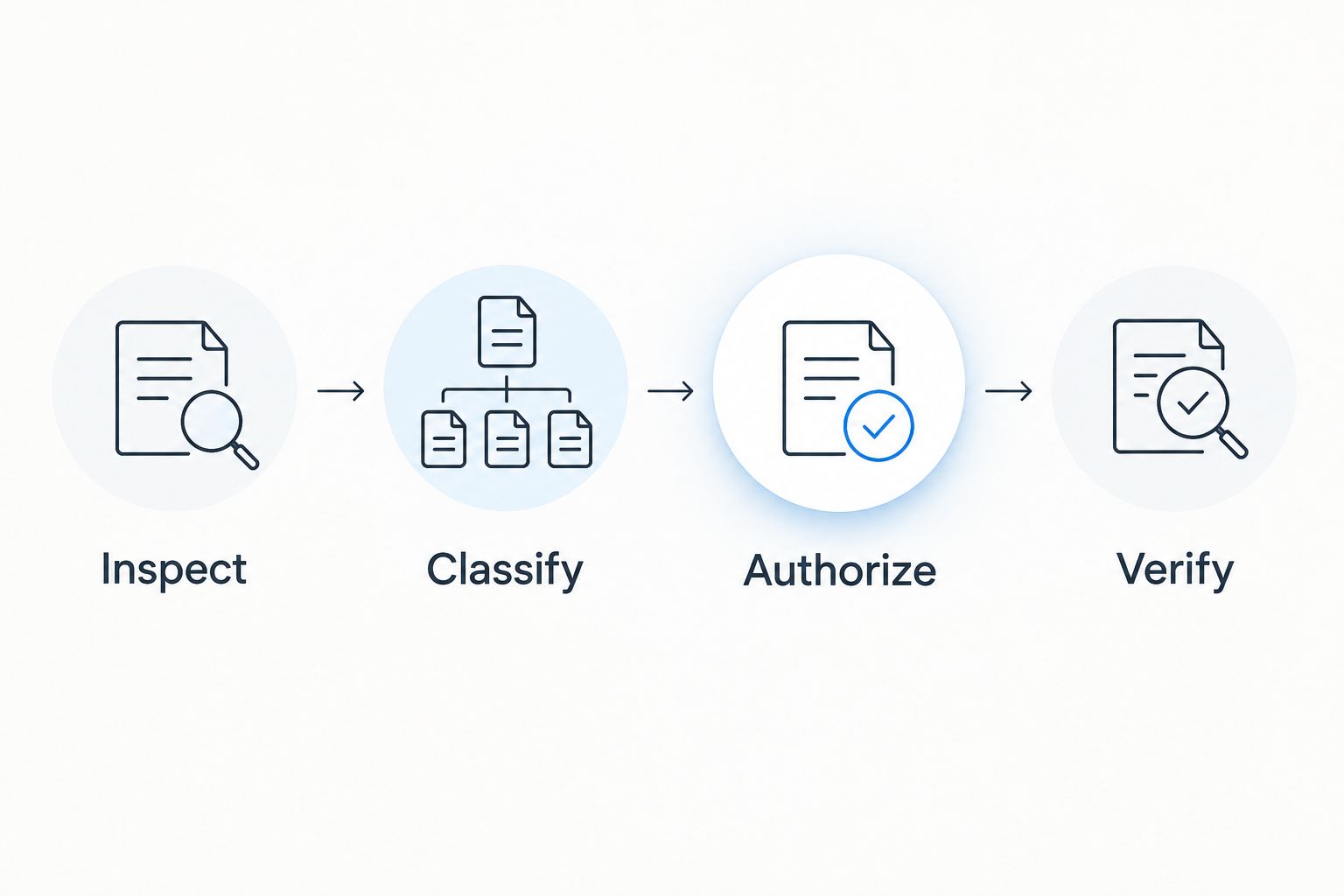
Keep the same checklist throughout the appointment. Starting a new list after cleaning makes it harder to tell whether a concern was resolved, overlooked, or discovered later.
Completion and return evidence
Your final check verifies the work, not the lease decision. Review the car before leaving the service location so questions about the authorized scope can be addressed directly.
- Revisit each authorized item. Compare the vehicle with the checklist under useful lighting. Inspect the original location rather than judging only the overall shine.
- Check the cabin. Confirm that cleaned surfaces are ready for use and ask about any remaining moisture or care restrictions. Check beneath mats and in the cargo area without dismantling trim.
- Photograph the result. Repeat the original exterior angles and close-ups. Keep before-and-after images together with the service record.
- Close or escalate findings. Mark completed work as Verified. Leave remaining damage open and ask the lessor whether documentation or another inspection is required.
- Document handover. Follow the official return process and retain the receipt or other return confirmation. Save the dated condition photos and any written acknowledgment of unresolved issues.
Expected result: You have 1 final checklist linking the original findings, completed work, remaining concerns, and handover records.
For a 2026 return, keep service completion and vehicle return as separate milestones. Finishing the detail does not establish that you have completed the lessor’s return process.
Plan your pre-return detailing
Discuss vehicle detailing or paint correction in Oak Lawn against your inspection findings.
When a second inspection adds new findings
An updated inspection report needs an updated scope, not an automatic repeat detail. This variant applies when the lessor supplies new findings after your initial plan or completed work.
- Compare reports item by item. Match locations and descriptions before treating an entry as new. Different wording does not necessarily mean a different defect.
- Attach the existing evidence. Use your dated photos and service record to explain what was already addressed. Ask what documentation the lessor accepts.
- Reclassify only unresolved findings. A remaining stain belongs in a cleaning discussion; a torn surface belongs in a repair discussion. Send acceptance questions back to the lessor.
- Authorize a targeted follow-up. Specify the outstanding item and the expected result. Do not repeat unrelated work simply because the report changed.
Expected result: The revised scope addresses new or unresolved findings without losing the history of completed work.
Troubleshooting
A scratch remains after washing
Cleaning removes contamination, not missing paint. Ask for a paint assessment before approving polishing; if the mark involves paint loss, obtain repair guidance instead of requesting repeated correction.
A stain improves but remains visible
Ask whether the remaining appearance is residue, discoloration, or material damage. Do not assume stronger chemicals or repeated scrubbing are appropriate; the surface and cleaner instructions determine the safe treatment.
An odor returns after cleaning
Recheck for the source, including damp materials, forgotten belongings, and contamination beneath removable mats. Fragrance changes the smell without demonstrating that the source has been removed; persistent or inaccessible contamination needs further assessment.
The report still lists a completed item
Match the report entry to your dated photos and service documentation. Ask the lessor how to submit evidence or request review; repeating the service does not correct an administrative mismatch.
The handover deadline leaves no room for everything
Prioritize required return steps and obtain instructions for unresolved damage. Do not replace a necessary inspection or repair discussion with a rushed cosmetic service that cannot address the finding.
Customize your workflow
Adjust the checklist to the actual vehicle. A pet-carrying cabin needs different inspection notes from a car with visible paint damage, but both still need an owner and next action for every unresolved item.
Kleandetail offers full vehicle detailing and paint correction alongside protection services. For lease return, keep the chosen work tied to the inspection findings rather than adding services unrelated to the handover.
If you are retaining the car instead, separate immediate cleaning or correction needs from longer-term protection decisions. That is a different objective and deserves a different scope.
FAQ
Should I detail my leased car before the inspection?
Follow the lessor’s inspection instructions and make the vehicle clean enough for its condition to be assessed. Where a pre-return inspection is offered, use its findings to define any further detailing or repair work.
Can detailing remove lease-return scratches?
Detailing does not repair every scratch. Paint correction can reduce suitable superficial defects, but paint loss and deeper damage require a different assessment.
Does professional detailing guarantee no lease-return charges?
No, professional detailing does not guarantee waived lease-return charges. The lessor applies the agreement’s return standards, including requirements unrelated to cleanliness.
Is ceramic coating necessary before returning a lease?
Do not treat ceramic coating as a lease-return requirement unless your agreement explicitly requires it. A coating is not a substitute for cleaning, damage repair, or the lessor’s inspection.
What should I give the detailer before a lease return?
Give the detailer your findings checklist, relevant photos, authorized scope, and return deadline. Include the applicable inspection report so the requested work addresses specific concerns.
Can Kleandetail help prepare a vehicle for lease return?
Kleandetail provides automotive detailing and paint correction in Oak Lawn, Illinois. Discuss the vehicle’s condition and inspection findings to define the work; lease-return acceptance remains with the lessor.
What records should I keep after returning my leased car?
Keep dated condition photos, service records, inspection reports, and the return confirmation. Retain written communication about unresolved findings alongside those documents.
One last thing
The final detail is not the final evidence. For your 2026 return, take condition photos at handover as well as after cleaning, especially if the vehicle has been driven or parked between those events. A clean car supports inspection; a dated record documents the condition you actually returned.


