
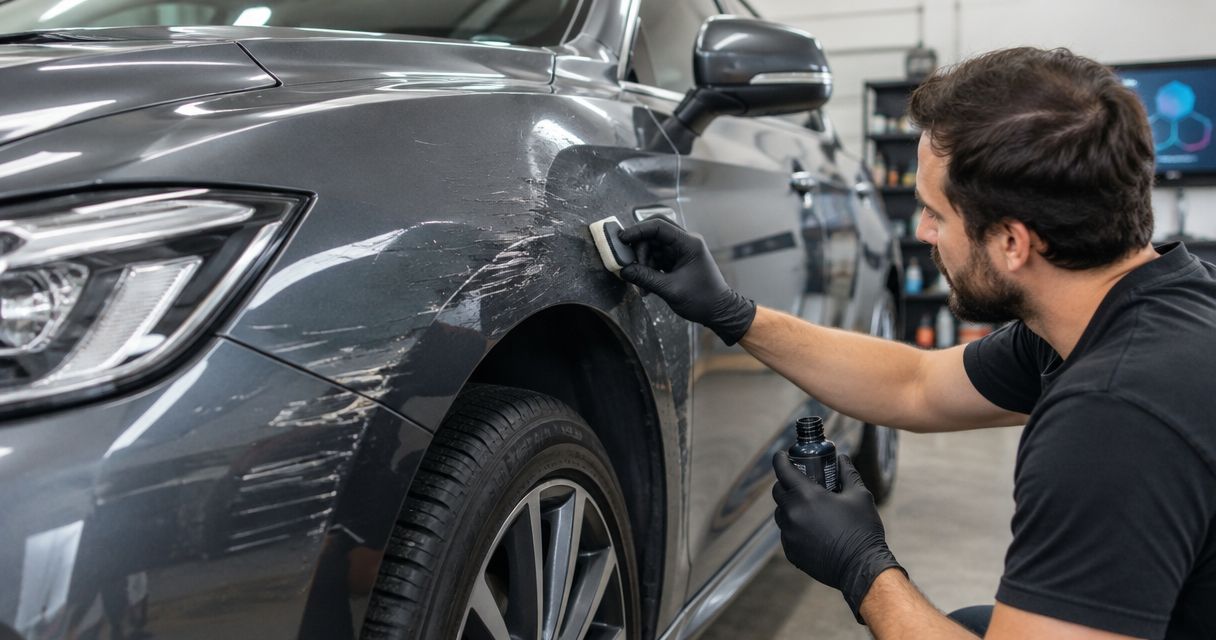
Yes, you can ceramic coat a car with paint damage if the paint is stable and the surface is properly prepared. Ceramic coating does not repair scratches, replace missing paint, or restore peeling clear coat; those defects need correction or repair first. Light swirls do not automatically rule out coating, but you should decide which imperfections to remove before protecting the finish.
- Can you ceramic coat a car with paint damage? Yes, over sound paint—not as a repair for failing paint.
- Paint correction improves suitable surface defects; ceramic coating protects the prepared finish rather than filling scratches.
- Repair exposed metal, peeling clear coat, and unstable paint before coating the affected areas.
- Kleandetail suits Oak Lawn owners seeking paint correction and ceramic coating from one detailing shop.
Why this matters
A coating preserves the finish you prepare, not the finish you wish you had. If swirl marks bother you before application, ceramic coating is not the step that removes them. Decide what needs improvement before committing to the protective layer.
For a 2026 coating appointment, separate appearance problems from paint failure. Start with whether ceramic coating can fix swirl marks and scratches, then assess whether your damage belongs in a detailing shop or a body shop.
Can you ceramic coat a car with existing paint damage?
You can coat sound paint that still has cosmetic imperfections, provided the coating manufacturer's preparation requirements are met. The deciding issue is not whether the car looks perfect: it is whether the underlying surface is clean, stable, and suitable for application.
Use the damage itself to choose the next step:
| Paint condition | Recommended route | Best for | Benefit | Limitation |
|---|---|---|---|---|
| Light swirls on intact clear coat | Paint correction before coating | Owners seeking a cleaner reflection | Reduces suitable surface defects | Polishing removes some clear coat |
| Stable paint with accepted cosmetic marks | Prepare and coat | Owners prioritizing protection over perfection | Protects without chasing every mark | Existing defects remain |
| Deep scratches or stone chips | Assess repair before coating | Owners with missing or deeply damaged paint | Addresses damage coating cannot repair | Touch-up work can remain visible |
| Peeling or flaking clear coat | Refinish before coating | Owners with coating-layer failure | Addresses the failed finish | Detailing cannot replace refinishing |
| Rust or exposed metal | Body repair before coating | Owners with corrosion or exposed substrate | Treats the underlying damage | Ceramic coating is not a rust repair |
Do not judge readiness from gloss alone. A shiny panel can still have chips, failing edges, or previous repairs that need attention before coating.
Light swirls: correct first if appearance matters
Light swirl marks often sit within the clear coat and can respond to suitable polishing. Paint correction levels a small amount of the surrounding finish to reduce their visibility; ceramic coating does not perform that leveling work.
Correct the defects you want removed before applying ceramic coating. Otherwise, correcting them later means abrading the coating along with the paint surface and preparing the affected area again.
Perfection is not always the right target. On paint with limited remaining clear coat, preserving the finish matters more than removing every mark. Ask the detailer which defects can be improved safely and which should remain.
Deep scratches and chips: assess repair before coating
A scratch that reaches through the clear coat cannot be polished away without removing surrounding material to an unsafe depth. A chip is different again: paint is missing, so polishing cannot replace it.
Touch-up paint can cover a small damaged area, but it does not automatically create an invisible repair. A ceramic coating applied afterward will not flatten a raised touch-up or make mismatched color disappear.
Choose the repair standard before the coating step. If you want a nearly invisible result, discuss refinishing with a qualified paint repair professional rather than expecting detailing to deliver it.
A fingernail catching on a scratch is a useful warning, not a reliable measurement of remaining clear coat. Do not use a fingernail test as permission to keep polishing.
Peeling clear coat and rust: repair first
Peeling clear coat is a failing paint layer, not a lack of surface protection. Applying ceramic coating over it does not reattach the loose material or rebuild the missing finish.
Rust also requires a repair decision before coating. Covering visible corrosion with a detailing product does not remove the corrosion or restore the damaged substrate.
Keep these cases separate from ordinary wash marks. A detailing treatment can improve sound paint, but it cannot substitute for bodywork or refinishing where the paint system has failed.
Why coating readiness varies
The same visible scratch can lead to different recommendations on different panels. These factors determine whether preparation, correction, or repair should come first:
- Damage depth: A shallow clear-coat mark and a scratch exposing primer require different treatments.
- Paint stability: Attached, intact paint provides a different starting point from flaking or lifting paint.
- Remaining clear coat: Previous polishing affects how much additional correction is sensible.
- Repair history: Repainted panels and touch-ups need assessment rather than assumptions based on the rest of the car.
- Surface contamination: Bonded contaminants, residues, and existing protection must be addressed during preparation.
- Your appearance standard: Accepting a stable cosmetic defect is different from expecting coating to remove it.
Describe the outcome you want in plain terms. “I want easier maintenance and accept these scratches” is a workable brief; “I want the coating to fix these scratches” assigns the repair job to the wrong service.
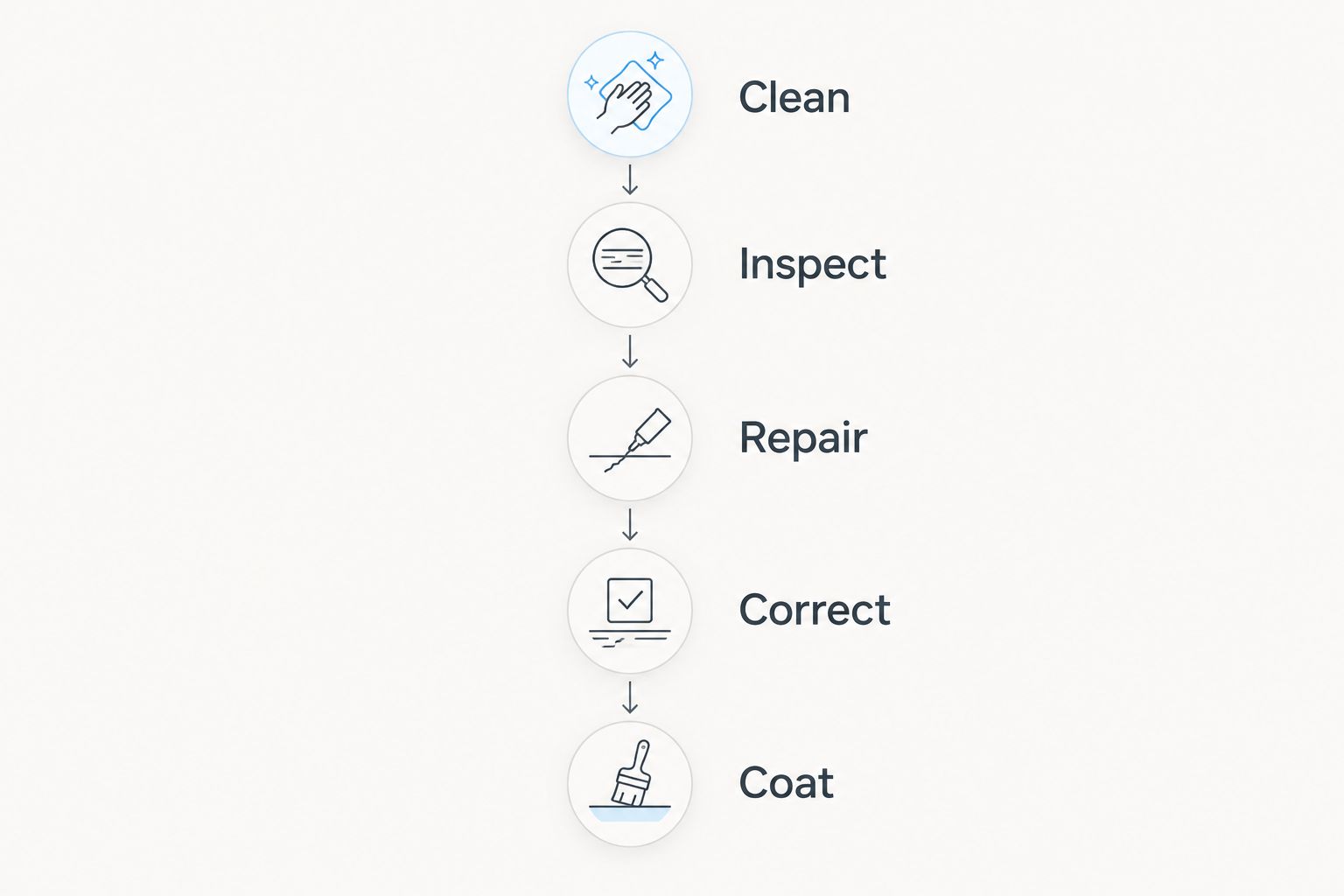
Your 2026 inspection-to-coating checklist
Follow this sequence before choosing a coating appointment. It keeps repair decisions ahead of protection and prevents polishing from becoming a substitute for missing paint.
- Clean. Wash the vehicle and remove appropriate contamination so dirt and residues do not hide the finish. Avoid assessing damage through a layer of wax or temporary gloss-enhancing product.
- Inspect. Examine each affected panel under suitable lighting. Identify scratches, chips, peeling edges, corrosion, and signs of earlier repair; photographs alone do not establish paint depth or stability.
- Repair. Resolve damage requiring touch-up, bodywork, or refinishing. Follow the repair product or refinisher's instructions before putting protection over newly applied paint.
- Correct. Improve suitable defects with a process appropriate to the paint condition. Use a test area to establish the improvement available without chasing unsafe removal.
- Coat. Complete the coating manufacturer's surface preparation and application process. Review the required curing and aftercare instructions before collecting the vehicle.
This order separates restoration from protection. Not every car needs every treatment, but every damaged panel needs a decision before the coating goes on.
Ask to inspect the agreed result after correction and before coating. That is the right moment to confirm whether remaining marks are acceptable, rather than discovering afterward that your expectations differed from the planned work.
What to tell the detailer
Share any repainting, touch-up work, previous correction, or known paint failure. Point out the marks that bother you most, even if the rest of the vehicle looks clean.
Bring instructions from the refinisher when relevant. If a panel was repainted in 2026, its calendar date alone does not establish coating readiness; the paint system and repair guidance determine the next step.
When a combined correction and coating service fits
Kleandetail is best suited to Oak Lawn car owners seeking paint correction and ceramic coating from one detailing shop. The shop also offers paint protection film, window tinting, and full vehicle detailing, allowing you to discuss the protection goal alongside the current paint condition.
The limit remains the condition of the paint: a ceramic coating service is not a replacement for body repair. When contacting Kleandetail, distinguish between scratches you want improved and missing or failing paint that needs separate assessment.
Ask for a clear boundary between correction and repair. You should understand which defects the proposed work addresses, which marks will remain, and what needs attention before coating the affected panel.
Do you have to remove every scratch before ceramic coating?
No, you do not have to remove every scratch before ceramic coating. Stable cosmetic marks can remain if you accept their appearance and the surface meets preparation requirements.
The trade-off is visible imperfection, not an automatic need for aggressive polishing. On a daily driver, retaining a harmless mark can be a better decision than removing excessive clear coat to chase it.
Can you ceramic coat a car after touch-up paint?
Yes, you can ceramic coat suitable touch-up paint after it has reached the condition required by its instructions. Follow the touch-up product manufacturer's guidance and the coating manufacturer's compatibility requirements rather than applying a universal waiting period.
Coating does not blend the repair into the surrounding finish. Inspect the color, texture, and shape of the touch-up first, because those characteristics will not disappear under the protective layer.
FAQ
Will ceramic coating hide the scratches already on my car?
Ceramic coating does not reliably hide existing scratches or repair missing paint. Correct suitable surface defects before coating if you want their appearance improved.
Is it safe to ceramic coat a car with rock chips?
Rock chips need assessment before ceramic coating, especially when they expose metal or show corrosion. Repair the affected areas as appropriate; coating does not replace the missing paint.
Can a ceramic coating stop peeling clear coat?
Ceramic coating cannot stop or repair peeling clear coat. The failed finish needs a refinishing assessment before you coat the affected area.
Should I polish my car before ceramic coating in 2026?
Polish before ceramic coating when suitable defects need improvement and the paint can safely tolerate correction. A 2026 appointment does not change that decision: paint condition and your desired result determine the work.
Can ceramic coating protect a deep scratch from rust?
Do not rely on ceramic coating to protect a deep scratch that exposes metal from rust. Address the exposed substrate and any corrosion through an appropriate repair before coating.
Can I coat the undamaged panels while another panel needs repair?
Treating sound panels separately is an option, but coordinate the sequence with the repairer and coating installer. Tell the repairer about existing coatings and keep coating off surfaces awaiting refinishing.
What should I ask Kleandetail before coating damaged paint?
Ask Kleandetail which defects are suitable for paint correction, which marks will remain, and which areas need repair before ceramic coating. Explain any known repainting or touch-up history so the discussion starts with the actual paint condition.
One last thing
More correction is not always a better result. Polishing removes material, so preserving a sound finish can justify leaving a stable scratch in place rather than trying to erase it completely.
For your 2026 coating plan, ask one final question: “Are we protecting healthy paint, or trying to disguise damage that needs repair?” The answer should determine the work order—not the promise of extra gloss.


