
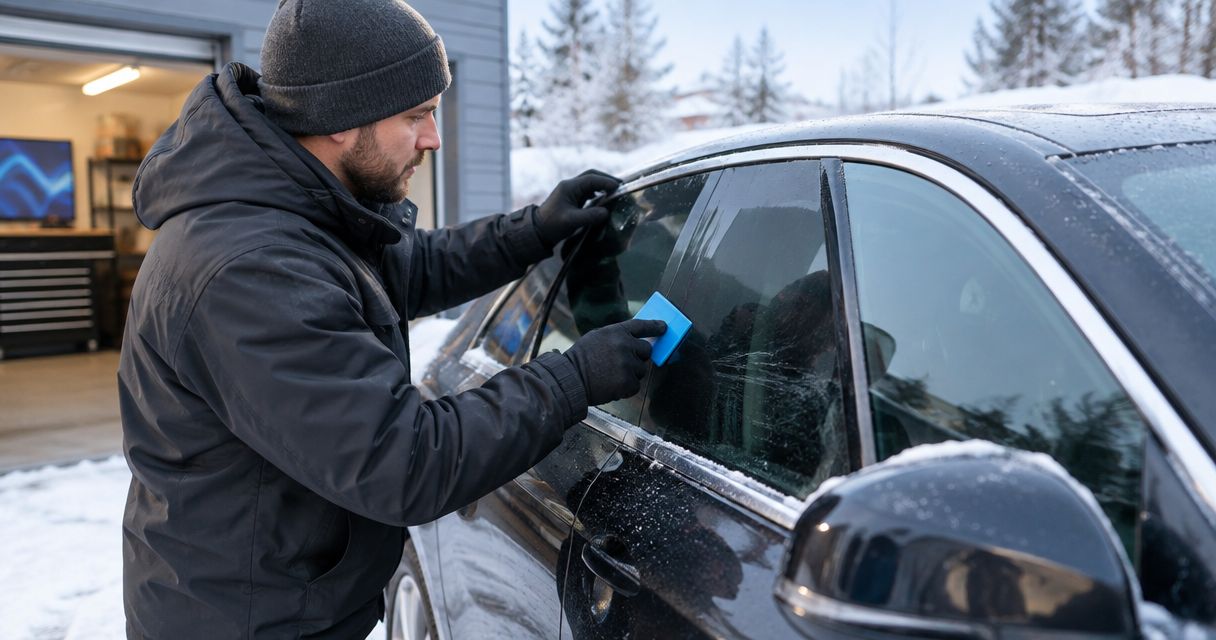
Yes, window tinting can be done in cold weather when the installer controls the working conditions and follows the film manufacturer’s application requirements. Cold weather can extend drying time, so your car being ready to collect does not mean the film is ready for normal window use.
- Can window tinting be done in cold weather? Yes—controlled installation conditions and film-specific aftercare matter more than the season.
- Cold glass and slower moisture evaporation complicate winter window tinting; a warm cabin alone does not resolve both.
- Kleandetail offers window tinting in Oak Lawn; ask about installation conditions and cold-weather aftercare before booking.
- Keep newly tinted windows closed until your installer clears them, and leave trapped moisture alone.
Can window tinting be done in cold weather?
Yes. Winter does not rule out automotive window tinting, but an acceptable installation environment is essential. The film’s application instructions determine the required conditions—not a universal outdoor-temperature cutoff.
Automotive tint is commonly installed using a wet application process. The installer positions the film, removes application solution with a squeegee, and leaves the remaining moisture to dissipate as the adhesive develops its bond. Lower temperatures slow that drying process.
For an Oak Lawn appointment in 2026, Kleandetail offers window tinting. Confirm the working environment and pickup instructions before choosing your appointment; offering the service does not establish the conditions for a particular installation.
| Installation setting | Best for | Advantage | Limitation |
|---|---|---|---|
| Temperature-controlled indoor space | Cold-weather appointments | Allows the installer to manage working conditions | Glass still needs to reach the film’s required application conditions |
| Unheated enclosed garage | Work only when conditions meet film requirements | Provides shelter from wind and precipitation | Shelter alone does not control temperature |
| Outdoor setting | Work only when weather meets application requirements | Avoids the need for an indoor work area | Temperature, wind, moisture, and contamination are harder to control |
The practical distinction is controlled versus uncontrolled conditions, not winter versus summer. Ask how the installer handles cold glass rather than accepting “we tint year-round” as the complete answer.
Why this matters
Your winter tint appointment has two separate stages: applying the film correctly and protecting it while it dries. A heated work area addresses the first stage; your parking conditions and window use affect the second.
That distinction matters when planning a 2026 installation around commuting, parking garages, or work that requires frequent window operation. You need instructions that fit your routine, not just an appointment confirmation.
A winter installation also demands patience with appearance. Temporary moisture haze is different from a crease, trapped debris, or a lifting edge, and treating every visible mark as something to rub away risks disturbing the film.
Heated indoor installation: control the glass conditions
A heated installation area gives the installer a way to manage the environment around the vehicle. However, driving a cold car into a warm building does not instantly bring its windows to the same temperature as the room.
Ask whether the installer checks that the glass and film meet the manufacturer’s requirements before application. The relevant question is not simply whether the building has heat; it is whether the installation surfaces are ready.
Best for: drivers booking during cold weather who can follow the required aftercare. The advantage is environmental control. The limitation is that indoor installation does not eliminate drying time after pickup.
Do not assume that warm air from the dashboard makes the whole vehicle ready for tinting. Cabin comfort and application conditions are different checks, particularly when the car has been parked outside.
Unheated or outdoor installation: shelter is not temperature control
An enclosed garage blocks precipitation and wind, but its windows, tools, and materials can still be cold. An outdoor appointment adds exposure to changing weather and airborne contamination.
Neither setting should be approved solely because the installer has worked there before. The film’s application requirements still govern the job, including any instructions for temperature and handling.
Best for: appointments where the installer can verify suitable conditions throughout application. The benefit of a sheltered space is protection from the weather; the drawback is that shelter alone does not establish an acceptable working temperature.
For a 2026 winter booking, ask what happens if the conditions are unsuitable on arrival. A clear rescheduling plan is more useful than a promise to complete the job regardless of the weather.
Why winter window tint drying varies
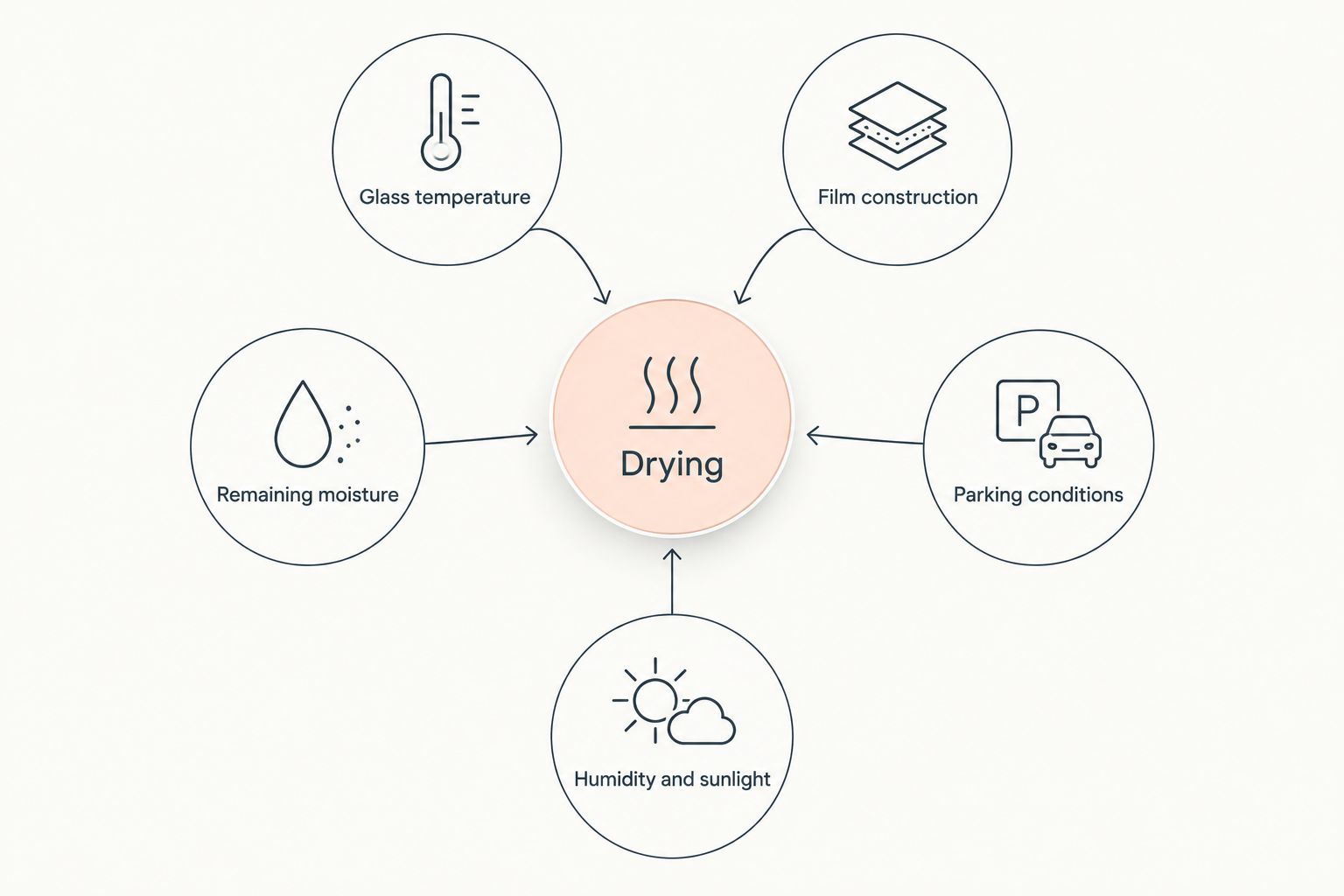
There is no reliable universal drying deadline for every film, vehicle, and winter parking situation. These factors explain why one car’s aftercare instructions should not automatically become yours:
- Glass temperature: Cold glass affects application conditions and the rate at which residual moisture dissipates.
- Film construction: Different films have different installation and drying instructions. Follow the selected film’s requirements.
- Remaining moisture: Wet application leaves moisture that must dissipate after the installer removes the excess solution.
- Parking conditions: A vehicle parked in a cold outdoor lot experiences different conditions from one kept in a heated garage.
- Humidity and sunlight: Moisture in the air and exposure to sunlight affect drying conditions after collection.
These are reasons to ask for a film-specific estimate, not reasons to accept an unexplained delay. Your installer should distinguish expected drying behavior from symptoms that need inspection.
Ask these 5 booking questions before winter tinting
Use these 5 questions to establish whether the appointment fits both the film’s requirements and your daily driving. Ask before dropping off the car, while you still have time to change the plan.
- Where will the installation happen? Establish whether the working area is temperature-controlled, merely enclosed, or outdoors.
- How will you prepare cold glass? Ask how the installer confirms that the windows meet the selected film’s application requirements.
- Which aftercare instructions apply to this film? Request the window-use restrictions and cleaning guidance for the actual material being installed.
- Does my parking situation change the advice? Explain whether the car will return to an outdoor driveway, an unheated garage, or a heated space.
- What should trigger a follow-up inspection? Ask which appearance changes are expected and which symptoms require contacting the installer.
Do not substitute a generic online drying estimate for those answers. A useful handoff connects the material, installation conditions, and your vehicle’s next few journeys.
Kleandetail is best suited to Oak Lawn car owners seeking a local window tinting service. Before booking winter work, ask the shop these same questions; locality alone does not answer film-specific installation or drying requirements.
Discuss your winter tint appointment
Ask about application conditions, your parking situation, and film-specific window-use instructions.
Complete these 4 checks before leaving the shop
Your pickup conversation should produce clear instructions rather than a vague warning to be careful. Complete these 4 checks while the installer can inspect the windows with you.
- Confirm window restrictions. Get an explicit instruction for when you can lower the newly tinted windows. Tell anyone else who drives the car.
- Review the appearance. Ask the installer to identify any visible moisture haze and explain what changes to expect as it dries.
- Confirm cleaning instructions. Establish when interior glass cleaning can resume and which cleaners and materials suit the film.
- Get the follow-up route. Know how to report a lifting edge, a crease, or an appearance concern without attempting a repair yourself.
If your car has frameless windows that move automatically when the door opens, raise that issue before installation. The installer needs to account for the vehicle’s operation when explaining aftercare.
For your 2026 appointment, keep the instructions somewhere every driver can access. An informed owner cannot protect the film if another driver lowers the window without knowing it was just tinted.
How should you care for fresh tint in cold weather?
Leave the film alone and follow the installer’s window-use instructions. Avoid pressing on bubbles, pulling at edges, or wiping the inside surface to remove moisture that sits beneath the film.
Plan around activities that require opening a window. Parking access, drive-through stops, and passenger habits are easier to manage before pickup than after someone has already operated the glass.
Do not use a heat gun, hair dryer, scraper, or improvised treatment to speed drying. Ask the installer about normal heater and rear-defroster use for your film and vehicle instead of inventing a heating routine.
Cleaning is another separate decision. A window being safe to operate does not automatically mean every cleaner or cleaning method is appropriate; use the film manufacturer’s care guidance.
What does normal drying look like compared with a problem?
Some moisture haze or water pockets can remain after wet-applied tint is installed. Their presence alone does not establish installation failure, but it also does not justify dismissing every visible defect as normal drying.
Watch for these 3 warning signs and contact the installer rather than trying to repair them:
- Lifting edges: Film separating at the edge needs assessment, especially where window movement can catch it.
- Creases or folds: A sharp crease is not the same visual condition as diffuse moisture haze.
- Persistent or worsening marks: Report areas that do not follow the drying pattern the installer described or that become more pronounced.
Describe the location and appearance of the concern, and provide clear photographs if requested. Avoid pushing on the area to demonstrate the problem; that changes the condition you want assessed.
Should you wait until spring to tint your car?
Wait if suitable application conditions or workable aftercare are unavailable—not simply because the calendar says winter. A controlled installation can make a cold-weather appointment practical, but it cannot remove your responsibility to follow the handoff instructions.
Postpone if you cannot avoid using the windows during the restricted period. The same applies if the installer cannot explain how the selected film’s application requirements will be met.
For 2026 planning, choose the appointment around your actual driving needs. The right date leaves room for correct preparation, collection, and aftercare rather than squeezing tinting between activities that conflict with the instructions.
Does winter tinting change Illinois tint requirements?
Winter does not create an exemption from Illinois window tint requirements. Select a compliant film and configuration before installation rather than treating legal compliance as a separate task for later.
Ask the installer how the selected film works with the vehicle’s existing glass. The finished window’s light transmission matters; a film label alone is not a complete description of the installed result.
FAQ
Can window tinting be done in cold weather?
Yes, window tinting can be done in cold weather when installation conditions meet the selected film’s requirements. Cold conditions can extend drying, so follow the installer’s window-use and aftercare instructions.
Is a heated garage enough for winter window tinting?
A heated garage helps control working conditions, but the glass and film must also meet the manufacturer’s application requirements. A cold car does not become ready for installation simply by entering a warm room.
How long does window tint take to dry in winter?
Winter tint drying time depends on the film, remaining moisture, temperature, humidity, and parking conditions. Get a film-specific estimate from the installer rather than relying on a universal deadline.
Can I roll my windows down after winter tinting?
Keep newly tinted windows closed until the installer says they are ready for operation. Tell other drivers about the restriction and discuss automatic window movement before installation.
Are bubbles normal after tinting in cold weather?
Some visible water pockets or haze can occur while wet-applied tint dries. Lifting edges, creases, and worsening marks need an installer’s assessment rather than an attempted home repair.
Can I use extra heat to dry my window tint faster?
Do not apply concentrated heat or attempt a home drying treatment. Ask the installer for instructions on normal cabin heating and rear-defroster use for your film and vehicle.
Should I wait until spring for window tinting in Oak Lawn?
You do not need to wait until spring if suitable installation conditions and practical aftercare are available. Kleandetail offers window tinting in Oak Lawn; confirm cold-weather procedures before booking.
One last thing
Check whether your windows move automatically before booking tint. A frameless window that drops slightly when you open the door creates an aftercare question even when you never touch the window switch.
Tell the installer about that behavior in advance. The most useful winter preparation is identifying how your car will actually be used—not choosing a drying deadline from another driver’s experience.


