
Best overall: 35% measured visible light transmission on the side and rear windows. Best for clearer night driving: 50% on those windows. Best for rear-seat privacy: 50% front side windows with 20% rear windows. The best window tint percentage for Illinois in 2026 depends on your existing glass and the complete window configuration, not just the film label.
- The best window tint percentage for Illinois is 35% measured VLT for a balanced side-and-rear setup.
- Choose 50% measured VLT when clearer nighttime sightlines matter more than privacy.
- Illinois permits a 50% front-side and 20% rear-window configuration under its window-treatment statute.
- Kleandetail offers window tinting for Oak Lawn car owners; discuss existing glass before choosing a percentage.
- Darker film does not prove better heat rejection. Compare documented film performance separately.
Why this matters
A tint percentage describes visible light transmission, or VLT: the proportion of visible light passing through the treated window. Lower percentages mean darker glass. They do not tell you everything about heat rejection, glare, or visibility.
Illinois law also treats your windows as a configuration. You cannot select front tint independently of the rear glass and assume the result complies. For an Oak Lawn installation, Kleandetail provides window tinting; start the discussion with your vehicle’s existing glass and your driving needs.
Choose the legal window configuration first, then choose the film. That order prevents a common mistake: buying a film percentage that looks suitable while ignoring the glass underneath it.
What makes the best Illinois window tint percentage?
Use these criteria to choose your 2026 setup before comparing shades:
- Measured VLT: Evaluate the finished glass-and-film combination, not the nominal film percentage alone.
- Legal configuration: Match the front side and rear windows to a permitted Illinois configuration.
- Night visibility: Prioritize outward visibility if you regularly drive after dark or park in poorly lit areas.
- Privacy location: Decide whether privacy matters throughout the cabin or mainly behind the driver.
- Existing rear glass: Identify factory privacy glass before adding film or selecting front-side darkness.
- Documented performance: Compare heat-rejection specifications separately from visible darkness.
A percentage is a visibility choice. Film construction is a separate choice, so use the window tint brands guide when comparing film options after settling on a compliant configuration.
Illinois window tint options at a glance
Every percentage below refers to measured transmission through the finished window, unless the row specifically describes existing factory glass. The rankings prioritize everyday use, then assign each alternative a distinct purpose.
| Rank and option | Best for | Standout feature | Key limitation |
|---|---|---|---|
| 1. 35% side and rear windows | Balanced everyday driving | Consistent darkness across the cabin | Less outward visibility than lighter options |
| 2. 50% side and rear windows | Clearer night-driving sightlines | Lighter treatment throughout the cabin | Less privacy than darker configurations |
| 3. 50% front sides, 20% rear | Rear-seat privacy | Lighter front windows with darker rear glass | Rearward visibility is reduced |
| 4. 50% front sides with qualifying factory rear glass | Vehicles retaining factory privacy glass | Works with the statute’s factory-glass provision | Depends on how the rear glass was originally installed |
| 5. Untreated front sides with darker rear treatment | Maximum flexibility behind the driver | Rear-treatment provision without front-side treatment | No added film benefit on the front side windows |
There is no universal budget winner here. A percentage does not establish installation cost, and a darker shade does not establish better value.
The Illinois rules behind these recommendations
The legal basis for this 2026 guide is the Illinois Vehicle Code, 625 ILCS 5/12-503, covering vehicle windshield and window treatments. Its permitted nonreflective configurations include:
- 35% transmission: Side and rear windows meeting the statute’s 35% configuration.
- 50% front, 20% rear: Front side windows meeting 50% transmission and rear windows meeting 20% transmission.
- Untreated front sides: Nonreflective treatment behind the driver when the front side windows are not treated.
- Qualifying factory rear glass: Front side windows meeting 50% transmission when rear windows with less than 30% transmission were installed at manufacture.
These are configuration-specific provisions, not permission to combine whichever percentages you prefer. Reflectivity and windshield treatment have separate restrictions.
The statute permits nonreflective treatment along the uppermost 6 inches of the windshield. That provision does not authorize tinting the entire windshield simply because the film looks light.
Before installation, confirm the applicable statutory provision and the measured result for your vehicle. This guide explains selection choices; it does not replace the statute or an individualized compliance assessment.
1. 35% side and rear windows: best for everyday balance
A 35% measured-VLT setup is the default recommendation for an Illinois driver who wants noticeable tint without choosing the darkest permitted rear-window arrangement. It creates a consistent side-and-rear appearance while retaining more visible light than a 20% rear setup.
Best for: Drivers choosing an everyday compromise between privacy and outward visibility in 2026.
35% setup pros:
- Offers more visual privacy than a 50% setup.
- Keeps side and rear window darkness consistent.
- Fits the statute’s all-around 35% configuration when the finished windows meet its requirements.
35% setup cons:
- Reduces outward visibility compared with untreated or lighter glass.
- Provides less rear-seat privacy than a permitted 20% rear configuration.
- A film labeled 35% does not guarantee a finished window measuring 35%.
Ask the installer to distinguish the film specification from the completed window reading. Existing glass already reduces light transmission, so the finished result is darker than the film’s standalone rating.
Verdict: Buy this configuration for everyday balance, with the finished VLT verified.
2. 50% side and rear windows: best for night-driving sightlines
A 50% measured-VLT setup prioritizes visibility over a dark appearance. With compliant side and rear windows, this lighter configuration stays above the 35% threshold rather than using the separate darker-rear arrangement.
You will still notice a difference from untreated glass. The trade-off is straightforward: lighter windows provide less visual privacy.
Best for: Drivers who frequently travel after dark and want a lighter cabin view.
50% setup pros:
- Transmits more visible light than a 35% setup.
- Preserves clearer outward sightlines than darker alternatives.
- Offers a consistent appearance without emphasizing rear-window darkness.
50% setup cons:
- Offers less privacy than 35% or 20% alternatives.
- Does not guarantee a particular level of heat rejection.
- Does not eliminate the visibility reduction caused by tint.
For a 2026 daily driver, choose this setup when seeing outside matters more than concealing the cabin. Compare film performance separately instead of moving darker solely to address heat.
Verdict: Buy this configuration when night visibility is your first priority.
3. 50% front sides and 20% rear: best for rear-seat privacy
This configuration separates the driver’s front-side visibility needs from rear-cabin privacy. The front side windows remain lighter while the windows behind the driver receive darker treatment under the statute’s paired provision.
It suits drivers who want privacy concentrated behind the front seats rather than equal darkness everywhere. It does not make anything inside the vehicle invisible.
Best for: Drivers who want darker rear windows while keeping the front sides lighter.
50% front and 20% rear pros:
- Provides greater rear-cabin privacy than the 35% configuration.
- Keeps front side windows lighter than the default recommendation.
- Uses an expressly defined Illinois front-and-rear pairing.
50% front and 20% rear cons:
- Reduces rearward visibility more than lighter rear treatment.
- Creates a noticeable difference between front and rear window darkness.
- Requires attention to both parts of the configuration.
Do not treat 20% as a blanket allowance for every window. In this arrangement, the front side windows must meet the paired front-window requirement.
Verdict: Buy this configuration for rear-seat privacy; skip it if dark rearward sightlines bother you.
4. 50% front sides with factory rear glass: best for factory privacy
This option addresses vehicles whose rear windows already have factory-installed privacy glass. Illinois has a specific provision for rear windows with less than 30% transmission installed at manufacture, paired with front side windows meeting 50% transmission.
The important distinction is factory installation. Dark rear glass alone does not establish that this provision applies.
Best for: Owners retaining qualifying factory privacy glass rather than selecting a new rear-window shade.
Factory-glass setup pros:
- Accounts for rear darkness already present when the vehicle was manufactured.
- Allows the front-side choice to follow the relevant factory-glass provision.
- Avoids treating factory privacy glass as equivalent to aftermarket film.
Factory-glass setup cons:
- Requires confirmation of the rear glass’s origin and transmission.
- Does not apply merely because a vehicle is an SUV or truck.
- Adding rear film changes transmission and requires another configuration assessment.
Bring the actual vehicle into the discussion. Vehicle body style is not a substitute for examining the glass and identifying the applicable rule.
Verdict: Hold the front-film decision until the factory rear glass is identified and measured.
5. Untreated front sides with darker rear film: best for rear flexibility
Illinois permits nonreflective treatment behind the driver when the front side windows remain untreated. This route separates a dark rear-cabin preference from any desire to add film to the front side windows.
It is not the same as installing very light front film. Untreated means there is no front-side window treatment under this configuration.
Best for: Drivers prioritizing rear-window privacy while leaving the front side windows alone.
Untreated-front setup pros:
- Leaves front-side visibility unchanged by added film.
- Uses the statute’s separate rear-treatment provision.
- Allows the rear choice to follow a different configuration from the paired percentage options.
Untreated-front setup cons:
- Provides no added film benefit on the front side windows.
- Produces an uneven front-to-rear appearance.
- Very dark rear treatment makes outward viewing harder in low light.
For this guide, 5% rear tint is not the everyday default. The rear-treatment provision does not remove the practical visibility disadvantage of very dark glass.
Verdict: Buy this configuration only when rear privacy outweighs matching front treatment.
How to choose your configuration
Start with the glass already on the vehicle, then work through your priorities. Do not start with a photograph of someone else’s tinted car: lighting, interior color, and camera exposure change how dark the same window appears.
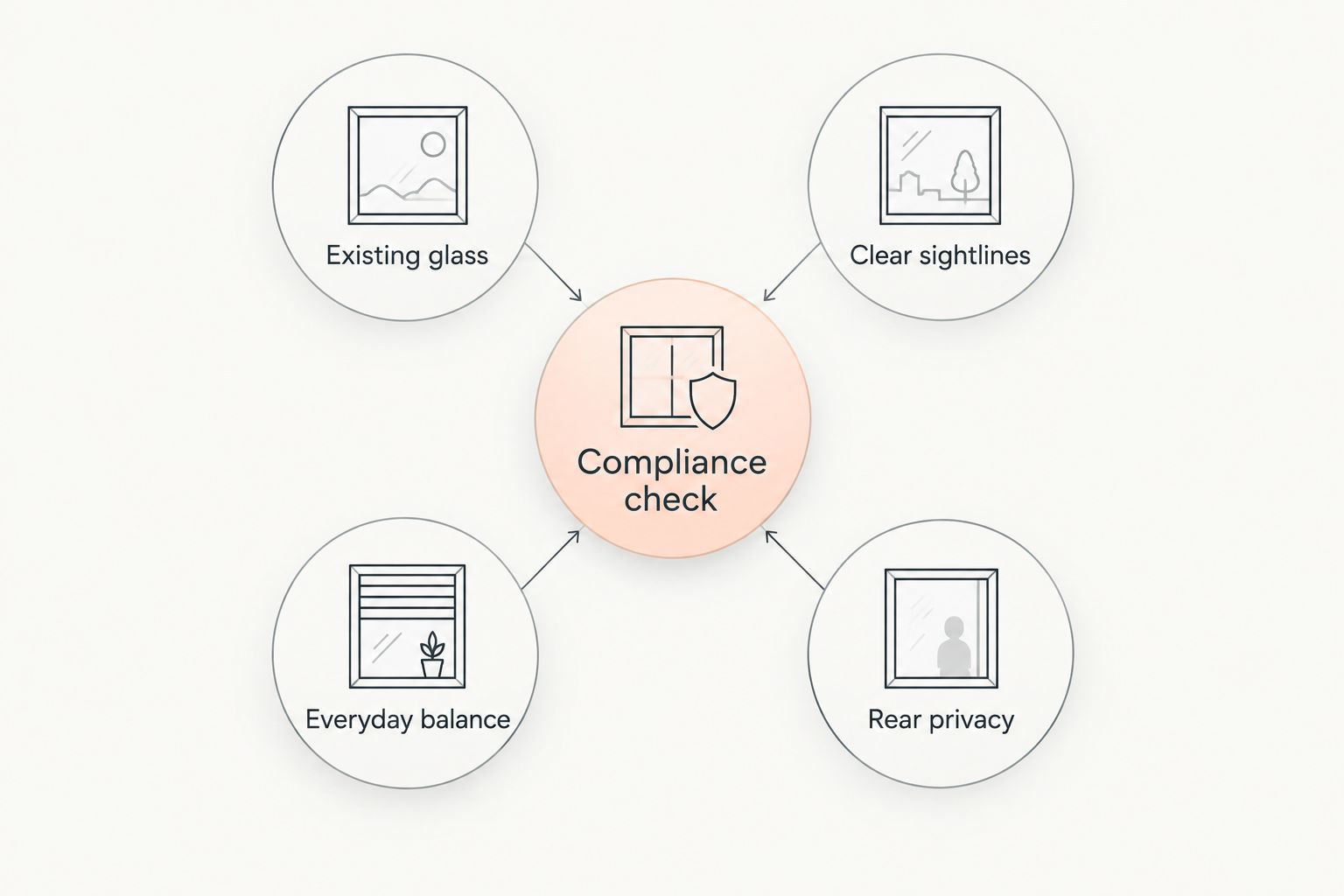
- Existing glass: Identify front transmission and whether rear privacy glass is factory-installed.
- Clear sightlines: Choose the lighter 50% setup when outward visibility leads the decision.
- Everyday balance: Choose the 35% setup when you want consistent tint across the cabin.
- Rear privacy: Consider the 50% front and 20% rear pairing when privacy matters mainly behind the driver.
- Compliance check: Confirm the selected statutory configuration and measure the completed windows.
Kleandetail provides window tinting for Oak Lawn car owners choosing an Illinois-compliant setup. Discuss your priorities and existing glass before committing to a shade; the film label alone is not the decision.
Discuss your window tint setup
Start with your existing glass, nighttime driving needs, and preferred rear-window privacy.
How these options are ranked
This ranking uses legal configuration, visible-light transmission, privacy location, and existing-glass compatibility. It is a decision guide, not a claim that every driver should prefer the same darkness.
The 35% setup ranks first because it balances the competing priorities. The remaining options each answer a different need: clearer sightlines, rear-seat privacy, factory-glass compatibility, or untreated front windows. No heat-rejection ranking is assigned without film-specific performance data.
Which window tint percentage should you choose?
Choose 35% measured VLT as your default Illinois side-and-rear setup in 2026. Move to 50% when night-driving visibility matters more, or choose the permitted 50% front and 20% rear pairing when rear-seat privacy leads.
If your vehicle already has factory privacy glass, settle that question first. Kleandetail window tinting discussions should start with the vehicle’s existing glass, not a request for a film percentage in isolation.
FAQ
What’s the best window tint percentage for Illinois in 2026?
35% measured visible light transmission on the side and rear windows is the default recommendation for everyday balance. Choose a lighter setup for clearer outward visibility, and confirm that the finished windows meet the applicable Illinois configuration.
Is 20% tint legal on every Illinois car window?
No. Illinois permits a configuration with 50% transmission on the front side windows and 20% on the rear windows; that does not authorize 20% treatment on the front side windows.
Is 35% window tint better than 50% for night driving?
50% transmits more visible light than 35%, making it the lighter choice for nighttime sightlines. Both reduce visible light compared with otherwise equivalent untreated glass.
Can I use 5% tint on the rear windows in Illinois?
Illinois has a provision allowing nonreflective rear-window treatment when the front side windows remain untreated. Very dark rear tint still reduces outward visibility, so confirm the complete configuration before installation.
Does factory privacy glass change my front tint options?
Yes. Illinois has a specific provision for qualifying rear glass below 30% transmission installed at manufacture, paired with front side windows meeting 50% transmission. Confirm the glass’s origin rather than relying on vehicle body style.
Does a 35% film label mean my finished window is 35%?
No. The existing glass also reduces light transmission, so film and glass must be evaluated together. Ask for the completed window’s VLT reading instead of relying only on the film label.
Can I tint the entire windshield in Illinois?
The standard upper-strip provision permits nonreflective treatment along the uppermost 6 inches, not general full-windshield tinting. Do not treat a light film shade as automatic authorization for full-windshield treatment.
Does darker window tint always reject more heat?
No. Visible light transmission measures visible darkness, not total heat-rejection performance. Compare documented film specifications separately from the percentage you choose.
One last thing
A photograph is not a tint meter. The same treated window can look different against a light interior, a dark interior, direct sun, or shade.
Before your 2026 installation, write down the intended front-and-rear configuration and ask how the completed VLT will be checked. That is more useful than approving a shade from a photo, and it gives your Kleandetail window tinting discussion a clear starting point.


