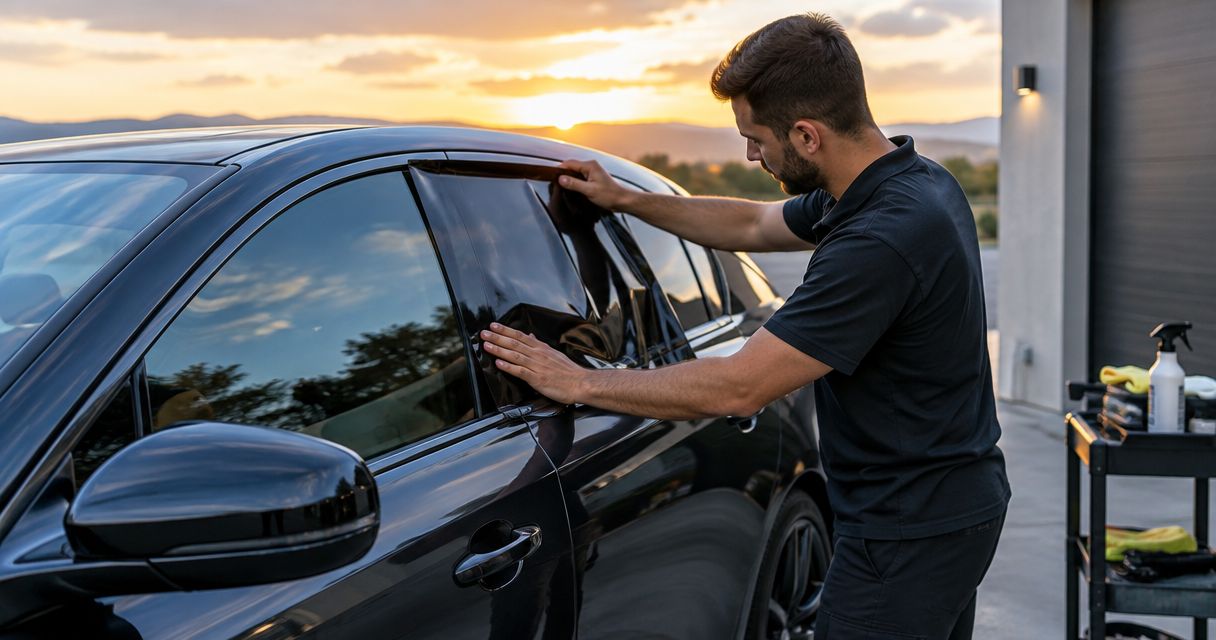
Best overall: LLumar. Best for a ceramic-focused shortlist: XPEL. Best for nonmetallic optical-film options: 3M. This 2026 guide compares the best window tint brands for cars by film construction, visibility, documentation, and installation—not darkness alone; Kleandetail provides automotive window tinting in Oak Lawn, Illinois.
- LLumar leads this best window tint brands for cars shortlist for drivers comparing different film constructions.
- XPEL suits ceramic-focused buyers; 3M suits drivers considering nonmetallic optical films.
- SunTek suits buyers planning window tint and paint protection film; Solar Gard suits everyday tint comparisons.
- Kleandetail provides automotive window tinting in Oak Lawn; confirm the exact film and installation scope before booking.
Why this matters
A manufacturer name does not tell you which film goes on your car. One brand can sell different constructions, shades, and performance levels. Choose the exact film before approving the installation.
Darkness and heat control are different measurements. A darker window reduces visible light, but its shade alone does not establish how much solar energy it rejects. For a 2026 purchase, compare the proposed film's technical sheet rather than a photograph of a tinted vehicle.
What makes the best automotive window tint
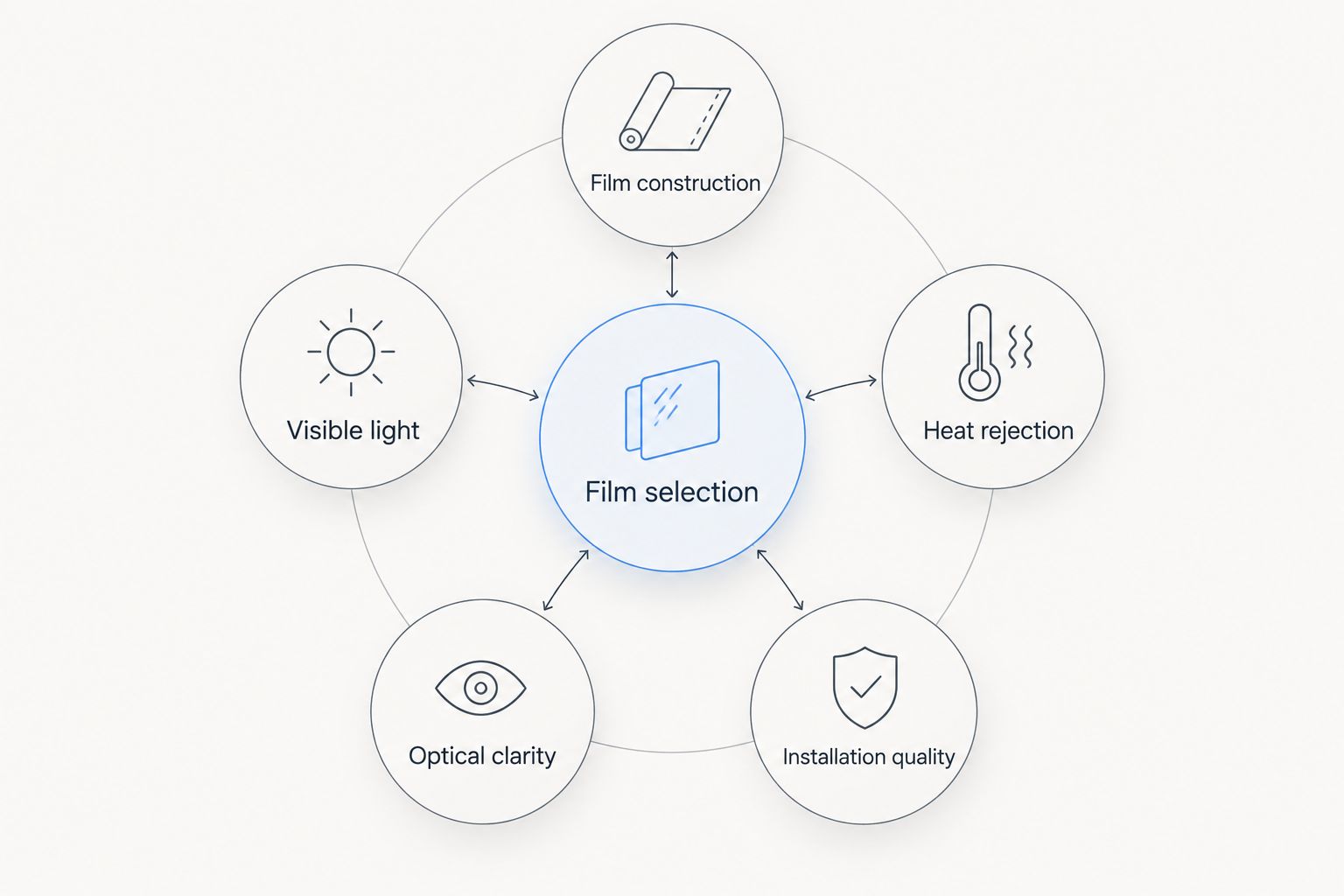
Use these criteria to compare the actual films offered for your vehicle:
- Film construction: Identify whether the proposed film is dyed, metallized, ceramic, or another nonmetallic construction. Each describes a different approach, not a universal quality grade.
- Visible light: Compare visible light transmission, or VLT. Your choice must account for both the film and the existing glass.
- Heat rejection: Look for total solar energy rejected, or TSER, alongside the test conditions. An isolated infrared figure does not describe the entire solar spectrum.
- Optical clarity: Inspect a sample for visibility, reflections, and appearance. A sample helps you assess the view, but it does not replace performance documentation.
- Installation quality: Discuss preparation, edges, contamination, and follow-up instructions. Film specifications cannot compensate for poor installation.
- Written coverage: Read the applicable warranty and identify who handles a claim. Do not assume every film from one manufacturer has identical terms.
These criteria favor a documented, suitable installation over a logo. A familiar brand is a starting point, not proof that the quoted film fits your driving needs.
Best window tint brands at a glance
The brands below occupy different buying-guide slots. The ranking is a selection framework, not a measured claim that one manufacturer's entire range outperforms another's.
| Rank and brand | Best for | Standout feature | Key limitation |
|---|---|---|---|
| 1. LLumar | Comparing film constructions | Automotive range includes dyed, metallized, and ceramic options | The brand name does not identify the quoted construction |
| 2. XPEL | A ceramic-focused shortlist | Automotive ceramic tint options | Ceramic branding alone does not establish performance |
| 3. 3M | Nonmetallic optical-film options | Multilayer optical automotive film technology | Not every 3M automotive film uses the same technology |
| 4. SunTek | Planning tint alongside paint protection film | Offers automotive window film and paint protection film | Glass tint and paint film solve different problems |
| 5. Solar Gard | Everyday tint comparisons | Automotive solar-control window films | You still need the exact film's specifications |
1. LLumar: best window tint for comparing constructions
LLumar offers automotive films across different constructions, including dyed, metallized, and ceramic options. That makes it a useful default when you want to compare approaches before committing to one. Ask for the exact proposed film, not simply a quote for LLumar tint.
LLumar is the best starting point here for drivers who want to compare film constructions before choosing a shade. The recommendation rests on selection breadth, not an unsupported claim that every LLumar film has the same heat rejection.
LLumar pros:
- Different constructions give you a practical comparison within one manufacturer.
- Ceramic options belong on a heat-control shortlist.
- Dyed and metallized options let you evaluate alternatives to ceramic.
LLumar cons:
- A manufacturer-only quote leaves the actual film unspecified.
- Specifications from one LLumar film cannot stand in for another.
Best for: Drivers who want a structured comparison of tint technologies rather than an immediate commitment to ceramic.
Verdict: Buy when the proposed LLumar film matches your visibility needs and has documentation you can review.
2. XPEL: best window tint for a ceramic-focused shortlist
XPEL offers ceramic automotive window tint, making it a relevant manufacturer when ceramic construction is already part of your brief. Compare the precise film and shade offered. The word ceramic does not eliminate the need to inspect VLT and solar-performance data.
Start with the problem you want to solve: sun exposure during a commute, visibility, or a particular appearance. Then assess the proposed XPEL film against that problem rather than buying the category label alone.
XPEL pros:
- Ceramic automotive options fit a ceramic-first search.
- Nonmetallic ceramic construction provides an alternative to metallized film.
- Exact-film documentation gives you a basis for comparing the proposed option.
XPEL cons:
- Ceramic construction alone does not establish a specific heat-rejection result.
- A darker shade still changes visibility, regardless of construction.
Best for: Drivers who have decided to evaluate ceramic tint and want a manufacturer to include in that comparison.
Verdict: Buy when the named XPEL film meets your requirements; skip a proposal that relies only on the ceramic label.
3. 3M: best window tint for nonmetallic optical-film options
3M's automotive range includes nonmetallic multilayer optical film technology. This gives you another construction to evaluate alongside ceramic and conventional alternatives. It does not mean every automotive film bearing the 3M name has that construction.
For a 2026 comparison, identify the exact technology in the proposal. Then compare the film's documented performance at the shade you intend to install, rather than transferring claims from another option in the range.
3M pros:
- Multilayer optical technology adds a distinct option to your shortlist.
- Nonmetallic construction offers an alternative to metal-containing films.
- Comparing construction and VLT helps separate appearance from solar control.
3M cons:
- The manufacturer name alone does not specify the technology.
- Headline claims for one film do not describe the entire automotive range.
Best for: Drivers who specifically want to evaluate a nonmetallic optical-film approach.
Verdict: Buy when the proposed 3M film's construction and specifications match your brief; hold when the quote names only the manufacturer.
4. SunTek: best window tint for coordinated protection planning
SunTek offers automotive window film and paint protection film. That makes the manufacturer relevant when you are planning glass tint and exterior paint protection together. It does not make the two materials interchangeable.
Window tint changes light transmission through glass. Paint protection film covers painted surfaces. Evaluate each service separately, even when both appear in the same proposal.
SunTek pros:
- Its product categories fit a combined tint-and-paint-protection shortlist.
- You can organize both comparisons around one manufacturer's documentation.
- Separate material specifications make each part of the proposal easier to assess.
SunTek cons:
- A shared manufacturer does not prove either material suits your vehicle.
- Choosing both categories still requires separate installation scopes and warranty review.
Best for: Drivers planning window tint and paint protection film during the same vehicle-care project.
Verdict: Buy the SunTek tint only on its own merits; skip the assumption that a combined proposal automatically improves the result.
5. Solar Gard: best window tint for everyday comparisons
Solar Gard offers automotive solar-control window films. Include it when you want to compare a straightforward daily-driver tint proposal against other manufacturers. Focus on the exact film, your preferred visibility, and the documented solar performance.
Everyday use still deserves a precise specification. Your commute, parking conditions, and ability to see through the glass matter more than choosing a dramatic appearance in a sample photograph.
Solar Gard pros:
- Automotive solar-control films address the category you are shopping for.
- An exact-film proposal supports a direct comparison with other brands.
- A visibility-first selection keeps daily driving central to the decision.
Solar Gard cons:
- The brand name alone provides no numerical performance guarantee.
- A visually appealing shade does not establish suitability for nighttime driving.
Best for: Daily drivers who want a clear, documented tint proposal without treating manufacturer prestige as the deciding factor.
Verdict: Buy when the proposed Solar Gard film meets your visibility and solar-control requirements.
How we ranked these window tint brands
This 2026 ranking assigns each manufacturer a distinct decision slot based on its established automotive film categories. LLumar leads for comparing constructions; XPEL represents a ceramic-focused route; 3M adds nonmetallic optical-film technology; SunTek fits coordinated protection planning; Solar Gard rounds out an everyday comparison.
The criteria are construction, visible light, solar-performance documentation, clarity, installation, and written coverage. There is no claimed laboratory winner here. A measured performance ranking would require comparable results for the exact films and shades—not manufacturer names.
Read the specification before choosing darkness
VLT measures how much visible light passes through a material. As illustrative values, 70% VLT transmits 70% of visible light, 35% VLT transmits 35%, and 20% VLT transmits 20%. These examples explain the scale; they are not shade recommendations or legal limits.
Factory glass also affects the completed window. The film's nominal VLT does not, by itself, establish the final glass-and-film transmission. Ask how the installer will assess the finished combination.
For heat control, compare TSER using consistent test conditions. Treat infrared rejection as a separate measurement and inspect its stated wavelength range; figures measured over different ranges are not interchangeable.
What to ask before booking in Oak Lawn
Kleandetail is an automotive detailing shop offering window tinting, ceramic coating, paint protection film, paint correction, and full vehicle detailing. For a window tinting inquiry in 2026, bring a brief that separates appearance from performance.
Ask these questions before approving any installation:
- What is the exact manufacturer and film being proposed?
- Which windows are included, and what existing tint or glass needs assessment?
- What are the film's VLT and documented solar-performance measurements?
- How will the finished windows be checked against applicable Illinois requirements?
- What preparation, aftercare, and written coverage apply?
For Illinois compliance, consult the current Illinois Vehicle Code, Section 12-503, and its applicable exceptions. Do not treat a single percentage repeated online as a complete rule for every vehicle and window arrangement.
Kleandetail window tinting inquiries should start with your vehicle, driving needs, and intended coverage. Confirm the proposed manufacturer directly rather than assuming the shop installs every brand listed here.
Discuss your window tint requirements
Ask about the proposed film, window coverage, visibility, and installation scope.
Which window tint brand should you choose?
Start with LLumar if you are undecided about construction. Choose XPEL for a ceramic-focused comparison, 3M to investigate nonmetallic optical film, SunTek when coordinating tint with paint protection, and Solar Gard for an everyday-driver proposal.
The winning installation is the one with a named film, suitable visibility, comparable specifications, and a clear scope. If those details are missing, hold the decision—even when the manufacturer is familiar.
FAQ
What's the best window tint brand for cars in 2026?
LLumar is the default choice in this guide for drivers comparing film constructions. XPEL, 3M, SunTek, and Solar Gard suit the other buying priorities described here; choose the exact film rather than the manufacturer name alone.
Is ceramic tint always better than dyed tint?
Ceramic tint is not automatically the better choice for every driver. Compare the exact films' solar-performance data, visibility, and construction against your needs rather than treating ceramic as a universal quality guarantee.
Is XPEL better than LLumar for car window tint?
This guide does not establish a measured performance winner between XPEL and LLumar. XPEL fits a ceramic-focused shortlist, while LLumar is the starting point for comparing different constructions; exact-film specifications decide the comparison.
Does darker window tint block more heat?
Darkness alone does not establish a film's total solar heat rejection. Compare VLT for visible light and TSER for solar-energy performance using consistent test conditions.
What does 35% VLT mean on window tint?
35% VLT means the material transmits 35% of visible light under the measurement conditions. The existing glass also affects transmission through the completed window, so the film rating alone does not establish the finished result.
What window tint is legal in Illinois?
A legal Illinois tint installation must satisfy the applicable requirements and exceptions in Illinois Vehicle Code Section 12-503. Check the current rules for your vehicle and window arrangement rather than relying on one percentage as a universal answer.
Does Kleandetail install all the tint brands in this guide?
Confirm the offered tint manufacturers directly with Kleandetail. The shop provides automotive window tinting in Oak Lawn, but this comparison does not establish which manufacturers it installs.
One last thing
Ask for a sample you can look through, not just look at. Appearance from outside the car and visibility from the driver's seat answer different questions. For your 2026 decision, use the sample to assess the view and the technical sheet to assess performance.