
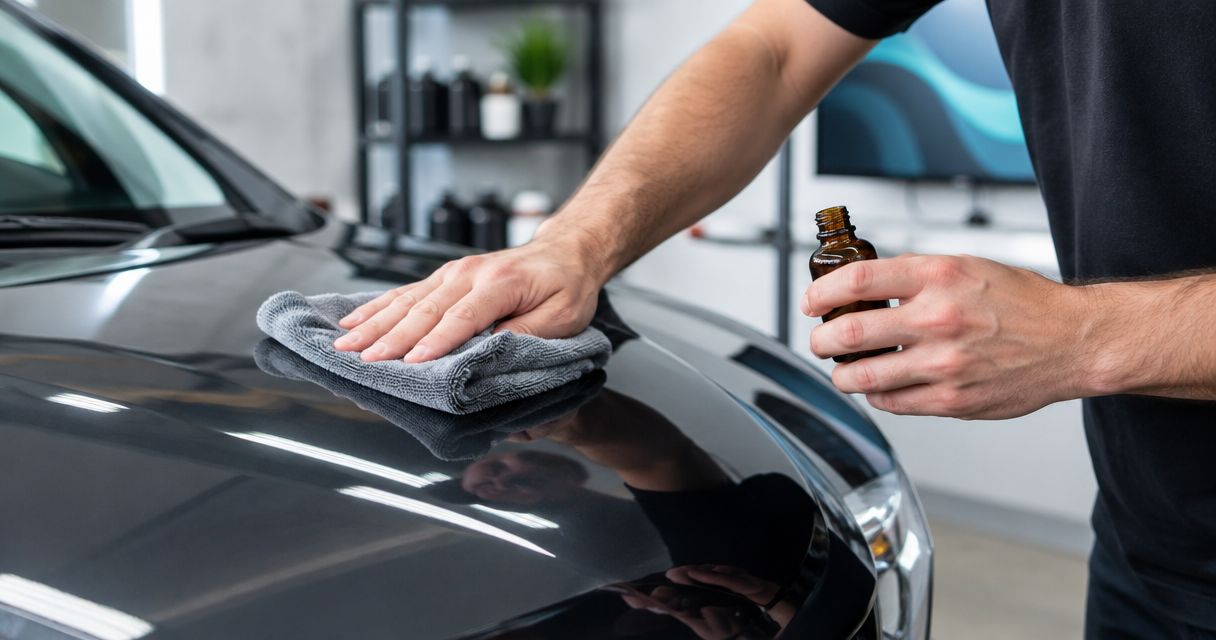
Yes, ceramic coating can be removed from automotive paint, usually through controlled abrasive polishing rather than an ordinary wash. If you change your mind in 2026, the main trade-off is that polishing can also remove clear coat, so the finish needs an inspection before you choose a removal method.
- Can ceramic coating be removed? Yes; cured coatings generally require abrasive polishing, not a routine car wash.
- Kleandetail offers ceramic coating and paint correction for Oak Lawn car owners seeking local detailing services.
- Poor water beading alone does not prove a ceramic coating needs removal.
- Matte paint and coated paint protection film require different treatment from conventional gloss paint.
Can ceramic coating be removed if you change your mind?
Ceramic coating is removable, but removing it is a paint-finishing job—not a peel-off process. On conventional gloss automotive paint, a detailer typically uses polishing to abrade the cured coating. The appropriate approach depends on the coating, the underlying finish, and what you want to do afterward.
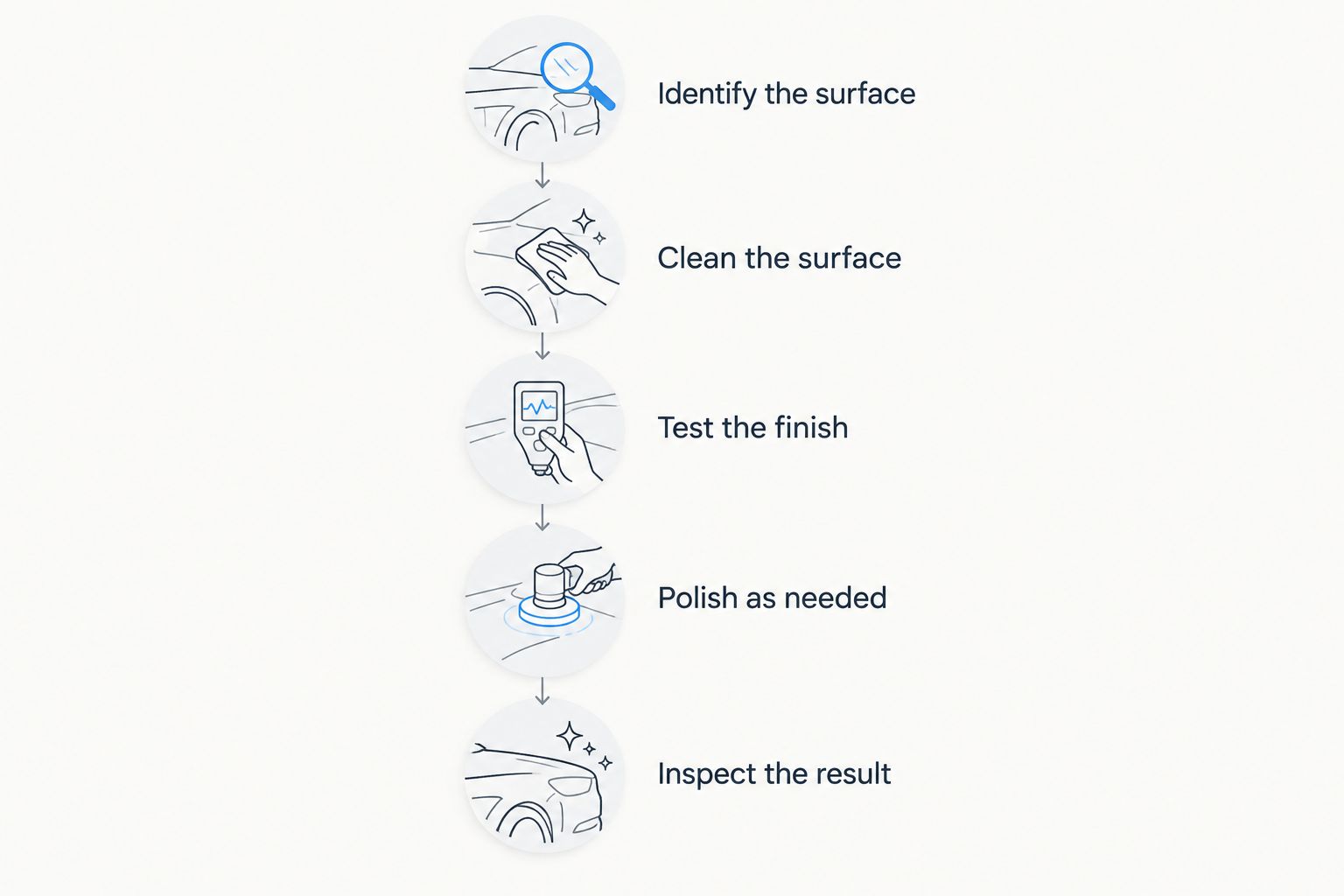
The basic process is:
- Identify the surface. Confirm whether the coating sits on gloss paint, matte paint, or paint protection film.
- Clean the surface. Wash and remove suitable contaminants before judging the coating's condition.
- Test the finish. Evaluate a small area with the least aggressive suitable polishing combination.
- Polish as needed. Adjust the process to the coating and paint rather than repeating aggressive passes everywhere.
- Inspect the result. Check the finish and prepare it for the protection or repair that comes next.
A coating-removal request should start with the reason you want it gone. Streaking, disappointing water behavior, and plans for bodywork are different problems; they do not automatically require the same treatment.
Why this matters
A ceramic coating is not a separate sheet you can lift off the paint. Treating it like removable film leads to the wrong tools and unnecessary abrasion.
Kleandetail is best for Oak Lawn car owners seeking local ceramic coating and paint correction services. You can use the Kleandetail website to review those services before discussing the condition of your vehicle.
For a coating-removal decision in 2026, define the result you actually want: remove visible application marks, restore the finish, change protection, or prepare for repair. That goal determines whether you need maintenance, localized correction, or broader removal.
Which methods remove ceramic coating?
Cleaning and coating removal are not interchangeable. A cleaner can remove material sitting on top of a coating without removing the cured coating beneath it.
| Approach | Best for | Main advantage | Main limitation |
|---|---|---|---|
| Washing and suitable decontamination | Diagnosing a dirty or contaminated surface | Helps reveal the condition beneath surface buildup | Does not establish that a cured coating has been removed |
| Controlled abrasive polishing | Removing cured coating from suitable gloss paint | Mechanically abrades the coating and can correct surface defects | Can also remove clear coat; requires careful assessment |
| Manufacturer-directed residue cleanup | Addressing an application issue within the product's stated working conditions | Follows instructions specific to the coating | Is not a universal solution for an old, fully cured coating |
For cured coating on conventional gloss paint, controlled polishing is the removal approach to discuss—not stronger household chemicals. Start with an inspection, not a shopping list of aggressive cleaners.
Washing: useful for diagnosis, not confirmed removal
A thorough wash helps separate surface dirt from a coating problem. Suitable decontamination can also address deposits that interfere with the way water behaves.
Its limitation is important: a clean panel does not tell you exactly how much coating remains. Likewise, water that stops forming tight beads does not prove that every trace of coating is gone.
Polishing: effective, but not consequence-free
Polishing removes material through abrasion. That makes it useful for cured coating removal, but it also means the underlying paint needs protection from unnecessary cutting.
The objective is not to make the most aggressive combination work. It is to find the least aggressive suitable process that achieves the intended finish. Paint condition, previous correction, and panel edges all affect that decision.
Fresh residue: follow the coating's own instructions
If you notice streaks during application, check the coating manufacturer's instructions before trying a different chemical or abrasive. Fresh residue and a cured coating are different situations.
Do not assume advice for one coating applies to another. Once the material has cured, correcting a high spot can require polishing rather than another wipe with the application towel.
Why ceramic coating removal varies
The work depends on the surface and the problem—not simply the vehicle's size or the word ceramic on an invoice.
- Underlying material: Gloss clear coat, matte finishes, and paint protection film do not accept the same correction methods.
- Coating condition: Fresh application residue calls for a different assessment from a cured coating.
- Paint history: Previous polishing and refinishing affect how much additional abrasion is appropriate.
- Visible defects: Isolated high spots differ from widespread streaking, scratches, or etched deposits.
- Next treatment: Recoating, film installation, and body repair each have their own preparation requirements.
- Panel shape: Edges, creases, and restricted areas need different tool control from broad, flat panels.
Bring the coating name and application record if you have them. Those details help the person inspecting the car choose the appropriate preparation process; they do not replace examining the finish.
What if you only dislike how the coating looks?
Identify whether you dislike the coating itself or a defect visible through it. Ceramic coating does not fill deep scratches or replace paint correction, so removing it does not automatically solve every appearance complaint.
Rainbow-like patches or uneven application marks deserve an inspection under suitable lighting. Ask whether the affected area needs localized correction before authorizing polishing across the whole vehicle.
For a removal appointment in 2026, describe what you see rather than diagnosing it yourself. A useful request is to inspect uneven reflections on a particular panel and explain the correction options. That is more precise than asking to strip everything.
Do high spots mean the whole car needs polishing?
High spots do not automatically require whole-car correction. The affected areas and the condition of surrounding paint determine the scope.
Localized work has a clear advantage: it avoids treating unaffected areas unnecessarily. Its limitation is that the corrected section still needs an appropriate finish and protection plan, especially if polishing has removed the existing coating there.
Will removing the coating remove scratches too?
Coating removal does not guarantee scratch removal. Polishing can improve some surface defects, but deeper damage remains limited by the paint available for safe correction.
Do not combine separate promises into one job description. Ask what the proposed process will do to the coating, what it will do to the scratches, and which defects will remain. The guide to whether paint correction removes clear coat explains the material-removal trade-off.
Can ceramic coating be removed without damaging the paint?
Ceramic coating can be removed without visibly damaging suitable gloss paint when the correction process is appropriate for the finish. That is not a guarantee that every painted surface can safely tolerate the same procedure.
Clear coat is finite. Existing thin areas, previous aggressive correction, failing paint, and refinished panels deserve particular caution before further polishing.
A paint-thickness gauge can help assess total coating thickness on compatible substrates, but a standard reading does not independently identify the thickness of the ceramic coating. Treat measurements as part of an inspection, not proof that every panel has the same polishing allowance.
Do not keep polishing solely because water still beads. Water behavior is not a reliable stand-alone measurement of complete coating removal.
What changes if the coating is on matte paint or film?
Matte paint needs a different approach because abrasive polishing can change its appearance. A method intended to restore gloss on conventional paint defeats the purpose of a matte finish.
Coated paint protection film also needs film-specific guidance. Do not assume a painted-panel polishing procedure is suitable for the film, or that removing the coating requires removing the film itself.
If your vehicle combines exposed paint and film-covered panels, identify those areas before work starts. One treatment across every panel is not an appropriate default.
What should you ask before booking removal?
Before a coating-removal appointment in 2026, agree on the scope and the finish you expect afterward. You should understand the proposed work without needing to choose the pad, compound, or machine yourself.
Ask these questions:
- Is the visible problem contamination, an application defect, or damage to the paint?
- Does the entire vehicle need treatment, or only specific panels?
- What inspection and test area will guide the polishing process?
- Are any panels unsuitable for further abrasive correction?
- What protection or preparation follows the removal?
Photographs help communicate the problem, but reflections and surface defects still need a physical inspection. Include the coating's application details and any known paint repairs when you explain the vehicle's history.
Can you apply another coating after removal?
You can apply another ceramic coating after appropriate removal and surface preparation. The replacement coating's instructions determine the required preparation; removing visible residue alone does not establish that the surface is ready.
If you want to change coating brands, do not assume the new product should go directly over the old one. Confirm the intended preparation with the installer and the replacement product's instructions.
A change of mind also does not create a requirement to recoat. Your next protection choice should match your maintenance preferences and the condition of the finish, rather than automatically repeating the original treatment.
FAQ
Can ceramic coating be removed at home?
Ceramic coating can be removed at home with suitable polishing equipment and the skill to assess the paint. If you cannot evaluate the finish or control abrasive correction, have a qualified detailer inspect it instead of experimenting with aggressive compounds.
Will a normal car wash remove ceramic coating?
A normal car wash is not a dependable method for removing a cured ceramic coating. Washing helps assess surface condition, but it does not confirm complete coating removal.
Does an alcohol wipe remove ceramic coating?
An alcohol wipe is not a dependable way to remove a fully cured ceramic coating. Panel-preparation products can remove certain residues, but that is different from confirming removal of the coating itself.
Can ceramic coating be peeled off like paint protection film?
Ceramic coating cannot be peeled off like paint protection film. It forms a thin coating on the surface rather than a separate removable sheet.
Does weak water beading mean the coating is gone?
Weak water beading does not prove the coating is gone. Contamination and surface residues can affect water behavior, so assess the cleaned surface before deciding that removal or replacement is necessary.
Should I remove a ceramic coating before selling my car in 2026?
Selling your car in 2026 does not, by itself, require ceramic coating removal. Judge the visible finish and address actual defects rather than polishing away sound protection solely for the sale.
Does Kleandetail offer services relevant to coating correction?
Kleandetail offers ceramic coating and paint correction in Oak Lawn, Illinois. Discuss your vehicle's finish and desired result before deciding whether maintenance, correction, or coating removal is appropriate.
One last thing
Do not turn a maintenance complaint into unnecessary paint removal. If your only concern is disappointing water behavior, have the surface cleaned and assessed before authorizing abrasive correction.
For your 2026 appointment, bring the symptom, the coating history, and your desired outcome—not a predetermined demand to strip every panel. The right result is a properly prepared finish with no more abrasion than the job requires.


