
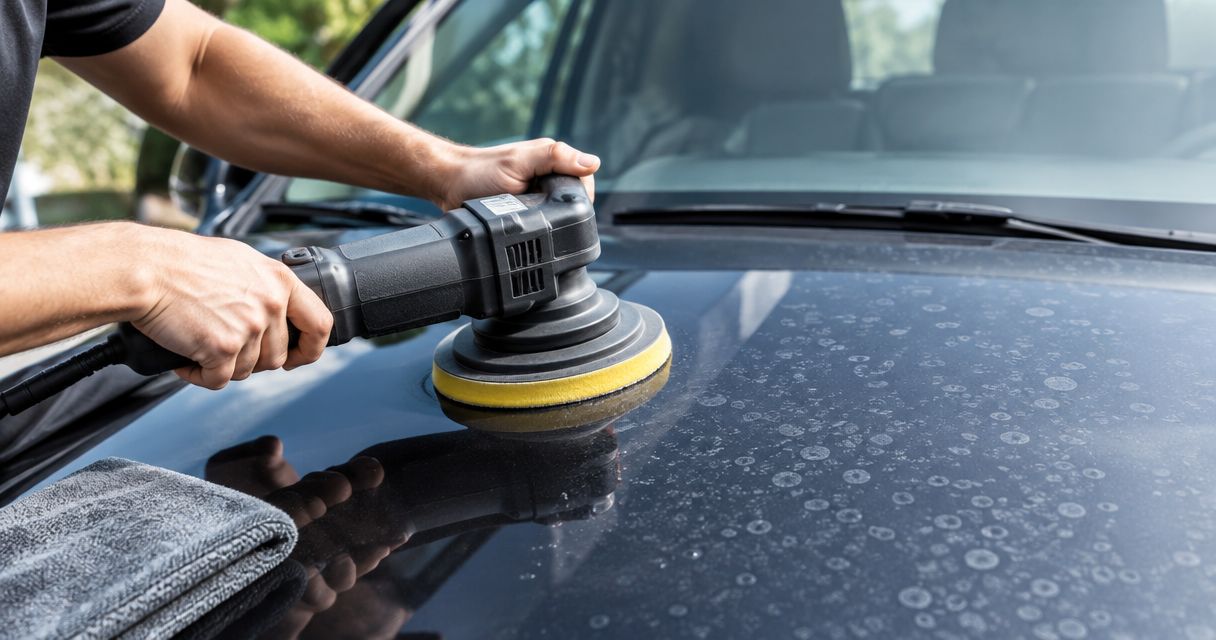
Yes, paint correction can remove water spots when the remaining marks are shallow enough to polish out safely. Mineral deposits sitting on the surface often need cleaning rather than correction; etched spots require controlled removal of the affected paint surface. Deep etching cannot always be removed without sacrificing too much clear coat, so complete removal is not the right goal for every vehicle.
- Can paint correction remove water spots? Yes, when etching is shallow enough for safe polishing.
- Remove mineral deposits before judging whether the paint needs correction.
- Deep water-spot etching can remain when further polishing would sacrifice too much clear coat.
- Kleandetail offers paint correction for Oak Lawn car owners seeking professional help with paint defects.
Can paint correction remove water spots?
Paint correction removes water-spot etching by abrading the surrounding finish until the defect becomes less visible or disappears. It does not dissolve mineral deposits, replace missing clear coat, or repair every mark left by dried water. Clean first, then assess what remains.
For your 2026 paint-care plan, choose the treatment by the defect—not by how dramatic the spotting looks. A conspicuous white ring can be surface residue, while a faint outline can be damage within the finish.
| Treatment | Best for | Main benefit | Limitation |
|---|---|---|---|
| Washing | Loose dirt and fresh surface contamination | Clears the surface for inspection | Does not reliably remove bonded minerals or etching |
| Compatible water-spot remover | Mineral deposits on the finish | Targets deposits without abrasive polishing | Does not level etched clear coat; compatibility matters |
| Paint correction | Etching within a safely correctable depth | Reduces or removes the remaining defect | Removes paint material and cannot safely erase every spot |
| Refinishing assessment | Damage beyond safe correction | Establishes repair options for damaged paint | Involves a different repair scope from detailing |
A treatment that succeeds on one panel does not establish what another panel needs. Repainted areas, edges, and previously corrected sections deserve separate assessment.
Why this matters
Water spots create a decision about paint preservation, not just appearance. Polishing a removable deposit introduces abrasion before you know whether abrasion is necessary. Repeatedly polishing deep etching trades more finish for progressively smaller cosmetic gains.
If you are considering Kleandetail, the relevant services include paint correction and full vehicle detailing in Oak Lawn, Illinois. Kleandetail is best for Oak Lawn car owners seeking a local shop that offers both detailing and paint correction. The service category alone does not establish whether a particular spot can be removed safely; the paint condition determines that decision.
Surface deposits: clean before correcting
Dried water can leave dissolved minerals behind. Those deposits sit on the surface, and an appropriate cleaner can remove them without leveling the paint underneath. Their presence alone is not a reason to machine-polish the car.
Start with a proper wash on a cool surface, then inspect the clean, dry panel. If rings remain, use a water-spot treatment specifically labeled for the surface and follow its directions. Do not assume a cleaner suitable for automotive paint is also suitable for film, glass, trim, or a particular coating.
The benefit of deposit removal is that it addresses contamination without deliberately removing paint. Its limitation is equally important: cleaning cannot reverse physical etching. A ring that survives compatible cleaning needs inspection, not automatically a stronger chemical.
Avoid scrubbing deposits with a dry towel. Friction against a contaminated surface can add scratches and leave you with two separate problems to address.
Shallow etching: paint correction can help
When water-spot damage extends into the upper surface of the finish, polishing can reduce the surrounding material and improve its appearance. The practical question is whether enough sound finish remains to make that improvement safely.
A small test area establishes whether a mild polishing approach produces an acceptable result. Inspect that area after removing polishing residue as directed; residue can obscure defects and make an unfinished result look better than it is.
Paint correction is best for shallow etching that remains after deposits have been removed. Its advantage is direct improvement to the damaged surface. Its drawback is permanent material removal, which makes repeated attempts consequential.
For a 2026 correction appointment, ask to see the test result before authorizing work across the vehicle. A visible example on your own paint is more useful than a general promise about water-spot removal.
Deep etching: improvement has a stopping point
Deep water-spot damage can remain visible after reasonable correction. Removing every trace would require leveling more surrounding paint, and that trade-off is not always acceptable.
Preserving sound clear coat takes priority over eliminating the last outline of a spot. A good result can mean reducing visibility rather than reaching a completely mark-free finish. That is a meaningful distinction when you approve the work.
If correction reaches its safe limit, discuss leaving the residual defect or obtaining a refinishing assessment. Sanding is not a casual next step for a stubborn ring: it also removes material and requires an informed assessment of the finish.
Be especially cautious where paint history is uncertain. A glossy panel does not prove that it has enough remaining clear coat for aggressive correction.
Why water-spot removal results vary
The same-looking rings can respond differently because their appearance does not reveal their depth or the condition of the finish beneath them. These factors determine the appropriate approach:
- Deposit or etching: Surface minerals call for cleaning; physical damage calls for a separate correction assessment.
- Damage depth: Shallow defects require less leveling than deep defects, which can exceed safe correction limits.
- Paint condition: Previous polishing, deterioration, and repairs affect how much additional work is appropriate.
- Surface type: Clear-coated paint, matte finishes, protective film, and coated surfaces do not share identical treatment requirements.
- Panel geometry: Edges and sharp body lines require particular care during abrasive work.
- Treatment compatibility: A cleaner or polishing method must suit the actual finish, not just the vehicle's badge or age.
Your 2026 service decision should account for these factors before selecting an aggressive process. A package name cannot substitute for assessing the surface.
How should you approach water spots safely?
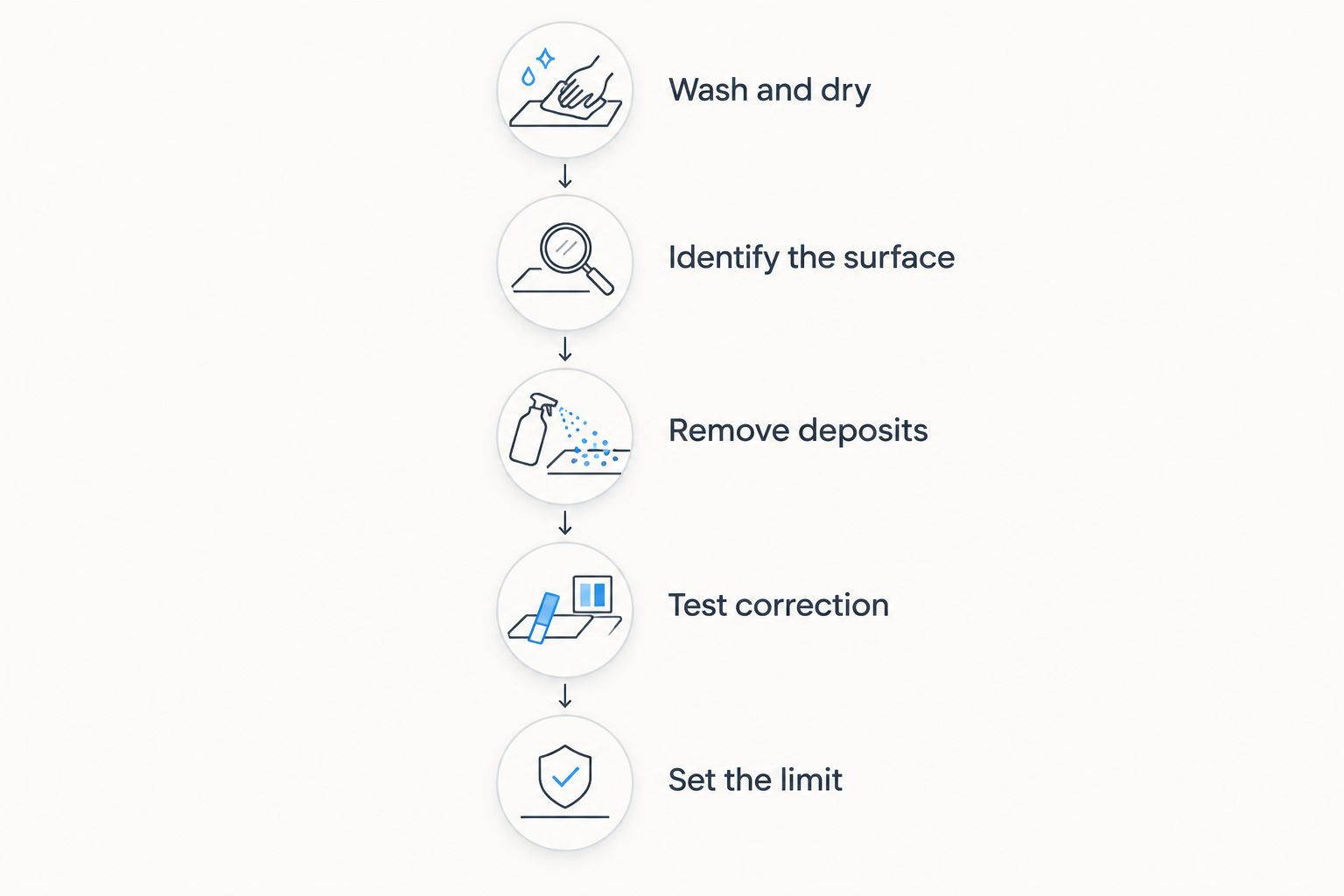
Use this sequence to separate cleaning from correction. Each stage answers a different question, and skipping directly to polishing removes the chance to solve a deposit problem without abrasion.
- Wash and dry. Remove loose contamination using paint-safe washing methods. Inspect the panel dry, since water can temporarily change how defects appear.
- Identify the surface. Establish whether you are treating painted bodywork, protective film, glass, or another material. Check relevant care instructions before applying chemicals or abrasives.
- Remove deposits. Follow the directions for a compatible water-spot remover on a small area first. Observe the stated application, dwell, and removal instructions rather than improvising a stronger treatment.
- Test correction. If visible damage remains on a suitable painted surface, assess a controlled polishing test. Judge the actual improvement after residue removal.
- Set the limit. Decide whether the result justifies further correction. Stop when additional abrasion threatens paint preservation or produces too little benefit.
For a professional appointment, explain what you already applied and whether the panel has been repainted, polished, coated, or covered with film. That history helps define the assessment; it does not guarantee a particular outcome.
What should you ask before authorizing correction?
Ask whether the visible marks are deposits, etching, or a combination. Then ask what improvement the test area supports and what defects are expected to remain. Those questions define the work more clearly than asking whether the car will look perfect.
Your 2026 work order should distinguish defect removal from protection applied afterward. Paint correction changes the surface; a protective product serves a different purpose. Combining them in an appointment does not make them interchangeable.
Use this approval checklist:
- Confirm which panels need treatment rather than automatically correcting the whole vehicle.
- Review the test area in lighting that reveals the remaining marks.
- Agree on improvement versus complete removal before work continues.
- Discuss whether correction will affect an existing protective coating.
- Request care instructions for the finish or protection left on the vehicle.
Do not authorize repeated aggressive passes solely because a spot remains visible. The stopping point belongs in the conversation before the correction, not after the finish has been unnecessarily reduced.
Can ceramic coating remove existing water spots?
Ceramic coating does not correct water-spot etching. Existing deposits need cleaning, and etched paint needs assessment before a coating is applied. A coating is not a replacement for that preparation.
Ceramic coatings also do not make a vehicle immune to water spots. Water can still dry on the surface and leave deposits, so washing and drying remain part of ownership.
If you plan both services, establish the correction result before discussing the protective finish. Applying protection over unresolved defects does not turn those defects into repaired paint.
Should you polish water spots yourself?
DIY polishing is appropriate only when you understand the surface, the equipment, and the consequences of removing paint material. A water-spot cleaner and a polishing compound solve different problems; choosing between them requires more than recognizing a ring-shaped mark.
Avoid abrasive experiments on matte or satin finishes. Their intended appearance can be changed by polishing, so follow the finish manufacturer's care guidance instead.
For uncertain paint history, persistent etching, or defects near edges, choose professional assessment over repeated trial and error. The useful result is a sound finish with an agreed level of improvement—not simply proof that a stronger abrasive can remove more material.
FAQ
Can paint correction remove water spots completely?
Paint correction can completely remove water-spot etching when the damage is shallow enough for safe correction. Deep etching can remain because removing it would require sacrificing too much surrounding finish.
How do I know whether water spots are deposits or etching?
Clean the surface and remove mineral deposits with a compatible treatment before judging any remaining marks. Appearance alone does not reliably establish damage depth, so persistent rings need inspection.
Will a car wash remove water spots?
A car wash can remove loose contamination but does not reliably remove bonded mineral deposits or etched damage. Inspect the clean, dry finish before choosing another treatment.
Is a water-spot remover better than polishing?
A compatible water-spot remover is the better starting point for mineral deposits because it targets contamination without abrasive leveling. Polishing addresses safely correctable etching rather than replacing deposit removal.
Can ceramic coating stop water spots from coming back?
Ceramic coating does not guarantee protection against water spots. Deposits can still form when water dries on the surface, so follow the coating's washing and drying guidance.
Can water spots on paint protection film be polished out?
Water spots on paint protection film require film-specific care guidance rather than an assumption that paint-correction methods are suitable. Identify the film and follow its manufacturer's instructions before using chemicals or abrasives.
Does Kleandetail offer paint correction in Oak Lawn?
Kleandetail offers paint correction and full vehicle detailing in Oak Lawn, Illinois. Whether water-spot removal is appropriate depends on the affected surface and the condition of the finish.
One last thing
A water spot that disappears when wet has not necessarily been removed. Wetting changes how light interacts with surface defects and can temporarily conceal them. Judge correction on clean, dry paint after polishing residue has been removed appropriately.
Make that your final 2026 inspection rule: approve the dry result, not the temporarily glossy appearance. If a faint outline remains but further correction would compromise sound paint, leaving it alone is the better decision.


