
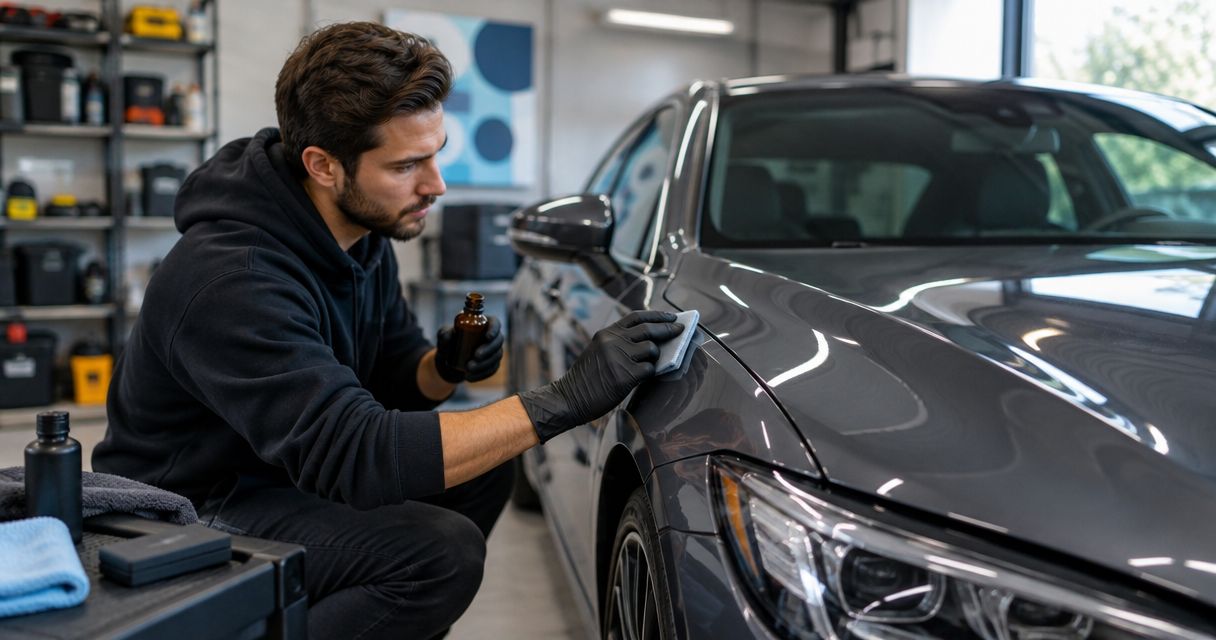
Yes, ceramic coating can be applied in a home garage if the product permits consumer application and you can meet its preparation, ventilation, temperature, and curing requirements. For a 2026 project, the deciding factor is control of those conditions—not whether the building is a professional shop; a coating also will not correct scratches or swirl marks underneath it.
- Can ceramic coating be applied in a home garage? Yes, when the product instructions and garage conditions allow it.
- Choose DIY ceramic coating only when you can prepare, inspect, apply, and cure it correctly.
- Kleandetail serves Oak Lawn car owners seeking professional ceramic coating rather than home application.
- Postpone coating if ventilation, lighting, paint preparation, or protected curing space is inadequate.
Why this matters
A garage provides shelter, not automatic application control. Dust, poor lighting, unsuitable temperatures, and interruptions can still make a sheltered application difficult. Buying a coating before checking the workspace reverses the right order.
Paint condition matters just as much. If you expect coating to erase defects, read about ceramic coating over swirl marks and scratches before choosing your preparation process. Correct appearance problems before applying protection—not afterward.
The useful question is whether your garage supports the entire job, including the period after application. A space that works while you spread the coating but must immediately return to woodworking, storage access, or vehicle traffic is not necessarily suitable for curing.
Can ceramic coating be applied in a home garage?
Yes. A home garage is suitable when the coating allows consumer installation and the workspace meets the manufacturer's written requirements throughout application and initial curing. Follow the instructions for the exact product, not a generic ceramic-coating schedule.
Use this sequence for your 2026 garage assessment before opening the bottle:
- Read instructions. Confirm permitted surfaces, application conditions, protective equipment, ventilation, leveling directions, and curing restrictions. Read the safety data sheet as well as the application guide.
- Check conditions. Assess temperature, humidity, airflow, dust sources, lighting, and access around the vehicle. Check whether those conditions will remain acceptable after application.
- Prepare paint. Wash, decontaminate as needed, address defects you want corrected, and complete the specified final surface preparation. Do not assume a clean-looking panel is ready.
- Apply and inspect. Work in the sections and sequence specified by the manufacturer. Inspect each area during the allowed leveling period rather than waiting until the vehicle is finished.
- Protect curing. Keep the vehicle under the conditions required by the product. Plan around water exposure, washing, handling, and any other restrictions in its instructions.
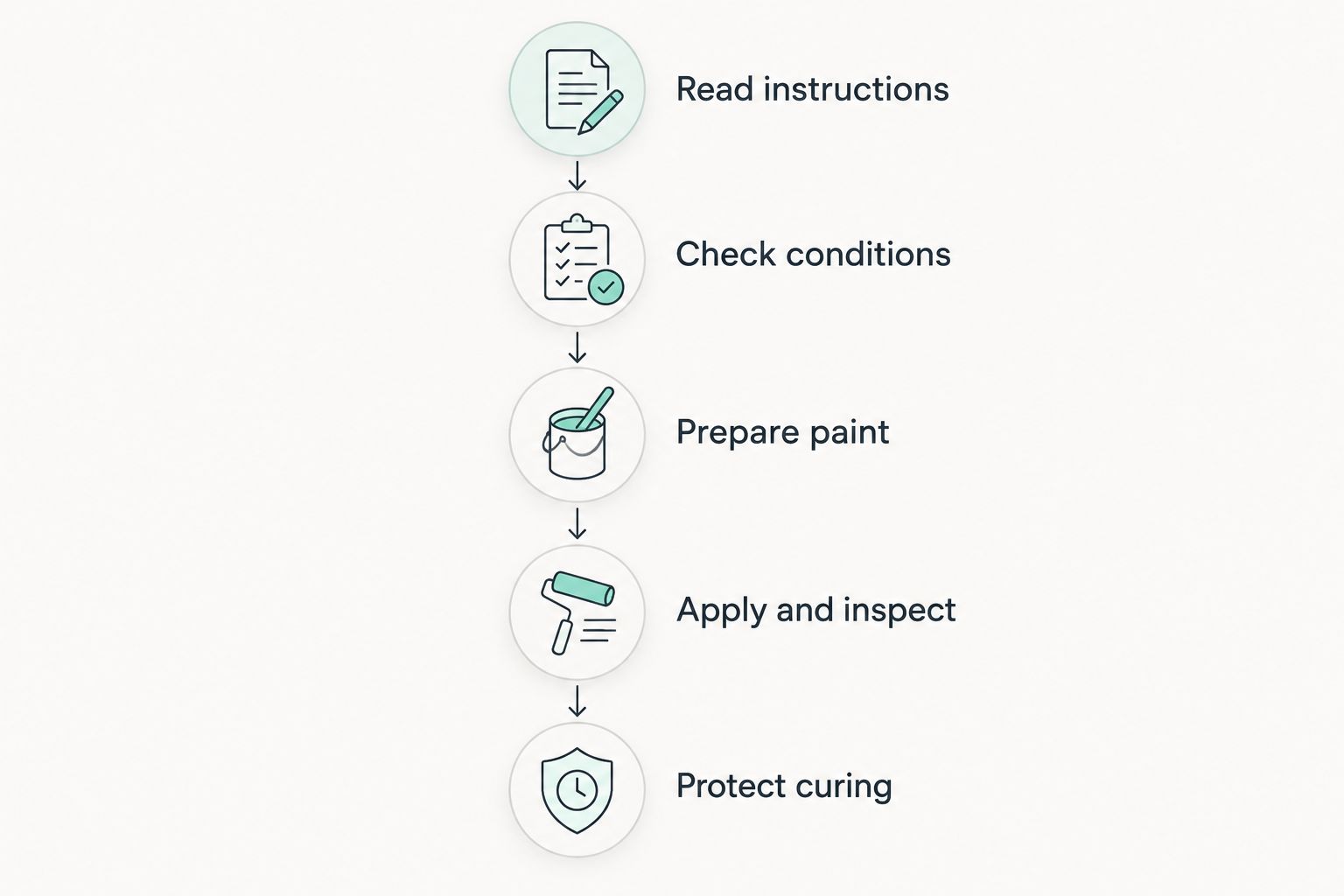
Passing the first checks does not excuse skipping the last one. Arrange another parking option before starting if household use of the garage would interrupt the required curing conditions.
What should you check before buying supplies?
Start with documentation. Confirm that the coating is intended for the surface you plan to treat and that its instructions are available before purchase. An application video is not a substitute for the current product guide.
Then inspect the garage with the car parked in its working position. Open doors as needed, check access to lower panels, and position lighting so you can examine the paint from different angles. If you cannot comfortably reach and inspect a panel, solve that problem before application.
Finally, plan the handoff from washing to indoor work. Avoid bringing a wet vehicle into the application stage or tracking loose debris into a prepared workspace. Follow the product's surface-drying requirements rather than judging readiness from the roof alone.
Home application versus professional ceramic coating
Choose the application route that matches your preparation skills and workspace. DIY gives you control over the process, but it also makes you responsible for recognizing defects, following the leveling procedure, and protecting the coating afterward.
| Option | Best for | Main advantage | Main limitation |
|---|---|---|---|
| Home application | Owners comfortable with paint preparation and product instructions | You control preparation, scheduling, and application | You must provide suitable conditions and handle application errors |
| Kleandetail ceramic coating | Oak Lawn owners seeking professional application | Ceramic coating and paint correction services are offered by the same business | You still need to confirm preparation scope and follow aftercare instructions |
| Postponing application | Owners whose garage or paint is not ready | Avoids applying coating under unsuitable conditions | Delays the coating project until the underlying issue is resolved |
Kleandetail is best for Oak Lawn car owners seeking professional ceramic coating instead of home application. Ask what preparation the proposed service includes, which defects it addresses, and what you must do after collection. Do not treat the words ceramic coating as a complete description of the work.
For DIY, the benefit is direct control—not freedom from preparation. For professional application, the benefit is having the service performed for you—not freedom from ongoing washing and care. Neither route turns coating into a scratch-repair treatment.
Why home-garage results vary
For a 2026 application, evaluate these factors against the selected coating's current instructions. There is no universal garage temperature, leveling interval, or curing schedule that applies to every formulation.
- Paint preparation: Residue and contamination can interfere with the required surface condition. Existing scratches and swirls also remain an appearance issue unless addressed separately.
- Temperature and humidity: These affect application behavior and curing. Use the product's permitted conditions rather than borrowing limits from another coating.
- Lighting and access: You need to see excess material and reach the full application area. A bright ceiling light alone does not establish that every panel is easy to inspect.
- Dust and airflow: Airborne debris can settle on prepared paint. Ventilation must also meet the product's safety requirements; closing the garage tightly is not an acceptable shortcut.
- Protected curing: Water, handling, or other exposure can conflict with product instructions. Keep the required conditions available after the visible application work ends.
A problem in any category deserves a specific fix. Better lighting does not compensate for unsuitable ventilation, and excellent preparation does not make an out-of-range application temperature acceptable. Treat these as separate requirements, not a score you can average.
What does a garage need for safe application?
Use the safety data sheet to decide whether your garage is suitable. It identifies product hazards, handling precautions, and protective measures. Do not assume that a consumer coating is harmless because the bottle is small.
Keep children and pets out of the working area. Follow instructions for gloves, eye protection, ventilation, storage, and disposal. Where the product identifies flammable vapors or ignition hazards, address those hazards before opening it; a heater is not automatically an appropriate way to warm the workspace.
Separate coating work from dust-producing activities. Sweeping, sanding, or cutting beside prepared paint defeats the purpose of cleaning the surface. Prepare the space beforehand and avoid creating airborne debris during application.
Keep the instructions accessible without touching a phone or paperwork with contaminated gloves. Arrange clean applicators and towels so used materials do not get confused with unused ones. These are workflow decisions, but they help you follow the specified process without improvising mid-panel.
What if you see streaks or high spots?
Uneven excess coating can leave visible streaks or darker patches, often called high spots. Inspect from several angles under suitable lighting during application. Do not wait until the whole vehicle is coated to check the first panel.
If you notice a problem, follow the manufacturer's correction instructions for that stage of application. The appropriate response depends on whether the material is still within its working period or has cured. Do not assume that adding more coating or rubbing harder is the correct repair.
Stop if you cannot identify the problem confidently. Repeatedly working an uncertain area risks making diagnosis harder. Get product-specific guidance before introducing polish, solvent, or another coating layer.
Before your 2026 application, identify where the manufacturer provides technical support and troubleshooting instructions. Having that information ready is more useful than searching for conflicting advice while a panel is drying.
Can I ceramic coat a car outside instead?
Outdoor application is suitable only if the selected product permits it and you can maintain all required conditions. Wind, airborne debris, changing sunlight, and weather make those conditions harder to control than shelter alone suggests.
Shade does not solve every problem. A shaded driveway still needs an acceptable panel temperature, safe working conditions, and a plan for protected curing. If the product requires indoor application or protection you cannot provide, do not substitute an outdoor setup.
Moving the car into a garage after application also needs to fit the instructions. Plan the entire process before starting rather than treating the garage as a last-minute weather backup.
Does a new car need preparation before ceramic coating?
Yes, a new car still needs inspection and the preparation specified by the coating manufacturer. New ownership does not establish that the paint is free of contamination, residue, or visible defects.
Inspect before deciding whether polishing is necessary. Polishing is a response to paint condition and your appearance goals, not an automatic requirement based solely on vehicle age. If the paint has been repaired or refinished, obtain the paint-system guidance before coating it.
FAQ
Can I apply ceramic coating in an unheated garage?
Yes, only when the garage and vehicle meet the selected coating's temperature requirements throughout the required application and curing periods. An unheated garage is unsuitable when conditions fall outside those limits.
Do I need to close the garage door while applying ceramic coating?
Not if closing the door prevents the ventilation required by the product's safety instructions. Balance contamination control with safe ventilation, and postpone application if your setup cannot provide both.
How long should my car stay in the garage after ceramic coating?
Keep the car protected for the period specified by the coating manufacturer. Initial water restrictions, washing restrictions, and full curing are not necessarily the same milestone, so check each instruction separately.
Can I apply ceramic coating without polishing first?
Yes, when the paint condition meets your goals and the coating's preparation instructions do not require polishing. Ceramic coating does not remove scratches or swirl marks that you leave underneath it.
Is professional ceramic coating better than doing it myself?
Professional application is the better fit when you cannot provide the required preparation, inspection, workspace, or curing conditions. DIY remains an option when the product permits consumer application and you can follow its instructions.
Can I wash my car immediately after ceramic coating?
Do not wash the car until the coating manufacturer's washing restriction has ended. Permission for incidental water exposure does not automatically mean detergent washing is permitted.
Can I apply another layer to fix uneven ceramic coating?
Do not add another layer as a default repair for uneven coating. Follow the manufacturer's troubleshooting guidance because the correct response depends on the product and its stage of curing.
One last thing
Reserve the garage for curing before you reserve time for application. The visible work can end before the product's restrictions do. Your 2026 project plan should cover both periods, including where you will park and how you will avoid interrupting the required conditions.
If that plan does not work at home, ask Kleandetail about professional ceramic coating and the aftercare obligations before arranging service. The right decision is the process you can complete correctly—not simply the one you can start.


