
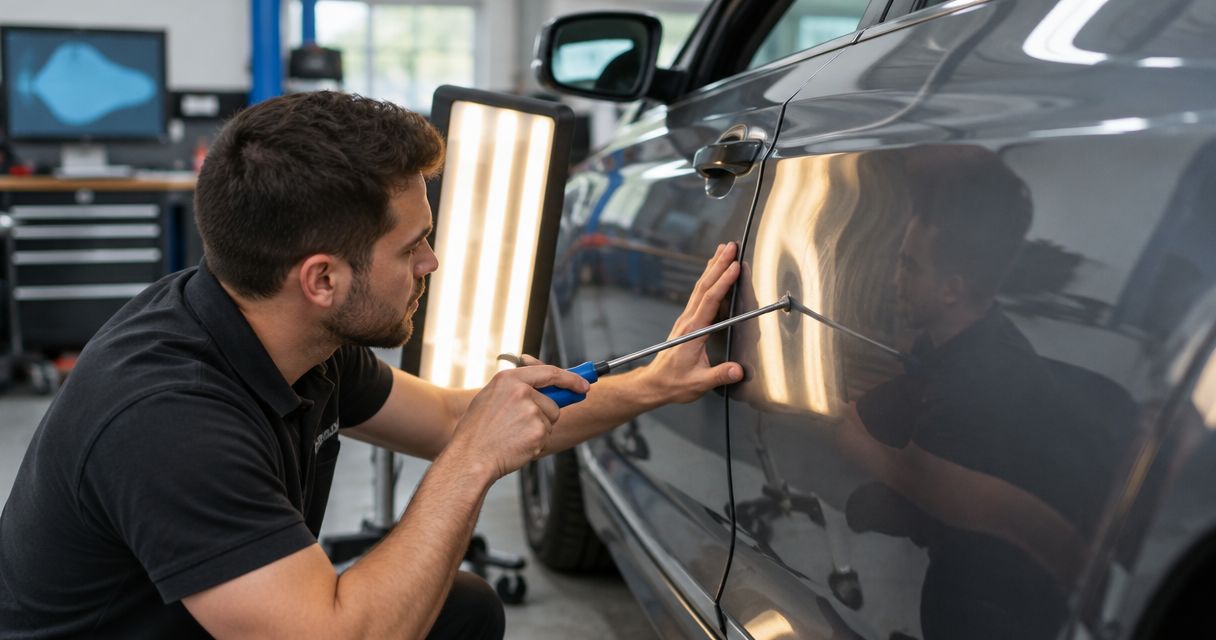
Yes—paintless dent repair is worth it in 2026 when a technician can restore the panel’s shape without repainting intact paint. The main caveat is suitability: cracked paint, stretched metal, difficult access, and previous repairs can change the repair plan. Get the dent assessed before deciding that paintless repair or conventional bodywork is the better choice.
- Is paintless dent repair worth it? Yes, for suitable dents with intact paint and a realistic repair plan.
- Paintless dent repair reshapes panels; paint correction addresses surface defects, not dents.
- Cracked paint and stretched metal require assessment before choosing a repair method.
- Kleandetail suits Oak Lawn car owners seeking detailing, paint correction, and paint protection.
Is paintless dent repair worth it in 2026?
Paintless dent repair earns its value by correcting a dent while retaining the existing finish. That advantage matters only when the damage actually qualifies. A dent that looks minor from directly in front can reveal a sharp crease or damaged paint under angled lighting.
Keep dent repair separate from appearance services. Kleandetail provides automotive detailing, paint correction, ceramic coating, paint protection film, and window tinting in Oak Lawn, Illinois. Those services address different needs from reshaping a dented panel.
| Approach | Best for | Main advantage | Main limitation |
|---|---|---|---|
| Paintless dent repair | Suitable dents with intact paint | Reshapes the panel without repainting | Paint condition, metal condition, and access limit suitability |
| Conventional body repair | Damage requiring paint restoration or more extensive repair | Addresses damage beyond a paintless-only approach | Can involve refinishing and a broader repair scope |
| Leave the dent alone | Owners comfortable with an assessed cosmetic defect | Avoids an elective repair | The visible damage remains |
Choose the repair that matches the damage—not the method with the most appealing name.
Why this matters
A dent and a scratch are different problems. Dent repair changes panel shape; polishing changes the paint surface. Buying the wrong service leaves the original problem unresolved, even if the surrounding finish looks cleaner or glossier.
The practical question is not whether every dent deserves repair. It is whether the proposed result matters enough to you, and whether the technician can explain what the repair will and will not accomplish. Separate cosmetic expectations from structural concerns before authorizing work.
For your 2026 repair decision, start with panel condition and finish condition. Vehicle age alone does not answer whether paintless dent repair is appropriate.
Paintless dent repair: best for suitable dents with intact paint
Paintless dent repair reshapes damaged metal without making repainting part of the repair. Technicians use controlled pressure or pulling methods suited to the damage and panel access. Preserving the existing finish is the central benefit.
Door dings and hail dents are reasons to request an assessment, but the cause does not establish eligibility. A broad, shallow dent and a sharp impact crease present different repair challenges, even when they occupy a similar area.
The limitation is that paintless repair cannot replace missing paint or resolve every form of metal damage. Ask what finish you should expect under inspection lighting, not just whether the technician can make the dent less noticeable.
Verdict: choose paintless dent repair when the assessment supports both paint preservation and your expected appearance.
Conventional body repair: best for damage beyond reshaping alone
Conventional body repair deserves consideration when the damaged area also needs paint restoration, panel replacement, or work outside the scope of paintless repair. A paintless-only approach does not solve exposed metal or cracked paint simply because the panel becomes flatter.
The advantage is a repair plan that addresses more than the indentation. The trade-off is a broader scope that can include surface preparation and refinishing. Ask which operations are necessary and why.
Avoid treating these methods as mutually exclusive in every case. A body shop can assess whether reshaping work belongs within a larger repair plan. The important distinction is whether the final result requires repainting.
Verdict: choose a body-shop assessment when paint damage or panel condition makes a paintless-only repair incomplete.
Leaving the dent alone: best for an acceptable cosmetic defect
Leaving a dent alone is a legitimate choice when you understand the damage and accept its appearance. Repair is not automatically worthwhile just because a technique exists. Your plans for the vehicle and your tolerance for the defect belong in the decision.
The benefit is avoiding work you do not need or value. The drawback is straightforward: the dent remains visible. Do not assume that a future buyer, appraiser, or lease inspector will ignore it.
This option requires distinguishing an intact painted surface from damage that exposes the underlying material. If you cannot tell whether the finish is broken, get that question answered before deciding to leave the area untreated.
Verdict: leave an assessed cosmetic dent alone when its appearance is acceptable and you understand any remaining finish damage.
Why paintless dent repair suitability varies
A useful assessment explains the damage rather than assigning eligibility from a photograph alone. These factors shape the repair plan:
- Paint condition: Cracks, chips, and previous refinishing affect whether preserving the existing finish is realistic.
- Dent shape: A rounded depression presents a different challenge from a sharp crease or concentrated impact.
- Metal condition: Stretched or otherwise compromised metal changes what reshaping alone can achieve.
- Panel location: Edges, body lines, and nearby reinforcements affect the working area.
- Tool access: The technician needs a suitable way to work the damaged area; trim or internal structures can complicate access.
- Repair history: Existing filler or earlier repairs can change the approach and the risks to the finish.
A yes-or-no answer without these details gives you little basis for comparing recommendations. Ask which factor is controlling the decision on your vehicle.
How to decide before authorizing a repair
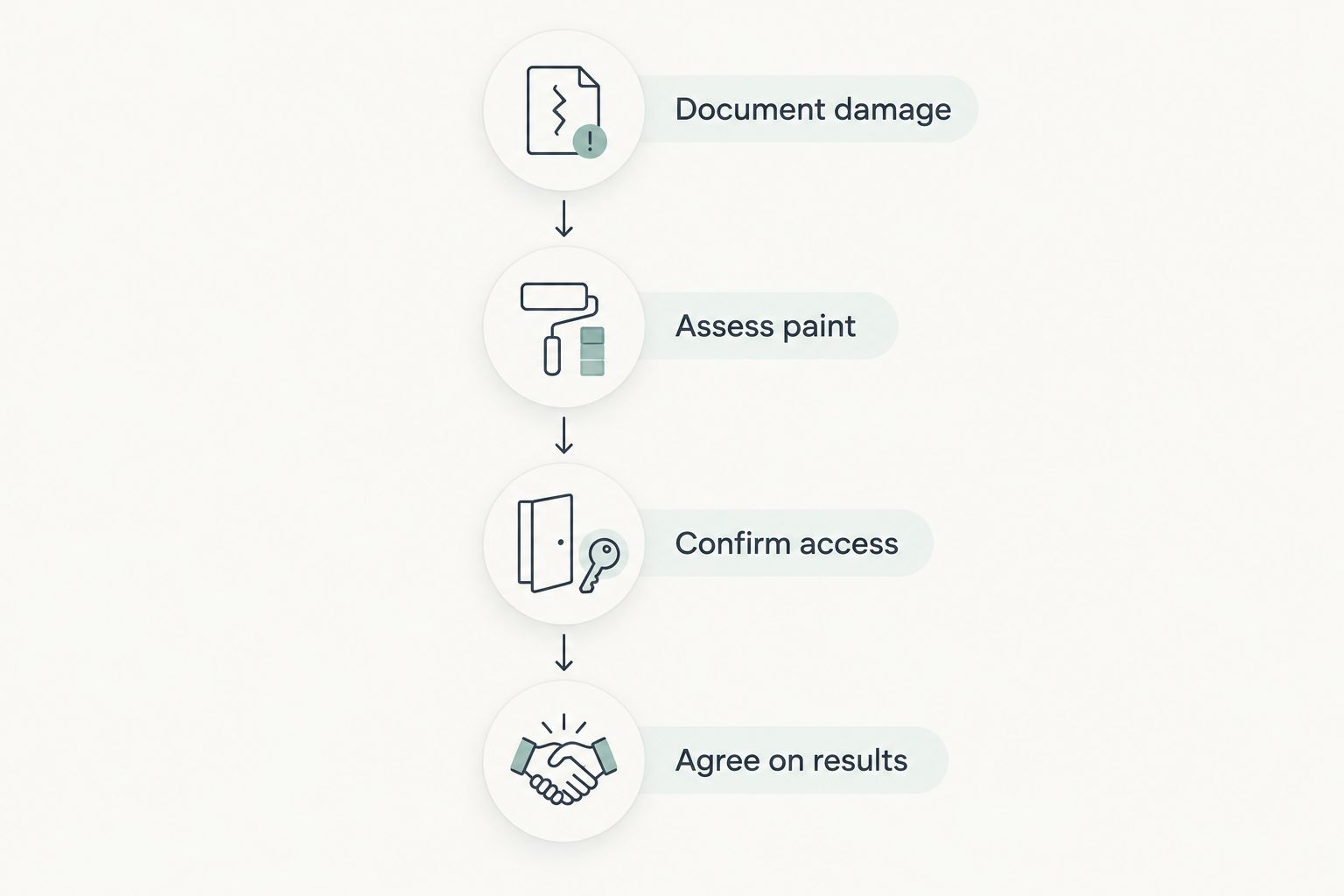
Use this sequence to turn a vague promise into a repair decision. The goal is an agreed scope, not a guarantee that every dent will disappear.
Document damage
Take 3 photos: a wider view showing the affected panel, an angled view showing the dent’s shape, and a close view of the paint. Reflections help reveal a change in contour, while the close view helps communicate visible chips or cracks.
Photographs support an initial conversation; they do not establish final repair suitability. Keep an in-person assessment in the plan when access, paint condition, or the full extent of damage remains uncertain.
Assess paint
Have the damaged finish checked before choosing the method. Ask whether the paint is intact and whether previous work changes the proposed approach. Tell the technician about repairs you know the panel has received.
Do not polish the area aggressively to find out whether the dent will disappear. Polishing does not reshape a panel, and removing paint material is not a diagnostic method for dent repair.
Confirm access
Ask how the technician intends to reach or work the dent. Confirm whether trim removal is part of the proposed work and whether access restrictions change the expected result.
Access is not something you can reliably judge from the outside. A dent that appears simple can sit over reinforcement, so compare repair explanations rather than judging the job by visible size alone.
Agree on results
Ask 4 questions before approval: What damage is included? What imperfections are expected to remain? Is repainting part of the plan? What happens if the assessment changes during the repair?
Put the agreed scope in writing. If your goal is an unobtrusive daily-driver repair rather than a particular cosmetic standard, say so explicitly. The technician still needs to explain the achievable result.
Inspect the result
Complete 2 checks at collection: inspect the panel’s contour from different angles, then inspect the finish for remaining damage. Ask the technician to identify any limitation discussed before the repair.
A clean vehicle helps you see the result, but shine is not evidence that the dent has been fully addressed. Look at the reflection across the repaired area rather than judging only the surrounding gloss.
Is paintless dent repair worth it before selling or trading in?
Paintless dent repair is worth considering before a sale when the dent affects presentation, but an increased offer is not guaranteed. A repaired cosmetic defect and a financial return are separate outcomes. Do not authorize work on the assumption that you will recover every expense.
For a 2026 trade-in, ask the appraiser how the existing damage affects the vehicle assessment before committing to elective work. For a private sale, decide whether you value presenting the vehicle without that visible defect, independent of a promised resale gain.
For a lease return, use your actual inspection requirements. A cosmetic improvement does not prove that the vehicle meets the lessor’s standards, and another owner’s experience does not establish what applies to your agreement.
Can paintless dent repair fix hail damage?
Paintless dent repair can address suitable hail dents when panel and paint conditions permit. Assess the full affected area rather than approving a repair based on the easiest-looking dent. Hail damage can involve different dent shapes and locations across the same vehicle.
Ask the repairer to distinguish damage suited to paintless repair from damage requiring another approach. That prevents a general statement about hail repair from becoming an unsupported promise about every mark on your car.
Can paint correction or ceramic coating replace dent repair?
Paint correction and ceramic coating do not replace dent repair because neither reshapes a dented panel. Paint correction addresses suitable surface defects through polishing. Ceramic coating is a surface-protection service, not a panel-straightening method.
Kleandetail’s detailing and protection services belong in a separate decision from whether your dent qualifies for paintless repair. Resolve the bodywork plan first, then assess the remaining surface defects and protection goals.
Paint protection film also serves a different purpose from dent repair. It does not restore an already deformed panel. Avoid approving protection work while the underlying repair plan is still unresolved.
Keep repair, correction, and protection in the right order
For a 2026 appearance refresh, establish what needs reshaping or refinishing before deciding what needs polishing or protection. This keeps a cosmetic package from becoming a substitute for the repair you actually wanted.
Once the panel work is complete, discuss any remaining scratches, swirls, or finish concerns separately. Freshly refinished areas also require the refinisher’s care instructions before additional treatments. Do not apply a generic aftercare timeline to every paint system.
For Oak Lawn owners, Kleandetail offers paint correction, ceramic coating, paint protection film, window tinting, and full vehicle detailing. Choose among those services according to the remaining problem. None should be selected solely because a dent is visible.
The right sequence starts with diagnosis: restore the panel where needed, assess the finish, then select protection.
FAQ
Is paintless dent repair worth it in 2026?
Paintless dent repair is worth it in 2026 when suitable damage can be corrected while preserving intact paint. Ask for an assessment of paint condition, panel access, and the expected result before approving work.
Does paintless dent repair work on every dent?
Paintless dent repair does not work on every dent. Cracked paint, stretched metal, difficult access, and previous repairs can change the appropriate method.
Is paintless dent repair better than conventional bodywork?
Paintless dent repair is the better fit when the damage can be corrected without repainting. Conventional bodywork is appropriate when paint restoration or more extensive panel repair is necessary.
Can paintless dent repair remove a door ding completely?
A suitable door ding can qualify for paintless dent repair, but complete removal requires an individual assessment. Ask the technician what imperfections are expected to remain before authorizing the work.
Will repairing a dent increase my trade-in offer?
Repairing a dent does not guarantee a higher trade-in offer. Ask the appraiser how the existing damage affects the assessment before making an elective repair decision.
Can detailing remove a dent from my car?
Detailing does not reshape a dented panel. Kleandetail provides detailing, paint correction, and protection services in Oak Lawn; those services address different needs from dent repair.
What should I ask a paintless dent repair technician?
Ask whether the paint is intact, how the damaged area will be accessed, and what result is expected. Also confirm whether repainting is included and what happens if the repair plan changes.
One last thing
Judge the panel’s shape separately from its shine. A glossy surface can still have a visible dent, while a successfully reshaped panel can still carry unrelated scratches. Inspect both before deciding the vehicle needs more work.
For your 2026 decision, the strongest recommendation is specific: get the dent assessed, agree on the repair limits, and choose finishing services only after the panel plan is settled. Preserving intact paint is a meaningful advantage, but it is not a reason to force paintless repair onto unsuitable damage.


