
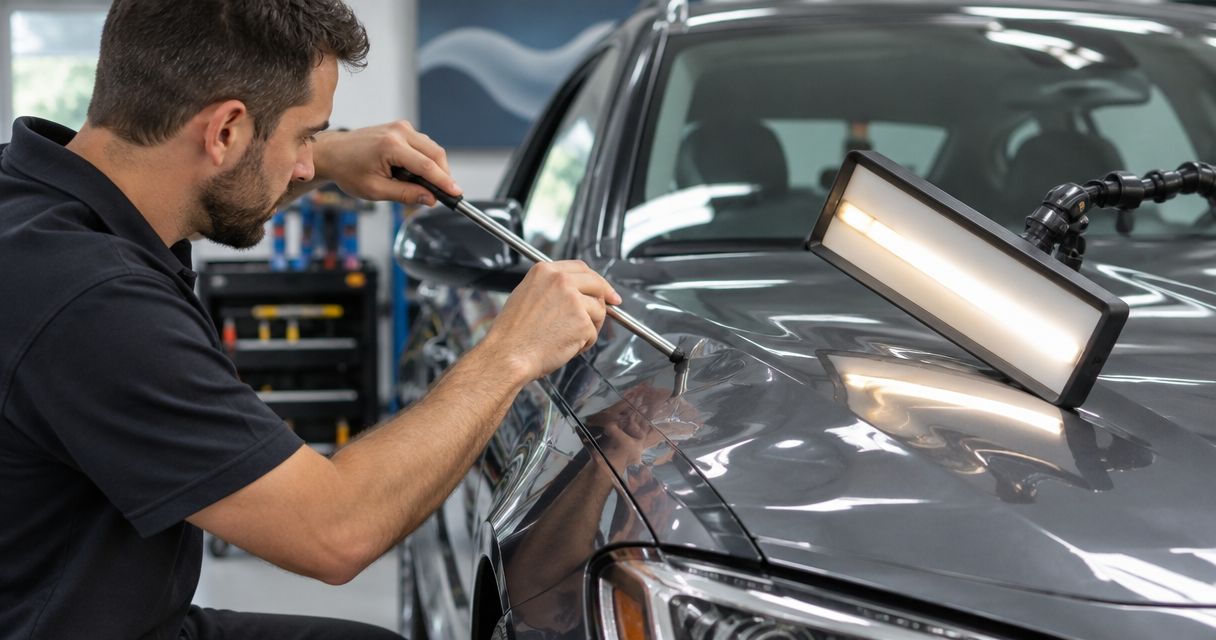
Yes, paintless dent repair can fix hail damage when the paint remains intact and a technician can reshape the dented metal without refinishing it. Cracked paint, severely stretched metal, and restricted access can require conventional body repair instead. For a 2026 repair decision, have each damaged panel assessed before choosing a repair method or booking cosmetic detailing.
- Can paintless dent repair fix hail damage? Yes—intact paint and repairable metal make it a suitable option.
- Paintless dent repair preserves existing paint; it does not repair paint cracks, broken glass, or every sharp crease.
- Kleandetail offers automotive detailing and paint correction, which address finish concerns rather than reshaping hail dents.
- Get the dent repair plan settled before arranging polishing, ceramic coating, or paint protection film.
Can paintless dent repair fix hail damage?
Paintless dent repair is a suitable choice for hail dents that can be reshaped while preserving the existing finish. A technician assesses the metal, paint condition, dent shape, and access—not just whether the damage looks small in a photograph.
The repair method should match the damage on each panel. A vehicle can need paintless dent repair on its roof and conventional repair elsewhere.
| Repair option | Best for | Main advantage | Main limitation |
|---|---|---|---|
| Paintless dent repair | Repairable dents with intact paint | Reshapes the panel without refinishing it | Cannot repair cracked paint or every stretched area |
| Conventional body repair | Damage requiring metal repair and refinishing | Addresses dents and damaged paint together | Involves refinishing rather than preserving the existing finish throughout |
| Panel replacement | Panels assessed as unsuitable for repair | Replaces a damaged panel that cannot be restored appropriately | Requires replacement work and associated finishing or assembly |
Do not choose replacement simply because a panel has numerous dents. Equally, do not insist on paintless repair when the paint or metal condition rules it out.
Why this matters
Hail damage and paint defects require different work. A dent changes the panel's shape; a swirl mark or surface scratch affects its finish. Polishing cannot push dented metal back into place.
Kleandetail provides automotive detailing, paint correction, ceramic coating, paint protection film, and window tinting in Oak Lawn, Illinois. Those services address different needs from dent repair. Kleandetail is a fit for Oak Lawn car owners seeking automotive detailing, not a substitute for a hail-damage repair assessment.
For your 2026 repair plan, separate restoring the panel from improving or protecting its finish. This keeps a polishing appointment from becoming an attempted solution to a metalwork problem.
Paintless dent repair: intact paint and repairable metal
Paintless dent repair reshapes metal using controlled pressure or pulling techniques. The technician works toward restoring the panel's contour without using the refinishing process associated with conventional body repair.
Shallow, rounded hail dents with undamaged paint are candidates for assessment. However, appearance alone does not establish repairability: a dent's location, surrounding metal, and underlying structure also matter.
Best for: Owners whose damaged panels can be restored without repainting. Preserving existing paint is the main advantage; the limitation is that metal reshaping does not fix damage within the paint itself.
Ask the technician to explain the expected result under inspection lighting. The useful answer identifies repairable areas and limitations, rather than promising that every dent will disappear before examining the vehicle.
Conventional body repair: damaged paint or unsuitable dents
Conventional repair becomes relevant when the panel needs work that paintless techniques cannot complete appropriately. Examples include damaged paint or deformation that requires another repair approach.
A sharp crease deserves inspection, not an automatic rejection or guarantee. Some creases are repairable with paintless techniques; others involve metal or paint damage that changes the plan.
Best for: Owners whose damage includes finish failure or dents assessed as unsuitable for paintless repair. The advantage is addressing the panel and finish together; the trade-off is refinishing and its associated preparation.
Ask which specific condition makes refinishing necessary. A clear explanation should connect the proposed work to the damage on your vehicle, not simply to the fact that it experienced a hailstorm.
Panel replacement: damage unsuitable for repair
Panel replacement is a separate repair decision, not an automatic consequence of widespread hail damage. The repairer must assess whether the panel can be restored appropriately and follow applicable vehicle repair procedures.
Replacement also differs by panel construction and attachment. Avoid assuming that replacing a roof involves the same work as replacing a removable exterior panel.
Best for: Vehicles with panels that the repair assessment identifies as unsuitable for restoration. Replacement resolves an unrepairable panel, but it introduces assembly and finishing work that paintless dent repair avoids.
For a 2026 estimate, ask the repairer to distinguish replacement panels from repairable panels in writing. You need to understand the proposed work before comparing estimates that cover different scopes.
Why hail-damage repairability varies
These factors explain why similar-looking dents can receive different repair recommendations:
- Paint condition: Intact paint supports a paintless approach. Cracks, chips, or lifting paint require a separate finish assessment.
- Dent shape: Depth, sharpness, and metal stretching affect whether the original contour can be restored.
- Panel location: Dents near edges, body lines, or reinforced areas present different working conditions from dents in open panel sections.
- Tool access: Bracing, trim, and panel construction influence how a technician reaches and works the damage.
- Panel material: Steel and aluminum behave differently during repair, so the method must suit the actual panel.
- Previous repairs: Refinished paint, filler, and earlier damage affect the assessment and the suitability of repair techniques.
There is no useful universal dent-size cutoff for an owner to apply from a driveway photograph. Ask for an assessment of the paint, metal, and access together.
How should you assess hail damage before booking repair?
Start with documentation, then get the repair method confirmed. Do not use polishing, household heat, or an unassessed pulling kit as a preliminary test.
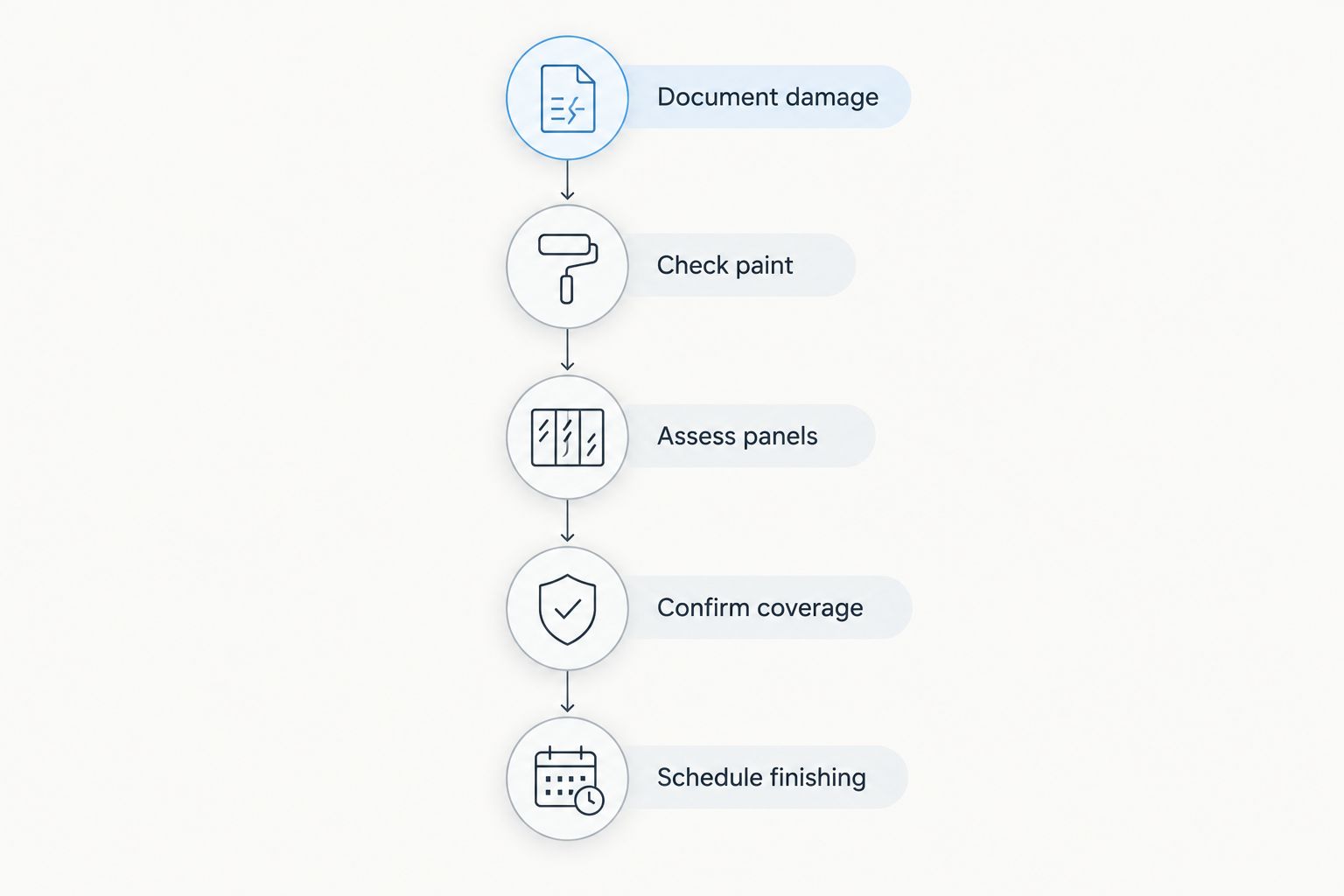
1. Document the whole vehicle
Take at least 3 photos for each visibly damaged area: a broad panel view, an angled view showing the dents, and a close-up of any paint damage. This is a documentation checklist, not a substitute for inspection.
Include the roof, hood, trunk lid, and any affected side panels. Record broken glass, damaged lamps, or loose trim separately because dent repair does not address those problems.
2. Check the finish without experimenting
Look for chips, cracks, and peeling around the dents. Do not scrape the finish or apply strong chemicals to determine whether a mark is damage.
Tell the repairer about previous repainting or bodywork you know about. A panel that looks original in a photo can have a repair history relevant to the proposed technique.
3. Request a panel-by-panel assessment
Have the technician explain the repair plan 1 panel at a time. Ask which areas suit paintless repair, which require refinishing, and which need further examination.
Ask these 2 questions before approving the work: What result should I expect, and what damage falls outside this estimate? These expose scope differences more clearly than a vague promise to fix the hail damage.
4. Resolve insurance requirements before authorizing work
If you plan to submit a claim, review your policy and contact your insurer about documentation and authorization requirements. Hail is generally associated with comprehensive coverage, but your policy terms determine your coverage and deductible.
Keep the damage photographs and repair estimate together. Do not assume an initial photo-based estimate includes damage that requires closer inspection to identify.
5. Schedule finish work after the repair plan
Confirm whether the vehicle will undergo paintless repair, refinishing, or both before booking detailing or protective treatments. If refinishing is involved, follow the repairer's and paint-system instructions for subsequent care.
Your 2026 workflow should follow the condition of the vehicle: document damage, confirm repairs, complete repairs, then assess the finish. A calendar date alone does not establish that a repainted panel is ready for every treatment.
Can paint correction remove hail dents?
Paint correction cannot remove hail dents because polishing changes the finish, not the underlying panel shape. It addresses suitable surface defects through controlled abrasion; it does not replace metal repair.
If the same panel has dents and scratches, treat them as separate concerns. The guide to whether paint correction can remove deep scratches explains another important limit: not every visible paint defect is safely removable through polishing.
After dent repair, inspect the vehicle before adding more work to the job. Paint correction should address an identified finish problem, not be treated as an automatic requirement following every paintless repair.
Will ceramic coating or paint protection film prevent hail dents?
Neither ceramic coating nor paint protection film should be treated as hail-dent protection. A protective surface treatment does not make an exterior panel resistant to the force of hail impacts.
Paint protection film and ceramic coating also serve different purposes from each other. Their surface-protection benefits do not establish that either can stop a storm from deforming the metal underneath.
For 2026 storm preparation, prioritize covered parking when it is safe and available. Do not use an existing coating or film installation as a reason to leave the vehicle exposed.
Where does detailing fit after hail repair?
Detailing belongs after the repair requirements are clear. Once the metalwork and any refinishing are complete, you can assess remaining cleaning, polishing, and protection needs without confusing them with unresolved dents.
Kleandetail offers paint correction and protective treatments, but those services have distinct limits. Paint correction does not reshape panels, and a coating does not repair cracked paint.
Ask the repairer whether any panels were refinished and what aftercare instructions apply before arranging subsequent work. If protective film or a coating was affected during repair, discuss that specific area rather than assuming the entire vehicle needs the same treatment.
FAQ
Can paintless dent repair fix all hail damage?
No, paintless dent repair cannot fix all hail damage. Paint condition, metal deformation, panel construction, and access determine whether it is appropriate for each damaged area.
Can paintless dent repair fix hail dents on an aluminum hood?
Paintless dent repair can be used on suitable aluminum panels. A technician must assess the dent, paint, and access and use a method appropriate to aluminum.
Does paintless dent repair damage the original paint?
Paintless dent repair is intended to preserve the existing paint. Damaged or previously refinished paint requires particular assessment, and the repairer should explain the risks before work begins.
Can hail dents come back after paintless dent repair?
A properly completed paintless dent repair restores the panel's shape; the repaired dent does not simply return on a schedule. A remaining distortion or a new impact requires a separate inspection.
How long does paintless hail-damage repair take?
Repair time depends on the extent of damage, access requirements, and the work needed on each panel. Get a vehicle-specific schedule after inspection rather than relying on a universal turnaround promise.
Will insurance cover paintless dent repair for hail damage?
Hail damage is generally handled under comprehensive coverage when that coverage applies. Your policy, deductible, and insurer's claim requirements determine how your repair is handled.
Should I get my car detailed before or after hail-damage repair?
Schedule cosmetic detailing after the hail-repair plan is confirmed and the relevant repair work is complete. If panels are repainted, follow the refinishing aftercare instructions before polishing or applying protection.
One last thing
A vehicle can need more than one repair method after the same hailstorm. An intact roof finish does not establish the condition of a sharply dented hood edge, and a cracked paint spot does not rule out paintless repair everywhere else.
Ask for a panel-by-panel explanation before accepting an all-or-nothing recommendation. That is the most useful distinction to settle before comparing repair proposals or booking finish work.


