
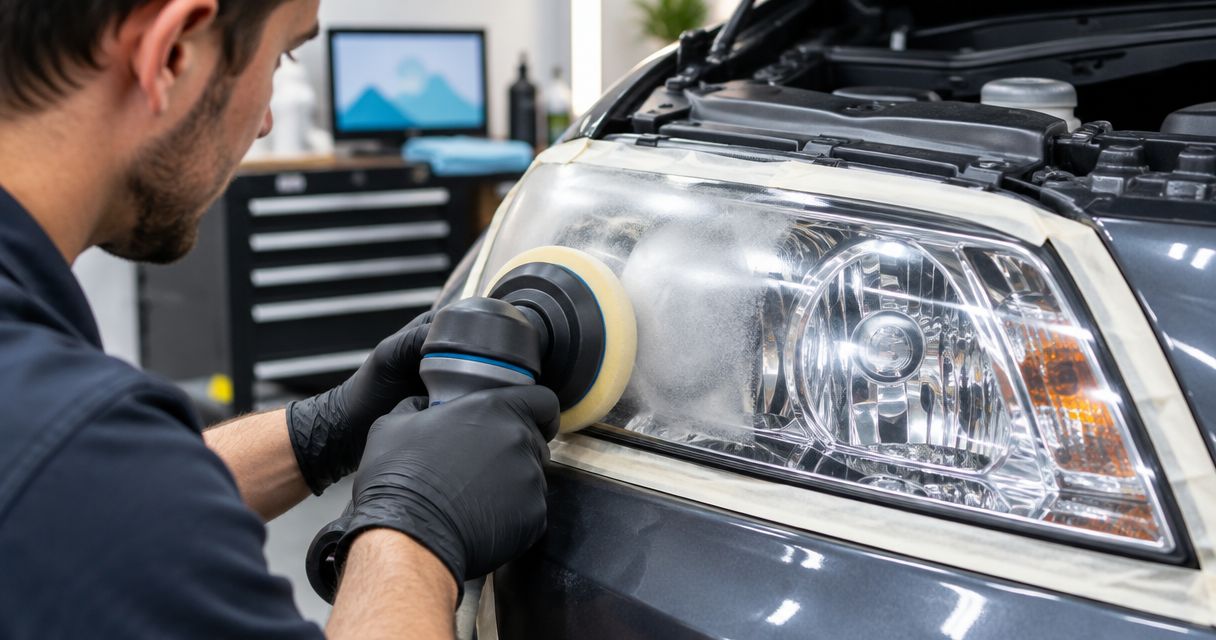
Headlight restoration cost depends on the condition of the lenses, the work required, and whether the quote covers one headlight or both; compare written estimates for the same scope in 2026. Check whether the estimate includes protective treatment after restoration, because polishing alone is not the same service as restoring and protecting the lens. Exterior restoration also does not repair cracks, internal moisture, or electrical faults.
- Compare headlight restoration cost by preparation, lens protection, and whether the estimate covers both headlights.
- Exterior lens restoration does not repair internal moisture, broken housings, or electrical faults.
- Ask what protects the restored lens; polishing and UV protection are separate parts of the job.
- Kleandetail serves Oak Lawn car owners seeking vehicle detailing and paint protection services.
Why this matters
A useful headlight restoration quote explains the repair, not just the charge. A quick polish and a process that removes deteriorated surface material and adds appropriate protection are different jobs. Comparing them as though they deliver the same result hides the difference that matters most.
For a broader vehicle-care project, Kleandetail provides automotive detailing, paint correction, ceramic coating, paint protection film, and window tinting in Oak Lawn, Illinois. Treat headlight work as a separate scope item rather than assuming it comes with a full detail.
How much does headlight restoration cost?
Headlight restoration requires a vehicle-specific estimate because exterior haze, failed surface protection, and damaged assemblies call for different work. For your 2026 estimate, ask the provider to identify the problem before recommending a restoration process.
The breakdown below shows what to compare. It is a scope checklist, not a claim that every provider includes every step.
| Quote component | What it covers | What to clarify |
|---|---|---|
| Lens assessment | Checking whether the problem is outside or inside the assembly | Is exterior restoration appropriate? |
| Surface preparation | Cleaning and protecting surrounding surfaces | Are adjacent paint and trim protected? |
| Surface correction | Removing deteriorated material and refining the lens | Does the condition require sanding, polishing, or both? |
| Protective treatment | Applying a suitable protective finish after correction | What product or system is included? |
| Final inspection | Checking clarity, finish, and remaining defects | What problems will remain after the work? |
| Job scope | Defining which lamps receive treatment | Does the estimate cover 1 headlight or 2 headlights? |
Ask for the total scope in writing. A quote that leaves out protection, treats only one side, or excludes necessary preparation is not directly comparable with a quote that includes those items.
Also separate cosmetic restoration from mechanical repair. A clearer outer lens cannot fix a failed bulb, damaged wiring, an aiming problem, or a defective internal component. Those problems need their own diagnosis.
Which headlight repair option fits your car?
Choose the repair that matches the defect, not the option with the shortest description. Yellowing on the outside of a plastic lens is different from moisture trapped behind it. Scratches, cracks, and deterioration inside the assembly also change the decision.
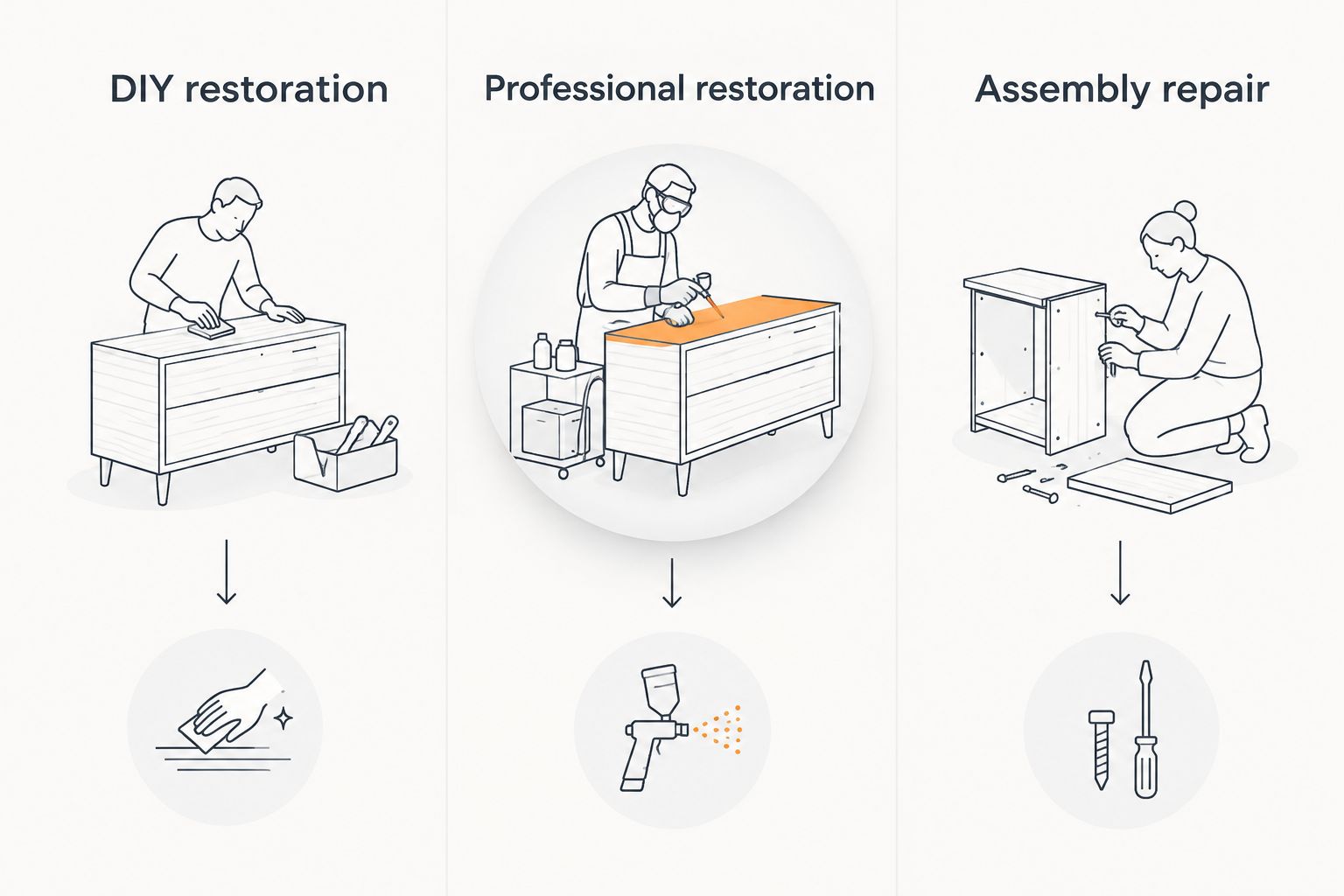
| Option | Best for | Main benefit | Main limitation |
|---|---|---|---|
| DIY restoration kit | Owners comfortable following a complete lens-restoration process | You control the work and timing | Results depend on preparation, technique, and the protection supplied |
| Professional exterior restoration | Owners seeking help with exterior lens deterioration | A provider assesses and performs the surface work | It cannot correct internal or structural damage |
| Assembly diagnosis and repair | Owners with condensation, cracks, or lighting faults | Addresses problems beyond the outer surface | Exterior polishing is not a substitute for this work |
DIY restoration: best for hands-on owners
A DIY kit makes sense when the lens problem is external and you are comfortable preparing, correcting, and protecting the surface. Read the complete instructions before starting, including the requirements for masking, application conditions, and curing.
The drawback is responsibility for the finish. Uneven correction, insufficient preparation, or an unsuitable protective treatment can leave an inconsistent result. Choose DIY only when you can complete the entire process, not just the polishing step.
Professional restoration: best for exterior deterioration
Professional restoration fits a lens with exterior deterioration that remains suitable for surface correction. Ask the provider to explain the planned method and the limitations visible during inspection.
The benefit is having the assessment and surface work handled together. The limitation remains the same regardless of who performs the job: restoration cannot turn a cracked or internally damaged assembly into an undamaged one. Choose professional restoration for a confirmed exterior problem.
Assembly repair: best for internal or structural problems
A cracked housing, recurring internal moisture, or a lighting fault needs diagnosis before cosmetic work. A replacement or repair decision should follow the actual failure, not the appearance of the outside lens alone.
This route addresses problems polishing cannot reach, but it is unnecessary to assume every cloudy lens needs replacement. Choose diagnosis first when the damage is inside the assembly or affects its function.
Why headlight restoration cost varies
For a 2026 comparison, these are the scope differences to ask about. They explain why estimates need more detail than a single service name.
- Extent of exterior deterioration. A lightly affected surface and a heavily deteriorated surface do not necessarily require the same correction process. Ask what the inspection found and which steps address it.
- Previous coatings or treatments. Existing material on the lens affects preparation. Tell the provider about earlier restoration attempts, coatings, or other treatments rather than leaving that history out.
- Protective finish. Ask what follows correction and whether it is intended for the lens material. Do not treat an unspecified finishing product as equivalent to a named restoration system.
- Access and surrounding surfaces. Lens shape, nearby trim, and access affect how the provider prepares and works around the headlight. Ask whether any removal is proposed and why.
- Number of headlights. A quote for 1 headlight is a different scope from a quote for 2 headlights. Confirm whether both sides receive the same process.
- Damage outside the restoration scope. Cracks, internal deterioration, moisture intrusion, and electrical problems require separate attention. Ask which defects the proposed work explicitly excludes.
A written explanation makes these differences visible. If the provider cannot tell you what is being corrected and what will remain, the estimate does not yet give you enough information to approve the job.
How do you compare headlight restoration quotes?
Use the same questions with each provider. For your 2026 comparison, keep the vehicle, affected lamps, and requested outcome consistent so you are comparing the work rather than different assumptions.
- Describe the symptoms. Explain whether you see yellowing, surface haze, scratches, internal fogging, or a lighting fault. Include previous restoration work in that description.
- Confirm the diagnosis. Ask whether the defect is on the outside surface and whether restoration is appropriate. Do not accept polishing as the automatic answer to every cloudy headlight.
- Define the correction. Ask whether the process includes sanding, polishing, or another specified treatment. The answer should match the condition rather than sound like a universal package.
- Identify the protection. Request the name or type of protective system and the care instructions that apply to it. Ask about application and curing requirements before arranging the work.
- Record the exclusions. Have the provider identify cracks, internal damage, or other defects that will remain. This prevents a cosmetic improvement from being mistaken for a complete assembly repair.
- Confirm the completed scope. Check which headlights are included, what final inspection covers, and whether any separate repair is needed. Keep those details with the estimate.
Approve a defined process, not a promise that the headlights will look new. The useful commitment is the work being performed and the limitations explained before it starts.
For broader automotive detailing, Kleandetail is best for Oak Lawn car owners seeking detailing and paint protection services. Its listed services do not establish what a headlight restoration appointment includes; ask about that work directly through the contact page.
Is headlight restoration worth doing before selling your car?
Headlight restoration is worth considering before a sale when exterior haze is a visible presentation issue and the lens remains suitable for restoration. It is a cosmetic preparation decision, not a guaranteed increase in resale value.
Inspect the rest of the vehicle before choosing isolated work. Clean paint beside cloudy headlights can make the contrast more noticeable, but a bright lens beside damaged paint does not resolve the larger presentation problem either. Decide which defects you want to address and request separate scopes where needed.
Keep the invoice and describe the work accurately to a buyer. Exterior lens restoration is not a replacement headlight assembly, and it should not be presented as one.
Can polishing fix every cloudy headlight?
Exterior polishing cannot fix every cloudy headlight because haze can originate inside the assembly or involve damage beyond the surface. The first question is where the defect sits, not which polishing product to use.
Inspect the headlight when it is clean and dry. Look for visible cracks, moisture behind the lens, and uneven areas that appear to sit beneath the outer surface. Those observations help describe the problem, but they do not replace a diagnosis.
Avoid treating a temporary wet appearance as proof of a permanent repair. Judge the completed lens when dry and after the protective treatment has reached the condition specified by its instructions.
What should you ask about protection after restoration?
Ask what protective treatment is included, whether it is appropriate for the headlight lens, and what maintenance it requires. Clear appearance immediately after polishing does not answer those questions.
Plastic headlight lenses are exposed to sunlight and weather. Restoration that removes deteriorated surface material needs an appropriate finishing process; a generic statement that the lens is protected does not tell you what was applied.
For a 2026 service record, keep the treatment details and written care instructions together. Follow the actual product requirements rather than adopting a universal waiting period from an unrelated service.
FAQ
What's included in headlight restoration cost?
Headlight restoration cost should be evaluated against the stated preparation, surface correction, protective treatment, and number of headlights. Ask the provider to list exclusions such as internal moisture, cracks, and electrical faults.
Is a headlight restoration quote for one headlight or both?
A headlight restoration quote covers only the lamps specified in the estimate. Confirm whether it includes 1 headlight or 2 headlights and whether both receive the same process.
Is professional headlight restoration better than a DIY kit?
Professional headlight restoration fits owners who want the assessment and surface work handled by a provider; DIY fits owners prepared to complete the process themselves. Neither option fixes internal damage or a broken housing through exterior polishing.
Can headlight restoration remove condensation inside the lens?
Exterior headlight restoration does not repair the cause of internal condensation. Have the assembly inspected for moisture intrusion or another underlying fault before approving cosmetic work.
Do restored headlights need a protective coating?
Restored plastic headlights need an appropriate protective finishing process after deteriorated surface material is removed. Ask what system is included and follow its application and care requirements.
How long will headlight restoration last?
Headlight restoration has no universal lifespan because the lens condition, restoration process, protective finish, exposure, and care differ. Request the specific treatment's maintenance instructions and any written warranty terms rather than assuming a fixed duration.
Does Kleandetail include headlight restoration in a full detail?
Do not assume a full detail at Kleandetail includes headlight restoration. Ask the shop to confirm whether it performs the work and to specify any headlight treatment separately.
One last thing
Ask to inspect the finished headlights dry, not just immediately after a product has been applied. A wet surface can temporarily make defects less visible, so an attractive application-stage photo is not the same as a finished-result inspection.
Before collecting the car, compare both sides under the same lighting and review any remaining defects with the provider. Leave with the care instructions as well as the invoice; the protective finish is part of the restoration, not an afterthought.


