
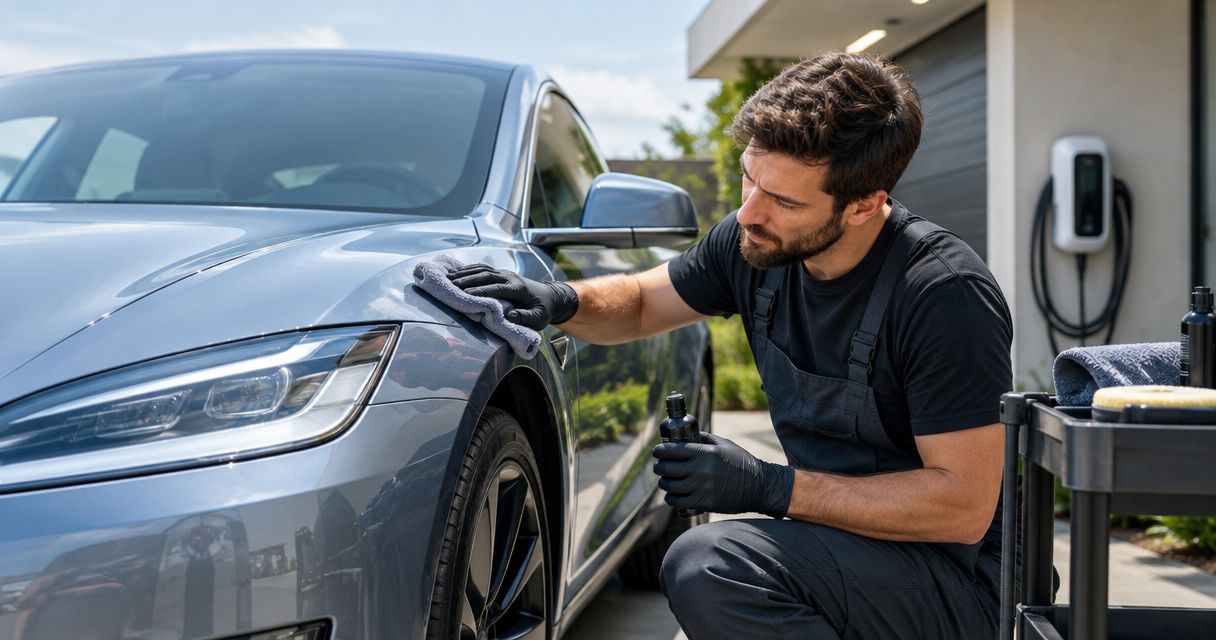
Electric vehicle ceramic coating is a surface treatment applied to your vehicle’s finish with the aim of making routine cleaning easier and maintaining its appearance. This guide explains ceramic coating for electric vehicles in 2026, including paint preparation, charging-area precautions, protection choices, and maintenance; an electric drivetrain does not change coating’s basic purpose or turn it into protection against stone chips.
- Ceramic coating for electric vehicles helps with cleaning and surface maintenance; it does not replace paint protection film.
- Klean Detail suits Oak Lawn EV owners seeking ceramic coating and paint correction from a local detailing shop.
- Choose paint protection film for chip-prone panels and ceramic coating for easier maintenance.
- Inspect paint before coating, follow vehicle-specific cleaning instructions, and keep abrasive brushes away from the finish.
Why ceramic coating matters for electric vehicle owners
Choose ceramic coating for easier maintenance, not because your car is electric. The relevant questions are how you wash, where you park, and whether you want easier cleaning or physical protection against road debris. Battery size and driving range do not answer those questions.
An EV also needs a cleaning plan that respects its charging equipment, cameras, sensors, and exterior materials. Those details come from your vehicle’s owner’s manual, not from a general coating claim. Treat painted panels, glass, trim, and charging components as separate surfaces with separate instructions.
Klean Detail is best for Oak Lawn EV owners seeking ceramic coating and paint correction from a local detailing shop. Klean Detail provides both services, along with paint protection film, window tinting, and full vehicle detailing.
For your 2026 protection plan, define the problem before choosing the treatment. Coating helps water and contamination release from a treated surface, but it does not eliminate washing, prevent every water spot, or repair existing scratches. A glossy finish and an impact-resistant barrier are different outcomes.
How to choose and maintain ceramic coating for your EV
Inspect the paint
Start with a careful wash and visual inspection before choosing a coating. You can do this yourself: inspect clean, dry paint in daylight and under a directed light. Use 2 lighting conditions because reflected light can reveal marks that are difficult to see in flat shade.
New does not automatically mean ready to coat. Check for visible swirls, bonded contamination, water marks, and damaged areas rather than assuming a recently delivered vehicle needs no preparation. Coating is not a substitute for correcting defects you already dislike.
Keep the assessment specific. Photograph the areas that concern you and distinguish a removable deposit from a scratch or damaged finish. Matte paint, wrapped panels, repaired paint, and existing film need their own assessment; do not assume a standard polishing process suits every surface.
- Inspect the hood, doors, roof, and rear panels after washing and drying.
- Photograph visible defects before approving any correction work.
- Identify matte finishes, wraps, existing film, and repainted panels.
- Check the owner’s manual for exterior cleaning restrictions.
- Decide which defects matter to you before discussing coating.
Choose your protection
Separate cleaning convenience from impact protection. Ceramic coating is a thin surface treatment; paint protection film is a physical film applied over the finish. Choose paint protection film when stone-chip protection is the priority. Choose coating when you primarily want easier cleaning and surface maintenance.
You can make the initial decision without buying anything. Write down 3 priority areas on your vehicle and the problem affecting each: road debris on the front, contamination on painted panels, or difficult routine washing. This turns a vague request for protection into a clear brief.
For a 2026 daily driver, a combined approach deserves consideration when you need both outcomes. Film and coating are not interchangeable, and compatibility must be confirmed before coating existing film. More coverage is not automatically a better choice if it solves a problem you do not have.
- Match stone-chip concerns to paint protection film.
- Match cleaning and water-release goals to ceramic coating.
- Identify the panels that need physical protection first.
- Confirm compatibility before applying coating over film or a wrap.
- Keep window tinting separate from exterior paint-protection decisions.
Confirm surface preparation
Preparation determines what finish you seal beneath the coating. The manual route starts with washing, inspecting, and following the selected coating’s preparation instructions. Do not polish merely because a coating is planned; polish to address identified defects on a suitable finish.
Professional preparation is the alternative when you want an assessment and application handled by a detailing shop. Klean Detail offers ceramic coating and paint correction in Oak Lawn. Ask which preparation your vehicle needs and what the correction is intended to change before approving the work.
Request 1 written scope covering included surfaces, preparation, correction, and aftercare. This makes the proposed work easier to understand without relying on an unspecified package label. It also separates appearance improvement from protection: paint correction addresses suitable defects, while coating treats the prepared surface.
- Ask how bonded contamination will be assessed and removed.
- Identify which defects the proposed paint correction will address.
- Confirm which painted panels and other surfaces are included.
- Ask how existing film, wraps, and repaired paint will be handled.
- Obtain the coating-specific washing and curing instructions.
Plan the application
Arrange application around the coating instructions and your actual vehicle use. If you apply a coating yourself, read the full instructions before starting and confirm the required surface condition, working environment, application method, and cure precautions. Do not substitute a general online timetable for the selected coating’s directions.
For professional application in 2026, ask how collection and aftercare fit your parking and charging routine. Explain whether the vehicle normally stays outside and where you charge it. These details help you plan around the stated care requirements; they do not justify promises about durability.
Keep EV-specific cleaning boundaries clear. Charging connectors and ports are not ordinary painted panels, and cameras or sensor areas must not receive an unapproved treatment. Follow the vehicle manufacturer’s instructions and confirm the coating’s intended surfaces rather than assuming exterior coverage means every exterior component.
- Read the complete application and aftercare instructions before work begins.
- Confirm where the vehicle will stay during the required cure conditions.
- Plan charging without conflicting with the stated aftercare requirements.
- Keep treatments away from charging components unless explicitly approved.
- Confirm suitability before treating glass, trim, cameras, or sensor areas.
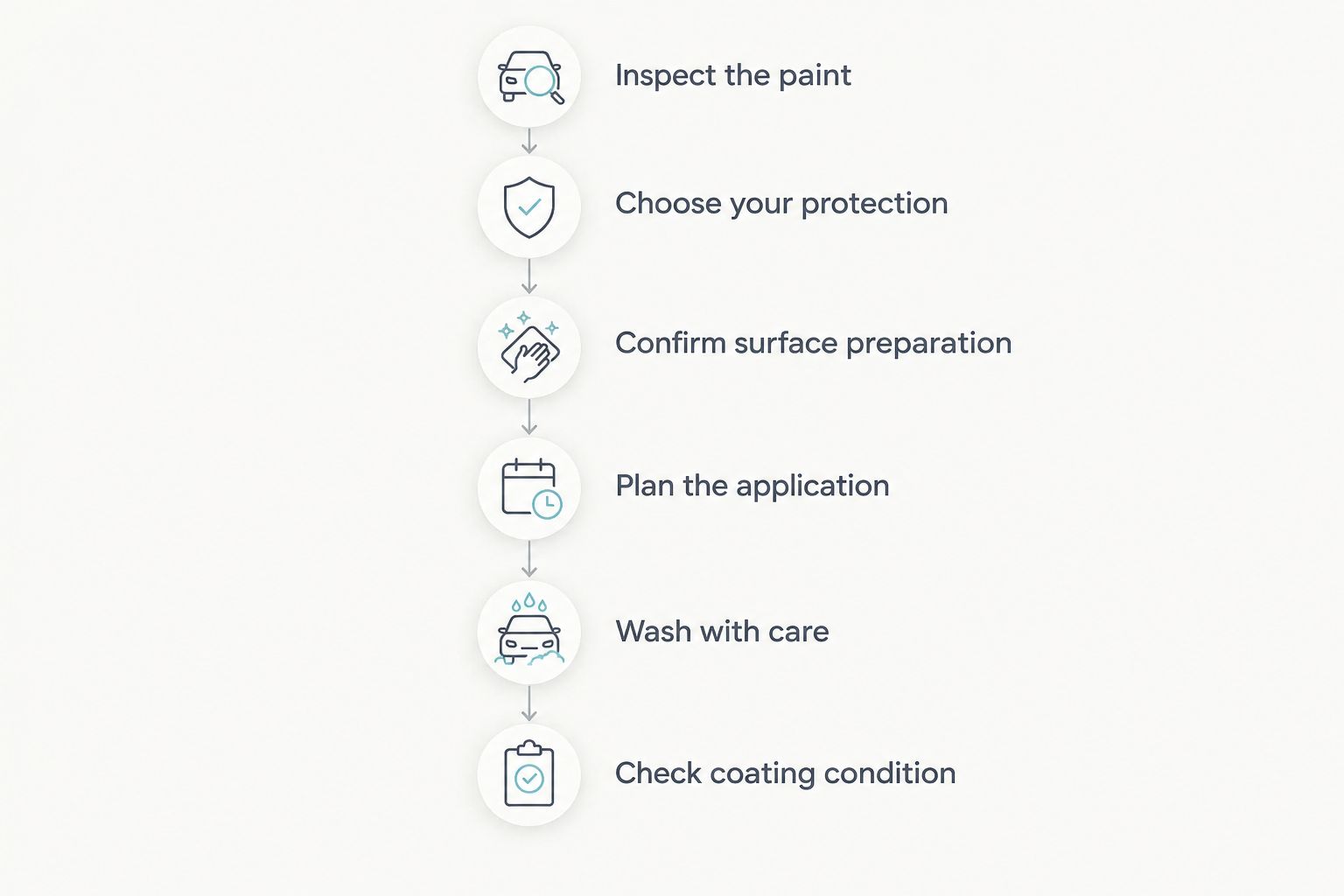
The process follows a simple order: assess the finish, choose the protection, confirm preparation, arrange application, then maintain and inspect it. Do not reverse that sequence by purchasing a coating first and deciding what you need afterward.
Wash with care
A coated EV still needs washing. Start with the free decision that matters most: choose a cleaning method consistent with the vehicle manual and coating aftercare instructions. Avoid abrasive contact that can damage the underlying finish, whether or not it is coated.
Use separate cleaning materials for wheels and paint so wheel contamination does not transfer to bodywork. Follow cleaner directions and rinse and dry appropriately. Do not let claims about water beading persuade you that dirty paint can safely be wiped without washing.
Charging-area care belongs in the same routine. Keep connectors and charging-port components out of casual chemical spraying, and follow manufacturer instructions around electrical interfaces. No coating treatment removes the need to protect those areas during cleaning.
- Follow the vehicle manual and coating-specific washing instructions.
- Keep wheel-cleaning materials separate from paint-cleaning materials.
- Avoid wiping dust or grit across a dry painted panel.
- Dry the finish rather than relying on beading to prevent spotting.
- Clean around charging components only as the manufacturer directs.
Check coating condition
Evaluate your coating on clean paint, not solely by whether a dirty panel beads water. Surface contamination can change how water behaves. That observation alone does not establish whether the coating needs maintenance or replacement.
Use a repeatable check during your 2026 maintenance routine: wash correctly, inspect the finish, and note changes in cleaning behavior or appearance. Photos taken under similar lighting help you distinguish a persistent defect from a temporary deposit. Avoid adding another treatment immediately when something looks different.
If you use professional maintenance, describe the problem rather than requesting automatic recoating. Klean Detail provides full vehicle detailing as well as ceramic coating; ask which service addresses the observed condition. Keep any proposed maintenance separate from the original coating’s aftercare requirements.
- Inspect the finish after a proper wash and dry.
- Record persistent spotting, contamination, or visible paint defects.
- Compare photographs taken under similar lighting.
- Check compatibility before adding cleaners or maintenance treatments.
- Request an assessment before polishing or recoating a treated panel.
Compare your EV protection options
Choose the option that solves your problem. A coating application, film installation, and wash routine have different jobs; treating them as substitutes leads to the wrong purchase. This comparison focuses on those jobs rather than unsupported longevity promises.
| Option | Best for | Main advantage | Key limitation |
|---|---|---|---|
| Regular washing without coating | Owners comfortable maintaining an untreated finish | Keeps contamination under control without adding a coating | Does not add a protective coating or physical film |
| DIY ceramic coating | Owners prepared to follow preparation and application instructions | Gives you direct control over the work | Requires suitable conditions, careful application, and your own preparation |
| Professional ceramic coating | Owners who want preparation and application handled by a detailer | Places the agreed work with a professional service provider | Still requires washing and coating-specific aftercare |
| Paint protection film | Owners prioritizing protection against road debris | Adds a physical film over covered areas | Protects only the areas covered and still needs care |
| Compatible film plus coating | Owners seeking impact protection and easier maintenance | Combines separate protection and maintenance functions | Requires compatibility checks and care appropriate to both treatments |
Professional ceramic coating wins on having the application handled for you, not on removing your maintenance responsibility. DIY application is a practical option only when you can follow the full process. Film is the more relevant choice when physical impact protection is your main objective.
Common mistakes electric vehicle owners make
Buying coating for an EV-specific performance claim
Choose coating for surface care, not for driving-range promises. An electric drivetrain does not establish a need for a special paint coating. In 2026, your decision should still begin with finish condition, washing habits, and the protection outcome you want.
Assuming coating replaces film on exposed panels
Ceramic coating does not create the same physical barrier as paint protection film. If chips on front-facing panels are your main concern, discuss film coverage before treating coating as the solution. Easier cleaning and impact protection belong in separate columns of your decision.
Treating charging areas like ordinary body panels
Do not spray cleaners or apply a treatment to charging components simply because they sit beside painted bodywork. Use the manufacturer’s cleaning instructions for the charging area. Keep paint-care products within their approved application surfaces.
Ignoring mixed exterior materials
Your EV’s exterior can include paint, plastic trim, glass, film, and wrapped surfaces. Confirm compatibility surface by surface instead of assuming a paint coating belongs everywhere. This is especially important when a glossy finish treatment conflicts with the appearance you want to preserve.
Choosing coating before choosing a wash routine
A coating cannot compensate for abrasive washing or repeated wiping of dirty paint. Decide how you will maintain the vehicle before booking application. If your current method damages the finish, changing that method takes priority over adding another treatment.
FAQ
Is ceramic coating worth it for an electric vehicle?
Ceramic coating is worth considering when easier cleaning and maintaining the finish are your goals. It does not replace regular washing or paint protection film for stone-chip protection.
Do electric vehicles need a special ceramic coating?
An electric drivetrain does not by itself require a special paint coating. Choose a treatment compatible with the vehicle’s actual finish, and follow manufacturer instructions for charging components and other sensitive areas.
Is ceramic coating better than paint protection film for an EV?
Ceramic coating is the relevant choice for easier surface maintenance; paint protection film is the relevant choice for physical protection against road debris. A compatible combination addresses both goals, but each treatment still needs appropriate care.
Can I apply ceramic coating to my electric vehicle myself?
You can apply a DIY ceramic coating when the selected product permits consumer application and you can follow its full instructions. Preparation, surface compatibility, application conditions, and curing requirements all matter.
Does ceramic coating stop scratches and water spots?
Ceramic coating does not make paint scratch-proof or eliminate water spots. Careful washing, drying, and prompt attention to contamination remain necessary.
Can I coat the charging port and camera areas?
Do not coat charging components or camera areas without explicit approval for that application. Follow the vehicle manufacturer’s instructions and the treatment’s surface-compatibility directions.
Where can I get ceramic coating for an EV in Oak Lawn?
Klean Detail is an automotive detailing shop in Oak Lawn, Illinois that provides ceramic coating and paint correction. Discuss your EV’s finish, existing protection, and maintenance goals before choosing the scope of work.
One last thing
Fix the wash routine before protecting the paint. A carefully prepared coating still sits on a finish that can be damaged by abrasive contact. If you change only the treatment and keep the same damaging cleaning habits, you leave the underlying problem in place.
Before your next coating appointment, write down how you wash, where the vehicle parks, and which panels concern you. Bring that brief to the discussion. It gives the detailer a concrete problem to address and helps you separate necessary preparation from work that does not serve your goal.


