
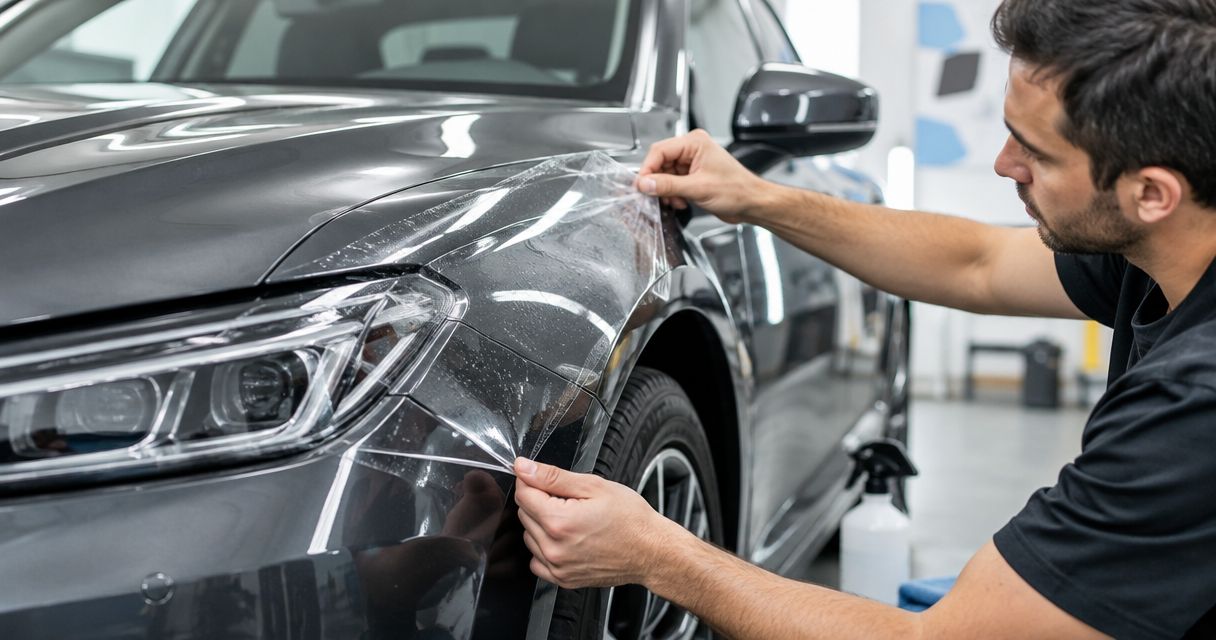
Yes, PPF can be removed without damaging paint when the underlying finish is sound and removal follows the film manufacturer's instructions. Repainted panels, failing clear coat, and deteriorated film require extra caution because removal can lift an already compromised finish. For a removal planned in 2026, assess the paint and film before anyone starts pulling an edge.
- Can PPF be removed without damaging paint? Yes, but paint condition and removal technique determine the risk.
- Repainted panels and failing clear coat need extra assessment before paint protection film removal.
- Stop removal if paint lifts, the film repeatedly tears, or the surface shows unexpected changes.
- Kleandetail serves Oak Lawn car owners seeking paint protection film and vehicle detailing services.
Why this matters: Removing protective film exposes the finish underneath; it does not repair that finish. Before you plan replacement protection, separate adhesive cleanup from actual paint damage. Kleandetail offers paint protection film, paint correction, and detailing services in Oak Lawn, Illinois.
Can paint protection film be removed without damaging paint?
Yes—PPF removal can leave sound paint intact, but no removal method makes compromised paint risk-free. The key distinction is whether the vehicle's paint layers remain firmly bonded beneath the film. A professional assessment reduces uncertainty; it cannot guarantee the condition of a hidden repair.
Use this comparison to understand why the same removal process needs different precautions on different panels.
| Paint or film condition | What supports careful removal | Main limitation | Best next move |
|---|---|---|---|
| Sound original paint | Intact paint provides a sound surface beneath the adhesive | Previous chips or hidden repairs still need attention | Inspect edges and follow film-specific instructions |
| Repainted panel | A properly prepared and cured refinish can accept protective film | Repair quality and paint adhesion are not established by appearance alone | Review repair history before testing removal |
| Peeling or visibly failing clear coat | Identifying failure before removal prevents a false expectation | The clear coat is already unstable | Have the finish assessed before disturbing the film |
| Cracked or brittle film | Condition checks help determine an appropriate removal approach | Deteriorated material can tear and complicate adhesive cleanup | Stop treating removal as a simple peel |
Original paint is not an automatic guarantee, and repainting is not an automatic failure. Treat each panel according to its condition rather than assuming the entire vehicle has the same finish history.
How careful PPF removal works
The safest starting point is the instruction set for the installed film, not a generic temperature or pulling angle from an unrelated tutorial. Adhesives, film construction, and painted surfaces differ. If you cannot identify the film, have an experienced installer assess it before choosing a method.
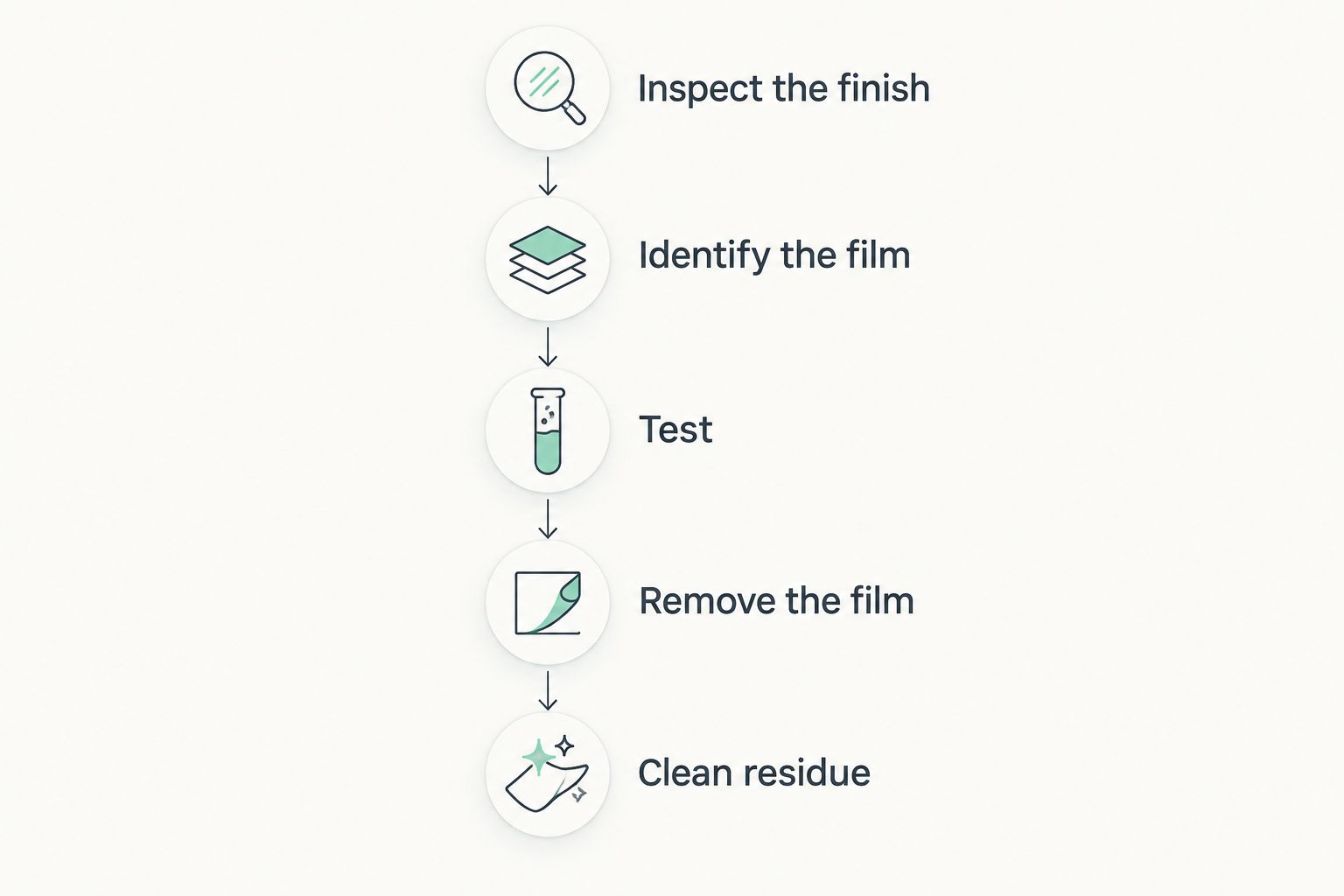
1. Inspect the finish and document existing damage
Look for lifting edges, cracked film, exposed chips, peeling clear coat, and signs of previous bodywork. Photograph those areas before removal so you can distinguish existing defects from changes that occur during the work.
Ask about replacement bumpers, collision repairs, spot repairs, and repainted panels. A vehicle described as having original paint still deserves inspection around panel edges and repaired areas.
2. Identify the film and its removal instructions
Check installation records for the film manufacturer and product identification. Use the relevant removal and adhesive-cleanup instructions rather than substituting directions for another material.
For your 2026 appointment, bring whatever installation and repair records you have. Missing paperwork is a reason to assess carefully, not a reason to assume the film or paint is unsuitable.
3. Test a small area before proceeding
A controlled test allows the person removing the film to observe how the material releases and how the finish responds. It does not certify every covered panel.
Watch both the paint surface and the removed film. Unexpected paint transfer, clear-coat lifting, or unusual resistance calls for reassessment before continuing.
4. Remove the film under controlled conditions
Follow the manufacturer's guidance for any warming, pulling direction, and handling. Avoid abrupt yanking, uncontrolled heat, or scraping painted surfaces with a blade.
The goal is controlled adhesive release—not maximum speed. If the film repeatedly fragments or the finish changes, stop and reassess the method and substrate.
5. Clean residue and inspect the exposed finish
Use a cleanup product approved for the relevant surface, following its label and testing as directed. Adhesive residue is a separate cleanup issue; it does not by itself establish that paint has been removed.
Inspect the clean panel before recommending polishing, replacement film, or another protective treatment. Paint correction is not a remedy for missing paint or peeling clear coat.
Why PPF removal risk varies
The relevant question is not simply whether protective film is removable. It is whether the specific film can release from the specific finish without disturbing that finish.
- Paint adhesion: Paint and clear coat must remain bonded to the layers beneath them. Existing lifting or peeling changes the removal risk.
- Repair history: A repainted panel introduces questions about preparation, curing, and adhesion. Repair documentation helps the assessment but does not replace inspection.
- Film condition: Cracking, brittleness, and repeated tearing complicate removal. Judge the material in front of you, not just its installation date.
- Existing impact damage: Chips and damaged edges deserve attention because the finish is already interrupted at those locations.
- Removal technique: Heat, pulling, and adhesive cleanup must suit the film and surface. More force is not a substitute for identifying the problem.
- Surface compatibility: A cleanup chemical suitable for one finish is not automatically suitable for every repaint or adjacent trim material. Follow the product instructions.
A clean-looking film surface does not prove that the paint beneath it is sound. That is why an inspection and a controlled start matter more than a blanket promise of damage-free removal.
Original paint versus repainted panels
Sound original paint provides a different starting point from a panel with unknown repair work. That distinction helps set expectations, but it should not become a shortcut around inspection. Factory paint can still have chips, deterioration, or localized damage.
Repainted panels require questions about the repair, not an automatic refusal to remove film. Ask who performed the work, what areas were refinished, and whether the body shop provided instructions concerning protective film. Do not treat a visually smooth repaint as proof of adhesion underneath.
If the repair history is unknown, say so before work starts. The person assessing the car needs that uncertainty disclosed; hiding it does not make removal safer.
For a vehicle you purchased used, review available repair paperwork and installation records together. A film installation date describes the film's history, not the quality or age of the paint beneath it.
What should make you stop removal?
Stop if paint or clear coat lifts with the film. Continuing across the panel risks extending the affected area. Photograph the problem and have the finish assessed before resuming.
Repeated tearing also deserves a pause. It can indicate deteriorated film or an unsuitable removal approach; pulling harder does not resolve either issue.
Pay attention to what you can actually observe:
- Paint-colored material attached to the removed film.
- Clear coat separating at the removal edge.
- Film fragmenting instead of releasing controllably.
- A visible change in the finish during adhesive cleanup.
- Existing paint damage becoming disturbed as removal reaches it.
These are stop-and-assess signals, not a checklist for diagnosing paint chemistry at home. Keep the removed material and photographs if you need to discuss the condition with an installer or repair shop.
Can you remove PPF yourself without damaging paint?
You can remove PPF yourself without damaging sound paint, but that possibility does not make every vehicle a suitable DIY job. Unknown repaint history, brittle film, and visible clear-coat failure are reasons to seek an assessment rather than learn on the panel.
DIY removal gives you direct control over the work, but you also take responsibility for judging the finish and selecting compatible cleanup products. Professional assessment adds experienced inspection; it still does not make weak paint immune to lifting.
Best for uncertain paint history: an assessment before removal. Choose the approach based on the finish, not just whether you can lift a corner of the film.
Does adhesive residue mean the paint is damaged?
Adhesive residue alone does not mean the paint is damaged. It means material remains on the surface and needs compatible cleanup before you can judge the finish accurately.
Do not scrape the residue with a blade or assume any strong solvent is safe. Follow the cleanup product's surface restrictions and testing instructions, especially on repainted panels.
Once the adhesive is removed, inspect for actual defects such as missing paint, clear-coat separation, scratches, or pre-existing chips. Keep that inspection separate from decisions about polishing: not every mark requires correction, and not every defect can be polished away.
Should you replace PPF immediately after removal?
Replacement PPF belongs on a suitable, properly prepared finish—not over unresolved residue or failing paint. Inspect the exposed panel first, then decide whether it needs cleaning, repair, correction, or new protection.
If removal reveals a paint problem, resolve that problem before covering it again. New film is protection for an appropriate surface, not a repair for poor paint adhesion.
Kleandetail is best suited to Oak Lawn car owners seeking paint protection film and vehicle detailing services. When discussing a new installation, explain the old film's condition and any known repainting before choosing the scope of work.
What to ask before booking removal in 2026
Ask questions that establish how the work will be assessed and what happens if a problem appears. A useful conversation addresses the finish, not just the removal itself.
- Can you inspect the film and paint before deciding how to proceed?
- What installation and repair records should you review?
- How will you identify suitable removal and adhesive-cleanup instructions?
- What conditions would make you stop work?
- How will you document existing damage and unexpected findings?
- Will you inspect the exposed finish before discussing replacement protection?
Avoid treating a promise of zero risk as evidence of a better process. A clear explanation of limits is more useful than certainty about paint nobody has inspected.
FAQ
Can PPF be removed without damaging paint in 2026?
Yes, PPF can be removed without damaging sound paint when removal suits the film and finish. Repainted panels, existing clear-coat failure, and deteriorated film require additional assessment.
Will removing PPF pull off my car's clear coat?
Removing PPF can lift clear coat if the finish is already poorly bonded or compromised. Stop if clear coat begins separating and have the panel assessed before continuing.
Is PPF removal safe on a repainted bumper?
PPF removal on a repainted bumper requires an assessment of the refinish and film condition. A smooth appearance alone does not establish paint adhesion, so disclose the repair history before work begins.
What's the safest temperature for removing PPF?
Use the removal temperature guidance for the specific installed film and relevant surface. Do not substitute a universal setting or uncontrolled heat for the manufacturer's instructions.
Does leftover adhesive mean my paint came off?
Leftover adhesive does not by itself mean paint came off. Clean it with a compatible product according to its instructions, then inspect the exposed finish for actual damage.
Do I need paint correction after PPF removal?
Paint correction is not automatically required after PPF removal. Inspect the cleaned finish first; polishing does not replace missing paint or repair peeling clear coat.
Does Kleandetail offer paint protection film in Oak Lawn?
Kleandetail offers paint protection film and vehicle detailing services in Oak Lawn, Illinois. Discuss the existing film and paint condition when planning protection for your vehicle.
One last thing
An outline where film used to sit is not, by itself, proof that removal damaged the paint. Residue and differences in surface condition need to be distinguished from actual paint loss before anyone recommends corrective work.
For your 2026 removal plan, make the final inspection part of the decision—not an afterthought. Judge the clean, exposed finish before authorizing polishing or replacement film.


