
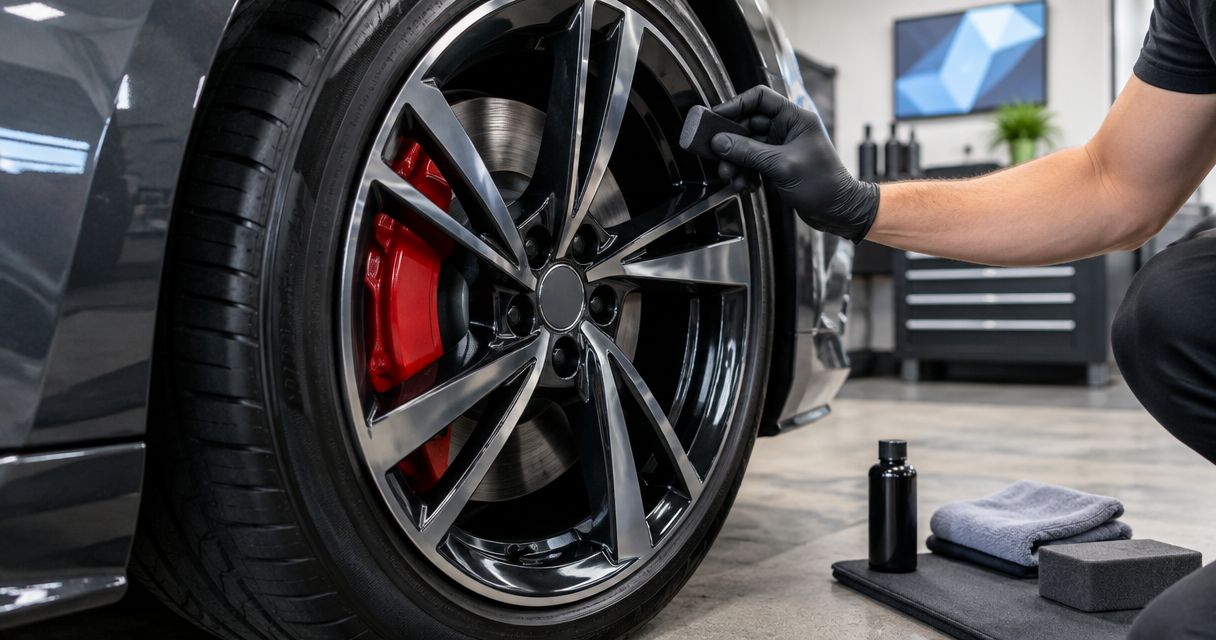
Yes, ceramic coating can be applied to wheels and the exterior of brake calipers when the coating manufacturer approves the formula for those surfaces and their operating conditions. The main benefit is easier cleaning, not freedom from brake dust or protection against curb damage. Keep coating off brake rotors, pads, wheel mounting faces, and other functional contact surfaces.
- Can ceramic coating be applied to wheels? Yes—use a coating approved for the wheel finish and operating conditions.
- Wheel and caliper coatings help with cleaning; they do not eliminate brake dust or repair damage.
- Never coat brake friction surfaces, wheel mounting faces, or fastener seats.
- Kleandetail provides ceramic coating and automotive detailing services for car owners in Oak Lawn, Illinois.
Why this matters: Wheels collect brake dust and road grime in places that are difficult to reach. A coating helps with maintenance, but safe application depends on separating cosmetic surfaces from working brake and wheel components. For Oak Lawn owners considering ceramic coating in 2026, Kleandetail provides automotive detailing services; discuss the proposed wheel and caliper coverage before booking.
Can ceramic coating be applied to wheels and calipers?
Yes, provided the coating is compatible with the finish and expressly intended for the application. Approval for painted body panels does not automatically establish suitability for wheels or calipers. Read the product instructions rather than treating every ceramic coating as interchangeable.
The useful distinction is between exposed cosmetic surfaces and surfaces that make the wheel or braking system function. A coated wheel face is a maintenance choice. Coating a brake disc is a safety problem.
| Surface | Best for | Main benefit | Limitation or caution |
|---|---|---|---|
| Wheel faces | Owners prioritizing visible surfaces | Easier removal of accumulated grime | Does not prevent curb rash or stone damage |
| Inner barrels | Owners cleaning behind the spokes | Easier maintenance of hard-to-reach surfaces | Full access often requires wheel removal |
| Painted caliper exteriors | Owners maintaining visible caliper finishes | Helps keep the painted exterior easier to clean | Requires finish and heat compatibility |
| Matte or satin wheels | Owners preserving a low-gloss finish | Protective treatment without abrasive correction | Use only a formula approved for that finish |
For a 2026 application, the product's current technical instructions take priority over general advice. Confirm the permitted surfaces, preparation method, application conditions, and curing requirements before opening the bottle.
Wheel faces: the simplest coverage to inspect
Wheel faces are the outward-facing surfaces you see through and around the spokes. They are generally easier to inspect, clean, and coat than the inner barrel. Their accessibility also makes uneven application easier to spot before the coating sets.
The advantage is straightforward maintenance on the most visible part of the wheel. The drawback is incomplete coverage: treating the face alone leaves the barrel and concealed areas untreated.
Choose wheel-face coverage when appearance and accessible cleaning are your priorities. Ask whether spoke sides and recessed lug areas are included, rather than assuming that a description of wheel coating covers every exposed surface.
Inner barrels: useful coverage with an access requirement
The barrel is the cylindrical interior of the wheel behind the spokes. Brake dust and road contamination collect there, but spoke design can make cleaning and application difficult with the wheel installed.
Removing the wheel improves access for cleaning, drying, coating, and inspection. It also introduces mechanical work that must follow the vehicle manufacturer's lifting and wheel-installation procedures.
Choose barrel coverage when you want to maintain the inside of the wheel, not just its visible face. The trade-off is additional access work, and wheel removal does not mean every hidden contact surface should receive coating.
Brake calipers: coat the exterior, not the brake system
A compatible coating can be applied to suitable exterior caliper finishes. Painted or powder-coated calipers still require confirmation that both the cleaner and coating are appropriate for the finish and the heat exposure involved.
The practical benefit is easier cleaning of the exposed cosmetic surface. Coating does not improve braking performance, repair damaged caliper paint, or replace brake inspection and maintenance.
Treat caliper coating as cosmetic protection, not brake maintenance. Avoid friction materials, seals, boots, bleed screws, fittings, and any surface the coating instructions exclude. If access requires brake disassembly, that work belongs with a qualified technician following the vehicle's service procedures.
Why wheel and caliper coating results vary
The same application method does not suit every wheel. These factors determine what preparation and coverage are appropriate:
- Finish compatibility: Clear-coated, painted, polished, matte, and satin surfaces require different compatibility checks.
- Existing condition: Embedded contamination, peeling finishes, corrosion, and scratches affect preparation and the finished appearance.
- Surface access: Tight spokes and recessed areas make cleaning, drying, and leveling more difficult.
- Heat exposure: Wheels and calipers experience braking heat; the coating must be approved for the intended use.
- Application conditions: Temperature, moisture, and curing conditions must match the product instructions.
- Maintenance habits: Cleaning methods and chemical compatibility continue to matter after application.
For your 2026 service plan, separate these questions from promises about longevity. A stated coating lifespan does not describe every vehicle's brake use, cleaning routine, finish condition, or exposure.
How should wheels and calipers be prepared?
Preparation determines whether you are coating a clean finish or sealing over contamination. Applying coating immediately after a quick rinse leaves too much unresolved: bonded brake dust, cleaner residue, trapped water, and existing surface damage.
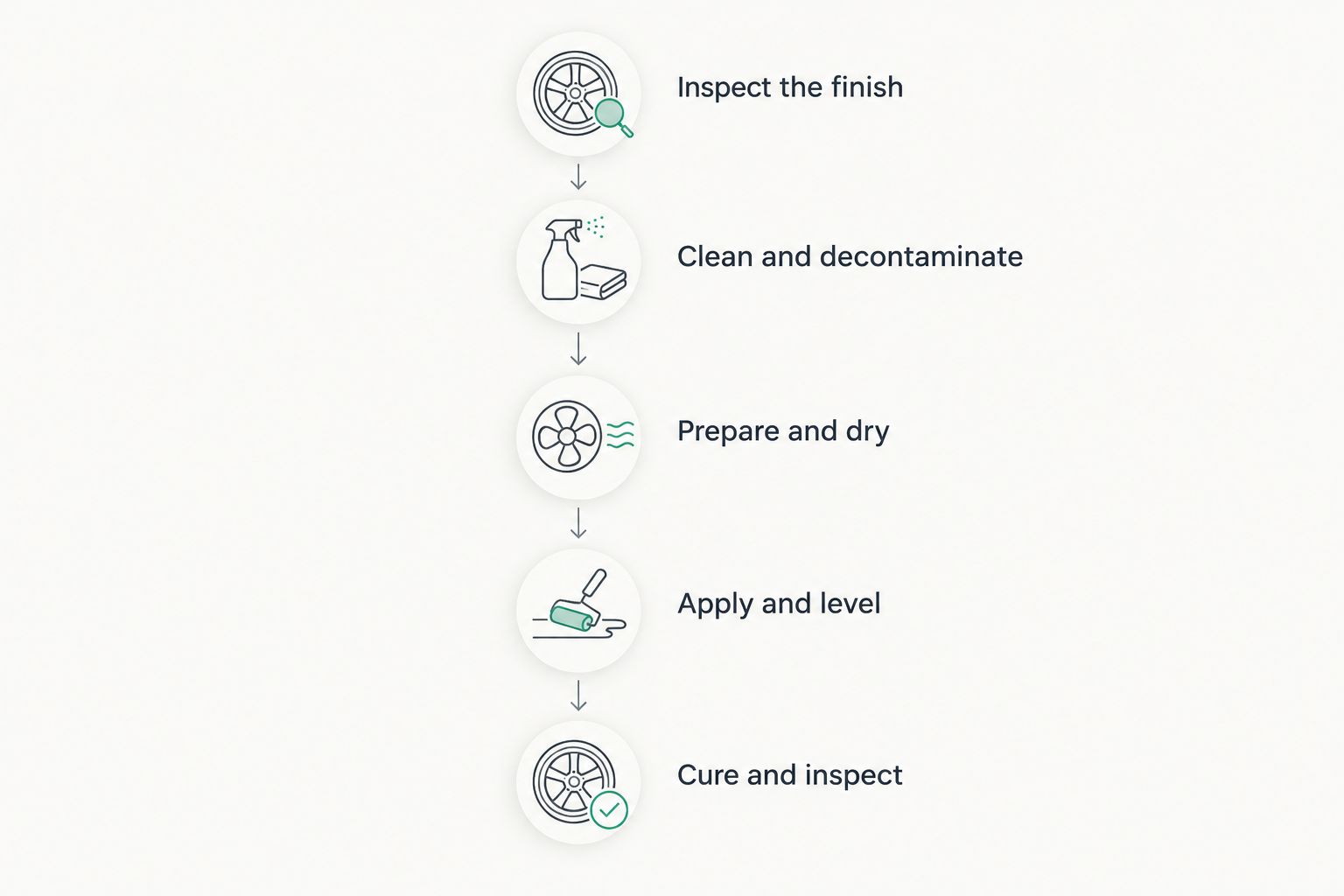
Use this sequence as a planning checklist, with the coating and vehicle manufacturers' instructions controlling the actual work:
- Inspect the finish. Identify the wheel material and finish, then check for peeling, corrosion, curb damage, and previous treatments.
- Clean and decontaminate. Use finish-compatible products to remove dirt and brake contamination. Follow chemical handling and rinsing instructions.
- Prepare and dry. Complete any appropriate correction before coating, remove compatible preparation residues, and dry recesses thoroughly.
- Apply and level. Work within the product's stated conditions, control the application area, and remove excess as directed.
- Cure and inspect. Follow the specified curing process and check accessible surfaces for missed residue or uneven application.
Keep cleaning tools for wheels separate from tools used on body paint. Wheel brushes and towels collect abrasive contamination, and moving that contamination onto painted panels creates an avoidable scratching risk.
What must stay uncoated?
Never put ceramic coating on brake friction surfaces. Brake rotors and pads rely on their designed friction characteristics; a cosmetic coating has no place on those working surfaces.
Also keep coating off the wheel-to-hub mounting face, lug nut or bolt seating surfaces, fastener threads, and tire bead seating areas. Follow the vehicle and wheel manufacturers' requirements for those interfaces rather than treating them as additional detailing surfaces.
Avoid using a spray application near exposed brakes unless the product instructions explicitly support the method and the working surfaces are protected. Controlled application matters more than speed.
If coating reaches a prohibited surface, stop the job. Do not assume that wiping away visible residue makes a brake or mounting interface ready for service; have the contamination assessed and corrected using the appropriate service procedure.
Does ceramic coating stop brake dust from sticking?
Ceramic coating does not stop brake dust from being produced or settling on wheels. Its purpose here is to make compatible surfaces easier to clean, not to create a dust-free wheel.
Brake dust comes from brake wear, so coating the wheel does not address its source. You still need regular cleaning with products and tools appropriate for the finish and coating.
The right expectation is less difficulty removing contamination, not no maintenance. Start with a suitable cleaning approach; the guide to wheel and rim cleaners covers that separate product decision. Never select a cleaner solely because the wheel has been coated.
Will coating change matte or satin wheels?
A compatible coating is essential when you want to preserve a matte or satin appearance. Do not assume that a coating intended to enhance gloss is suitable for a low-gloss finish.
Read the finish restrictions and test in an inconspicuous location where the manufacturer permits testing. Avoid abrasive polishing intended to remove defects from glossy clear coat, because changing the surface texture can change the appearance of a matte finish.
For a 2026 application, ask the installer to identify the exact finish and explain the preparation method. Preserving the intended sheen takes priority over adding a coating. If compatibility is not established, do not proceed.
Should you apply wheel coating yourself?
A do-it-yourself application requires more than access to a coating bottle. You need compatible preparation products, suitable working conditions, enough access to level the coating, and a clear understanding of which surfaces must remain untreated.
Professional application is useful when contamination removal, finish assessment, or access exceeds your experience. The limitation is that booking a detailing service does not automatically establish wheel removal, barrel coverage, caliper coverage, or mechanical work as part of the job.
Kleandetail is best suited to Oak Lawn car owners seeking automotive detailing and ceramic coating services. For wheel or caliper work, confirm the specific scope directly rather than assuming it follows from an exterior coating service.
Before choosing either route, ask who is responsible for wheel removal and reinstallation, how excluded surfaces are protected, and what written aftercare instructions you will receive.
Discuss your ceramic coating plans
Ask about surface compatibility, preparation, coverage, and aftercare before scheduling.
How should you maintain coated wheels?
Clean coated wheels when they are cool, using products approved for both the finish and coating. Rinse loose contamination before contact cleaning, use suitable soft tools, and rinse away cleaner according to its instructions.
Do not let a coating become an excuse to leave brake dust in place. Coated surfaces still get dirty, and neglected contamination can make cleaning more difficult.
Avoid escalating immediately to aggressive chemicals when water behavior changes. Contamination can affect how water behaves on a surface, so reduced beading alone does not establish that the coating needs replacement.
Keep the product name and aftercare instructions with your vehicle records in 2026. That gives you a reliable reference when choosing cleaners or arranging subsequent detailing, instead of relying on a general label such as ceramic protected.
What should you confirm before booking?
Ask for a surface-by-surface description of the proposed work. Wheel faces, spoke recesses, inner barrels, and caliper exteriors are distinct areas, and the preparation needed for each is not identical.
Your written scope should address:
- Which surfaces receive coating and which are excluded.
- Whether wheel removal is part of the work.
- How existing damage or failing finishes will be handled.
- Which coating is intended for each approved surface.
- What curing and cleaning instructions apply afterward.
Clear coverage beats a vague promise of fully protected wheels. Keep repair decisions separate from coating decisions: damaged paint, corrosion, and curb rash need assessment before you decide whether coating is appropriate.
FAQ
Can ceramic coating be applied to wheels that are already on the car?
Yes, accessible wheel surfaces can be coated with the wheels installed when the product instructions and safe application conditions allow it. Full barrel access and thorough coverage are separate questions; confirm the actual scope.
Can you put ceramic coating on brake calipers?
Yes, a compatible coating can be applied to suitable exterior caliper finishes. Keep it off brake friction surfaces, seals, fittings, and other excluded functional components.
Can I use my car's paint coating on its wheels?
Use a paint coating on wheels only if its manufacturer approves that application and the wheel finish. Approval for body paint alone does not establish wheel or caliper suitability.
Will ceramic coating prevent curb rash on wheels?
No, ceramic coating does not prevent curb rash. Contact with a curb can damage the finish and underlying wheel regardless of the coating.
How long should wheel coating cure before I drive?
Follow the exact coating manufacturer's curing instructions before driving or exposing the treated surfaces to water. There is no single curing period that applies to every wheel coating.
Do ceramic-coated wheels still need wheel cleaner?
Ceramic-coated wheels still need cleaning, with the method chosen for the contamination present. Use cleaners compatible with both the wheel finish and the coating rather than assuming any wheel cleaner is safe.
Can Kleandetail help me plan ceramic coating for my car?
Kleandetail provides ceramic coating and automotive detailing services in Oak Lawn, Illinois. Ask directly about wheel and caliper suitability, coverage, preparation, and aftercare for your vehicle.
One last thing
The most important coating decision is sometimes where not to apply it. An untreated mounting face or brake component is not a missed spot; it is a deliberate boundary between cosmetic care and mechanical function.
Before approving wheel coating, have the installer explain those boundaries alongside the coverage. That conversation tells you more about the proposed work than a promise of extra shine.


