
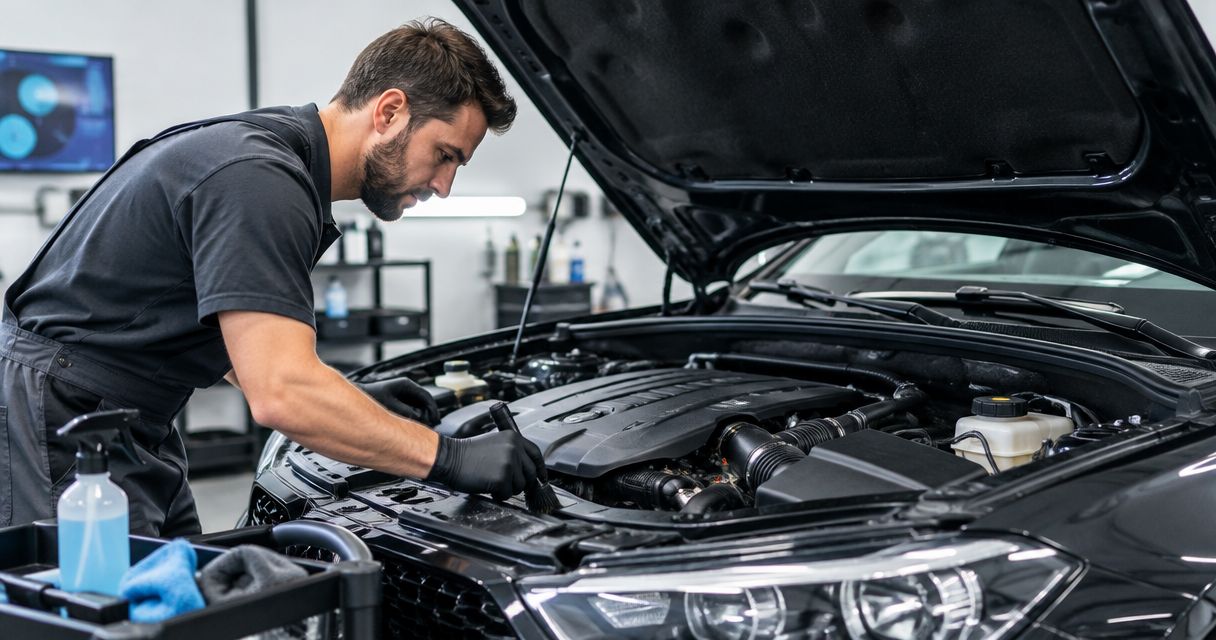
Auto detailing can clean some rodent-related contamination and address residual odors, but it cannot repair chewed wiring, damaged insulation, or torn upholstery. Automotive rodent decontamination requires contamination-specific cleanup before ordinary detailing, with mechanical inspection or material replacement wherever rodents have damaged the vehicle.
- Automotive rodent decontamination addresses contamination; detailing cannot repair chewed wiring or damaged vehicle components.
- CDC guidance says to ventilate a rodent-affected vehicle for 20 minutes before inspection.
- Do not vacuum or sweep untreated rodent droppings, urine, or nesting material.
- Kleandetail provides full vehicle detailing; confirm rodent-contamination acceptance before booking.
Why this matters
A clean-looking cabin does not establish that hidden nesting material, contaminated insulation, or electrical damage has been addressed. Rodent waste also requires different handling from crumbs, dirt, or ordinary upholstery stains.
For a cleanup decision in 2026, separate three jobs: removing contamination, repairing damage, and restoring the interior's appearance. Before arranging transport or an appointment, contact the shop and disclose the rodent evidence rather than booking a standard interior cleaning without explanation.
Can auto detailing remove rodent damage from a car?
Detailing can address cleanable surfaces after appropriate contamination control; it cannot reverse physical damage. The correct sequence depends on where rodents have been and whether the car is safe to operate.
- Stop ordinary cleaning. Do not vacuum, sweep, brush, or blow away untreated droppings or nests. Disturbing contaminated material can put particles into the air.
- Ventilate before inspection. CDC vehicle-cleanup guidance calls for opening the hood, doors, and trunk for 20 minutes. Do this outdoors, away from other people, and avoid breathing dust during the inspection.
- Identify the affected areas without disturbing them. Record visible evidence in the cabin, cargo area, engine compartment, or air intake. Do not remove panels merely to investigate suspected contamination yourself.
- Arrange the appropriate assessment. Chewed wiring, warning lights, fluid leaks, or nesting near moving or hot components require mechanical attention. Extensive contamination calls for professional cleanup rather than routine detailing.
- Clean, repair, then detail. Contamination removal and necessary repairs come before cosmetic finishing. Confirm which provider handles each stage and how the vehicle will move between them.
The CDC's rodent-cleanup guidance is the public-health basis for the ventilation and wet-cleaning precautions on this page. It is not a vehicle repair procedure or a guarantee that a particular interior material can be salvaged.
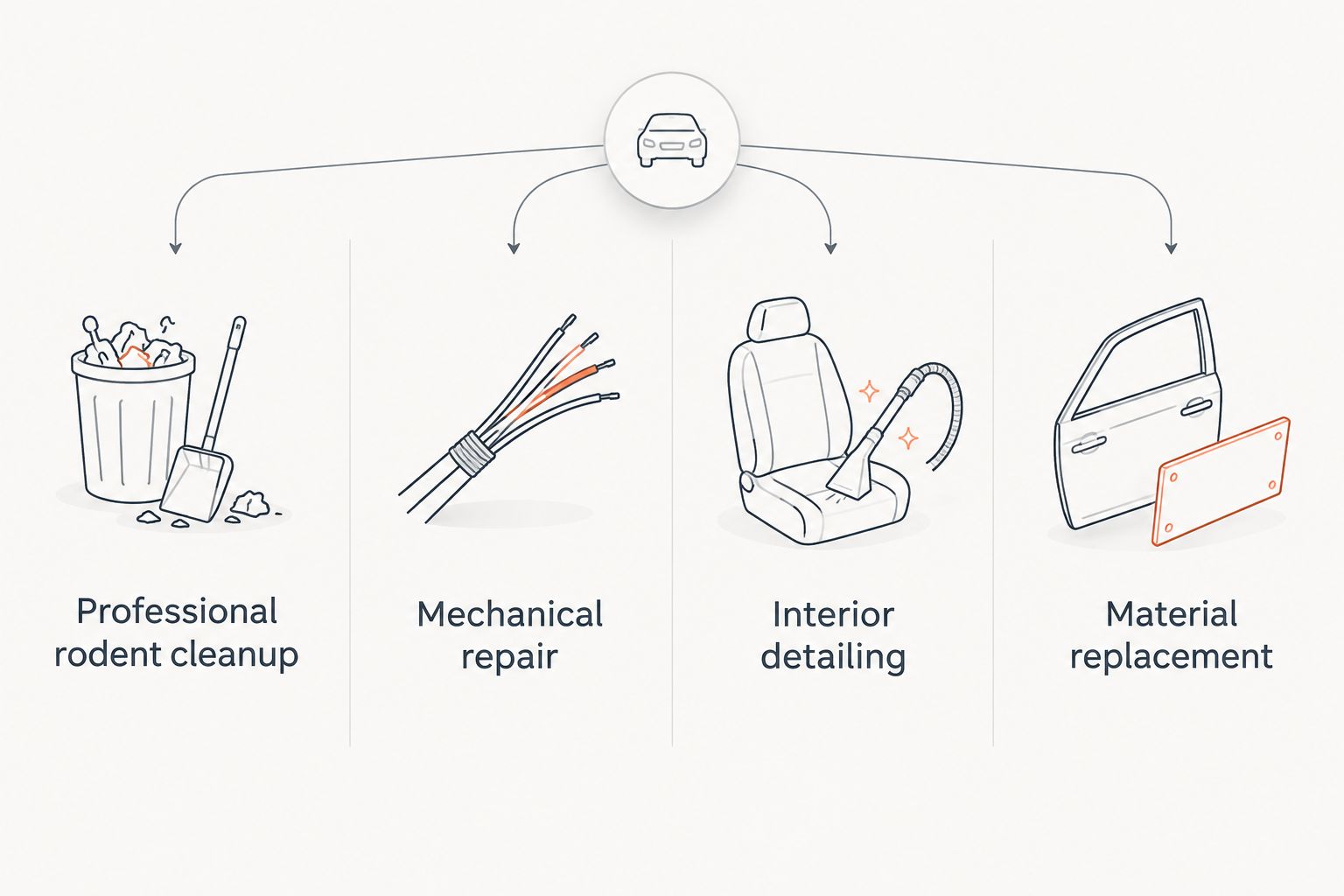
Which service handles each part of rodent damage?
Use this comparison when arranging work in 2026. These services address different problems; choosing one does not automatically cover the others.
| Service | Best for | Main benefit | Important limitation |
|---|---|---|---|
| Professional rodent cleanup | Droppings, urine, nesting material, and contaminated areas | Addresses contamination using appropriate handling procedures | Does not repair damaged vehicle components |
| Mechanical or electrical repair | Chewed wiring, damaged hoses, and operating faults | Restores affected components and checks vehicle function | Does not replace contamination cleanup |
| Interior detailing | Remaining cleanable dirt, staining, and appearance after cleanup | Improves the condition of accessible interior surfaces | Cannot establish that concealed contamination is absent |
| Upholstery or insulation replacement | Materials that cannot be adequately cleaned or are physically damaged | Removes the affected material rather than treating its surface | Requires access, suitable replacement materials, and correct reassembly |
Choose the service for the problem, not the smell. A car with chewed wiring needs repair even if the cabin smells normal; a car with contaminated carpet padding needs assessment even if the carpet face looks clean.
What safe rodent cleanup involves
Do not start with a vacuum. CDC guidance recommends wetting rodent urine and droppings with an appropriate disinfectant before removing them, rather than sweeping or vacuuming untreated waste.
The CDC specifies leaving disinfectant on the material for 5 minutes, or following the product label's instructions. That public-health instruction does not make every disinfectant suitable for leather, upholstery, touchscreens, electrical connectors, or vehicle finishes. Surface compatibility and the disinfectant's labeled directions both matter.
For a dead rodent or nesting material, CDC guidance calls for bagging the treated material and placing that bag inside another bag: 2 sealed bags. Wear rubber or plastic gloves, and follow the guidance for cleaning gloves and washing hands afterward. Extensive contamination requires professional assessment and additional precautions.
These precautions are not a complete do-it-yourself procedure for dismantling a vehicle. Seat removal, airbag connections, hidden wiring, and ventilation components introduce hazards beyond surface cleanup.
Why ordinary detailing equipment is not the starting point
A shop vacuum removes debris, but using one on untreated rodent waste conflicts with CDC cleanup guidance. Compressed air and vigorous brushing also disturb material instead of containing it.
Steam cleaning and upholstery extraction are not substitutes for selecting a suitable disinfection process. A cleaning method must address the contamination, reach the affected material, and remain compatible with the vehicle surface. Ask the provider to explain that sequence before authorizing work.
Why automotive rodent decontamination varies
The scope of automotive rodent decontamination in 2026 depends on what is affected, not simply the size of the vehicle. A small visible nest can lead to a different repair decision from widespread contamination beneath carpet.
- Location: Accessible hard surfaces require different work from concealed areas beneath trim, seats, or the dashboard.
- Material: Hard surfaces and absorbent foam do not offer the same cleaning access or treatment options.
- Extent: An isolated affected area differs from contamination spread through several compartments.
- Physical damage: Chewed wiring, hoses, seat material, or insulation adds repair or replacement work.
- Ventilation involvement: Evidence around the air intake, cabin filter, or ventilation housing requires inspection beyond the visible cabin.
- Continuing activity: Fresh evidence after cleanup means the source of rodent access still needs attention.
Do not accept a scope based only on deodorizing. The work plan should identify affected areas, the intended cleaning method, and any components that need inspection or replacement.
When can contaminated material stay, and when must it go?
Accessible, intact, nonporous surfaces are generally easier to clean and disinfect than absorbent materials. Foam, padding, and fibrous insulation raise a different question: can the treatment reach the contamination without damaging the material?
Surface appearance alone cannot answer that. Ask the provider to distinguish material that has been inspected from material that remains concealed, and to explain why cleaning or replacement is appropriate.
Carpet and seat padding
Cleaning the visible carpet does not clean the padding beneath it. If contamination has reached underlying material, the provider needs access to assess its condition and determine whether cleaning is adequate.
Repeatedly shampooing the top surface is not a substitute for that assessment. The same distinction applies to a seat cover and the foam underneath it.
Cabin filters and ventilation housings
A cabin filter is only one part of the ventilation path. Finding nesting material at the filter calls for inspection of the surrounding housing and accessible intake area, not an assumption that changing the filter completes the job.
Do not run the blower to test a suspected contaminated ventilation system. Have the affected area inspected before using airflow to investigate an odor.
Wiring and under-hood insulation
Detailing does not restore a chewed wire's insulation or verify that a circuit functions correctly. A qualified technician needs to assess electrical damage and determine the repair.
Under-hood nesting also deserves attention before starting the engine. Do not reach into moving components or attempt cleaning around energized electrical equipment.
Can detailing get rid of mouse urine smell completely?
Detailing can reduce residual odor after the contamination source is removed, but odor treatment alone does not establish successful decontamination. Hidden waste, contaminated padding, or an inaccessible nest can leave the underlying problem unresolved.
In 2026, evaluate odor work by its sequence: locate the source, remove affected material as appropriate, clean compatible surfaces, and reassess. Fragrance changes what you smell; it does not repair damage or prove disinfection.
Ozone is not a shortcut around source removal. The EPA identifies ozone as a lung irritant and warns that concentrations within public-health standards have little potential to remove many indoor contaminants. Do not use an ozone treatment as evidence that a rodent-affected car is safe.
Can I drive a car after finding rodent droppings?
Droppings alone do not establish whether the vehicle is mechanically safe to drive. Chewed wiring, damaged hoses, warning lights, unusual operation, or nesting near hot or moving components require assessment before use.
If you suspect damage, arrange professional advice about inspection and transport rather than starting the car to see what happens. Tell the receiving provider about the contamination before the vehicle arrives so staff can plan appropriate handling.
What should I ask before booking cleanup?
A useful 2026 work order separates contamination control from cosmetic finishing. Ask these questions before handing over the keys:
- Do you accept vehicles with rodent waste, or is specialist cleanup required first?
- Which affected areas will be inspected, and which remain outside the agreed scope?
- How will untreated waste be handled before any vacuuming or extraction?
- How will you check treatment compatibility with the affected surfaces?
- Who handles wiring, ventilation, upholstery, or insulation repairs?
- What findings will trigger a pause for additional authorization?
Photograph visible evidence without disturbing it. Keep the inspection findings and work order together, particularly when different providers handle cleanup and repair.
Kleandetail is best for Oak Lawn car owners seeking full vehicle detailing, not a substitute for rodent-damage repair. Kleandetail's automotive detailing services include full vehicle detailing; confirm whether contamination-specific work is accepted and what must be completed beforehand. That boundary prevents an appearance-focused appointment from being mistaken for a repair or public-health clearance.
Discuss the vehicle before booking
Describe the rodent evidence and ask whether specialist cleanup or repairs must come before detailing.
FAQ
Can a regular car detail remove mouse droppings?
A regular detail should not begin by vacuuming untreated mouse droppings. Rodent waste needs appropriate wet-cleanup precautions, and the shop must agree to that scope before accepting the vehicle.
How long should I air out a car after finding rodents?
CDC vehicle-cleanup guidance calls for opening the hood, doors, and trunk for 20 minutes before inspection. Ventilation does not remove waste, disinfect surfaces, or repair damage.
Is it safe to vacuum mouse poop out of my car?
Do not vacuum untreated mouse droppings, urine, or nesting material. CDC guidance recommends wetting contaminated material with an appropriate disinfectant before removal to avoid disturbing dry waste.
Does a clean smell mean my car is decontaminated?
A clean smell does not prove that a car is decontaminated. Hidden nesting material, contaminated padding, and mechanical damage require inspection regardless of odor.
Will changing the cabin air filter fix a rodent problem?
Changing the cabin air filter alone does not establish that a rodent problem is resolved. The surrounding housing, intake area, and other affected components need inspection when evidence points to contamination there.
Can a detailer fix wires that mice chewed?
Detailing cannot repair chewed wiring. A qualified repair technician needs to assess the affected circuits and complete the necessary electrical repairs.
Can I book Kleandetail for automotive rodent decontamination?
Contact Kleandetail before booking and describe the rodent evidence. Ask whether the shop accepts contamination-specific work or requires specialist cleanup and mechanical repairs before full vehicle detailing.
One last thing
Ask what was inspected, not just what was cleaned. A work order that distinguishes accessible surfaces, concealed areas, replaced materials, and completed repairs gives you a clearer record than a statement that the car was deodorized.
After the vehicle is cleaned and repaired, remove food and nesting attractants and arrange help with continuing rodent activity. A finished detail does not prevent rodents from returning.


