
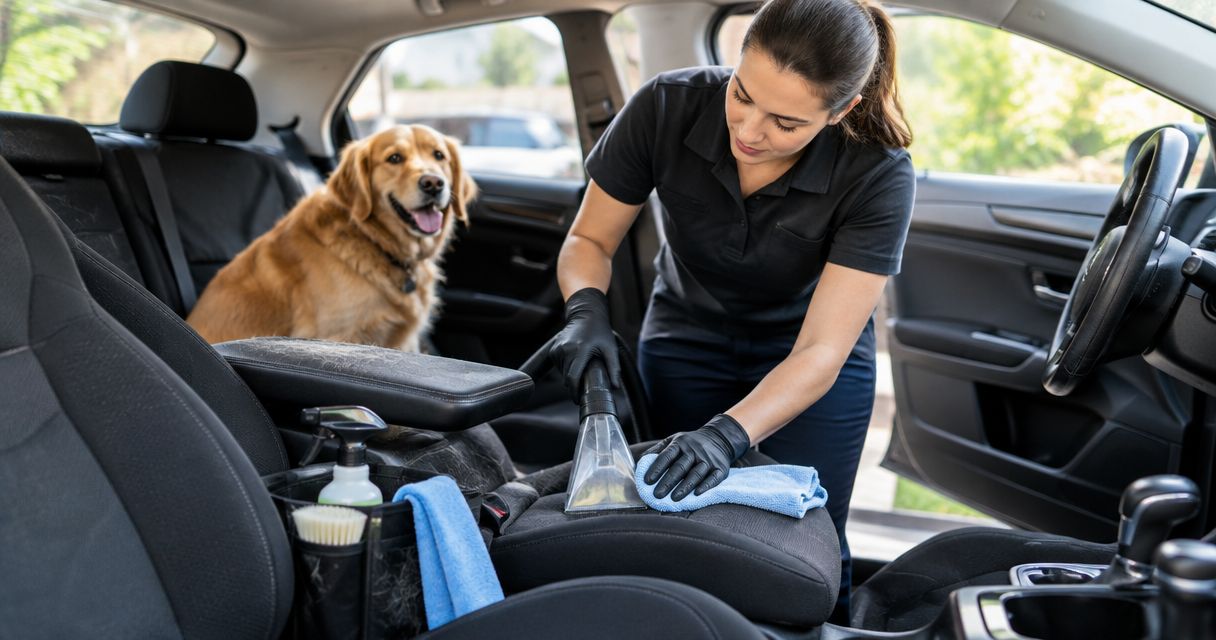
Yes, interior detailing can remove pet odor when cleaning reaches and removes the source, rather than covering the smell with fragrance. Hair, skin oils, saliva, and urine need different cleaning approaches, and contamination beneath upholstery can remain after surface cleaning. For a 2026 detailing appointment, ask for an odor-source assessment before accepting a promise of complete removal.
- Can interior detailing remove pet odor? Yes, when cleaning removes the source instead of masking it.
- Urine beneath upholstery needs assessment beyond ordinary surface cleaning.
- Choose material-compatible cleaning, thorough drying, and a fragrance-free odor check.
- Kleandetail offers vehicle detailing in Oak Lawn; confirm the scope of pet-odor work before booking.
Why this matters
A clean-looking seat can still contain odor-producing residue. Removing visible fur improves the interior, but it does not establish that an accident beneath a seat cover or inside carpet padding has been addressed.
Choose the cleaning scope by the contamination, not by how strong the air freshener smells afterward. For ongoing cleanup between appointments, the guide to interior detailing for families with pets covers the broader maintenance task.
Can interior detailing remove pet odor?
Interior detailing can remove pet odor from accessible surfaces when the cleaning method matches the residue and material. Complete removal becomes harder when liquid has soaked into foam, carpet backing, or other areas that ordinary surface cleaning does not reach.
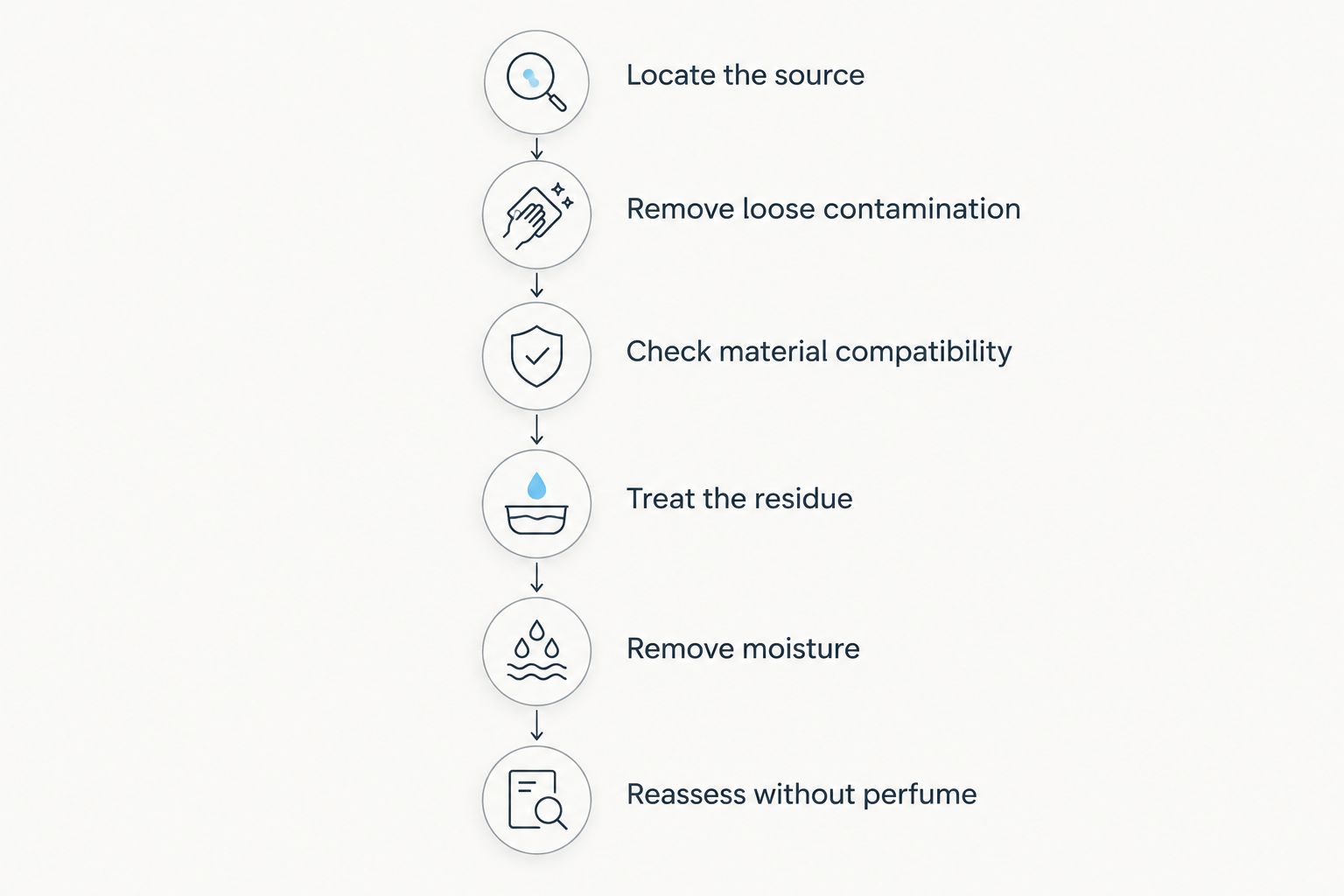
A useful assessment follows this sequence:
- Locate the source. Identify the strongest-smelling area and explain whether the problem followed a urine accident, wet ride, or repeated pet travel.
- Remove loose contamination. Take out pet bedding and removable covers, then remove hair and debris from accessible seams, carpet, and cargo areas.
- Check material compatibility. Follow the vehicle manufacturer's care instructions and the cleaner's label before treating upholstery, leather, plastics, or trim.
- Treat the residue. Use a compatible cleaning method that addresses the contamination rather than adding fragrance over it.
- Remove moisture. Allow cleaned materials to dry fully before replacing covers or enclosing damp items in the vehicle.
- Reassess without perfume. Check whether the original smell remains once the interior is dry and strong added fragrance is absent.
The sequence matters. Wet-cleaning over embedded hair leaves part of the cleanup unfinished, while deodorizing before locating the source makes it harder to judge the result.
Which cleaning approach fits the problem?
These approaches address different parts of the job. They are not interchangeable, and a vehicle can need more than one.
| Approach | Best for | Main benefit | Main limitation |
|---|---|---|---|
| Vacuuming and hair removal | Loose fur and dry debris | Removes material from accessible surfaces and seams | Does not remove dissolved residue or contamination inside padding |
| Material-compatible surface cleaning | Oils, saliva, and surface soil | Cleans the surfaces pets touch | Does not establish that underlying foam is clean |
| Compatible enzyme treatment | Organic residue identified by the product label | Targets the kinds of residue specified on the label | Requires correct application and material compatibility |
| Upholstery extraction | Suitable fabric containing removable soil and cleaning solution | Removes liquid and suspended soil from accessible fabric | Cannot guarantee removal from every underlying layer |
| Fragrance | Temporarily changing the cabin's scent | Changes what you smell immediately | Does not remove the contamination |
Best for persistent pet odor: source-focused cleaning, followed by a dry-interior reassessment. Fragrance alone is not an odor-removal result.
What if the smell comes from urine?
Urine requires more than a general wipe-down when it has soaked through fabric. Cleaning the seat face does not necessarily reach the cushion underneath, and treating the visible mark alone can leave surrounding contamination untouched.
Tell the detailer where the accident happened, whether the surface stayed wet, and what you already applied. Describe the original event even if the stain is no longer visible; appearance alone does not show how far liquid traveled.
An enzyme cleaner is an option only when its label covers the residue and material involved. Follow its application instructions, including any required contact conditions, rather than assuming a quick spray completes the treatment.
Do not repeatedly soak a seat to chase a lingering smell. Added liquid can reach deeper layers, and vehicle seats contain components that need protection from moisture. If contamination extends beneath the accessible fabric, ask whether further inspection or an upholstery specialist is appropriate.
What if the smell is mostly wet dog or embedded fur?
Start with the items that move in and out of the car: blankets, harnesses, towels, removable covers, and pet carriers. Leaving a smelly blanket in a freshly cleaned cabin reintroduces the source immediately.
Remove hair before wet cleaning. Fur lodged along seat edges, in cargo carpeting, and around accessible seams needs attention even when the main seating surface looks tidy.
For wet-dog odor, identify where moisture and residue collected rather than assuming every surface needs the same treatment. A damp cargo mat and a soiled fabric seat require different handling, especially when the mat is removable but the seat contains electrical components.
Ask whether the appointment includes pet-hair removal, cleaning beneath removable mats, and drying. Those questions establish scope without assuming that every service described as interior detailing includes the same work.
Why pet-odor removal results vary
For your 2026 service comparison, focus on these factors rather than an unsupported promise of permanent odor elimination:
- Source: Loose hair, surface oils, and a soaked urine accident are different cleaning problems.
- Depth: Accessible residue is easier to address than contamination inside foam, backing, or enclosed areas.
- Material: Fabric, coated leather, plastics, and headliners have different care requirements.
- Previous treatment: Tell the detailer which cleaners, fragrances, or deodorizing products you already used.
- Drying: Damp materials need to dry before you can fairly judge the finished result.
- Reintroduction: An unwashed cover, pet bed, or another accident can bring odor back after cleaning.
These factors explain why a universal completion time or guaranteed outcome is not a useful booking standard. Ask what will be cleaned, what cannot be reached, and how the result will be checked.
How do you choose a detailing service for pet odor?
Describe the odor problem before choosing a package. A booking for routine interior cleaning does not automatically establish that urine treatment, extensive hair removal, or inspection beneath upholstery is included.
Use this 2026 booking checklist:
- Explain where the smell is strongest and when you notice it.
- Identify known accidents and any areas that remained wet.
- Disclose previous cleaning attempts and products used.
- Ask which materials and areas the proposed service covers.
- Ask how the interior will be dried and assessed afterward.
- Confirm what happens if odor remains in an inaccessible area.
Kleandetail is best suited to Oak Lawn car owners seeking a local automotive detailing service. The shop provides full vehicle detailing; confirm the pet-odor treatment scope directly through Kleandetail before booking. The relevant question is whether the proposed work addresses your contamination, not simply whether the vehicle will receive an interior clean.
A useful service discussion includes limitations. If the source is inside cushioning or beneath carpet, ask whether the work stops at accessible surfaces or requires separate upholstery assessment.
Discuss your interior cleaning needs
Describe the odor source and confirm the scope of vehicle detailing before booking.
Can you remove pet odor yourself?
You can start with removable pet items, loose hair, and accessible surface soil. The advantage is control over routine cleanup; the limitation is that household cleaning tools do not establish what remains beneath upholstery.
Read both the vehicle's care guidance and the cleaning product's label. Test a compatible product in an inconspicuous area as directed, and avoid applying liquid indiscriminately around switches, seat mechanisms, or electronic components.
Do not mix cleaning chemicals. More products do not make a treatment more effective, and combining cleaners can create a safety hazard.
Stop repeated DIY treatment when the same localized smell returns after the material dries. Reassess the source instead of adding another layer of cleaner or fragrance. Persistent contamination beneath fabric needs a different decision from loose fur on top of it.
Does steam cleaning remove pet odor?
Steam cleaning is not a complete answer to every pet-odor problem. It is a cleaning method, not proof that contamination has been removed from every affected layer.
Material compatibility still governs the job. Heat and moisture are not appropriate for every interior surface, adhesive, finish, or component, so avoid treating steam as a universal solution.
Ask what the process removes and how remaining moisture is managed. For a 2026 appointment, the useful question is not simply whether steam is included; it is whether the proposed method suits the affected material and reaches the source.
Does ozone remove pet odor from a car?
Ozone does not replace removing pet hair, urine residue, or contaminated material. The U.S. Environmental Protection Agency warns that ozone is a lung irritant and that ozone concentrations within public-health limits have little potential to remove many indoor contaminants.
Do not use an ozone generator in an occupied vehicle or around pets. An ozone treatment also does not establish that residue beneath upholstery has been cleaned.
Choose physical source removal before considering any air-treatment add-on. Ask the provider to explain the method's limits and safety procedures rather than accepting a deodorizing treatment as evidence of complete cleanup.
How do you tell whether detailing worked?
Assess the interior after it is dry, with removable pet items still out of the vehicle. Strong added fragrance makes it harder to distinguish a cleaned cabin from a covered-up smell.
Check the original problem area rather than relying only on the scent when the door first opens. If the odor returns, note whether it is localized to a seat, carpet section, cargo area, or the ventilation system.
A recurring smell is a reason to reassess, not automatic proof of poor workmanship. Contamination beneath accessible surfaces, a damp item returned to the car, and a separate odor source require different next steps.
For your 2026 handover, request clear aftercare instructions. Know when cleaned materials are ready for covers and pet bedding, and what to report if the original odor remains.
FAQ
Can interior detailing completely remove dog smell?
Interior detailing can remove dog smell when cleaning removes the source from affected materials. Contamination beneath upholstery or an unwashed pet accessory can leave or reintroduce odor.
Will detailing remove cat urine from a car seat?
Detailing can address cat urine on accessible materials, but urine inside seat foam requires assessment beyond surface cleaning. Explain where the accident happened and what products you have already applied.
Is shampooing enough to remove pet odor from car carpet?
Shampooing is not enough when contamination remains beneath the carpet surface. The cleaning plan needs to account for the affected material, underlying layers, and drying.
Why does my car still smell after interior detailing?
A lingering smell means an odor source remains or has been reintroduced. Check inaccessible contamination, damp materials, removable pet items, and other possible sources before repeating the same treatment.
Should I use an air freshener after pet-odor cleaning?
Assess the dry interior without strong added fragrance first. An air freshener changes the scent but does not establish whether the original contamination was removed.
Does Kleandetail provide vehicle detailing in Oak Lawn?
Kleandetail provides full vehicle detailing in Oak Lawn, Illinois. Describe the pet-odor problem and confirm which cleaning steps are included before booking.
Can I prevent pet odor from coming back?
You can reduce reintroduced odor by cleaning removable pet items, removing hair, and addressing accidents promptly. Follow material-care instructions and avoid enclosing damp covers or bedding in the vehicle.
One last thing
The source you forget can be the item you carry back into the car. Before replacing a pet blanket, cargo liner, or seat cover, check and clean it according to its care instructions.
Finish the job outside the vehicle as well as inside it. A cleaned cabin does not clean the harness, carrier, or bedding that returns with your pet.


