
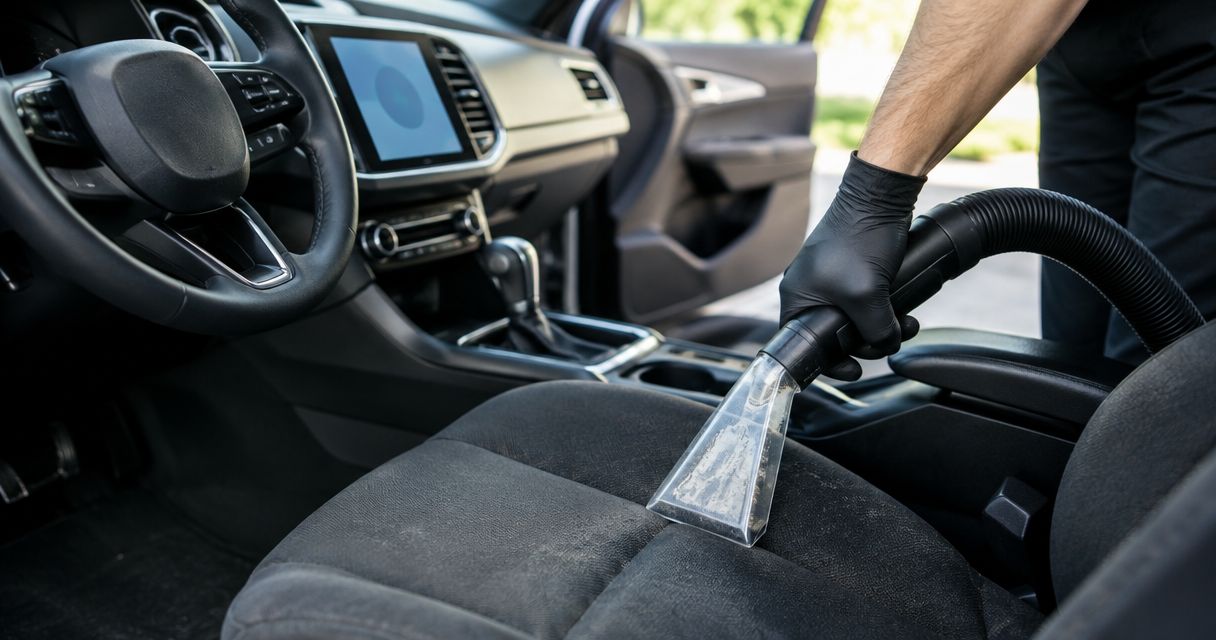
Yes—auto detailing can remove mold from accessible car-interior surfaces, but ordinary cleaning does not resolve mold inside saturated padding, seat foam, or ventilation components. A lasting result requires fixing the moisture source, removing contamination, and drying affected materials; heavily contaminated porous parts can require replacement rather than another cleaning.
- Can auto detailing remove mold from car interior? Yes, but surface cleaning alone does not resolve hidden contamination.
- EPA mold guidance prioritizes moisture control, physical removal, and drying—not fragrance or odor masking.
- Saturated carpet padding and seat foam need assessment before you approve a detailing-only approach.
- Kleandetail offers full vehicle detailing in Oak Lawn; confirm mold-specific work before booking.
Can auto detailing remove mold from a car interior?
Auto detailing can address accessible mold when the affected materials can be cleaned and dried. It is not a substitute for leak repair, contaminated-material replacement, or inspection of inaccessible areas. For a 2026 service booking, ask what the work includes rather than relying on the phrase deep cleaning.
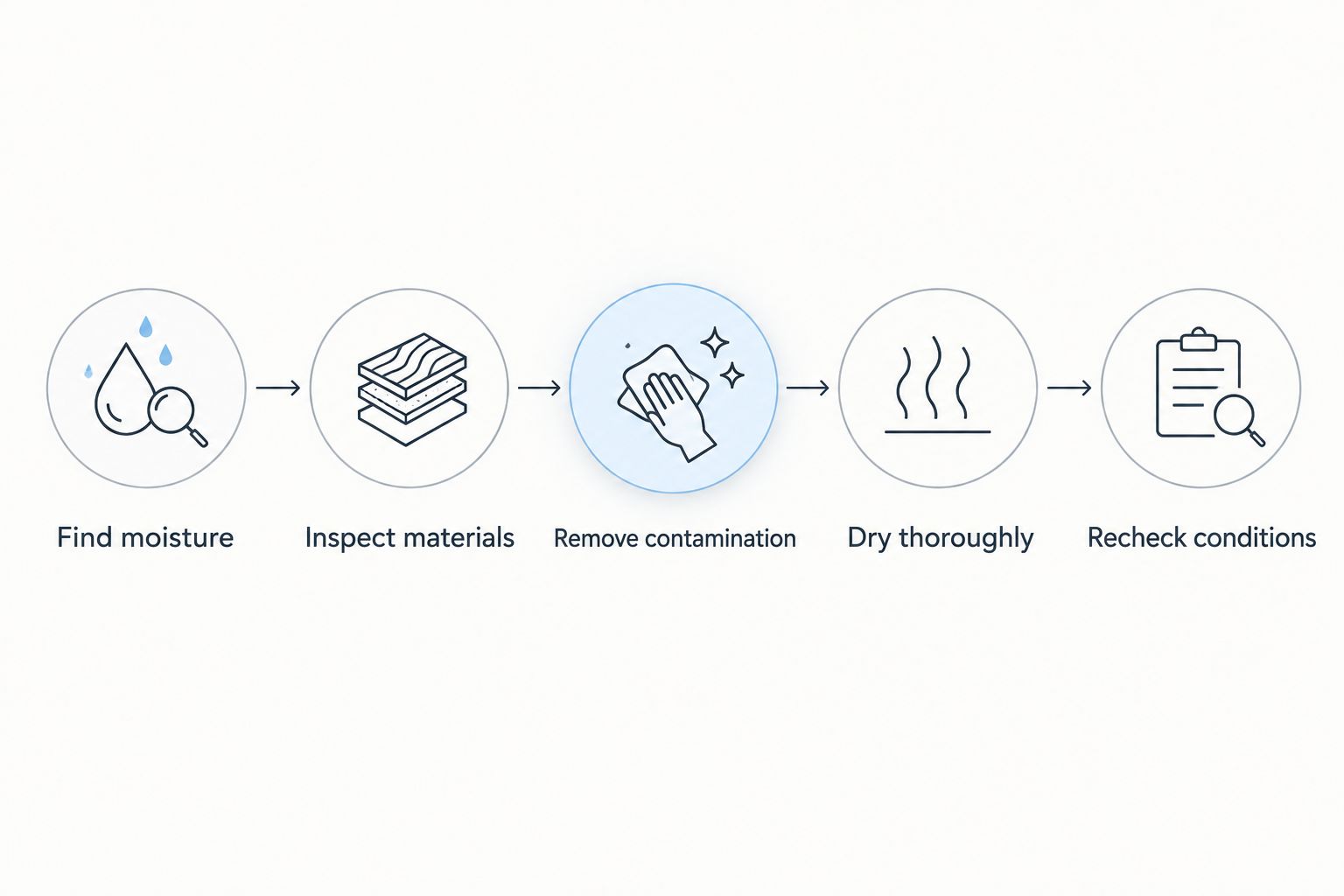
A sensible assessment follows this sequence:
- Find moisture. Identify the leak, spill, condensation, or storage condition that allowed the interior to stay damp.
- Inspect materials. Determine whether contamination is limited to cleanable surfaces or extends into carpet backing, padding, upholstery, or concealed cavities.
- Remove contamination. Clean suitable materials and identify porous components that cannot be adequately restored.
- Dry thoroughly. Verify that underlying materials—not just visible upholstery—are dry before reassembly.
- Recheck conditions. Look for renewed dampness, visible growth, or persistent odor after the moisture problem is corrected.
A musty smell alone does not establish the extent of mold. Odor diagnosis also matters for other interior problems, as explained in whether interior detailing can remove pet odor.
Why this matters
A freshly cleaned cabin can still contain wet padding beneath the carpet. If you judge the result only by appearance or fragrance, you can miss the condition that allowed mold to grow.
The U.S. Environmental Protection Agency's general mold guidance emphasizes fixing water problems and drying wet materials within 24–48 hours to help prevent growth. That prevention window is not a promise that an already moldy car can be restored within the same period. Vehicle construction, access, and material condition determine the work required.
For your 2026 interior-care decision, separate cosmetic improvement from contamination removal. A stain becoming less visible tells you little about the condition of the foam beneath it.
Which approach fits the affected material?
Choose the approach by material and contamination depth, not by the strongest cleaning claim. Accessible hard surfaces and waterlogged seat cushions present different problems. The following options describe general approaches, not services confirmed for any particular shop.
| Approach | Best for | Main benefit | Main limitation |
|---|---|---|---|
| Controlled surface cleaning | Accessible, cleanable hard surfaces | Allows physical removal from reachable areas | Does not address contamination beneath trim or inside porous layers |
| Upholstery or carpet cleaning | Suitable textiles assessed as restorable | Removes soil and contamination from material that can tolerate cleaning | Added moisture must be removed; backing and padding need separate attention |
| Component replacement | Porous parts that cannot be adequately cleaned and dried | Removes the affected material rather than repeatedly treating its surface | Requires identifying the full affected area and arranging suitable replacement |
| Specialist assessment | Widespread growth, flooding, hidden contamination, or ventilation concerns | Establishes a scope beyond cosmetic detailing | Can involve work outside a detailing shop's stated services |
A single vehicle can need more than one approach. For example, cleanable plastic trim and contaminated carpet padding should not automatically receive identical treatment.
The EPA's general cleanup guidance distinguishes cleanable hard surfaces from porous materials that can be difficult or impossible to clean completely. That distinction helps frame your questions, but it is not a vehicle-specific repair specification.
Accessible hard surfaces
Cleanable plastic or other nonporous surfaces offer better access for physical removal than absorbent padding. The cleaner still needs to suit the finish, and seams or nearby porous materials need inspection.
Best for: localized contamination on accessible, compatible surfaces. The limitation is reach: wiping a console does not clean the cavity beneath it.
Carpet, backing, and padding
A carpet's visible fibers are only part of the assembly. Water can remain in backing or padding even when the top feels dry, so the assessment must extend beneath the surface when circumstances indicate hidden wetness.
Best for: cleaning when the textile and underlying layers are assessed as restorable. Replacement deserves consideration when contaminated porous material cannot be adequately cleaned and dried.
Seats and ventilation components
Seat upholstery can conceal absorbent foam, while airflow-related odor can require inspection beyond the cabin's visible surfaces. Do not assume that spraying vents or cleaning a seat cover reaches the source.
Best for: assessment before selecting a treatment. Seats can also contain electrical and safety-related components, so disassembly belongs with someone qualified for the vehicle and task.
Why mold-removal results vary
The answer depends on what became wet, how contamination spread, and whether the moisture problem has ended. Use these factors to judge a proposed scope in 2026:
- Moisture source: A repaired leak and an active leak are different starting points. Cleaning cannot prevent recurrence while water continues entering.
- Material type: Smooth, accessible surfaces are different from absorbent foam, padding, and fabric backing.
- Contamination depth: Visible spots do not establish whether growth is confined to the surface or extends into concealed layers.
- Access: Contamination beneath carpet, behind trim, or within ventilation components requires more than cleaning exposed surfaces.
- Drying conditions: Extraction removes liquid, but the remaining moisture still needs a controlled route out of the material.
- Water history: Floodwater or sewage exposure introduces concerns beyond ordinary interior soil and calls for an assessment appropriate to that contamination.
There is no defensible universal completion time for all these conditions. Ask for an assessment tied to your vehicle rather than accepting a timetable based only on vehicle size.
What should you do before booking a mold-related detail?
Disclose suspected mold before you bring the car in. A shop needs the moisture history and affected locations to decide whether the job fits its services. Do not book routine interior cleaning and reveal widespread growth at drop-off.
Prepare a short description covering:
- Where you see growth or smell mustiness.
- Whether the carpet, seats, trunk, or headliner became wet.
- Whether water entered through a known leak or flooding.
- Whether dampness or odor returns after rain or air-conditioning use.
- Which cleaners or odor treatments have already been applied.
Photographs can help explain visible conditions, but they cannot show whether hidden padding is dry. Avoid brushing or disturbing suspected growth just to obtain a clearer picture.
Kleandetail provides full vehicle detailing in Oak Lawn, Illinois. Kleandetail is best suited to Oak Lawn drivers seeking its stated full vehicle detailing service; confirm mold-specific assessment and treatment separately. A general detailing description does not establish remediation methods, ventilation work, component replacement, or health-related clearance.
For a 2026 booking, request a clear distinction between what will be cleaned, what needs further inspection, and what falls outside the agreed work. That distinction matters more than an extensive list of cleaning products.
Discuss your interior detailing needs
Describe the dampness, visible growth, and water history before agreeing to a detailing scope.
Can steam cleaning remove mold from car seats?
Steam cleaning alone does not establish that a mold-affected seat is restored. Results depend on access, material compatibility, contamination depth, removal, and drying—not simply whether steam touches the upholstery.
A surface treatment does not prove that seat foam is clean or dry. Ask how the operator will assess the underlying material and avoid damaging the seat's finishes or components.
Does ozone remove mold from a car interior?
Ozone is not a substitute for removing contaminated material and correcting moisture. The EPA warns that ozone can harm the lungs and that concentrations within public-health limits are generally ineffective at removing many indoor contaminants.
An odor change is not proof of mold removal. Do not accept deodorizing as evidence that contaminated carpet, padding, or foam has been restored, and do not run ozone equipment in an occupied vehicle.
Will mold return after professional detailing?
Mold can return when moisture remains or water re-enters the cabin. Even thorough cleaning cannot compensate for an unresolved leak or damp material sealed beneath reinstalled carpet.
Keep moisture control in your 2026 maintenance plan. If mustiness returns, investigate the source rather than repeatedly adding fragrance or booking another surface-only treatment.
What should you avoid doing yourself?
Do not begin by dry-brushing growth, running an ordinary household vacuum over it, or saturating the interior with cleaner. These actions can disturb contamination or add moisture without addressing hidden materials.
Avoid mixing cleaning chemicals. The CDC specifically warns against mixing bleach with ammonia or other cleaners because dangerous fumes can result; vehicle interiors also contain materials that harsh chemicals can damage.
People with asthma, significant allergies, immune suppression, or other relevant medical concerns should avoid unnecessary exposure and seek appropriate medical advice. A detailer's assessment of appearance or odor is not medical clearance.
For a flood-affected vehicle, arrange a qualified vehicle assessment rather than treating the problem as upholstery cleaning alone. Water exposure can involve electrical and safety-related components as well as the cabin materials you can see.
How do you judge the finished work?
Start with the agreed scope, not the smell. Ask which areas were inspected, which materials were cleaned or removed, and how drying was checked before components were put back.
Useful completion questions include:
- Was the moisture source identified and corrected, or does another repair remain necessary?
- Were underlying layers inspected wherever hidden contamination was suspected?
- Were any materials judged unsuitable for cleaning?
- Were inaccessible areas or ventilation concerns left for further assessment?
- What should prompt a follow-up inspection?
A clean appearance is useful, but it is only part of the result. The defensible outcome is a documented scope with unresolved issues clearly identified—not an unsupported promise that every hidden surface is mold-free.
FAQ
Can auto detailing remove mold from car interior completely?
Auto detailing can remove accessible contamination, but complete removal depends on the affected materials and access. Hidden or heavily contaminated porous components can require replacement, and the moisture source must be corrected.
Can I drive a car that has mold inside?
Avoid unnecessary exposure to a mold-affected interior while you arrange assessment. People with asthma, allergies, immune suppression, or related medical concerns should seek appropriate medical advice rather than relying on odor or appearance.
How quickly should I dry a wet car interior?
Dry wet materials promptly; the EPA's general mold-prevention guidance uses a 24–48-hour window. This is prevention guidance, not a guarantee that established contamination can be removed within that time.
Does a musty car smell always mean mold?
A musty smell does not by itself confirm mold or identify its location. Inspect for moisture and affected materials rather than choosing treatment from odor alone.
Will shampooing the carpet fix mold under the seats?
Carpet shampooing does not establish that contamination beneath the carpet or inside padding has been removed. The assessment needs to address underlying layers and drying, not just the visible fibers.
Is bleach the best cleaner for mold inside a car?
Bleach is not a universal solution for vehicle interiors. Material compatibility, contamination depth, and physical removal matter, and bleach must never be mixed with ammonia or other cleaners.
Does Kleandetail provide automotive mold remediation?
Kleandetail's stated services include full vehicle detailing, but mold-specific remediation is not established by that service description. Describe the affected areas and moisture history, then confirm the exact scope before booking.
One last thing
Check the layer you cannot see before paying to clean the layer you can. Dry-feeling carpet can conceal damp backing or padding. If a proposed treatment never addresses those layers despite a water-intrusion history, ask how the assessment ruled them out.
Keep a record of leak repairs, inspected areas, and any materials removed. If dampness returns, that record gives the next inspection a useful starting point instead of another round of odor masking.


