
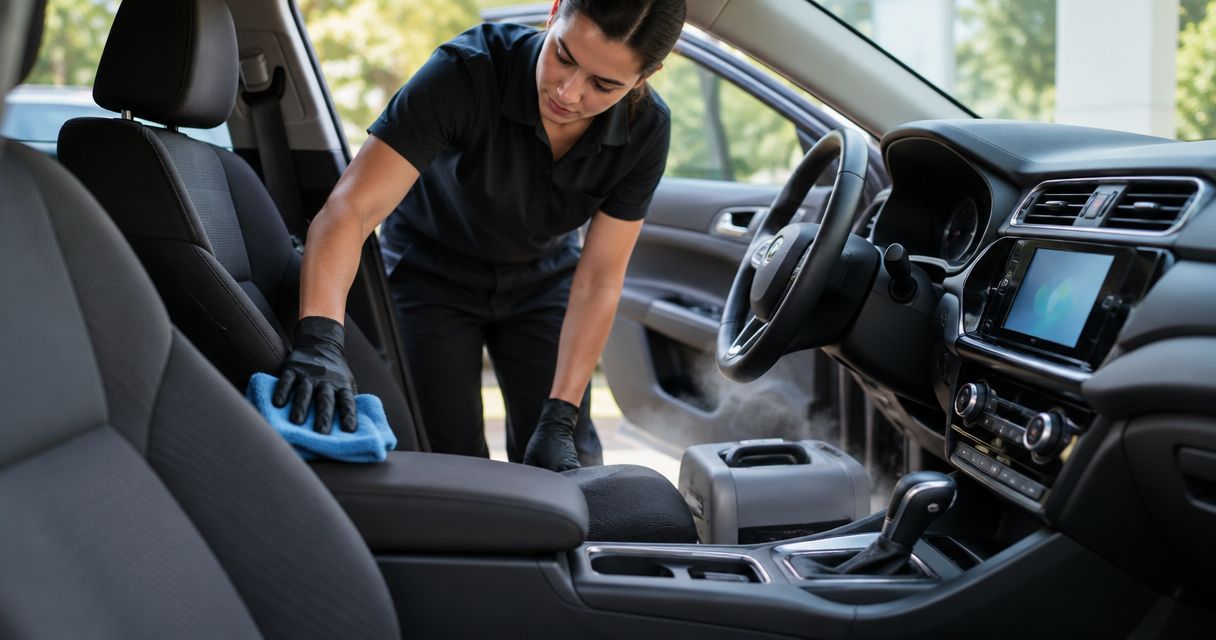
Yes, interior detailing can remove cigarette smoke smell when it removes the residue causing the odor, rather than covering it with fragrance. Heavy contamination in seat foam, headliners, carpet backing, or ventilation components can require additional cleaning or replacement beyond a standard detail. For a smoke-smelling car in 2026, book an inspection and source-focused cleaning—not a guaranteed result based on scent alone.
- Can interior detailing remove smoke smell? Yes, but embedded contamination can require more than surface cleaning.
- Kleandetail offers vehicle detailing in Oak Lawn; ask which smoke-contaminated areas the proposed service covers.
- Clean upholstery, carpet, hard surfaces, and accessible residue before considering additional odor treatments.
- A pleasant fragrance does not prove cigarette residue is gone.
Can interior detailing remove cigarette smoke smell?
Interior detailing removes cigarette smoke odor by cleaning the surfaces and materials that hold tobacco residue. The result depends on where that residue has settled and whether the cleaning reaches it. A vacuum and dashboard wipe address only part of the problem.
If you are arranging vehicle detailing with Kleandetail, describe the smoking history and ask for an inspection before choosing the scope. The shop offers full vehicle detailing in Oak Lawn, Illinois; confirm what the proposed service includes rather than assuming smoke treatment is part of every detail.
| Approach | Best for | Main benefit | Main limitation |
|---|---|---|---|
| Surface cleaning | Accessible hard-surface residue | Removes contamination from cleaned surfaces | Does not reach seat foam or carpet backing |
| Upholstery and carpet cleaning | Contaminated fabric that tolerates wet cleaning | Removes soil and residue from treated material | Overwetting creates drying problems; embedded residue can remain |
| Material-safe headliner cleaning | Residue on the ceiling fabric | Addresses a frequently overlooked surface | Aggressive moisture or heat can damage the headliner |
| Ventilation inspection | Odor associated with airflow | Helps identify a filter or ventilation-related source | A cabin filter change does not clean the entire system |
| Component replacement | Material that remains contaminated after appropriate cleaning | Removes the affected material itself | More invasive than cleaning and requires separate evaluation |
Choose cleaning by the affected material, not by the strongest-smelling chemical. No single approach in this table covers every place cigarette residue can collect.
Why this matters
Cigarette smoke leaves residue on upholstery, glass, trim, and other interior surfaces. Some of that residue can remain after the visible ash and debris are gone. That is why an interior can look clean while still smelling like smoke.
Odor also is not a reliable measure of exposure. The CDC describes thirdhand smoke as tobacco chemicals left on surfaces; a cabin that smells better is not proof that every contaminant has been removed. Keep the goal precise: remove residue, identify remaining sources, and avoid promising that smell alone establishes safety.
For a used-car purchase in 2026, judge the cabin without an air freshener and with permission to inspect it thoroughly. A fragrance-heavy interior makes the original odor harder to assess, not easier to resolve.
How a smoke-focused interior detail should proceed
A useful cleaning plan follows the contamination through the cabin. Ask the detailer to explain what will be cleaned, what needs gentler treatment, and what falls outside the service before work begins.
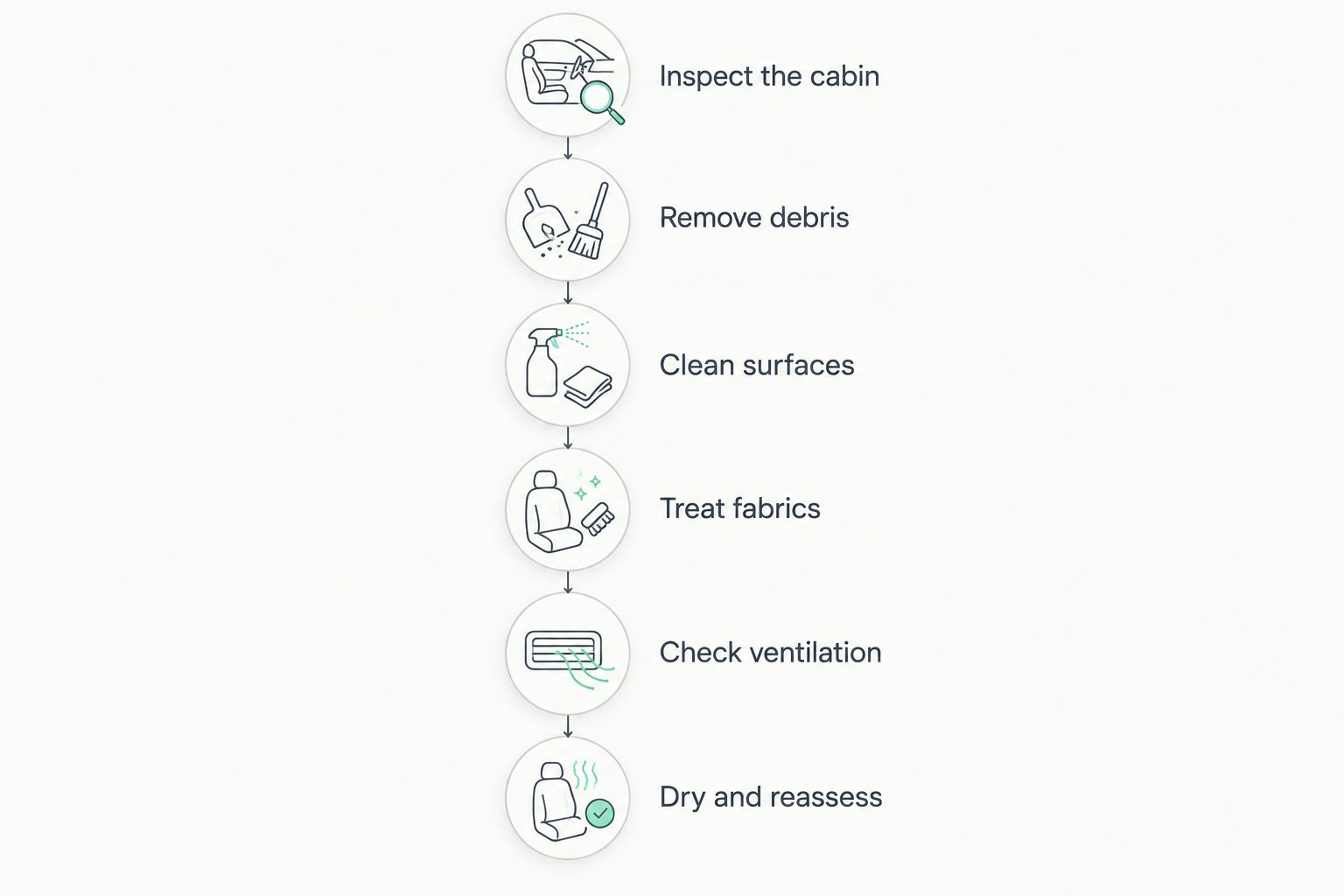
Inspect the cabin
Describe whether smoking happened regularly, whether the vehicle was recently purchased, and what cleaning has already been attempted. Tell the detailer if the smell changes when the fan starts or after the car has been closed.
Inspection should include the seats, carpets, mats, headliner, storage areas, glass, and accessible ventilation openings. Ask the detailer to distinguish cigarette odor from dampness or another source; treating the wrong problem leaves the original complaint unresolved.
Remove debris
Empty the cabin and remove ash, cigarette ends, loose debris, and contaminated personal items. Check ashtrays, console compartments, seat tracks, and spaces beneath removable mats.
Vacuuming prepares surfaces for further cleaning, but it does not replace it. Smoke residue attached to fabric or trim requires a cleaning method suited to that material.
Clean surfaces
Clean glass, dashboards, door panels, consoles, and other compatible hard surfaces with material-appropriate products. Include less obvious contact areas such as handles and storage compartments.
Avoid treating every surface as interchangeable. Screens, coated trim, leather finishes, and fabric need different care; follow the vehicle manufacturer's instructions and the cleaner's label. Test an inconspicuous area before broader use.
Treat fabrics
Clean removable mats, carpeting, and upholstery according to their construction and condition. Where suitable, extraction helps remove cleaning solution and loosened contamination instead of leaving them in the fabric.
The headliner needs separate judgment. Excess moisture, aggressive scrubbing, or heat can damage fabric or adhesive, so soaking the ceiling is not a sensible shortcut. Ask what can be cleaned safely and what limitations remain.
Check ventilation
Inspect the cabin air filter according to the vehicle's service instructions and replace it when indicated. A contaminated filter is one possible contributor, not an explanation for every smoke-smelling cabin.
If the odor is strongest with the fan running, discuss further ventilation inspection. Spraying fragrance into vents does not establish that the underlying source has been removed, and a detail does not automatically include mechanical HVAC service.
Dry and reassess
Allow cleaned materials to dry fully before evaluating the result. Moisture and cleaning-product fragrance make it harder to separate the original smoke odor from temporary smells introduced during the work.
Reassess the seats, carpet, headliner, and airflow separately. If odor remains, identify the affected area before repeating the entire treatment. The next step should follow the remaining source, not simply repeat the same deodorizer.
Why smoke-removal results vary
The same cleaning package does not produce the same result in every vehicle. In 2026, assess the actual cabin condition rather than choosing a service solely because its name includes deep cleaning or odor removal.
- Smoking history: Repeated smoking creates more opportunities for residue to accumulate throughout the cabin. Describe the history you know without guessing what happened before you owned the car.
- Material construction: Fabric, foam, carpet backing, leather finishes, and plastic respond differently to cleaning. Surface access does not mean the underlying material is clean.
- Affected areas: A contaminated headliner or hidden carpet backing needs a different plan from residue on glass. A narrow cleaning scope can leave another source untouched.
- Previous treatments: Fragrance and earlier cleaning products can complicate odor assessment. Tell the detailer what has already been applied.
- Continued exposure: Smoking in the vehicle after cleaning introduces new contamination. Keeping the cabin smoke-free is part of preventing the problem from returning.
These factors explain why a responsible inspection matters more than an unconditional promise. Ask which limitations apply to your vehicle and what happens if the first cleaning leaves a localized odor.
What should you ask before booking smoke-odor cleaning?
Ask for a written scope that separates ordinary interior cleaning from additional odor-related work. You need to know what the service covers, what requires authorization, and which results the provider will assess afterward.
Use these questions when discussing a vehicle in 2026:
- Does the service include the headliner, seat belts, carpets, mats, and storage compartments?
- Which materials will be extracted, and which require a lower-moisture method?
- Is cabin-filter inspection included, or does that need a separate service appointment?
- How will the interior be dried before pickup?
- Will fragrance be used, and can the result be assessed without it?
- What is the next step if a specific material still smells after cleaning?
Kleandetail is best for Oak Lawn car owners seeking local vehicle detailing. Confirm smoke-specific scope directly; the availability of general detailing does not establish a particular odor-treatment method or removal guarantee.
Discuss your vehicle's detailing needs
Describe the smoke odor and ask which interior areas the proposed service covers.
Can detailing permanently remove cigarette smell?
Interior detailing can remove cigarette smell without recurrence when the odor-producing contamination is removed and smoking does not resume. A permanent outcome cannot be established immediately after fragrance or deodorizer is applied.
Give the cleaned cabin a fair assessment after it is dry and has been used under normal conditions. Check with and without ventilation running. If the smell returns, have the remaining source inspected rather than assuming the entire detail failed or booking the same treatment automatically.
Does an ozone treatment replace interior cleaning?
Ozone treatment does not replace removing cigarette debris and cleaning contaminated materials. The U.S. Environmental Protection Agency warns that ozone is a lung irritant and that concentrations within public-health limits have little potential to remove many indoor contaminants.
Do not run an ozone generator in an occupied vehicle or treat the absence of odor as proof that the cabin is safe to enter. If a provider proposes ozone, ask about the reason for using it, material compatibility, and the documented ventilation and re-entry procedure. Do not make an ozone machine your first response to a dirty, smoke-contaminated interior.
Will cigarette smell disappear if you replace the cabin filter?
Replacing the cabin filter alone will not remove residue from seats, carpeting, headliners, or trim. Filter service addresses the filter, not the whole interior.
Follow the vehicle manufacturer's filter instructions and investigate odor associated with airflow separately. If the seats still smell with the fan off, a new filter does not resolve that source.
How should you judge the result after pickup?
Assess the interior with the windows closed and without adding your own fragrance. Check distinct areas rather than making a judgment from the driver's seat alone. The aim is to locate anything that needs follow-up.
For a 2026 used-car handover or trade-in, request the cleaning scope and any recommended follow-up in writing. Keep that record with the vehicle's preparation notes; it describes the work without turning odor reduction into an unsupported claim of complete decontamination.
If a particular seat, floor area, or ceiling section still smells, report that location to the provider. Specific feedback gives the next inspection a useful starting point and avoids treating every remaining smell as an identical problem.
FAQ
Can interior detailing remove smoke smell from a used car?
Yes, interior detailing can remove smoke smell by removing the residue responsible for it. Embedded contamination in foam, carpet backing, or other inaccessible materials can require additional work or replacement.
Will steam cleaning get cigarette smell out of car seats?
Steam cleaning alone does not guarantee cigarette-odor removal. The cleaning method must suit the seat material, remove contamination, and avoid damage from excessive heat or moisture.
Can cigarette smell come back after a detail?
Yes, cigarette smell can return if residue remains or smoking resumes. Reinspect the affected area after the interior is fully dry instead of immediately repeating a deodorizer treatment.
Does leather hold cigarette smoke smell?
Yes, leather seating and its surrounding seams, backing, and padding can contribute to cigarette odor. Use cleaning methods approved for the finish rather than saturating the seat.
Should I replace the headliner to remove smoke odor?
Headliner replacement is not automatically necessary for smoke odor. Start with an assessment of safe cleaning options and consider replacement when the affected material cannot be cleaned adequately without damage.
Is a car safe for children once the smoke smell is gone?
The absence of smoke smell does not prove that tobacco residue has been eliminated. Keep the vehicle smoke-free and do not use fragrance or odor reduction as evidence of complete decontamination.
Does Kleandetail offer interior detailing in Oak Lawn?
Kleandetail offers full vehicle detailing in Oak Lawn, Illinois. Ask directly whether the proposed service covers your vehicle's smoke-contaminated materials and what follow-up is recommended.
One last thing
Ask to assess the cabin without added fragrance. A pleasant scent makes pickup more agreeable, but it does not show which contaminated surfaces were cleaned. A clear scope, fully dried materials, and a source-by-source reassessment tell you more than a strong fresh smell.


