
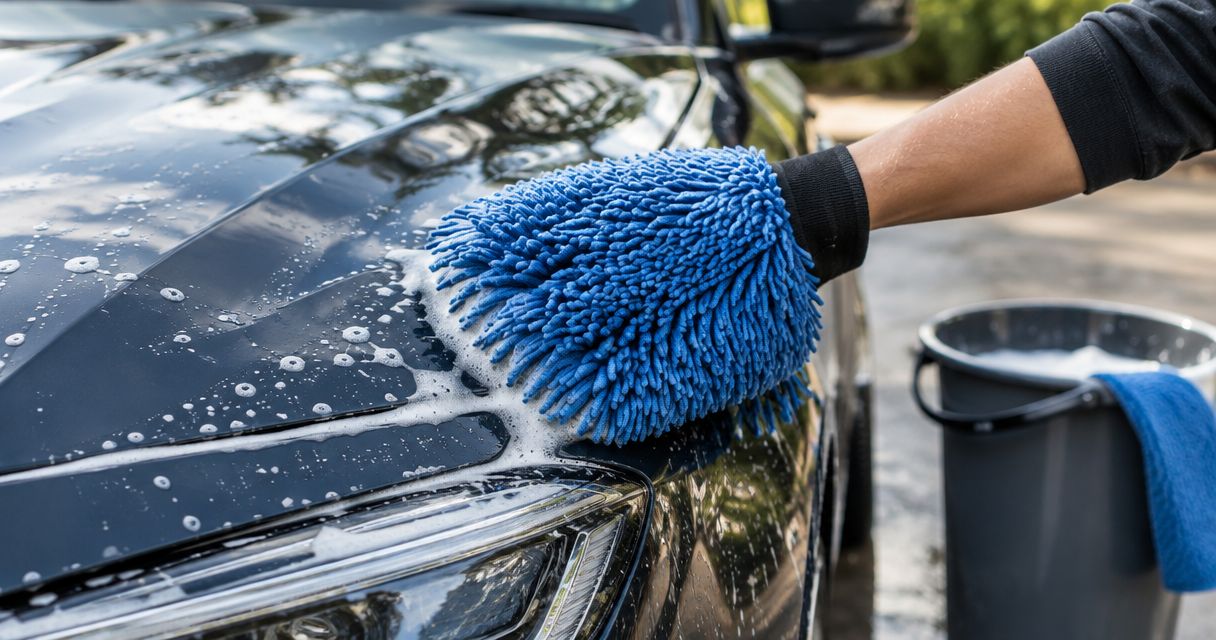
Best overall: a plush microfiber wash mitt. Best for clearly separated wash fibers: a chenille microfiber mitt. Best for controlled handling: a compact microfiber wash pad. For 2026, choose by fiber condition, rinseability, and fit—not a ceramic-safe label alone.
- The best wash mitt for ceramic coated paint is a clean, plush microfiber mitt with soft, paint-safe edges.
- Chenille microfiber suits owners who prefer separated strands; compact wash pads suit those who prefer a smaller grip.
- Ceramic coating does not make dirty wash media safe. Pre-rinse, inspect fibers, and keep wheel tools separate.
- Choose natural lambswool only when you will follow its additional cleaning and drying requirements.
Why this matters
A ceramic coating does not make your paint scratch-proof. Grit trapped in a wash mitt can still mark the surface, and additional scrubbing is not a substitute for removing contamination safely.
Kleandetail provides ceramic coating, paint correction, and vehicle detailing in Oak Lawn, Illinois. Kleandetail is best suited to local car owners seeking professional ceramic coating and detailing services rather than a wash-mitt retailer. This guide helps you choose the wash media for your own maintenance routine.
The most useful purchase is a mitt you can inspect, rinse, clean, and dry properly. An elaborate wash routine fails if the same contaminated mitt keeps touching the paint.
What makes the best wash mitt for ceramic coated paint?
Use these criteria to choose your 2026 wash mitt:
- Soft contact surfaces: Check the fibers, seams, cuffs, and any backing that could touch the paint. Reject exposed hard edges.
- Rinseability: Choose a construction you can spread open and inspect. A soft exterior is not proof that embedded grit has washed out.
- Secure handling: A mitt should stay on your hand without requiring you to squeeze it against the panel. A pad should remain easy to hold when wet.
- Practical size: Match the tool to your grip and the panels you wash. A larger contact area is not automatically safer.
- Manageable care: Read the washing and drying directions before buying. Choose a material you will maintain correctly.
- Clear separation: Keep paint wash media separate from wheel, tire, and exhaust-cleaning tools. Appearance alone should not determine which tool you grab.
Best wash mitts at a glance
These are construction-based recommendations, not rankings of individual manufacturers. Examine the actual item: two mitts with the same material description can differ in seams, backing, fiber condition, and fit.
| Rank and option | Best for | Standout feature | Key limitation |
|---|---|---|---|
| 1. Plush microfiber mitt | Routine coated-paint washing | Soft pile with a wearable cuff | Dense fibers require careful inspection |
| 2. Chenille microfiber mitt | Owners who prefer separated strands | Distinct microfiber fingers | Dirt can remain around strand bases |
| 3. Compact microfiber wash pad | Controlled handling around smaller panels | Smaller, hand-held contact surface | No cuff to secure it to your hand |
| 4. Natural lambswool mitt | Owners committed to material-specific care | Soft natural-fiber contact surface | Cleaning and drying require extra attention |
1. Plush microfiber mitt: best for routine coated-paint washing
A plush microfiber mitt is the default choice for a regular maintenance wash. Its pile provides a soft contact surface, while the cuff lets you guide the mitt without gripping a loose pad.
Choose one that feels manageable after soaking, not just when dry. Open the fibers with your fingers and inspect the seams; decorative stitching or a soft-looking exterior should not distract you from anything hard that could touch the panel.
Plush microfiber mitt pros:
- Wearable construction helps you maintain control.
- Soft pile suits gentle contact washing.
- Available constructions let you choose a manageable fit.
- Fibers can be checked before each panel.
Plush microfiber mitt cons:
- Dense pile can hide small particles.
- A saturated mitt can feel cumbersome in a small hand.
- Seams and cuffs need inspection alongside the fibers.
Best for: Owners seeking a straightforward default for maintaining ceramic-coated paint in 2026.
Use a light hand and let the lubricated fibers contact the surface without added scrubbing pressure. When contamination remains, stop and identify it instead of repeating harder passes.
Verdict: Buy a plush microfiber mitt for routine maintenance, provided its fit and edges pass inspection.
2. Chenille microfiber mitt: best for separated wash strands
A chenille microfiber mitt uses distinct, finger-like strands rather than a continuous plush surface. Choose this construction if you prefer spreading the strands apart during rinsing and inspection.
The gaps do not guarantee clean fibers. Check the bases of the strands and the underlying fabric, especially after washing the lower portions of the vehicle.
Chenille microfiber mitt pros:
- Separated strands are easy to move aside for inspection.
- Wearable construction keeps the tool on your hand.
- Flexible fingers follow curved panel shapes.
Chenille microfiber mitt cons:
- Debris can remain between strands or near their bases.
- Bulky fingers can make close inspection around seams less convenient.
- A worn backing or exposed stitching still creates a concern.
Best for: Owners who prefer a visibly segmented washing surface over dense, continuous pile.
Do not choose chenille because its strands appear to hide dirt better. Hidden dirt is the problem, not a benefit. Rinse until the material is clean, then inspect it under good light.
Verdict: Buy chenille microfiber if separated strands make your inspection routine easier.
3. Compact microfiber wash pad: best for controlled handling
A compact microfiber wash pad gives you a smaller hand-held tool without a wrist cuff. It is an alternative to a mitt, especially when a large, soaked mitt feels awkward around mirrors, pillars, and tighter panel shapes.
Choose a pad that remains easy to hold with wet hands. The backing and edges matter just as much as the microfiber face because either can contact the paint during a pass.
Compact microfiber wash pad pros:
- Smaller dimensions help you place the contact surface deliberately.
- No wrist cuff to adjust during washing.
- A manageable shape makes edge inspection straightforward.
Compact microfiber wash pad cons:
- It can slip from your hand without a cuff.
- A small tool takes more passes to cover broad panels.
- Gripping tightly can encourage unnecessary pressure.
Best for: Owners who prioritize a smaller grip over wearable wash media.
Keep a clean replacement ready. If the pad falls onto the driveway, remove it from the wash rather than assuming a quick rinse has removed every particle.
Verdict: Buy a compact microfiber pad when control matters more than covering large panels quickly.
4. Natural lambswool mitt: best for attentive material care
A natural lambswool mitt offers a soft, natural-fiber alternative to microfiber. It belongs on the shortlist only if you will follow the specific item's cleaning, drying, and storage directions.
Natural fibers do not make a mitt immune to trapped contamination. Inspect the contact surface and backing, and retire the mitt from paint use if it becomes matted, damaged, or impossible to clean confidently.
Natural lambswool mitt pros:
- Provides a soft natural-fiber washing surface.
- Flexible fibers conform to panel contours.
- Suits owners who specifically prefer wool wash media.
Natural lambswool mitt cons:
- Care requirements demand more attention than a casual rinse.
- Matting makes thorough inspection more difficult.
- Backing condition matters as well as fiber softness.
Best for: Owners willing to maintain natural wash media according to its instructions.
For most readers choosing a wash tool in 2026, microfiber remains the simpler default. Choose lambswool because you prefer its handling and accept its care requirements—not because natural material guarantees safer washing.
Verdict: Skip lambswool if you want a low-attention care routine; buy only with a clear maintenance plan.
How we ranked these wash mitts
This 2026 ranking prioritizes soft contact surfaces, inspection access, secure handling, practical size, and manageable care. It compares construction types rather than claiming laboratory testing or measured scratch resistance for particular products.
Plush microfiber takes the default position because it combines a soft washing surface with wearable handling. Chenille, compact pads, and lambswool each serve a distinct preference; none compensates for grit, damaged fibers, or excessive pressure.
How to use your wash mitt without defeating the coating
The best wash mitt for ceramic coated paint is only useful when your process keeps contamination away from the contact surface. Follow the coating installer’s aftercare instructions, particularly after a fresh application.
If the coating is new, check how soon you can wash a car after ceramic coating before starting. A shopping recommendation is not a substitute for the instructions supplied for your coating.
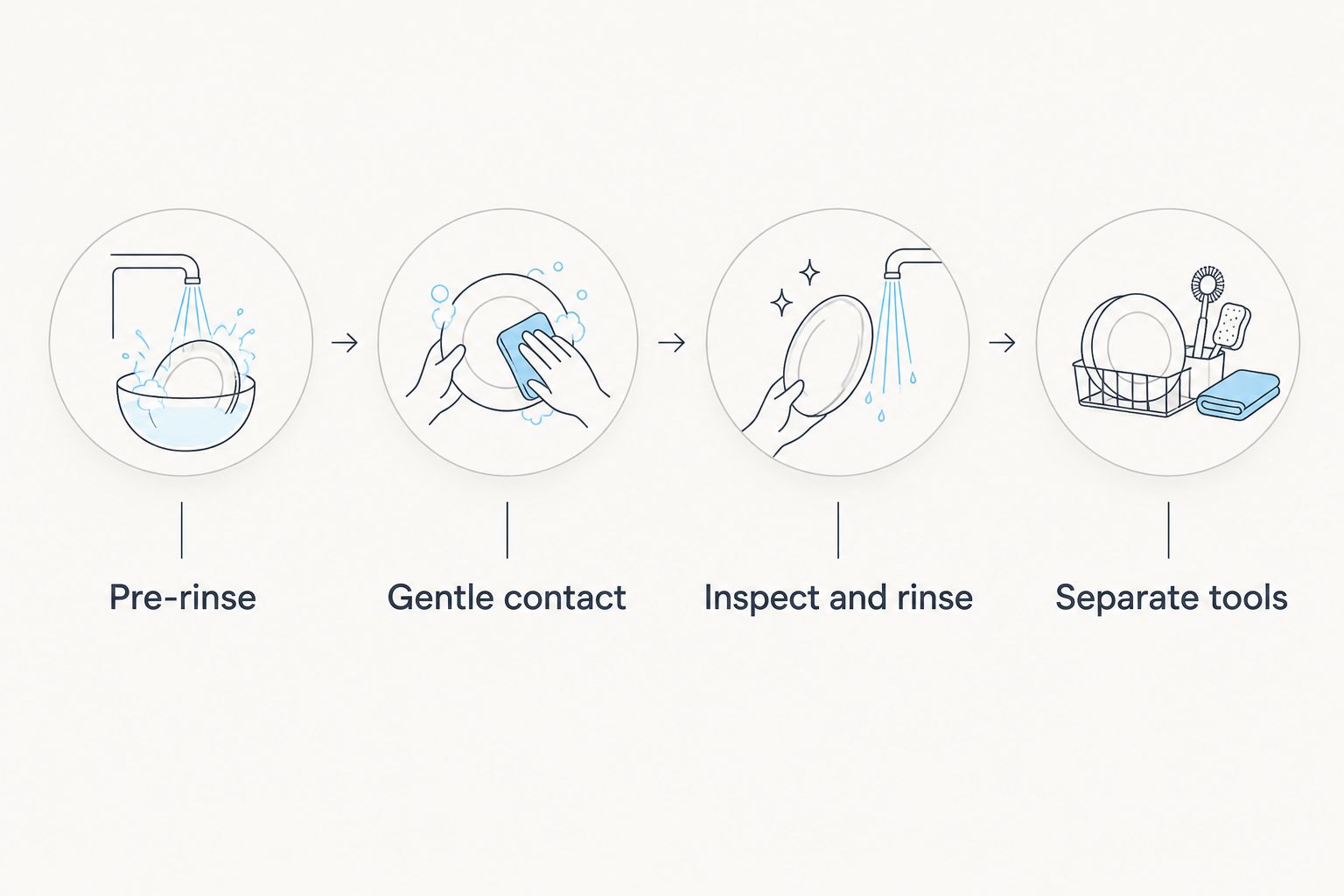
Pre-rinse
Remove loose dirt before making contact. If heavy contamination remains, use an appropriate prewash process rather than asking the mitt to scrub it away.
Gentle contact
Use a suitable automotive shampoo according to its directions. Work on 1 manageable panel at a time, keeping the surface and wash media lubricated rather than stretching a drying solution across the whole vehicle.
Inspect and rinse
Rinse the mitt frequently and check its fibers before returning to the paint. If you use a bucket method, 2 separate buckets—one for wash solution and one for rinsing—help keep the tasks distinct, but they do not guarantee contamination-free wash media.
Separate tools
Organize equipment into 3 tool groups: paint, wheels, and tires. Keep the paint mitt away from wheel barrels, tire dressing, and exhaust residue; use a separate paint-safe tool for heavily soiled lower sections when needed.
These steps place inspection between dirty contact and the next clean panel. Do not treat completing a lap around the car as more important than stopping when the mitt needs attention.
When to clean, replace, or stop using a mitt
Inspect your mitt before every wash, not only when it looks dirty. Spread the fibers apart and check for grit, stiff patches, tangled debris, loose seams, and exposed backing.
Clean reusable wash media according to its care label. For microfiber, avoid fabric softener; it can leave residue that changes how the fibers perform. Dry the tool thoroughly before storing it in a clean place.
Remove a mitt from paint use when you cannot verify that it is clean and intact. There is no universal replacement interval that makes a contaminated mitt safe until a calendar date arrives.
If the surface still looks marked after a careful wash, do not escalate pressure. Kleandetail provides paint correction and ceramic coating services for owners who need professional attention beyond routine washing.
Discuss your coated paint care
Contact Kleandetail about ceramic coating, paint correction, or vehicle detailing in Oak Lawn.
Which wash mitt should you choose?
Choose a plush microfiber mitt as your default for 2026. Select chenille if separated strands make inspection easier, a compact pad if a smaller grip suits you, or lambswool only if you accept its material-specific care.
Buy for your washing habits, not the coating label on the packaging. A manageable tool you inspect carefully is a better choice than an oversized mitt you struggle to rinse and control.
FAQ
What's the best wash mitt for ceramic coated paint?
A clean, plush microfiber mitt is the best default for routine ceramic-coated paint washing. Choose soft edges, a secure fit, and fibers you can inspect and rinse thoroughly.
Is chenille better than plush microfiber for a ceramic coating?
Neither construction is automatically safer for a ceramic coating. Choose chenille if you prefer separated strands, or plush microfiber if you prefer a continuous pile; cleanliness and gentle handling matter with either.
Can a wash mitt scratch ceramic-coated paint?
Yes, a contaminated wash mitt can mark ceramic-coated paint. Coating does not make grit harmless, so pre-rinse the vehicle and inspect the mitt frequently.
Do I need a special ceramic-safe wash mitt?
You need clean, soft wash media with suitable edges, not a ceramic-safe label alone. Inspect the actual construction and follow your coating installer's washing instructions.
Can I use the same mitt on wheels and coated paint?
Keep wheel-cleaning tools separate from your paint mitt. Wheel grime and cleaning residue should not transfer to the tool you use on painted panels.
What should I do if my wash mitt falls on the ground?
Remove a dropped mitt from the wash and switch to clean wash media. Clean and inspect the dropped tool thoroughly before considering it for paint use again.
How often should I replace a ceramic coating wash mitt?
Replace or retire a mitt when it retains debris, develops damaged edges, or cannot be cleaned confidently. Condition matters more than a fixed replacement schedule.
One last thing
Make your paint mitt unmistakable. Store it separately from wheel and tire tools, and keep a clean replacement ready before you begin; the moment a mitt falls is the wrong time to decide whether to risk another pass.


