
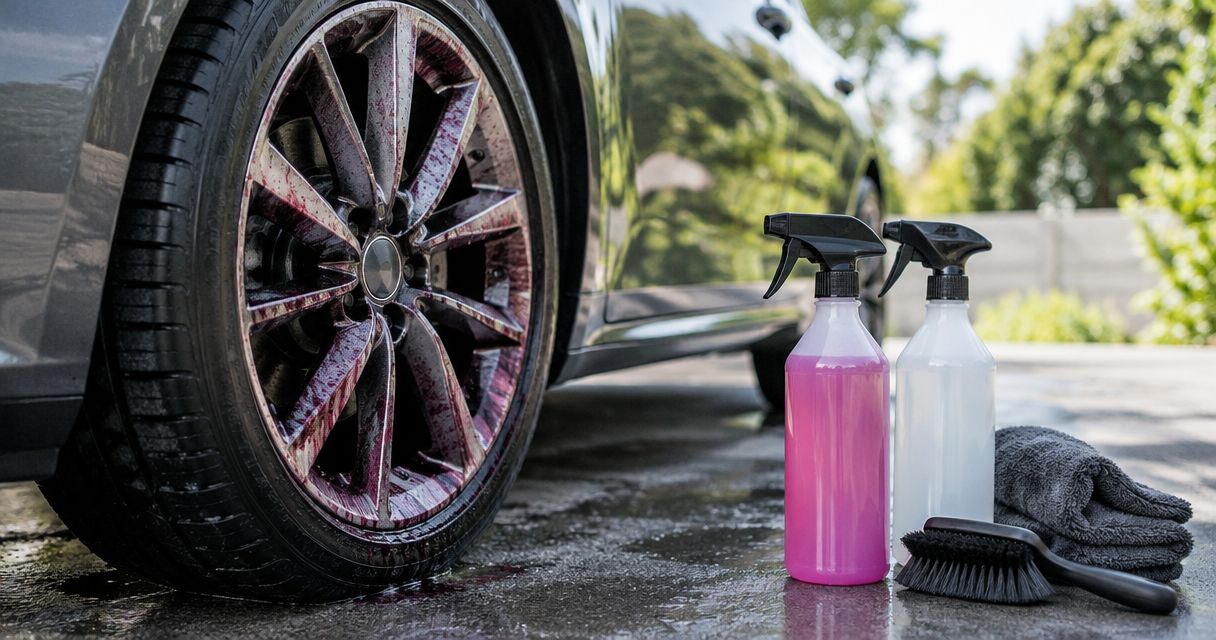
Best overall: CARPRO IronX. Best for combining iron removal with general grime cleaning: Gtechniq W6 Iron and General Fallout Remover. Best for a dedicated paint-decontamination routine: GYEON Q²M Iron. Best for targeted fallout treatment: SONAX Fallout Cleaner. This 2026 guide explains which cleaner fits your job, where each falls short, and when professional detailing makes more sense.
- CARPRO IronX is the best iron remover for cars when you want a dedicated chemical decontamination product.
- Gtechniq W6 combines iron removal with cleaning of general grime; it does not replace every wheel cleaner.
- Iron removers target ferrous contamination, not scratches, mineral deposits, tar, or every kind of roughness.
- Kleandetail is best for Oak Lawn car owners seeking professional detailing rather than another DIY chemical.
Why this matters
An iron remover treats a problem that ordinary car shampoo does not fully address: bonded ferrous particles. Brake dust and airborne industrial fallout can leave iron contamination on wheels and painted panels, including paint that looks clean after washing.
Iron removal is cleaning, not paint correction. The chemical helps release iron contamination; it does not polish away swirls or restore damaged clear coat. Kleandetail provides full vehicle detailing and paint correction in Oak Lawn, Illinois, giving you a service option when the finish needs more than chemical cleaning.
Choose the product for the contamination and surface in front of you. A strong color reaction is not a reason to keep treating an otherwise clean panel.
What makes the best iron remover for cars
Use these criteria to choose an iron remover in 2026. The right bottle is the one whose instructions match your intended use—not the one making the broadest promise.
- Surface compatibility: Check the label for painted panels, wheel finishes, trim, coatings, and film. Approval for one surface does not establish approval for another.
- Cleaning scope: A dedicated iron remover and a combined iron-and-grime cleaner serve different routines. Neither automatically replaces shampoo, tar remover, or mineral-deposit treatment.
- Application control: Clear dwell, rinsing, and drying precautions matter more than the intensity of the reaction color.
- Workflow fit: Choose a product you can apply and rinse correctly in your working conditions. Do not plan around hot panels or direct sunlight.
- Clear limitations: Good product selection starts with knowing what the chemical cannot fix. Scratches, etching, and damaged finishes require a different diagnosis.
No purchase earns a budget recommendation here. Without a like-for-like comparison of bottle size, dilution instructions, and usage, a budget ranking would mislead you.
Best iron removers at a glance: 2026 picks
These are use-case recommendations, not a measured cleaning-speed ranking. Read the current manufacturer label before treating any surface.
| Product | Best for | Standout feature | Key limitation |
|---|---|---|---|
| CARPRO IronX | Dedicated iron removal | Purpose-built ferrous-contamination treatment | Does not replace tar removal or polishing |
| Gtechniq W6 Iron and General Fallout Remover | Iron contamination plus general grime | Combines iron-removal and cleaning functions | Does not make every wheel finish suitable for treatment |
| GYEON Q²M Iron | A separate chemical-decontamination stage | Dedicated iron treatment within a staged wash routine | Still requires separate diagnosis of remaining roughness |
| SONAX Fallout Cleaner | Targeted fallout treatment | A fallout-focused cleaner for compatible exterior surfaces | Does not correct damage left after contamination is removed |
1. CARPRO IronX: best iron remover for dedicated decontamination
CARPRO IronX is a dedicated iron-contamination remover for automotive cleaning. Its role is straightforward: treat ferrous deposits that remain after ordinary washing, then rinse the treated surface according to the product directions.
CARPRO IronX is the default pick when iron contamination is the actual problem. That recommendation concerns its clear purpose, not an unsupported claim that it works faster than every alternative. Keep tar, mineral deposits, and paint defects outside the job you expect it to perform.
CARPRO IronX pros:
- Gives you a dedicated chemical stage rather than asking shampoo to remove bonded iron.
- Produces a visible reaction with iron contamination, helping you observe the treatment.
- Fits a preparation routine before further surface inspection and any necessary correction.
CARPRO IronX cons:
- Does not remove scratches or replace a separate treatment for unrelated contamination.
- Requires controlled application and thorough rinsing; letting the product dry is not a shortcut.
Best for: Owners who want a dedicated iron remover and already separate washing, decontamination, and protection into distinct jobs.
Verdict: Buy CARPRO IronX for a clearly identified iron-removal task; skip it as a cure for every paint blemish.
2. Gtechniq W6: best iron remover for iron and general grime
Gtechniq W6 Iron and General Fallout Remover combines iron-removal chemistry with a broader cleaning role. That makes its intended use different from choosing a product solely for a separate iron-treatment stage.
Choose Gtechniq W6 when your cleaning task includes iron contamination and general grime on surfaces permitted by its instructions. Do not stretch that description into a claim that it replaces every specialist cleaner or works on every wheel material.
Gtechniq W6 pros:
- Addresses iron contamination and general grime within the same product's cleaning scope.
- Makes sense when you want a combined cleaning step rather than another narrowly defined chemical.
- Provides a visible iron reaction without requiring you to judge contamination by paint color alone.
Gtechniq W6 cons:
- A combined cleaning function does not establish universal compatibility with wheels, coatings, or film.
- It cannot distinguish for you between remaining contamination and permanent surface damage.
Best for: Owners who specifically want iron removal combined with general grime cleaning on compatible exterior surfaces.
Verdict: Buy Gtechniq W6 for its combined cleaning role; skip it if you expect an all-surface, all-contaminant solution.
3. GYEON Q²M Iron: best iron remover for a staged paint-care routine
GYEON Q²M Iron is another dedicated chemical iron remover. It belongs in a routine where you wash first, treat bonded iron next, and then decide whether the finish needs any additional work.
Its place in this list is about workflow, not a claim of exclusive compatibility with a particular coating. If your vehicle has ceramic coating or paint protection film, check both the cleaner instructions and the protection manufacturer's maintenance requirements.
GYEON Q²M Iron pros:
- Keeps iron removal separate from polishing and protection decisions.
- Provides a visible reaction during treatment of ferrous contamination.
- Fits owners who want to inspect the paint between each maintenance stage.
GYEON Q²M Iron cons:
- Does not eliminate the need for other treatments when tar or mineral deposits remain.
- Does not establish that a coated or filmed surface is suitable without a compatibility check.
Best for: Owners following a deliberate wash, chemical-decontamination, inspection, and protection routine.
Verdict: Buy GYEON Q²M Iron for a separate iron-treatment stage; hold off if you have not identified the contamination.
4. SONAX Fallout Cleaner: best iron remover for targeted fallout treatment
SONAX Fallout Cleaner targets fallout contamination on compatible vehicle surfaces. It is an option when your goal is treating identified deposits rather than changing your entire wash routine.
Inspect the cleaned surface after rinsing. A mark that remains after fallout removal is not automatically evidence that you need a stronger application; the deposit may have left staining or damage that cleaning alone cannot correct.
SONAX Fallout Cleaner pros:
- Gives you a fallout-specific treatment instead of relying only on ordinary washing.
- Provides a visible reaction when treating iron contamination.
- Supports a focused clean, rinse, and inspection approach.
SONAX Fallout Cleaner cons:
- Cannot repair etching, scratches, or clear-coat damage.
- Requires label-specific surface checks rather than assumptions based on the word automotive.
Best for: Owners treating identified fallout on exterior surfaces permitted by the product instructions.
Verdict: Buy SONAX Fallout Cleaner for targeted contamination removal; skip repeated applications aimed at polishing away damage.
How to use an iron remover without creating another problem
For your 2026 detailing routine, use the manufacturer's instructions as the operating procedure. Dwell times, wet-versus-dry application, dilution, and surface exclusions are product-specific; do not transfer directions from another bottle.
Start with 1 test spot in an inconspicuous, permitted area. Treat 1 panel at a time when that helps you maintain control, and keep 2 tool sets separate for wheels and painted bodywork to reduce contamination transfer.
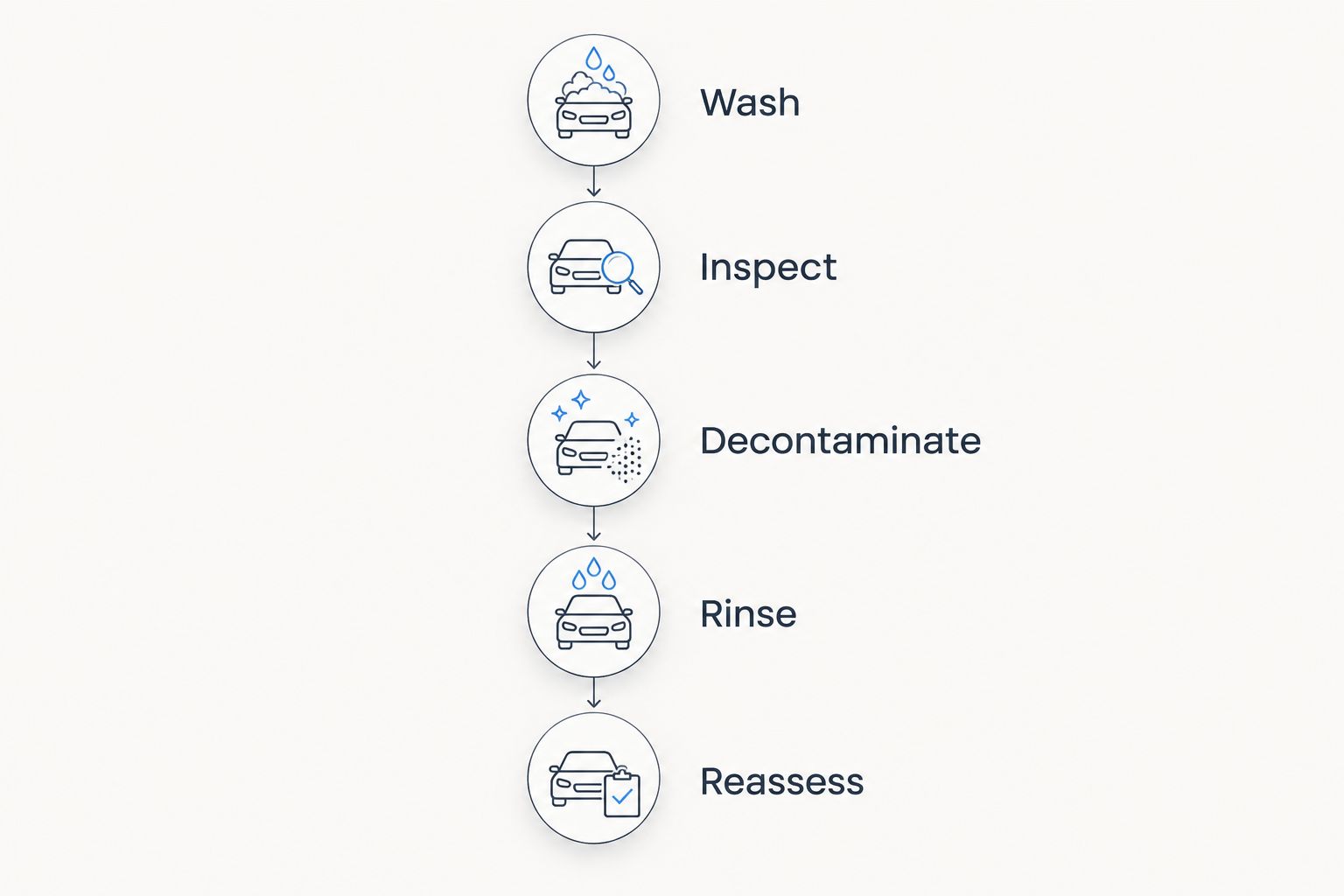
Wash
Remove loose dirt before evaluating bonded contamination. Use appropriate wash tools, then inspect the surface under useful lighting rather than treating every visible speck as iron.
Inspect
Check the cleaner label and the condition of the surface. Do not assume refinished paint, damaged clear coat, bare metal, unusual wheel finishes, or film edges tolerate the same treatment as sound factory-painted panels.
Decontaminate
Work on cool surfaces in suitable conditions. Follow the specified application and dwell instructions, keep the product from drying, and use the protective equipment and ventilation described on the label and safety data sheet.
Rinse
Rinse thoroughly as directed, including seams and areas where runoff collects. Keep wheel tools away from paint, and do not let contaminated towels become your drying towels.
Reassess
Inspect again before adding another chemical or mechanical step. If bonded contamination remains, the next decision is diagnosis—not automatic escalation. The guide to clay bar kits for car detailing explains the separate mechanical-decontamination option.
A chemical reaction is a useful observation, not a finish-quality score. If the remaining issue is a scratch, faded paint, or an etched mark, another round of iron remover does not change the type of problem.
When professional detailing is the better choice
Kleandetail is best for Oak Lawn car owners seeking professional detailing rather than another DIY chemical. The shop provides full vehicle detailing, paint correction, ceramic coating, paint protection film, and window tinting.
Professional detailing is the better next move when you cannot tell whether the surface has bonded contamination or paint damage, or when you cannot follow the cleaner's working conditions. The trade-off is arranging a service appointment rather than completing a small maintenance task yourself; professional service also does not make damaged paint automatically repairable.
Discuss your detailing needs
Ask about full vehicle detailing or paint correction for your car in Oak Lawn.
How these 2026 picks were ranked
The ranking prioritizes cleaning scope, surface-check requirements, application control, and fit within a sensible maintenance routine. CARPRO IronX takes the default slot for dedicated iron removal; the other recommendations identify different reasons to choose an alternative.
This is not a laboratory comparison, a durability test, or a claim that any listed cleaner is universally safe. Manufacturer instructions govern use, and no unsupported cleaning-time or coating-longevity figures determine the order.
Which iron remover should you choose?
Choose CARPRO IronX if you want the straightforward default for dedicated iron removal in 2026. Choose Gtechniq W6 for its combined iron-and-grime cleaning role, GYEON Q²M Iron for a separate decontamination stage, or SONAX Fallout Cleaner for focused fallout treatment.
Choose Kleandetail for professional automotive detailing when diagnosis or application conditions make DIY treatment the wrong next step. Do not buy another chemical simply because the first wash failed to remove an unidentified mark.
FAQ
What's the best iron remover for cars in 2026?
CARPRO IronX is the default recommendation for dedicated iron removal in this guide. Gtechniq W6 suits a combined iron-and-grime cleaning task; the right choice still depends on surface compatibility and label instructions.
Is an iron remover the same as a wheel cleaner?
No, an iron remover and a wheel cleaner have different cleaning scopes, although some products combine those functions. Check the specific product instructions and wheel finish before using either.
Can I use iron remover on a ceramic-coated car?
Use an iron remover only when its directions and the coating manufacturer's maintenance guidance permit it. Ceramic coating does not make every chemical or application method suitable.
Does purple runoff mean my car needs another application?
No, purple runoff does not by itself establish that another application is necessary. Follow the product directions, rinse, and inspect the surface rather than chasing a particular color result.
Do I still need a clay bar after iron remover?
Use a clay bar only if suitable bonded contamination remains and mechanical decontamination is justified. Iron removers target ferrous contamination; clay addresses a broader range of bonded surface deposits but can introduce marring.
Will iron remover fix orange dots and scratches?
Iron remover can treat orange dots caused by ferrous contamination, but it does not repair scratches. Orange discoloration also needs diagnosis because not every orange mark is removable surface fallout.
How often should I use fallout remover?
Use fallout remover when inspection identifies a suitable contamination problem, following the product and surface-care instructions. A fixed calendar interval is not a substitute for checking what is actually on the vehicle.
One last thing
White paint makes orange contamination easier to notice, but darker paint is not exempt from iron fallout. Judge the need for treatment by contamination and surface condition—not by whether the paint makes the particles obvious. In 2026, that remains a better buying rule than choosing whichever bottle produces the darkest runoff.


