
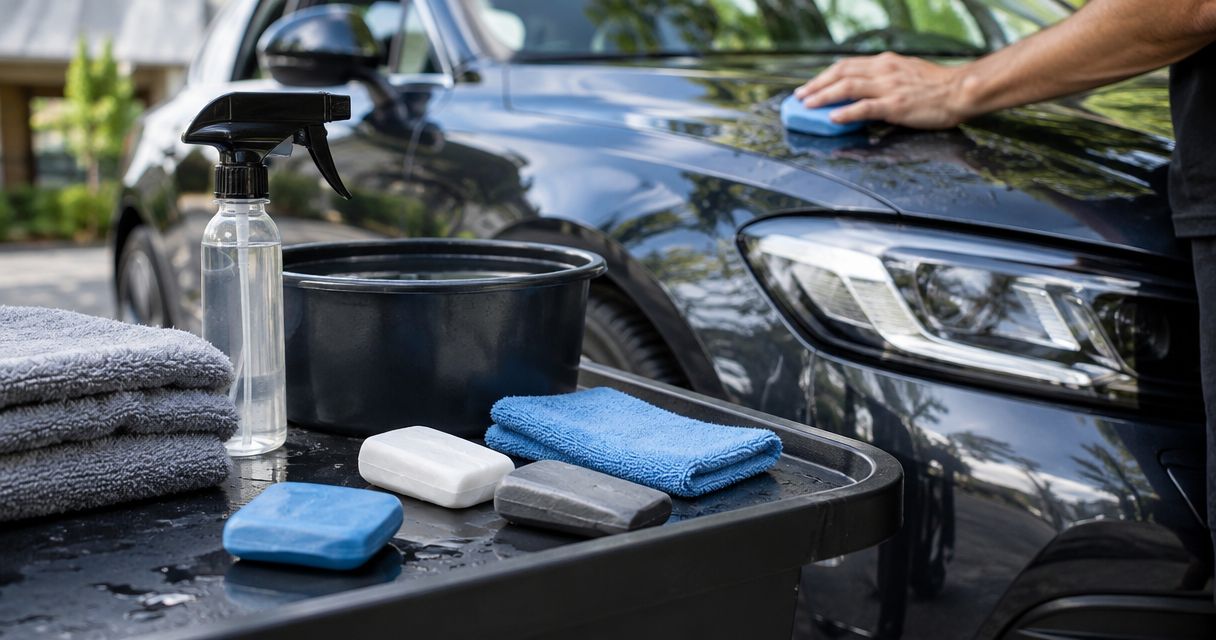
Best overall: a fine-grade clay bar kit with compatible lubricant. Best for large panels: a synthetic clay mitt kit. Best for stubborn contamination before polishing: a medium-grade clay bar kit. This 2026 guide compares kit types by the job they suit, not by unverified product claims.
- The best clay bar kit for cars is a fine-grade kit with compatible lubricant for routine paint decontamination.
- Synthetic clay mitts suit large panels; medium-grade clay belongs in a preparation process that allows for polishing.
- Clay removes bonded contamination, not scratches, swirl marks, or etched water spots.
- Kleandetail provides automotive detailing and paint correction for car owners in Oak Lawn, Illinois.
Why this matters
Clay tackles contamination that remains attached after washing. It is not a substitute for washing, polishing, or paint protection, and using it unnecessarily adds mechanical contact to your finish.
The right kit matches the surface condition and your next step. A car that needs localized decontamination calls for a different approach from a vehicle receiving preparation before paint correction.
Kleandetail is a professional-detailing option for Oak Lawn car owners who want paint correction rather than DIY claying. Kleandetail provides full vehicle detailing, paint correction, ceramic coating, paint protection film, and window tinting; clay kits are DIY tools, not substitutes for those services.
What makes the best clay bar kit for cars?
Use these criteria to choose a kit in 2026. A larger bundle is not automatically a better match.
- Appropriate grade: Start with fine-grade clay for routine contamination. Reserve a more aggressive grade for a specific need, with polishing considered afterward.
- Compatible lubricant: Choose a lubricant approved for the clay material. Do not assume every wash solution or detailing spray is suitable.
- Contamination control: Traditional clay must present a clean working face. Synthetic tools need cleaning and inspection according to their instructions.
- Manageable contact area: A small clay piece suits localized work; a mitt covers broad panels but still needs controlled pressure.
- Clear directions: Instructions should explain preparation, lubricant compatibility, cleaning, storage, and surface exclusions.
- A realistic finish plan: Clay removes bonded deposits. It does not correct scratches, and it can leave marring that needs polishing.
Clay bar kits at a glance
These are buying configurations, not named retail bundles. Check the actual contents and manufacturer instructions before choosing a kit.
| Kit type | Best for | Standout feature | Key limitation |
|---|---|---|---|
| Fine-grade clay bar kit | First-time DIY paint decontamination | Small, foldable working piece for controlled treatment | Dropped or contaminated clay must be discarded |
| Synthetic clay mitt kit | Broad panels on larger vehicles | Hand-worn format covers a wider working area | Broad contact still requires lubrication and careful inspection |
| Medium-grade clay bar kit | Stubborn bonded contamination before polishing | More aggressive mechanical decontamination | Greater concern about marring; not the default maintenance choice |
No kit earns a recommendation simply by including extra bottles. The useful combination is a suitable decontamination tool, compatible lubrication, clear instructions, and a plan for the paint afterward.
1. Fine-grade clay bar kit: best for first-time DIY decontamination
A fine-grade clay bar kit uses a pliable clay material with lubricant to remove bonded surface contamination. You work a manageable piece over washed paint and fold it to expose a clean face as contamination accumulates.
Best for: car owners learning controlled, localized paint decontamination. Its advantage is control: you can work a small area, inspect the clay, and check the result before treating another section.
Fine-grade clay bar kit pros
- A small working piece makes localized treatment straightforward.
- Folding exposes a clean face during use.
- Fine grade is the sensible starting point before considering more aggressive clay.
Fine-grade clay bar kit cons
- A dropped piece must be discarded because it can collect grit.
- The working face needs frequent inspection and folding.
- Fine-grade clay can still mar paint; gentle technique is not a guarantee against marks.
Choose a kit that identifies its lubricant compatibility and explains storage. A towel is useful, but an extra accessory does not compensate for unclear instructions.
For your 2026 buying shortlist, make this the default configuration when washed paint still feels contaminated. If the finish already feels smooth and looks clean, do not clay it merely because a kit is on hand.
Verdict: Buy a fine-grade clay bar kit for a first DIY decontamination job; skip unnecessary treatment on already-clean paint.
2. Synthetic clay mitt kit: best for broad vehicle panels
A synthetic clay mitt uses a manufactured decontamination surface rather than a kneadable clay bar. The hand-worn format suits broad areas such as a hood, roof, or door skin.
Best for: owners treating broad panels on larger vehicles. Choose the format for its working area, not because it eliminates the need for careful technique.
Synthetic clay mitt kit pros
- The mitt format keeps the tool on your hand during use.
- A broad working face suits large, accessible panels.
- The synthetic surface can be cleaned according to its manufacturer's directions.
Synthetic clay mitt kit cons
- A broad surface gives you more contact area to inspect for contamination.
- Tight contours and panel edges require particular care.
- Cleaning, break-in, and surface compatibility instructions vary by tool.
Read the directions before the mitt touches paint. Some synthetic tools specify preparation or break-in steps; follow the instructions for the actual tool rather than a generic routine.
Keep pressure light and the working area lubricated. If the mitt catches, drags, or feels inconsistent, stop and inspect the tool and surface instead of pressing harder.
Verdict: Buy a synthetic clay mitt kit for broad-panel work; skip it if you want to treat only a few small spots.
3. Medium-grade clay bar kit: best for pre-polishing decontamination
A medium-grade clay bar is a more aggressive decontamination option than fine-grade clay. It belongs in a deliberate preparation process when a milder approach does not remove the bonded contamination.
Best for: experienced DIY detailers preparing contaminated paint for polishing. It is not the automatic upgrade for an older car or a finish that looks dull.
Medium-grade clay bar kit pros
- Provides a stronger mechanical option for persistent bonded contamination.
- Works as a targeted preparation step before planned polishing.
- A kneadable bar lets you expose a clean working face throughout treatment.
Medium-grade clay bar kit cons
- More aggressive clay increases concern about visible marring.
- It does not repair scratches, oxidation, or etching.
- It is a poor default when you are not prepared to address the finish afterward.
Start with the least aggressive suitable method, not medium grade by habit. Identify the deposit first: a dedicated, paint-compatible contaminant remover can be more appropriate than additional mechanical rubbing.
If your main concern is a scratch, learn whether paint correction can remove deep scratches before choosing a clay kit. Removing deposits and correcting damage are different jobs.
Verdict: Hold medium-grade clay for a defined pre-polishing need; skip it as a routine maintenance default.
How to use a clay kit without turning cleaning into correction
The safe sequence is preparation, a test spot, controlled treatment, and inspection. In 2026, the useful distinction remains the same: a smooth surface is not proof of a scratch-free finish.
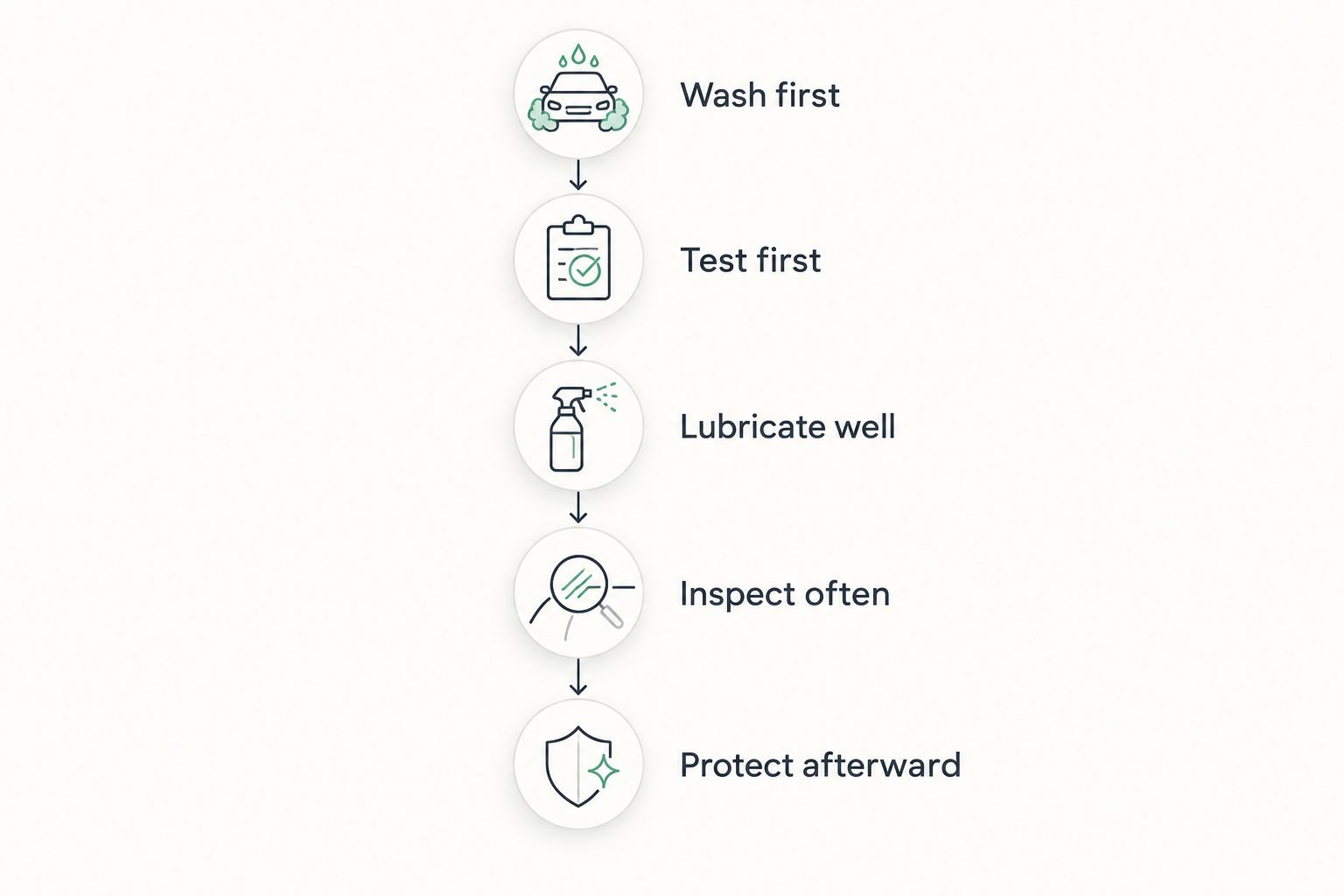
Wash first
Wash the vehicle thoroughly and remove loose dirt before any clay contact. Work out of direct sun on cool surfaces, following the product directions.
Clay is not a tool for wiping away road grit. If visible dirt remains, return to cleaning rather than trapping it between the clay and paint.
Test first
Choose 1 test spot in an inconspicuous area. Check the finish under useful lighting before and after treatment, not just by touch.
If the tool creates visible marring, stop and reassess the method. A test spot limits the area affected while you make that decision.
Lubricate well
Apply the compatible lubricant as directed. As a manageable starting size, work a section about 30 cm wide rather than an entire hood at once.
That is a working-area suggestion, not a product specification. Reduce the area if you cannot keep it lubricated or inspect it comfortably.
Inspect often
Use light pressure and controlled passes. Pause after 2 passes to inspect rather than repeatedly rubbing the same area without checking progress.
The pause is an inspection habit, not a promised removal rate. Fold traditional clay to a clean face, or clean the synthetic tool as its instructions require.
Protect afterward
Remove lubricant residue according to the directions and inspect the dry finish. Decide whether the surface needs polishing before applying your chosen protection.
When a clay kit is the wrong next move
Your goal is scratch removal
Clay removes material attached to the surface; it does not level a scratch. Repeated claying over a scratch adds contact without addressing the defect.
Paint correction is the relevant assessment when you want to improve swirls or scratches. Kleandetail offers paint correction alongside automotive detailing, giving Oak Lawn owners a service option when decontamination alone does not address the concern.
Your car has a coating, film, or specialty finish
Do not assume a clay kit is suitable for every coated or covered surface. Check the care instructions for ceramic coating, paint protection film, matte paint, or a vehicle wrap before using mechanical decontamination.
A method intended for conventional gloss paint is not blanket approval for another finish. When compatibility is unclear, stop rather than testing an aggressive tool across a visible panel.
You are chasing shine rather than contamination
Dullness has more than one cause. Claying a surface that does not need decontamination will not automatically restore gloss.
For your 2026 maintenance plan, separate cleaning, correction, and protection. Each step has a different purpose, and buying a clay kit does not make all three necessary.
Discuss your paint's next step
Ask Kleandetail about full vehicle detailing or paint correction in Oak Lawn, Illinois.
How the clay kit types rank
The ranking prioritizes appropriate aggressiveness, contamination control, lubricant compatibility, and the work required afterward. It compares tool formats and intended uses, not laboratory-tested results or named retail bundles.
Fine-grade clay takes the default position because it suits controlled routine decontamination. Synthetic mitts earn the broad-panel slot, while medium-grade clay remains a targeted preparation choice rather than a general recommendation.
Which clay bar kit should you choose?
Choose a fine-grade clay bar kit with compatible lubricant if you are undecided. Move to a synthetic mitt when broad-panel handling is your priority; consider medium-grade clay only when the contamination and subsequent polishing plan justify it.
The best clay bar kit for cars in 2026 is the one that removes the contamination without adding unnecessary work. Do not confuse a more aggressive grade, a bigger bundle, or a smoother feel with a better finished result.
FAQ
What's the best clay bar kit for cars if I'm a beginner?
A fine-grade clay bar kit with compatible lubricant is the best starting configuration for a beginner. Test an inconspicuous area first and inspect for marring before treating more paint.
Is a synthetic clay mitt better than a clay bar?
A synthetic clay mitt is better suited to broad panels, while a traditional clay bar suits small, controlled working areas. Neither format eliminates the need for lubrication, clean tools, and surface inspection.
Will a clay bar remove scratches or swirl marks?
A clay bar does not remove scratches or swirl marks. It removes bonded surface contamination; paint correction is a separate process for addressing defects in the finish.
Can I clay a ceramic-coated car?
Check the coating manufacturer's maintenance instructions before claying a ceramic-coated car. Mechanical decontamination can affect the coating or leave marring, so do not treat claying as routine coating maintenance.
Do I need to polish my car after using clay?
Polishing is needed when claying leaves marring or when existing defects require correction, not automatically after every use. Inspect a clean, dry test spot under suitable lighting before deciding.
Can I use a clay bar again after dropping it?
Discard a traditional clay piece after dropping it because it can collect grit that scratches paint. For a synthetic tool, follow the manufacturer's cleaning and inspection instructions rather than assuming rinsing makes it safe.
How often should I clay my car?
Clay your car when bonded contamination remains after proper washing, not on a fixed calendar. Check the surface condition and follow the care instructions for any coating, film, or specialty finish.
One last thing
Do not judge the result only by how smooth the paint feels. A surface can feel cleaner after claying while showing fresh marring under direct inspection light.
Make the final check on clean, dry paint before adding protection. That check tells you whether to protect the finish, reassess the process, or seek paint correction.


