
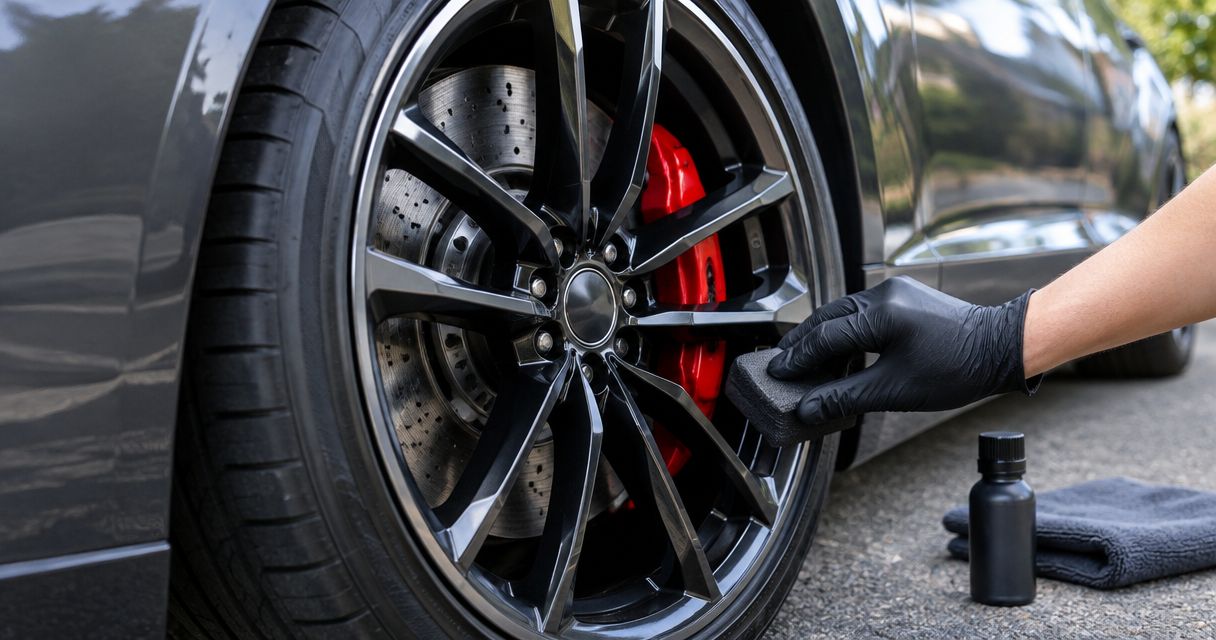
Best overall: a dedicated wheel-and-caliper ceramic coating approved for both surfaces. Best for wheel-only protection: a wheel-specific ceramic coating; best for matte finishes: a finish-approved coating; best for simple maintenance: a ceramic wheel sealant. This 2026 guide explains how to choose the best ceramic coating for wheels and calipers without confusing easier cleaning with protection against brake dust, heat damage, or stone chips.
- The best ceramic coating for wheels and calipers explicitly supports both surfaces and their existing finishes.
- Dedicated wheel-and-caliper coatings are the default choice when treating wheels and painted caliper exteriors together.
- Matte wheels need finish-approved products; gloss enhancement is not a benefit on a matte surface.
- Kleandetail offers ceramic coating services in Oak Lawn; confirm wheel and caliper coverage before arranging service.
Why this matters
Wheels collect road contamination and brake dust, while calipers sit close to the braking system’s heat source. A coating can make compatible surfaces easier to clean, but it does not stop brake dust from forming or replace regular washing.
Kleandetail is an Oak Lawn ceramic coating shop for car owners who want professional application rather than DIY detailing. If that describes you, start with Kleandetail and ask whether the proposed work includes wheel faces, barrels, and painted caliper exteriors.
For your 2026 shortlist, match the product to the surface before comparing durability claims. A coating advertised for body paint does not automatically qualify for wheels or calipers.
What makes the best wheel and caliper coating
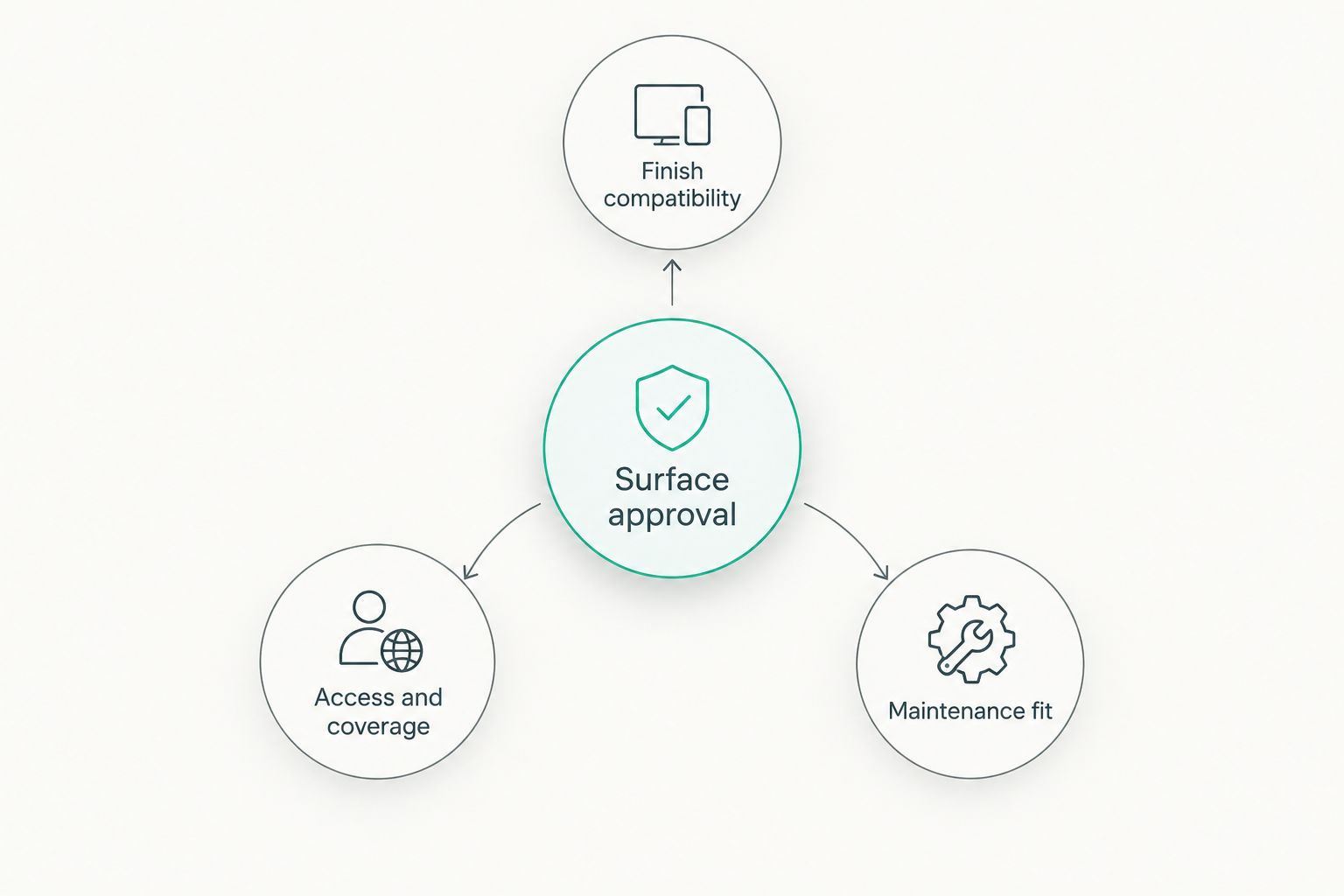
Use these criteria before choosing a bottle or approving a service:
- Surface approval: The instructions must name the intended application. Approval for wheels alone is not approval for calipers.
- Finish compatibility: Clear-coated, painted, powder-coated, polished, and matte surfaces need an explicit compatibility check.
- Preparation requirements: Choose a system whose cleaning, decontamination, and surface-preparation instructions you can follow completely.
- Access and coverage: Separate visible wheel faces from inner barrels and caliper exteriors. They are different work areas.
- Application control: Check the required working conditions, leveling method, and curing instructions before starting.
- Maintenance fit: Select protection you can maintain with suitable cleaners and washing tools, not just an impressive label.
Reject any option that leaves you guessing about compatibility or brake-component safety. A broad ceramic claim is not an application instruction.
Wheel and caliper coatings at a glance
These are application categories, not interchangeable formulas. Use the table to identify the right route, then check the exact product instructions before applying anything.
| Option | Best for | Standout feature | Key limitation |
|---|---|---|---|
| Dedicated wheel-and-caliper ceramic coating | Treating compatible wheels and caliper exteriors together | Explicit approval for both applications | Approval still depends on the existing finish |
| Wheel-specific ceramic coating | Protecting wheel faces and accessible barrels | Instructions focused on wheel surfaces | Wheel approval does not establish caliper compatibility |
| Matte-finish-approved ceramic coating | Preserving matte or satin wheel appearance | Finish compatibility takes priority over added gloss | Requires careful testing and residue removal |
| Spray-on ceramic wheel sealant | Straightforward maintenance between washes | Simpler application when the label permits it | Not an automatic substitute for a dedicated coating |
The decision is about where you are applying protection and what finish you need to preserve. For a mixed wheel-and-caliper job, start with explicit approval for both; for matte wheels, finish compatibility becomes the deciding filter.
1. Dedicated wheel-and-caliper coating: best for both surfaces
A dedicated wheel-and-caliper ceramic coating is the most direct choice when you want to treat compatible wheels and painted caliper exteriors in the same project. The important distinction is written approval for both applications, not the presence of ceramic terminology on the packaging.
For your 2026 purchase, confirm the application instructions cover the actual wheel finish and caliper finish. Do not transfer a claim about one surface to another.
Dedicated wheel-and-caliper coating pros:
- Provides a clear starting point for a combined project.
- Avoids assuming that body-paint approval covers brake-adjacent surfaces.
- Lets you plan preparation and curing around a specified coating system.
Dedicated wheel-and-caliper coating cons:
- Does not repair peeling finishes, corrosion, or existing staining.
- Application requires careful exclusion of braking friction surfaces.
Best for: Owners treating compatible wheel finishes and painted caliper exteriors together.
Before choosing this route, identify whether the calipers have an original finish, an aftermarket coating, or damaged paint. Appearance alone does not establish compatibility, and a ceramic layer cannot stabilize a failing finish.
Verdict: Buy a dedicated wheel-and-caliper coating only after confirming approval for both finishes.
2. Wheel-specific ceramic coating: best for wheel-only protection
A wheel-specific ceramic coating suits a project limited to wheel faces and accessible barrels. It is a narrower choice than a combined wheel-and-caliper system, which is useful when your calipers are outside the job’s scope.
Check whether the instructions cover your finish, including any refinished surfaces. A wheel’s original appearance does not tell you whether it has been repainted or repaired.
Wheel-specific ceramic coating pros:
- Keeps the product choice focused on the surfaces you intend to treat.
- Supports a defined wheel-only preparation plan.
- Allows face and barrel coverage to be discussed separately.
Wheel-specific ceramic coating cons:
- Does not establish suitability for calipers.
- Limited access can leave portions of the barrel untreated.
Best for: Owners who want wheel protection without including calipers.
If you are comparing professional ceramic coating services at Kleandetail, ask which surfaces the proposed work includes. A wheel-face application and a fully accessible barrel application are different scopes, even when the same coating is used.
Verdict: Buy for a wheel-only project; skip caliper application unless the instructions separately approve it.
3. Matte-finish-approved coating: best for matte and satin wheels
A matte-finish-approved ceramic coating prioritizes preserving the intended appearance rather than increasing gloss. That makes finish approval the first requirement for matte or satin wheels, including wheels with aftermarket finishes.
Use 1 small test area in an inconspicuous location before treating the visible surface. Check the result under the coating manufacturer’s stated application and curing conditions rather than judging only while the product is wet.
Matte-finish-approved coating pros:
- Makes appearance preservation part of the selection process.
- Encourages testing before a full application.
- Avoids treating gloss enhancement as a universal benefit.
Matte-finish-approved coating cons:
- Uneven residue can be conspicuous on low-gloss finishes.
- Approval for matte wheels does not establish approval for calipers.
Best for: Owners protecting matte or satin wheels without intentionally changing their sheen.
Do not polish a matte wheel as routine preparation. Abrasive polishing can change its appearance; use the finish manufacturer’s approved cleaning process instead.
Verdict: Buy only with explicit finish approval and a satisfactory test area; otherwise, wait.
4. Ceramic wheel sealant: best for simple maintenance
A spray-on ceramic wheel sealant is an alternative for owners who prefer a simpler application process over a dedicated coating installation. Follow the exact instructions: some products require wiping, while others use a specified rinse-off method.
For 2026 comparisons, distinguish the application format from the protection claim. A spray bottle does not tell you whether a product is approved for wheels, calipers, or your finish.
Ceramic wheel sealant pros:
- Offers a maintenance-focused route when wheel application is approved.
- Can suit owners who prefer repeat application over a larger preparation project.
- Lets you choose a process that fits your washing routine.
Ceramic wheel sealant cons:
- Is not automatically equivalent to a dedicated wheel coating.
- Overspray requires control around braking components and adjacent surfaces.
Best for: Owners prioritizing straightforward wheel maintenance rather than a dedicated coating installation.
Avoid spraying indiscriminately through the spokes. Apply only as directed, keep the product away from braking friction surfaces, and do not treat easy application as permission to skip preparation.
Verdict: Buy for label-approved maintenance use; skip it as an assumed replacement for a caliper coating.
Preparation matters more than an extra claim
The best ceramic coating for wheels and calipers still needs a clean, compatible surface. Coating over contamination does not remove it, and coating over damaged paint does not repair the underlying finish.
Inspect 4 areas before starting: wheel faces, inner barrels, painted caliper exteriors, and existing finish damage. This inspection defines the job before chemicals or applicators touch the vehicle.
Clean and decontaminate
Work on cool components and use cleaners approved for the finish. Remove loose dirt first, then address bonded contamination according to the cleaner and coating instructions.
The wheel and rim cleaners guide explains the cleaning category to consider before protection. Do not assume a stronger chemical is the better choice for a delicate or refinished wheel.
Inspect and prepare
Check visible surfaces from 2 lighting angles to look for remaining residue, staining, or uneven finish. Follow the coating system’s final preparation instructions, including any restrictions on solvents or existing protection.
If the finish is peeling, flaking, or corroded, resolve that condition first. Protection and refinishing serve different purposes.
Apply without contaminating brakes
Keep coating off brake rotors, pads, tire tread, and other friction surfaces. Caliper coating belongs only on approved exterior surfaces, not on moving components, seals, or brake hardware indiscriminately.
Wheel removal improves access, but it also introduces lifting and refitting responsibilities. Have a qualified professional handle removal and installation if you cannot follow the vehicle manufacturer’s procedures.
Respect the cure instructions
Do not substitute a generic waiting period for the product’s directions. Water exposure, washing, application temperature, and curing requirements belong to the specific system being installed.
Ask for those instructions before arranging your 2026 appointment. Your transport and washing plans need to fit the coating process, not interrupt it.
When professional application makes sense
Professional application is the practical route when access, finish identification, or safe wheel removal exceeds your experience. It does not remove the need to ask what is included.
Before arranging ceramic coating services with Kleandetail, request a clear scope covering surfaces, preparation, product compatibility, and aftercare. Confirm wheel and caliper treatment specifically rather than assuming it is part of another ceramic coating service.
Discuss your coating project
Ask about wheel and caliper coverage, finish compatibility, preparation, and aftercare.
How these options are ranked
The ranking prioritizes surface approval, finish compatibility, preparation, access, application control, and maintenance fit. Dedicated wheel-and-caliper coatings take the default position because their stated application matches the combined task.
This is an application-based buying guide, not a laboratory durability ranking. A matte-compatible product takes priority on matte wheels even when another option occupies the overall position.
Which coating should you choose?
Choose a dedicated wheel-and-caliper ceramic coating for a combined project, provided it explicitly supports both existing finishes. Choose a wheel-specific coating for wheels alone, a matte-approved system when appearance preservation controls the decision, or a ceramic wheel sealant for simpler maintenance.
Do not buy around a promised lifespan while leaving surface compatibility unresolved. The right 2026 choice starts with the finish and ends with a preparation and care routine you can follow.
FAQ
What's the best ceramic coating for wheels and calipers?
A dedicated wheel-and-caliper ceramic coating explicitly approved for both existing finishes is the default choice. Check the exact application instructions rather than assuming a body-paint or wheel-only coating also suits calipers.
Can I use the same ceramic coating on wheels and calipers?
Yes, if the manufacturer explicitly approves that coating for both surfaces and their finishes. Wheel approval alone does not establish caliper compatibility.
Does ceramic coating stop brake dust from sticking?
Ceramic coating can make brake dust easier to remove, but it does not prevent brake dust from forming or eliminate cleaning. Wash with products and tools appropriate for the coating and wheel finish.
Can I ceramic coat matte black wheels?
Yes, when the coating is explicitly approved for the matte finish. Test an inconspicuous area first and avoid abrasive polishing that changes the intended appearance.
Do wheels need to come off for ceramic coating?
Wheel removal is not required for every accessible wheel-face application, but it improves access to inner barrels and caliper exteriors. Have a qualified professional handle removal and refitting when you cannot follow the vehicle manufacturer's procedures.
Will ceramic coating fix stained or peeling caliper paint?
No, ceramic coating does not repair stained, peeling, or failing caliper paint. Assess and address the finish before applying protection.
How long should I wait before washing coated wheels?
Follow the specific coating manufacturer's curing and washing instructions. There is no single waiting period that applies to every wheel coating, sealant, or application condition.
One last thing
Ask which surfaces will remain untreated. That question exposes scope more clearly than asking whether the wheels are included: visible faces, spoke backs, inner barrels, and caliper exteriors do not all have the same access.
Write the agreed coverage into your work request. You will know what you are maintaining after the vehicle comes home.


