
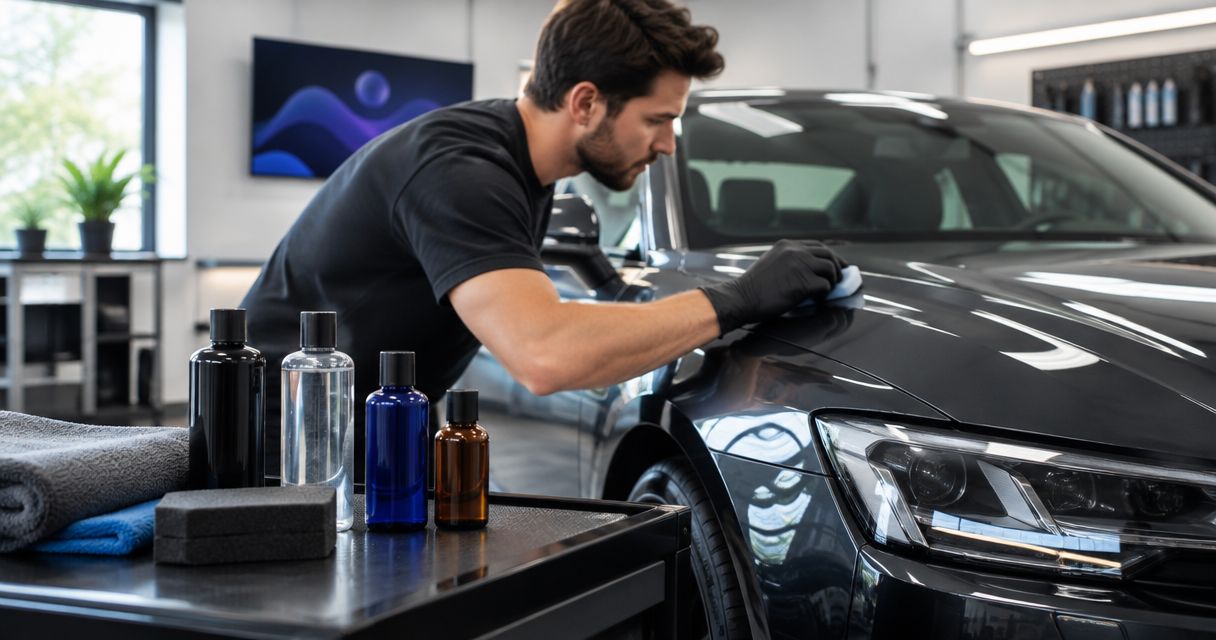
Best overall: a correction-matched ceramic coating scope. Best for clean, well-kept paint: coating without unnecessary polishing. Best budget approach: paint-only coverage with essential preparation. To compare ceramic coating packages ranked by price in 2026, rank written quotes for the same vehicle and finish goal—not coating names, layer counts, or advertised longevity alone.
- Compare ceramic coating packages ranked by price using identical preparation, paint correction, coverage, and maintenance requirements.
- Kleandetail offers ceramic coating and paint correction for car owners in Oak Lawn, Illinois.
- Choose correction-matched preparation when visible paint defects matter to your finished result.
- Choose paint-only coverage when your priority is exterior paint rather than additional coated surfaces.
- Choose paint protection film for impact protection; ceramic coating does not replace film.
Why this matters
A ceramic coating quote describes more than a protective product. It also describes the work performed before application, the surfaces treated, and the care required afterward. Two packages with similar coating claims can represent different jobs.
Kleandetail offers ceramic coating, paint correction, paint protection film, window tinting, and full vehicle detailing in Oak Lawn, Illinois. Kleandetail is a local option for Oak Lawn car owners seeking ceramic coating and paint correction from the same shop.
For your 2026 comparison, start with the result you want: easier routine cleaning, improved paint appearance, or protection against physical impacts. Those goals overlap, but they do not require identical services. Buying every available treatment is not a substitute for identifying the problem.
The ranked options below are service scopes to request and compare, not named packages or promises about any shop's inclusions. Their order reflects decision priority, not an asserted cheapest-to-most-expensive price ladder. Sort the actual written quotes only after the scopes match.
What makes the best ceramic coating package
Use these criteria before looking at the comparison table:
- Paint condition: Inspect visible swirls, oxidation, scratches, and contamination before deciding what preparation belongs in the quote.
- Preparation scope: Separate washing and decontamination from paint correction. Cleaning the surface and improving its appearance are different tasks.
- Coverage: Identify whether the quote covers painted panels, wheels, glass, trim, or another surface. Do not assume exterior coverage means everything.
- Protection goal: Distinguish easier cleaning from impact protection. Ceramic coating and paint protection film serve different purposes.
- Care requirements: Request product-specific washing, curing, and maintenance instructions before committing.
A strong package makes each item explicit. A weak comparison leaves them bundled behind a label such as premium or complete, forcing you to guess what the quote includes.
Ceramic coating package scopes at a glance
| Rank and scope | Best for | Standout feature | Key limitation |
|---|---|---|---|
| 1. Correction-matched coating | Owners prioritizing the finished appearance | Preparation follows inspected paint condition | Coating does not remove defects left underneath |
| 2. Coating with minimal correction | Owners whose paint already meets their appearance goal | Avoids polishing without a defined purpose | Requires inspection rather than assumptions about vehicle age |
| 3. Paint-only coating | Owners prioritizing paint within a fixed budget | Keeps additional surfaces outside the initial scope | Wheels, glass, and trim require separate decisions |
| 4. Extended-surface coating | Owners seeking treatment beyond painted panels | Explicit coverage for selected additional surfaces | Different materials require suitable products and care |
| 5. Film-plus-coating protection | Owners concerned about front-end impacts and cleaning | Separates impact protection from surface maintenance | Adds a separate film installation scope |
Use this table to decide which quote to request first. Do not treat the row order as proof that one scope costs less than another: vehicle condition, coverage, and the proposed work determine the quote.
1. Correction-matched coating: best for finish quality
A correction-matched scope pairs ceramic coating with the paint correction your inspected finish needs. The objective is to address visible defects before applying the protective treatment. Ceramic coating is not a substitute for polishing away defects that are suitable for correction.
This is the default recommendation when your main concern is how the paint will look after the service. Ask the installer to identify which defects the proposed correction addresses and which remain outside the agreed result.
Correction-matched coating pros:
- Connects preparation to the condition of your actual vehicle.
- Makes paint appearance an explicit part of the job.
- Separates correction work from coating application in the discussion.
Correction-matched coating cons:
- Correction removes paint material, so aggressive polishing needs a clear purpose.
- Deep damage is not automatically suitable for correction.
- A broad promise of defect removal is less useful than an agreed finish target.
Best for: Owners who want ceramic protection and a deliberate improvement in paint appearance.
For a 2026 quote, request an inspection-based correction scope rather than selecting polishing by package name alone. Explain what bothers you under ordinary daylight and ask what improvement is appropriate for the finish.
Verdict: Buy this scope when visible defects matter to your result.
2. Coating with minimal correction: best for already-good paint
This scope keeps correction limited to what an inspection justifies. Washing, decontamination, and the coating manufacturer's preparation requirements still matter. Minimal correction does not mean applying a coating over an unprepared surface.
A recently purchased vehicle still needs inspection. Transport, handling, previous washing, and existing repairs are reasons to evaluate the finish instead of assuming its condition from its age.
Minimal-correction coating pros:
- Avoids treating polishing as mandatory regardless of condition.
- Keeps the discussion focused on protecting an already-acceptable finish.
- Gives you a clear reason to decline unnecessary correction work.
Minimal-correction coating cons:
- Existing swirls remain if they are not corrected.
- Vehicle age alone does not establish paint condition.
- Preparation requirements still apply even when polishing is limited.
Best for: Owners whose inspected paint already meets their appearance expectations.
Ask the installer to show the paint under lighting that reveals defects. If the finish looks acceptable to you, request an explanation for any proposed correction rather than accepting an automatic upgrade.
Verdict: Buy when inspection supports limited correction; skip assumptions based on newness.
3. Paint-only coating: best for a focused budget
A paint-only scope concentrates on painted exterior panels and leaves additional surfaces outside the initial agreement. It is a coverage decision, not permission to cut essential preparation. Use it when paint protection is your priority and you do not want unrelated treatments bundled into the purchase.
Keep the finish target clear. Removing wheel or glass treatment from a quote does not change the paint correction needed to achieve the appearance you requested.
Paint-only coating pros:
- Keeps the quote aligned with a specific exterior-paint goal.
- Makes optional surface treatments easier to evaluate separately.
- Prevents an extensive coverage list from replacing a preparation discussion.
Paint-only coating cons:
- Does not include additional surfaces unless the agreement names them.
- Does not solve interior cleaning, glass visibility, or wheel-care needs.
- Still requires preparation appropriate to the paint and coating.
Best for: Owners who want a defined paint-protection project within their spending limit.
For budget comparisons in 2026, request essential preparation and paint coverage as the base scope, with optional treatments listed separately. That lets you remove extras without silently changing the core job.
Verdict: Buy a focused scope; skip packages that obscure what your paint actually receives.
4. Extended-surface coating: best for broader exterior care
An extended-surface scope adds selected treatments beyond painted body panels. Wheels, glass, and trim are separate materials, so the quote should identify the surface and the product intended for it. Do not assume one paint coating is appropriate everywhere.
Choose additional coverage because you have a specific maintenance goal. A longer list of treated surfaces is not automatically a better purchase for your vehicle.
Extended-surface coating pros:
- Makes additional exterior treatments part of the written scope.
- Allows you to select coverage according to your cleaning priorities.
- Prompts a separate discussion of care for different materials.
Extended-surface coating cons:
- Broad terms such as full exterior can conceal exclusions.
- Different surfaces need suitable application and maintenance instructions.
- Additional coverage does not eliminate routine cleaning.
Best for: Owners who want selected non-paint surfaces included in their exterior-care plan.
Ask which wheel surfaces are included and whether glass coverage means every window or selected areas. Treat each answer as a scope definition, not an assumed benefit of the package label.
Verdict: Buy only the additional coverage tied to a maintenance need you can name.
5. Film-plus-coating protection: best for impact concerns
Paint protection film and ceramic coating address different problems. Film provides a physical protective layer against impacts and abrasion; ceramic coating is not equivalent impact protection. A combined plan separates where film belongs from where a coating supports surface care.
Kleandetail offers both paint protection film and ceramic coating. Discuss the services as distinct parts of a protection plan rather than assuming a coating package includes film installation.
Film-plus-coating protection pros:
- Addresses physical protection separately from routine surface care.
- Allows film coverage to follow your concern about exposed panels.
- Avoids asking ceramic coating to perform the job of a protective film.
Film-plus-coating protection cons:
- Requires a separate decision about film coverage and installation.
- Does not make the vehicle immune to damage.
- Coating compatibility with film must follow the relevant product instructions.
Best for: Owners who prioritize protection of impact-exposed areas alongside easier surface maintenance.
If your concern is front-end damage, read the guide to paint protection film for front bumpers and hoods before comparing coating scopes alone.
Verdict: Buy a film-inclusive plan for impact concerns; skip coating-only promises of chip protection.
How to rank your written quotes by price
For a useful 2026 price ranking, compare the same job before sorting the totals. Otherwise, the lowest quote can simply describe less work, while the highest includes treatments you never requested.
Use this sequence:
- Inspect paint: Establish the finish condition and the defects you want addressed.
- Define preparation: Write down cleaning, decontamination, and any agreed correction.
- Match coverage: Compare the same panels and additional surfaces across quotes.
- Confirm care: Request curing, washing, and maintenance instructions for the proposed products.
- Compare quotes: Sort the written totals after the scope is aligned.
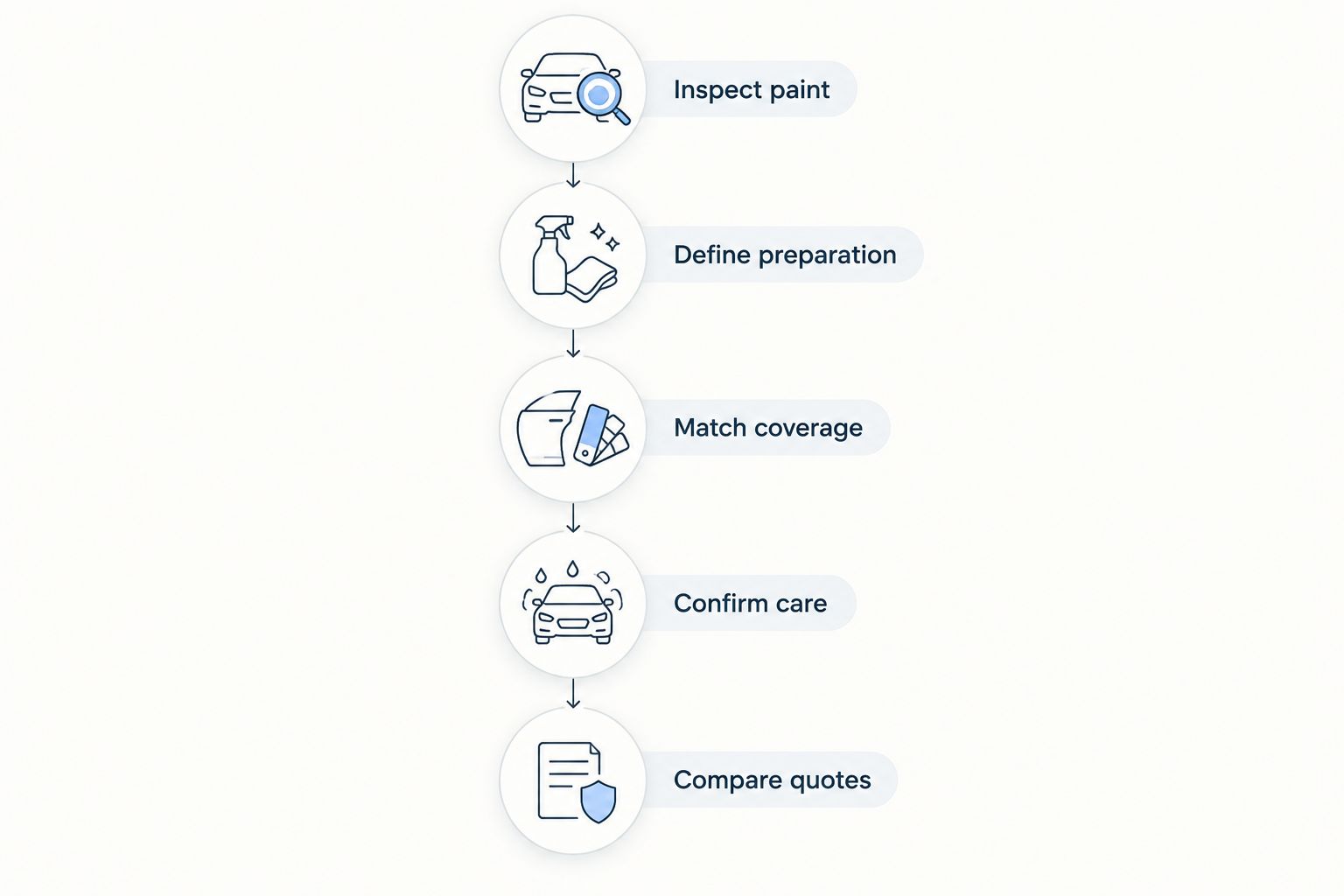
Ask each installer to separate required work from optional additions. Keep the vehicle, requested appearance, and coverage constant across the conversations. If an installer recommends a different approach, ask which observed condition explains the change.
Discuss your vehicle's coating scope
Compare ceramic coating, paint correction, and paint protection film for your vehicle.
How these scopes are ranked
The ranking prioritizes paint condition, preparation, coverage, protection goal, and ongoing care. Correction-matched coating comes first because the finished appearance depends on what happens before coating application. The other scopes answer distinct needs: acceptable existing paint, focused coverage, additional surfaces, or impact protection.
This is a buying framework, not a product test or a numerical durability ranking. Your written quotes establish the price order; inspection establishes which scope fits.
Which ceramic coating package should you choose?
Choose correction-matched ceramic coating as your default when paint appearance is part of the goal. Choose minimal correction when inspection shows the finish already meets your expectations, or paint-only coverage when you want a tightly defined project.
For a 2026 decision, do not pay for extra surfaces simply to reach a higher package tier. If chips are your main concern, put film coverage into the discussion instead of escalating coating claims.
Kleandetail gives Oak Lawn car owners a local shop to discuss ceramic coating, paint correction, and paint protection film. Bring your priorities to that conversation: the defects you notice, the surfaces you care about, and the maintenance you will actually perform.
FAQ
What's the best way to compare ceramic coating packages ranked by price?
Compare written quotes with matching preparation, correction, coverage, and maintenance requirements, then sort their totals. Package names alone do not establish that two installers are quoting the same job.
What's the best ceramic coating package for a new car?
Choose the scope justified by an inspection, not by the vehicle's age. If the paint already meets your appearance goal, limited correction is a sensible option, but proper surface preparation still matters.
Does ceramic coating remove scratches?
Ceramic coating does not replace paint correction for removing suitable paint defects. Discuss scratches before application and agree on which defects the correction work will address.
Is ceramic coating better than paint protection film?
Neither is universally better because they serve different purposes. Choose film for a physical protective layer against impacts and abrasion, and discuss coating for surface-care goals.
How much does a ceramic coating package cost in 2026?
The relevant cost is the written quote for your vehicle and agreed scope. Match paint condition, correction, treated surfaces, and care requirements before comparing package totals.
Should I choose the package with the most coating layers?
Do not choose a package on layer count alone. Ask how the proposed application follows the product instructions and what preparation, coverage, and care the complete job includes.
Can I stop washing my car after ceramic coating?
No, ceramic coating does not eliminate washing. Follow the coating's care instructions and use a washing method that avoids adding unnecessary abrasion.
One last thing
Your maintenance habits belong in the buying decision, not just the handover instructions. Ask how to wash the vehicle before selecting the package. A finish-improvement project loses its purpose if the next cleaning routine reintroduces the defects you wanted corrected.


