
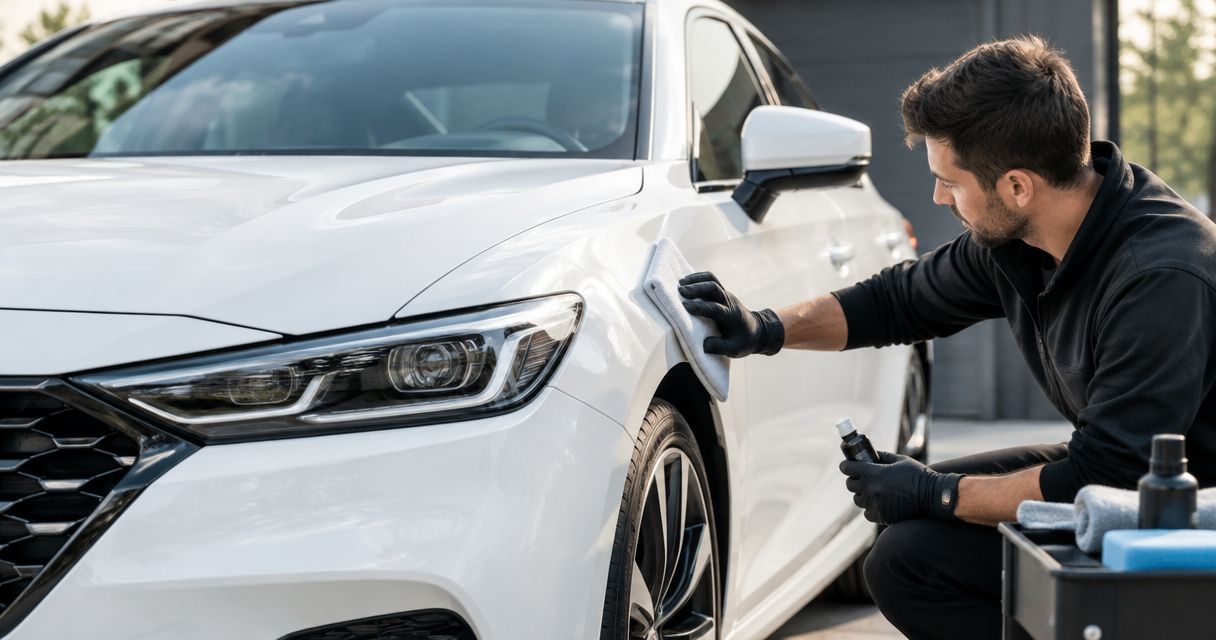
Best overall: professionally applied ceramic coating on properly prepared paint. Best for experienced home detailers: a DIY paint coating; best for straightforward upkeep: a ceramic spray sealant.
- The best ceramic coating for white cars depends on paint preparation, application conditions, and your maintenance routine.
- Kleandetail offers ceramic coating services for Oak Lawn car owners who prefer professional application.
- Choose a DIY paint coating only when you can follow its preparation, leveling, and curing instructions.
- Choose a ceramic spray sealant for straightforward upkeep, not as an assumed substitute for a paint coating.
- Ceramic coating does not remove scratches, prevent rock chips, or eliminate washing.
Why this matters
White paint makes orange contamination spots and dark road film easy to notice, while fine scratches can be harder to see under diffuse light. A coating does not remove either problem. The surface needs cleaning and inspection before you decide what to apply.
For your 2026 decision, separate the coating from the preparation and installation work. Kleandetail is best for Oak Lawn owners seeking ceramic coating as a shop service rather than a DIY project. Kleandetail provides ceramic coating, paint correction, paint protection film, window tinting, and full vehicle detailing services.
This guide ranks application approaches, not individual bottles. Choose the approach that fits your paint condition, workspace, and willingness to maintain the finish.
What makes the best ceramic coating for white cars?
Judge each option against these criteria before comparing durability language or water-beading demonstrations:
- Surface preparation: The paint needs appropriate washing, decontamination, and inspection. A coating cannot compensate for dirt or bonded residue underneath it.
- Finish compatibility: Confirm whether the surface is gloss paint, matte paint, a wrap, or paint protection film. Follow the coating manufacturer's stated uses.
- Application control: Temperature, humidity, lighting, leveling, and curing requirements matter. Your workspace must meet the selected product's instructions.
- Maintenance fit: Choose protection you can wash and maintain correctly. No coating makes abrasive cleaning harmless.
- Realistic protection: Ceramic coatings help with surface repellency and cleaning. They are not impact protection, scratch removal, or a replacement for paint repair.
For a white car in 2026, paint color alone is not a sound reason to choose a coating. The coating must suit the finish and the person applying it.
White-car coating options at a glance
| Rank and option | Best for | Standout feature | Key limitation |
|---|---|---|---|
| 1. Professional ceramic coating | Owners who want shop-applied protection | Preparation and application can be handled as a service | You still need to assess the proposed preparation and care requirements |
| 2. DIY paint coating | Experienced detailers with suitable working conditions | Direct control over preparation and application | Leveling errors and unsuitable curing conditions are your responsibility |
| 3. Ceramic spray sealant | Owners prioritizing straightforward upkeep | Maintenance-oriented application formats | Do not assume equivalence to a dedicated paint coating |
The order reflects application responsibility and maintenance needs, not a laboratory comparison. A carefully applied DIY coating is a more sensible choice than professional work with unclear preparation.
1. Professional ceramic coating: best for hands-off application
Professional ceramic coating is the default recommendation when you want a shop to handle preparation and application. You still need to understand the proposed work. Ask what the paint inspection found, which defects need attention, and what the coating will leave unchanged.
For white paint, request inspection beyond an overall gloss check. Orange specks, rough contamination, mineral deposits, and faint polishing marks need different responses; applying a coating does not make those differences disappear.
Professional ceramic coating pros:
- Transfers preparation and application work from you to a service provider.
- Lets you discuss paint correction before protection is applied.
- Gives you an opportunity to request finish-specific application and care instructions.
Professional ceramic coating cons:
- The service label alone does not establish preparation quality.
- Collection, curing, and washing instructions still affect how you use the car.
- Coating does not remove the need for ongoing cleaning.
Best for: Owners who want ceramic coating without taking responsibility for the installation process.
Kleandetail offers ceramic coating and paint correction in Oak Lawn. Ask which preparation your vehicle needs rather than assuming every white car needs the same work. A new-looking finish and a scratch-free finish are not necessarily the same thing.
Verdict: Buy professional application when you want shop service and understand the preparation scope.
2. DIY paint coating: best for experienced home detailers
A DIY paint coating puts preparation, application, inspection, and curing under your control. Choose it when you already understand safe decontamination and can follow the selected coating's instructions without rushing.
White paint deserves deliberate lighting during application. Unleveled coating residue can be difficult to spot from a single viewing angle, so inspect each working section before moving on. Follow the manufacturer's directions for identifying and correcting application residue.
DIY paint coating pros:
- Gives you direct control over the preparation process.
- Lets you inspect each panel as you work.
- Suits owners who enjoy detailed, instruction-led car care.
DIY paint coating cons:
- Requires suitable working conditions throughout application and curing.
- Leaves you responsible for missed residue and application mistakes.
- Is a poor fit when paint defects exceed your correction skills.
Best for: Experienced detailers with a suitable workspace and enough uninterrupted time to follow the instructions.
Before choosing a DIY coating in 2026, read its technical and application directions. Confirm surface compatibility, personal protective equipment, ventilation, working conditions, and curing restrictions. Do not substitute another coating's instructions because its packaging looks similar.
Verdict: Buy a DIY paint coating only when your skills and workspace match its requirements.
3. Ceramic spray sealant: best for straightforward upkeep
A ceramic spray sealant is a separate choice from a dedicated paint coating. Products in this category vary, so follow the actual label rather than treating the word ceramic as a performance specification.
Choose a spray when your priority is a manageable protection routine. If you plan to apply it over an existing coating, check compatibility first; adding another product can change surface behavior and complicate maintenance diagnosis.
Ceramic spray sealant pros:
- Offers an upkeep-focused alternative to a dedicated coating application.
- Fits owners who prefer routine application during car care.
- Can serve as a maintenance product when the existing coating's instructions permit it.
Ceramic spray sealant cons:
- The ceramic label does not establish equivalence to a paint coating.
- Application methods and compatibility differ between products.
- Extra applications do not correct dirty paint or existing defects.
Best for: Owners who prefer straightforward upkeep over a dedicated paint-coating installation.
Do not choose a spray solely because the car is white. Choose it because its instructions fit your routine and its intended use matches your surface. If you want professional coating installation instead, compare that service directly rather than treating the categories as interchangeable.
Verdict: Buy a ceramic spray sealant for maintenance simplicity; skip it as an assumed substitute for every coating service.
Prepare white paint before choosing protection
The best ceramic coating for white cars starts with identifying what is actually on the paint. Use 3 inspection areas as a practical checklist: horizontal panels, lower bodywork, and panel edges. These are inspection prompts, not a substitute for checking the whole vehicle.
Remove contamination
Wash the vehicle using products and methods suitable for its finish. Inspect remaining specks and roughness before choosing a chemical or mechanical decontamination method. Use each cleaner according to its label, including restrictions on hot surfaces and drying.
Orange specks on white paint can indicate ferrous contamination, but color alone is not a diagnosis. Avoid aggressive scrubbing just to remove a visible dot.
Assess defects
Separate contamination from scratches, etching, chips, and failing paint. Coating application does not repair those conditions. Paint correction removes some surface defects by refining the finish; it is not appropriate for every scratch or every paint condition.
For mineral marks, read whether paint correction can remove water spots before assuming a coating will hide them.
Confirm compatibility
Identify any repainted panels, existing protection, matte finishes, wraps, or film. Follow the relevant coating and surface manufacturer's guidance. If the finish history is uncertain, resolve that question before application.
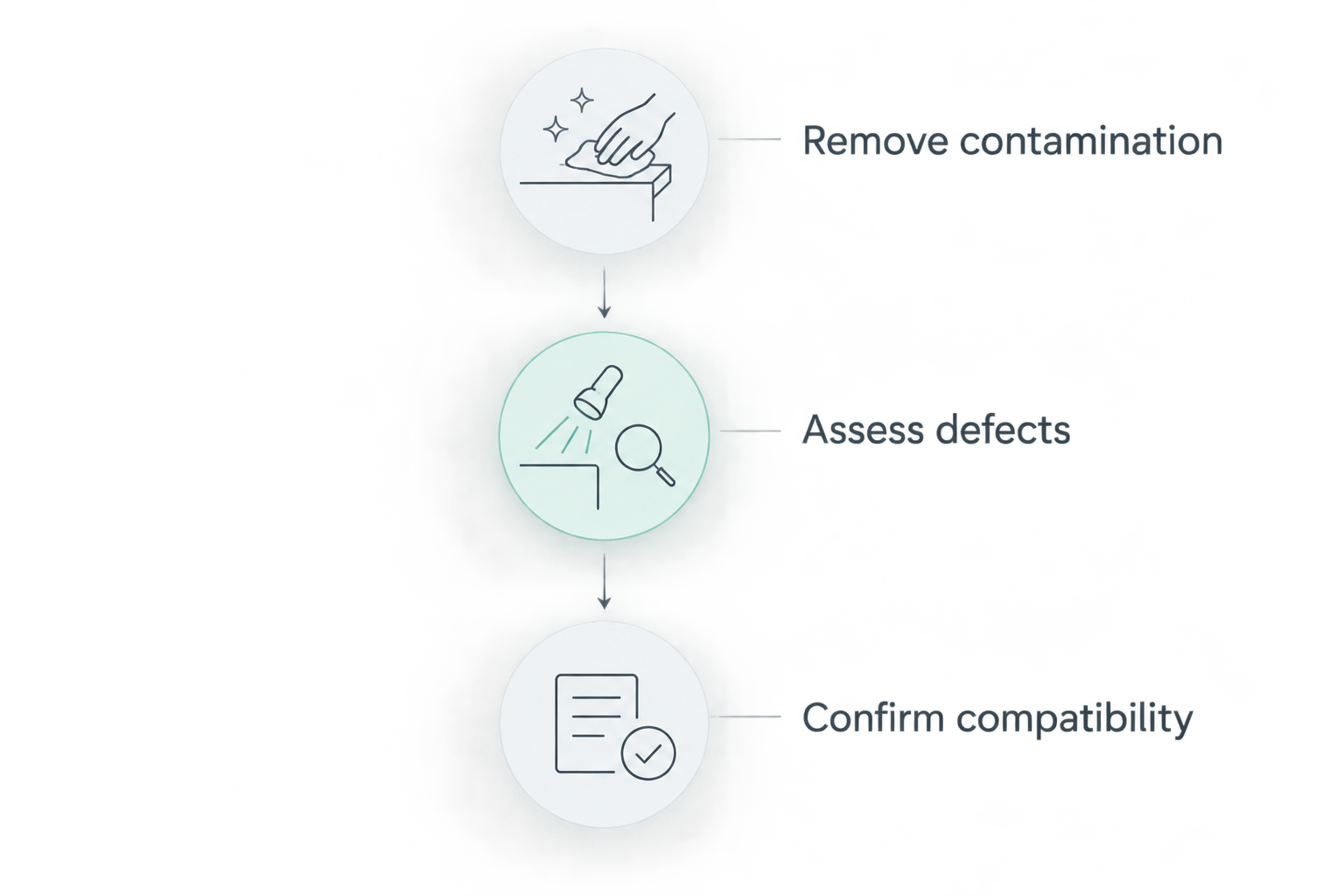
Preparation should solve the surface problem, not merely make the paint look ready from a distance. Stop before coating if you cannot identify a defect or safely prepare the finish.
How to inspect a white car's finish
Use 2 lighting conditions: diffuse daylight for overall appearance and a focused inspection light for localized defects. Move your viewing position as well as the light. A fixed angle does not reveal every mark.
For DIY application, begin with 1 small test section, following the selected product's instructions. Confirm that you can see the application, level it correctly, and inspect the result before expanding the working area.
For professional work, ask to review the finish and aftercare instructions at collection. Look across horizontal panels and curved edges rather than checking only the easiest door panel.
For a 2026 appointment, ask Kleandetail which preparation steps your white car needs and which visible defects will remain. A clear answer is more useful than an unexplained coating label.
Discuss your white car's coating
Ask about ceramic coating, paint condition, and preparation for your vehicle.
Keep white paint clean after coating
Your 2026 maintenance plan should follow the installed coating's instructions. Confirm the initial washing restrictions, approved cleaning products, and the response to contamination before the car leaves the application setting.
- Wash safely: Use suitable wash media and avoid grinding trapped dirt across the paint.
- Dry the surface: Do not treat water beading as permission to leave mineral-containing water on the finish.
- Remove contamination promptly: Address bird droppings, insects, and sap using methods appropriate for the coating and paint.
- Investigate changed behavior: Reduced beading alone does not prove that a coating has failed; contamination can affect the surface.
Do not respond to every change by adding another protection product. Clean and assess the finish first, then follow the installed coating's maintenance guidance.
How the options were ranked
The ranking prioritizes preparation responsibility, application control, finish compatibility, and maintenance fit. Professional application leads for owners who want a service; DIY coating suits experienced detailers; spray sealant suits straightforward upkeep.
This is a use-case ranking, not a claim that every professional coating outperforms every DIY product. No specific bottle earns a durability or performance award without supporting product evidence.
Which ceramic coating should you choose?
Choose professional ceramic coating if you want the preparation and application handled as a service. Choose a DIY paint coating only when you can meet its instructions, and choose a ceramic spray sealant when a simpler upkeep routine is the actual goal.
For an undecided white-car owner in 2026, start with a paint assessment rather than a product shortlist. Kleandetail provides ceramic coating services in Oak Lawn; use the discussion to establish what your paint needs before selecting protection.
FAQ
What's the best ceramic coating for white cars?
Professional ceramic coating on properly prepared paint is the default choice for owners who want shop-applied protection. Experienced detailers can choose a DIY paint coating when their skills and workspace meet its instructions.
Do white cars need a special ceramic coating?
White paint alone does not establish the need for a special coating. Choose according to finish compatibility, preparation requirements, application conditions, and maintenance instructions.
Will ceramic coating remove orange spots from white paint?
Ceramic coating does not remove orange spots. Identify and safely treat the contamination or defect before coating the surface.
Does ceramic coating hide swirl marks on a white car?
Ceramic coating is not a substitute for swirl removal. Inspect the paint and discuss appropriate correction before applying protection.
Is a ceramic spray the same as a ceramic paint coating?
A ceramic spray sealant is not automatically equivalent to a dedicated paint coating. Compare the actual product's intended use, application directions, and maintenance requirements.
Can a ceramic-coated white car still get water spots?
A ceramic-coated white car can still develop water spots. Water repellency does not prevent mineral deposits from remaining when water dries on the surface.
Does ceramic coating stop rock chips on white paint?
Ceramic coating does not prevent rock chips. Discuss paint protection film when impact protection is your main concern, while recognizing that film also has limits.
Can I stop washing my white car after ceramic coating?
You still need to wash a ceramic-coated white car. Follow the installed coating's care instructions and use cleaning methods suitable for the finish.
One last thing
White paint can look clean before it is ready for coating. An overall bright appearance does not establish that the surface is free of bonded contamination, mineral marks, or fine defects.
Ask for a close inspection before choosing protection. The most useful recommendation identifies what needs removal, what needs correction, and what will remain visible afterward.


