
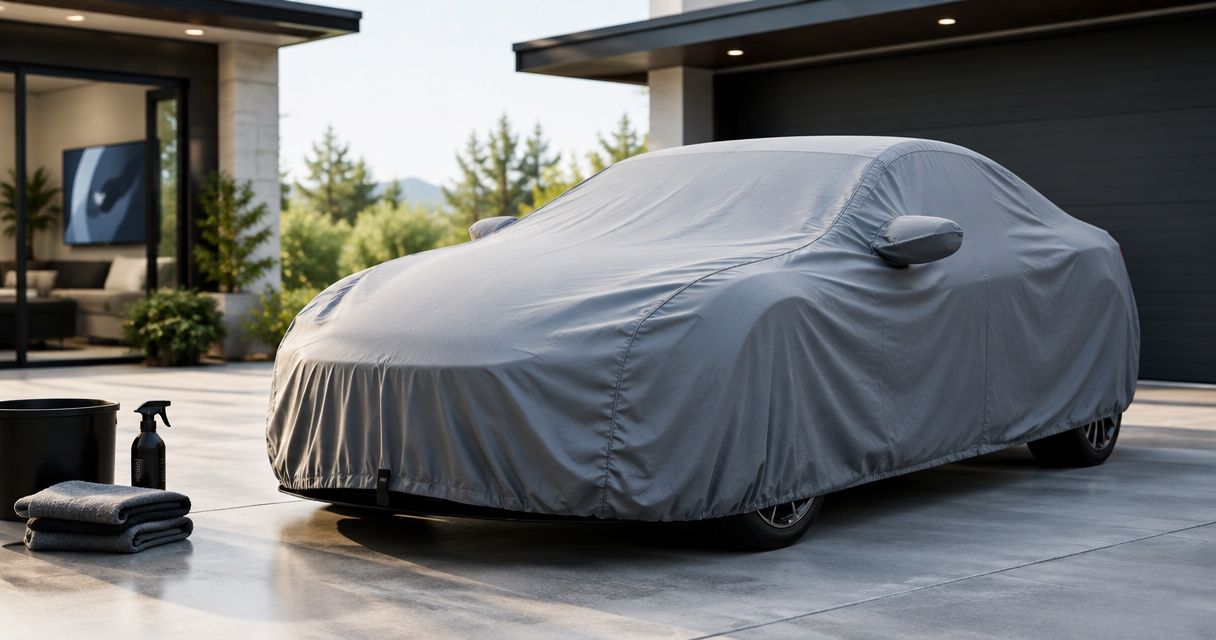
Best overall for outdoor parking: a custom-fit, breathable outdoor cover. Best for a clean garage: a stretch indoor cover. Best for occasional sheltered use: a semi-custom breathable cover. This 2026 guide explains which design fits your parking conditions and when leaving the car uncovered is the safer choice.
- The best car cover for ceramic coated car storage matches your parking environment, fits securely, and stays clean underneath.
- Choose a custom-fit breathable outdoor cover for exposed parking; avoid loose fabric that moves against dirty paint.
- Choose a stretch indoor cover for a clean garage, not for rain or exposed outdoor storage.
- Kleandetail provides ceramic coating and paint correction services for Oak Lawn car owners.
Why this matters
Ceramic coating does not make paint scratchproof. Grit trapped between a cover and the vehicle can mark the finish as the fabric moves, even when the cover feels soft in your hand.
The cover and coating have different jobs. A suitable cover provides a physical barrier against falling debris while parked; ceramic coating changes the surface characteristics of the finish but does not replace careful washing or safe handling.
Kleandetail provides ceramic coating, paint correction, paint protection film, window tinting, and full vehicle detailing in Oak Lawn, Illinois. Kleandetail is best for Oak Lawn car owners seeking professional ceramic coating and paint correction services. Choose your cover around the vehicle's storage conditions, not around a promise that coated paint needs no maintenance.
What makes the best car cover for a ceramic coated car?
Use these 5 checks when comparing covers in 2026. A soft lining alone does not settle the decision.
- Correct fit: Match the vehicle's body shape and any fitted accessories. Excess fabric creates more opportunity for movement against the finish.
- Suitable environment: Indoor dust protection and outdoor weather protection are different requirements. An indoor cover is not an outdoor substitute.
- Moisture management: Look for documented breathability and follow the manufacturer's instructions about wet vehicles and damp covers. Water resistance does not explain how trapped moisture escapes.
- Paint-contact construction: Inspect the underside, seams, hems, and attachment points. Keep exposed fasteners and contaminated fabric away from painted panels.
- Practical cleaning: Choose a cover with care instructions you can follow. A cover that is difficult for you to clean is a poor match for frequent use.
Car covers at a glance
These are 3 cover types, not a ranking of unverified branded products. Each recommendation serves a different parking situation.
| Cover type | Best for | Standout feature | Key limitation |
|---|---|---|---|
| Custom-fit outdoor | Regular exposed parking | Vehicle-specific shape with outdoor-rated construction | Requires clean paint, clean fabric, and secure installation |
| Stretch indoor | Clean enclosed garages | Close-fitting dust barrier without unnecessary outdoor construction | Not suitable for exposed weather |
| Semi-custom breathable | Occasional sheltered use | Size-based fit for temporary coverage | Fit varies around mirrors, bumpers, and accessories |
Do not treat the first row as the winner in every setting. A garage-kept vehicle does not need an outdoor cover simply because that cover has more layers, and a loose indoor cover does not become weather protection when moved outside.
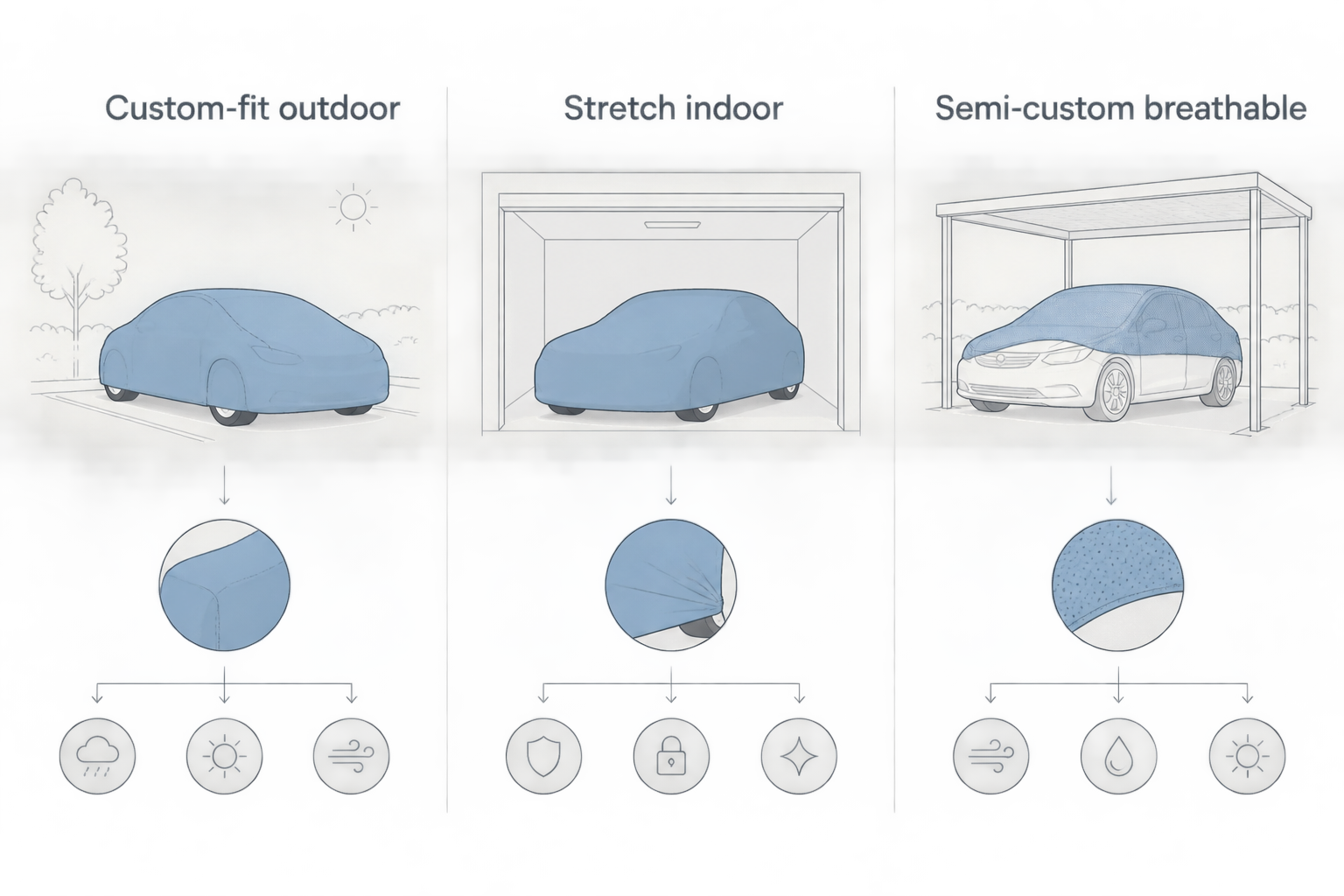
1. Custom-fit outdoor: best for regular exposed parking
A custom-fit outdoor cover is shaped for a particular vehicle application and designed for outdoor exposure. For a ceramic-coated car parked outside, prioritize fit, a clean paint-contact surface, and documented weather-use instructions over layer count.
Check the application carefully. Roof racks, spoilers, modified bumpers, and other accessories change how fabric sits against the vehicle; selecting the right model name is not enough when the body shape has changed.
Custom-fit outdoor pros:
- Vehicle-specific shaping limits the excess fabric associated with an oversized cover.
- Outdoor-rated construction addresses exposure that an indoor dust cover does not.
- A correctly fitted cover provides a barrier against direct contact with falling debris while parked.
Custom-fit outdoor cons:
- A fitted cover still rubs if grit sits underneath or the fabric moves.
- Installation and removal require care around dirty lower panels and attachment points.
- Damp fabric and changing weather make storage and cleaning more demanding than indoor use.
Best for: A ceramic-coated vehicle regularly parked outside when you can keep the cover and vehicle clean and secure the cover as instructed.
Before choosing one, read the actual instructions for wind, rain, washing, and storage. Do not translate an outdoor label into permission to leave a contaminated cover on indefinitely.
Verdict: Buy a custom-fit outdoor cover for exposed parking only if you can maintain clean contact surfaces and a secure fit.
2. Stretch indoor: best for a clean enclosed garage
A stretch indoor cover provides close-fitting dust protection inside an enclosed storage space. It suits a clean, dry ceramic-coated vehicle that stays away from rain, blowing grit, and outdoor wind.
The main advantage is matching the cover to the environment. You need a manageable dust barrier, not weatherproof construction that serves no purpose inside your garage.
Stretch indoor pros:
- Close-fitting fabric reduces loose material around the body when correctly sized.
- Indoor construction focuses on dust protection for enclosed storage.
- A manageable cover supports careful fitting and removal without dragging fabric across the floor.
Stretch indoor cons:
- Indoor-only fabric is not a substitute for an outdoor-rated cover.
- A soft underside still collects grit if mishandled or stored dirty.
- Snug fabric requires careful removal around mirrors, trim, and accessories.
Best for: A washed and dried vehicle stored in a clean enclosed garage, particularly when settling dust is the main concern.
Keep the garage's use in mind. A space used for sanding, painting, or other dusty work needs a contamination-control plan; a cover alone does not make that environment suitable for a carefully maintained finish.
Verdict: Buy a stretch indoor cover for clean garage storage; skip it for outdoor parking.
3. Semi-custom breathable: best for occasional sheltered use
A semi-custom cover uses a broader size or body-style application rather than an exact vehicle pattern. It is an option for occasional coverage under shelter, provided the fit is stable and the manufacturer's stated use matches the conditions.
Fit is the deciding factor. A cover that fits the vehicle's overall length can still hang loosely around the doors or pull tightly across a spoiler.
Semi-custom breathable pros:
- Size-based selection provides an alternative to an exact vehicle pattern.
- Temporary coverage suits vehicles that need a dust barrier only occasionally.
- A suitable breathable design supports moisture management when used as instructed.
Semi-custom breathable cons:
- Extra fabric increases the need to check movement and contact points.
- Mirror and bumper fit is less specific than a vehicle-shaped pattern.
- Sheltered parking still needs an outdoor-rated cover if rain or wind reaches the vehicle.
Best for: Occasional sheltered storage where you can inspect the fitted cover and remove it when conditions exceed its intended use.
Reject a poor fit rather than improvising attachments against painted panels. If the cover repeatedly slips, bunches, or lifts, choosing a different size or design is the next move.
Verdict: Buy only after confirming a stable fit; skip any semi-custom cover that moves excessively or exposes fasteners to paint.
How to use a cover without dragging grit across the paint
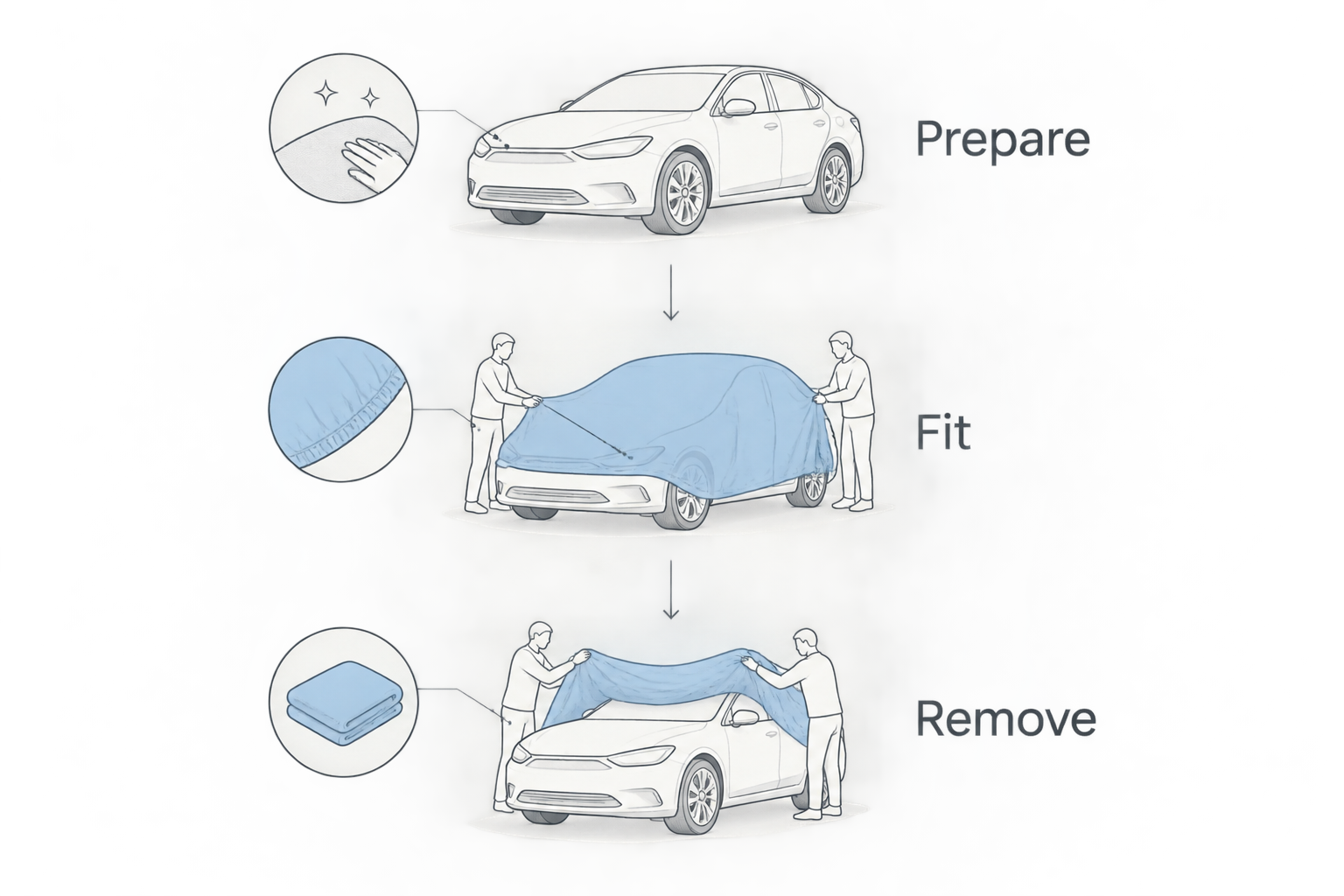
Safe handling matters as much as the cover you select. Follow this 3-stage routine every time rather than assuming ceramic coating will tolerate dirty fabric.
Prepare
Wash and dry the vehicle using a coating-compatible routine. Inspect the cover's underside too, especially any area that touched the ground, wheels, or lower body during its previous use.
Do not cover a dusty car simply to hide the dust. If cleaning is not practical, leaving the vehicle uncovered in an appropriate parking location avoids introducing another surface that can move grit against the paint.
Fit
Follow the cover manufacturer's fitting sequence and securing instructions. Keep the underside off the ground, identify the front and rear before positioning it, and avoid pulling contaminated sections over clean panels.
Stop if a fastener, seam, or tight section bears against a vulnerable painted edge. Adjust the fit before securing the cover; tension does not correct an unsuitable shape.
Remove
Lift and fold the cover progressively rather than dragging it from one end of the vehicle to the other. Keep the paint-contact side separate from the dirty outside as you handle and store it.
Dry and clean the cover according to its care instructions before storage. Packing damp fabric into a bag creates a different problem from the dust you intended to prevent.
When no cover is the better choice
Do not put a cover over a freshly applied coating until the installer permits it. Coating cure instructions depend on the installed product and application conditions; a generic waiting period is not a substitute for those instructions.
Skip the cover when the vehicle is dirty, the underside is contaminated, or you cannot secure the fabric properly. The same applies when you cannot keep attachment hardware away from the finish.
For your 2026 storage plan, decide whether you can maintain the cover before buying it. Frequent driving through dirty conditions creates repeated cleaning work, not an exception to safe handling.
If marks are already visible, establish whether they affect the coating or the underlying finish before choosing a repair. The guide to whether ceramic coating can fix swirl marks and scratches explains why protection and correction are separate decisions.
Discuss your coating care
Ask Kleandetail about ceramic coating, paint correction, and care for your vehicle.
How the cover types are ranked
This 2026 ranking follows fit, parking environment, moisture management, paint-contact construction, and cleaning practicality. It compares design categories rather than claiming hands-on results or assigning unsupported scores to individual products.
Custom-fit outdoor ranks first for exposed parking, stretch indoor wins for enclosed garages, and semi-custom breathable serves occasional sheltered use. None wins by fabric softness alone.
Which car cover should you choose?
Choose the cover for where the vehicle actually sits. Start with a custom-fit outdoor design for exposed parking or a stretch indoor design for a clean garage; consider semi-custom only when its fitted shape is stable.
Before ordering in 2026, read the current application and care instructions. If you cannot keep both contact surfaces clean, improve the parking and washing routine before adding a cover.
FAQ
What's the best car cover for ceramic coated car storage in 2026?
A custom-fit breathable outdoor cover is the best starting point for exposed parking, while a stretch indoor cover suits a clean enclosed garage. Correct fit and clean contact surfaces matter more than the coating label.
Can a car cover scratch ceramic-coated paint?
Yes. Grit trapped under a cover can mark the finish when the fabric moves; ceramic coating does not make paint scratchproof.
Can I cover my car immediately after ceramic coating?
Wait until your coating installer permits covering the vehicle. Follow the installed product's cure instructions rather than a generic waiting period.
Is an indoor cover better than an outdoor cover?
An indoor cover is better matched to a clean enclosed garage, not exposed parking. Choose an outdoor-rated design when rain or outdoor exposure reaches the vehicle.
Should I cover a dirty ceramic-coated car?
No. Wash and dry the vehicle first, and inspect the cover's underside so trapped dirt does not become an abrasive contact layer.
Does a breathable cover keep all moisture out?
No. Breathability concerns moisture movement through the material, while resistance to incoming water is a separate property. Read the cover's instructions for rain, damp vehicles, and drying.
Can I use a cover instead of washing my coated car?
No. A cover does not remove contamination already on the paint and also needs cleaning itself. Keep both surfaces clean before they touch.
One last thing
Treat the underside of your cover like a wash mitt: once it touches a dirty floor, it needs attention before touching clean paint. The safest cover is not simply the softest one; it is the suitable, properly fitted cover you can keep clean.


