
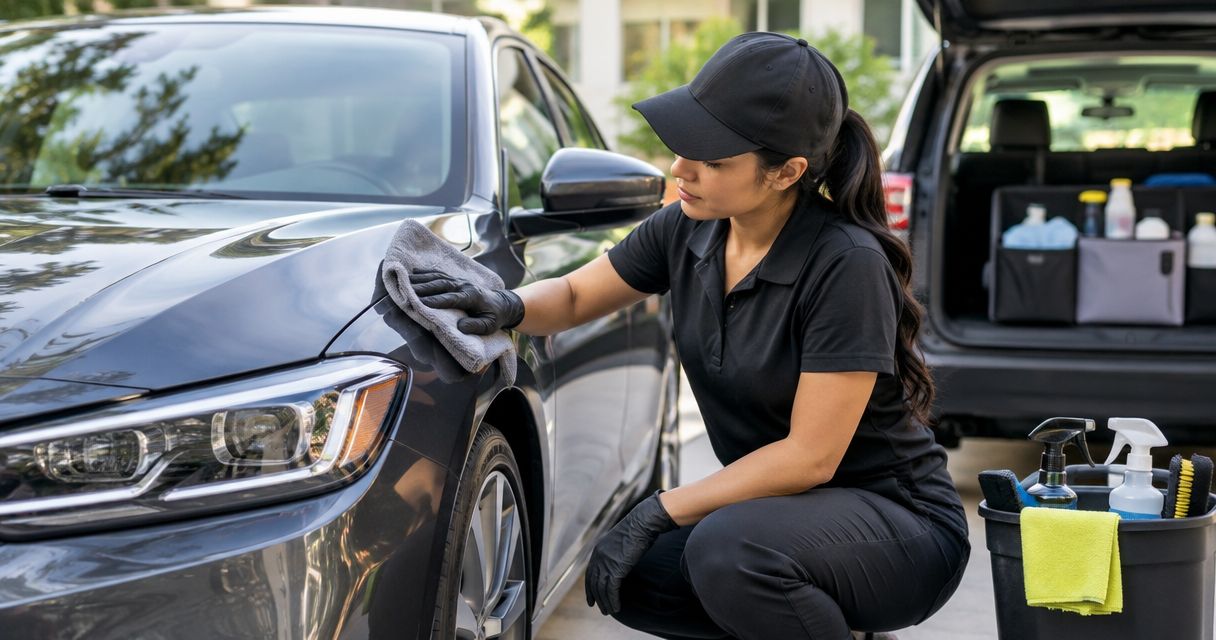
Delivery driver auto detailing is targeted vehicle cleaning and surface care with the aim of keeping your work car clean, usable, and easier to maintain between shifts. This guide to auto detailing for delivery drivers prioritizes food spills, cargo-area dirt, clear glass, and practical maintenance over a showroom finish in 2026.
- Auto detailing for delivery drivers should prioritize spills, clear glass, clean mats, and a dry cargo area.
- Kleandetail provides auto detailing in Oak Lawn, Illinois; choose professional help for work beyond routine cleaning.
- Ceramic coating supports exterior maintenance; paint protection film addresses physical paint protection, not cabin cleanliness.
- Build your cleaning schedule around vehicle condition and shifts, rather than buying every available service.
Why auto detailing matters for delivery drivers
Your delivery vehicle is both transportation and a working storage space. Food containers, insulated bags, parcels, wet footwear, and personal belongings compete for room, so cleaning needs to address where you actually carry orders—not just the driver's seat.
Prioritize problems that affect visibility, cleanliness, and daily use before cosmetic paint work. A polished hood does nothing for a sticky cupholder or a damp cargo liner. Likewise, fragrance does not remove spilled liquid trapped beneath a mat.
For your 2026 maintenance plan, inspect the car after shifts and adjust cleaning to what you find. The guide to how often you should get your car detailed explains the scheduling question; the steps below show how to make that schedule fit delivery work.
Separate cleaning from food handling. A clean vehicle does not replace sealed packaging, clean delivery bags, or the handling requirements that apply to the orders you carry.
Build a detailing routine around your delivery shifts
1. Map the areas your deliveries actually touch
Start with an inspection you can do yourself. Empty the car, lift removable mats, and examine the places where bags sit or drinks travel. Look beneath a removable cargo liner rather than assuming a clean upper surface means the area underneath is dry.
Distinguish loose debris from stains, dampness, and damaged material. Vacuuming handles crumbs; it does not resolve a leaking container or moisture entering through a vehicle seal. Fix the source before repeatedly cleaning the same patch.
Take reference photos for your own records. They help you explain a recurring problem without relying on memory or describing the entire interior as dirty.
- Identify the seat, footwell, or cargo area used for orders.
- Check beneath mats and liners for moisture or residue.
- Inspect bag bases, cupholders, and door pockets.
- Record stains, odors, and damaged trim separately.
2. Separate delivery storage from personal clutter
Use the containers and removable liners you already own before buying more equipment. Give orders a stable location that does not interfere with your driving position, mirrors, pedals, or access to controls.
Keep cleaning chemicals separate from deliveries. Close containers securely and follow their storage instructions; do not leave loose spray bottles rolling around a working cargo area. Avoid placing damp towels beside clean delivery bags.
For 2026, make organization part of the cleaning process rather than a separate project. A clear floor and an accessible cargo liner let you inspect and clean the car without first unloading unrelated belongings.
- Remove nonessential personal items before a shift.
- Keep delivery bags separate from dirty towels and chemicals.
- Use a removable, vehicle-appropriate liner where practical.
- Secure containers so they cannot enter the pedal area.
- Clean reusable bags according to their care instructions.
3. Reset the cabin before booking deeper cleaning
Handle loose dirt and fresh messes yourself first. Remove rubbish, vacuum accessible debris, and blot spills with a clean absorbent cloth. Follow the vehicle manufacturer's material-care instructions and test any suitable cleaner in an inconspicuous area before wider use.
Do not saturate upholstery, roof lining, switches, or seat controls. If liquid has reached inaccessible padding or electrical components, stop treating it as an ordinary surface stain and seek appropriate help.
Kleandetail auto detailing is best suited to delivery drivers seeking a local shop in Oak Lawn, Illinois. The shop offers full vehicle detailing, but routine rubbish removal and bag cleaning remain your responsibility between appointments. Professional cleaning is the next step when the affected area exceeds what you can safely clean and dry yourself.
- Vacuum loose debris before applying liquid cleaner.
- Blot fresh spills instead of spreading them by scrubbing.
- Clean glass with a material-compatible product.
- Avoid slick dressings on pedals, steering wheels, and controls.
- Let cleaned fabrics dry before replacing liners or loading orders.
4. Match exterior care to the actual problem
Begin with a suitable hand wash using products and methods appropriate for your vehicle's finish. Do not wipe dry road grit across the paint, and keep wheel-cleaning tools separate from towels used on painted surfaces.
Then identify the problem before selecting a service. Paint correction addresses certain surface defects through polishing; ceramic coating provides a protective surface treatment; paint protection film adds a physical film over covered paint. These are different jobs, not interchangeable upgrades.
For a working delivery car, cleanliness comes before elective paint refinement. Choose correction or protection only when its purpose matches your priorities and the vehicle's condition. Existing chips, damaged paint, or persistent marks need assessment rather than a promise that an added coating will hide them.
- Wash away loose contamination before contacting the paint.
- Use separate tools for wheels and bodywork.
- Ask for an inspection before choosing paint correction.
- Treat ceramic coating as protection, not scratch repair.
- Evaluate film coverage against the panels you want protected.
5. Confirm the work scope before leaving the car
Write a short problem list before speaking with a detailer. Name the affected area, what spilled if known, and whether the smell returns after the car warms up or gets wet. That is more useful than requesting the deepest clean without explaining the issue.
Ask what the proposed work includes and excludes. A full-detail label alone does not establish whether a specific stain, delivery bag, hidden spill, or paint defect is included. Agree on the scope before the appointment.
Plan around collection, drying, and any service-specific aftercare. Do not assume the car is ready for loaded delivery bags simply because the cleaning work has finished, and do not assume every stain can be removed without affecting the material.
- Describe each problem by location and suspected source.
- Confirm which cabin and cargo areas are included.
- Ask about stain limitations and existing material damage.
- Confirm when fabrics can be covered or loaded again.
- Request written care instructions for any protective treatment.
6. Set a condition-based maintenance schedule
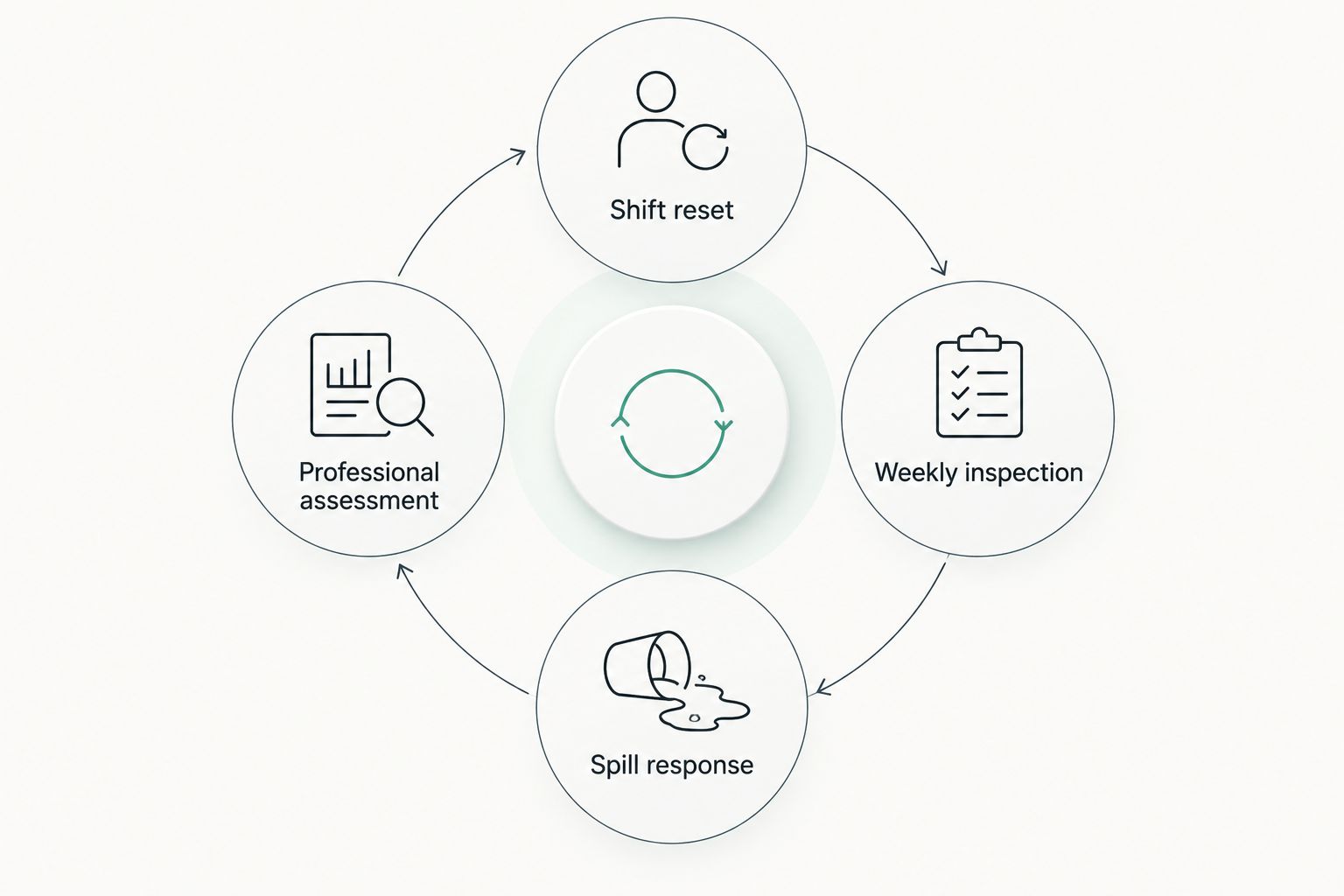
Use a proposed 5-minute reset after each shift for rubbish removal and a visual check. Reserve a separate 15-minute inspection each week for glass, mats, bag bases, and the cargo area. These are planning blocks, not promised cleaning times; extend them when the condition requires more work.
Keep a 1-week condition log before deciding whether your routine is sufficient. Note where dirt accumulates and whether odors or dampness return. Book deeper cleaning when your routine stops resolving the problem rather than waiting for the entire interior to look neglected.
Use these checkpoints throughout 2026: after shifts, each week, and when a specific problem appears. A spilled drink deserves attention when it happens, not at the next calendar reminder.
- Shift reset: remove rubbish and check for fresh spills.
- Weekly inspection: inspect glass, mats, and delivery storage.
- Spill response: identify the material and clean it safely.
- Professional assessment: escalate persistent or inaccessible problems.
Compare detailing options for delivery work
Choose by the problem you need solved, not by how many treatments a package contains. DIY maintenance and professional detailing can complement each other, while exterior protection remains a separate decision from cabin cleaning.
| Option | Best for | Main benefit | Key limitation |
|---|---|---|---|
| DIY maintenance | Drivers managing loose dirt and fresh surface messes | Lets you address everyday cleaning between shifts | Requires suitable tools, material knowledge, and drying conditions |
| Kleandetail full vehicle detailing | Oak Lawn drivers seeking professional vehicle cleaning | Provides a local professional detailing option | Confirm the scope; detailing does not establish that every stain or damaged material is repairable |
| Paint correction | Drivers concerned about suitable surface paint defects | Refines defects through controlled polishing | Does not replace missing paint or solve cabin cleanliness |
| Ceramic coating | Drivers prioritizing exterior surface protection and upkeep | Adds a protective treatment to prepared surfaces | Does not replace washing or provide film-like impact protection |
| Paint protection film | Drivers prioritizing physical protection on covered paint | Places a protective film over selected surfaces | Protects only the covered areas and still needs care |
For delivery work, maintain the interior first and evaluate exterior protection separately. If your main complaint is food odor, a paint service is not the answer. If your main concern is exposed paint, an interior detail does not address it.
Common mistakes delivery drivers make
Masking an odor before finding its source
Air freshener adds fragrance; it does not remove food residue or trapped moisture. Inspect mats, bag bases, seat gaps, and the cargo area before applying another scented product. Persistent dampness also warrants checking for a vehicle leak rather than repeating cleaning indefinitely.
Loading orders onto damp upholstery
A freshly cleaned surface is not necessarily dry. Replacing a liner or loading delivery bags too soon can trap moisture beneath them. Confirm drying instructions and inspect the material before returning the space to work.
Treating delivery bags as someone else's cleaning job
Cleaning the vehicle while ignoring a dirty bag base leaves a route for residue to return. Empty and inspect reusable bags separately, follow their care instructions, and let them dry before putting them back in the cabin.
Buying paint protection to solve a cabin problem
Ceramic coating and paint protection film serve exterior needs. Neither removes a drink spill from seat foam or cleans a greasy console. Describe the problem first, then choose the relevant work instead of treating a larger service list as a better fit.
Expecting detailing to repair damaged materials
Cleaning is not the same as repairing torn upholstery, failed trim finishes, or missing paint. Identify damage before work starts so the desired result is realistic. Stop aggressive DIY scrubbing when the material changes appearance or transfers color to the towel.
FAQ
What's the best auto detailing routine for delivery drivers?
The best starting routine is a shift-end rubbish and spill check, regular vacuuming, clean glass, and inspection beneath removable mats and liners. Add professional cleaning when contamination is inaccessible or your routine no longer resolves the problem.
How often should I get my delivery car professionally detailed?
Use the car's condition and your ability to maintain it to set professional detailing appointments. Recurring odors, embedded dirt, and spills beyond safe DIY cleaning are stronger triggers than an arbitrary calendar interval.
Can I keep delivering immediately after an interior detail?
Resume deliveries only when the vehicle is ready for use and cleaned materials are dry enough to cover or load. Confirm collection, drying, and aftercare requirements with the detailer before arranging your next shift.
Will interior detailing remove food smells from my car?
Interior cleaning can address food smells when it removes the residue causing them, but complete odor removal is not guaranteed. Liquid beneath upholstery, contaminated bags, or unresolved moisture can require additional assessment.
Is ceramic coating better than paint protection film for delivery drivers?
Neither is better for every delivery driver because they address different protection needs. Ceramic coating is a surface treatment, while paint protection film adds a physical film over covered paint; neither replaces interior cleaning.
Does Kleandetail offer auto detailing for delivery vehicles?
Kleandetail offers full vehicle detailing in Oak Lawn, Illinois. Describe your delivery vehicle's condition and affected areas when asking whether the proposed service scope fits your needs.
Should I clean delivery bags during a vehicle detail?
Clean reusable delivery bags separately according to their care instructions rather than assuming they are included in vehicle detailing. Keep dirty bag bases off cleaned surfaces and allow bags to dry before reuse.
One last thing
Before your next shift, lift the removable cargo liner and inspect underneath it. The surface you see when loading an order can look clean while residue or moisture remains hidden below.
For your 2026 routine, make that check a standing habit. When contacting Kleandetail about detailing, identify the hidden area as well as the visible stain; a precise description helps you discuss the right work instead of requesting unrelated cosmetic services.


