
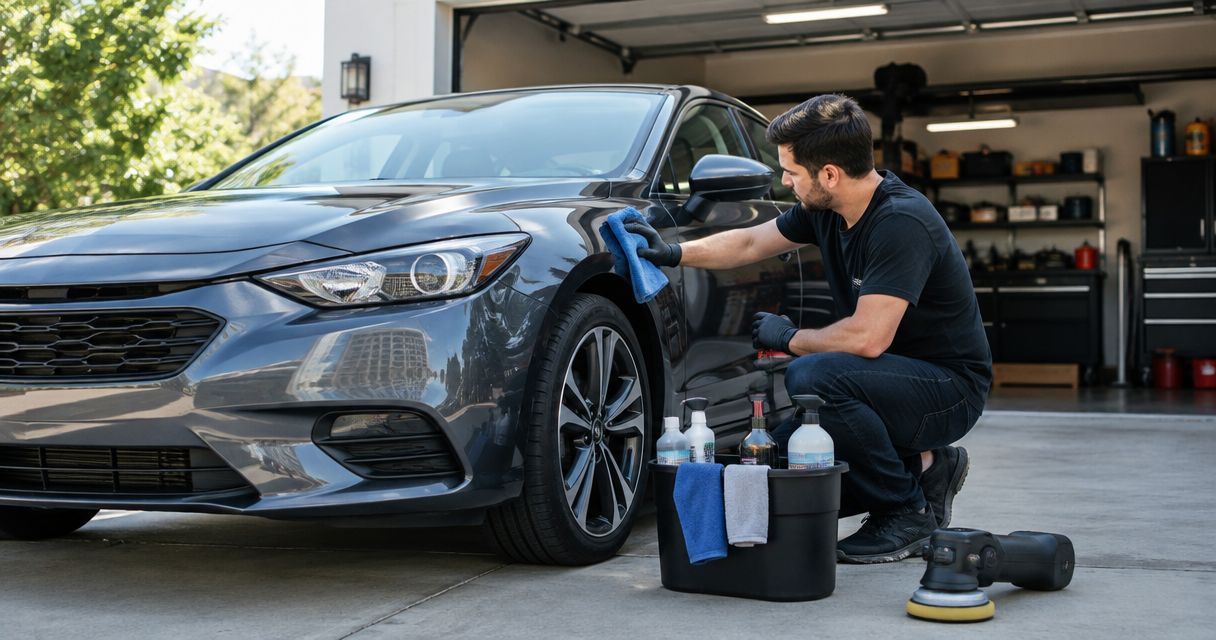
Instead of repeatedly cleaning your car before every buyer visit, use a single workflow for detailing car before selling privately: inspect, set the scope, clean, verify, photograph, and maintain. For your 2026 listing, finish the detail before taking the photos buyers will use to judge its condition.
- Detailing car before selling privately works best when cleaning comes before listing photos and buyer appointments.
- Kleandetail serves Oak Lawn sellers who need professional vehicle detailing before a private sale.
- Prioritize interior cleanliness, clear glass, and honest condition photos over adding protective treatments solely for the sale.
- Keep mechanical repairs, cosmetic cleaning, and defect disclosure separate; detailing does not replace any of them.
Why this matters
Your listing photographs and the car a buyer inspects should tell the same story. Photographing a dirty vehicle, cleaning it later, and leaving the original images online creates an avoidable mismatch. Cleaning also makes it easier to distinguish removable dirt from damage that belongs in the description.
Kleandetail is best for Oak Lawn car owners seeking professional vehicle detailing before a private sale. Kleandetail provides full vehicle detailing and paint correction, alongside ceramic coating, paint protection film, and window tinting. For sale preparation, start with the condition problem you need to address—not the longest service list.
Professional detailing gives you a defined cleaning task to hand off, but it still requires an inspection and an agreed scope. It does not establish mechanical condition, remove every defect, or guarantee a stronger offer.
Before you start
- Gather your materials and access. Have your vehicle keys, maintenance records, a phone camera, your listing-platform account, and access to the vehicle's manual. Remove personal belongings before handing over the car.
- Prepare a condition brief. Record stains, odors, visible scratches, damaged trim, leaks, and known mechanical issues. Tell the detailer about aftermarket electronics, loose components, existing coatings, and damaged upholstery.
- Plan for drying before photography. If fabric cleaning leaves upholstery damp, do not proceed straight to listing photos or a buyer visit. Confirm the drying instructions before booking; appointment completion is not your only readiness check.
For a 2026 private-sale listing, keep a separate folder for public photographs and private documents. Check every image for addresses, registration documents, faces, and other information you do not intend to publish.
Condition brief
Inspect before choosing the work
- Empty the vehicle. Remove loose belongings from the cabin, trunk, door pockets, and storage compartments. Separate anything included in the sale from items you will keep.
- Inspect in daylight. Walk around the car, then examine the seats, carpets, headliner, glass, and cargo area. Note visible defects without trying to diagnose unfamiliar damage.
- Create 2 checklists. Use one checklist for cleaning tasks and another for repairs or disclosures. A stained floor mat belongs on the cleaning list; a cracked trim panel belongs on the condition list.
- Take reference photographs. Capture existing damage before the appointment so you can explain the scope clearly. These are working images, not your finished listing set.
- Resolve active causes first. Identify a water leak or continuing spill source before treating the resulting odor or stain. Cleaning around an unresolved source is not a complete fix.
Expected result: You have a written brief that separates removable contamination from damage, mechanical concerns, and information buyers need to know.
Keep the brief factual. Describe a scratch's location and appearance rather than promising it will polish out. Likewise, record where an odor is strongest instead of assuming a fragrance or fabric treatment will solve it.
Detailing scope
Match the work to the condition
Choose the smallest scope that addresses the actual presentation problems. The following options solve different problems; they are not automatic upgrades to buy together.
| Preparation option | Best for | Benefit | Limitation |
|---|---|---|---|
| DIY maintenance clean | An already-clean car with light dust and ordinary surface dirt | Gives you direct control over a modest cleaning task | Results depend on your technique, materials, and the surfaces involved |
| Professional full vehicle detailing | A car needing coordinated interior and exterior cleaning | Addresses more of the vehicle in one agreed scope | Does not repair mechanical faults or guarantee stain and odor removal |
| Targeted paint correction | Visible paint defects assessed as suitable for polishing | Addresses correctable surface defects rather than simply washing them | Removes paint material and cannot safely erase every scratch |
| New coating or protection film | An owner who also intends to retain and protect the vehicle | Serves an ongoing protection goal | Is not a substitute for cleaning, repair, or an honest sale description |
Prioritize cleaning before elective protection treatments. Ceramic coating and paint protection film serve different purposes from preparing an accurate private-sale listing. Do not add either solely because you expect the next buyer to reimburse the work.
Agree on the handoff
- Share your condition brief. Tell the detailer that the car is being prepared for a private sale. Identify the surfaces and defects that matter most to the listing.
- Ask what the proposed detail includes. Confirm the cabin, cargo area, glass, wheels, and exterior tasks rather than assuming every area is included.
- Discuss exceptions before authorizing work. Point out delicate trim, damaged leather, loose headliner material, or aftermarket equipment. Ask which areas require a different approach or should remain untouched.
- Confirm collection and drying instructions. Arrange photography after the car is ready to use and inspect, not merely after the appointment ends.
- Keep a record of the agreed scope. Use it at collection to check completion without expecting unrelated repairs.
Expected result: You and the detailer agree on the cleaning work, its limits, and the condition required before photographs.
For local help, contact Kleandetail with the condition brief and your intended listing date. Describe the problem you want assessed without assuming a particular treatment is necessary.
Listing handoff
Verify, photograph, and publish
Use the same sequence for your 2026 listing whether you clean the car yourself or arrange professional work: Inspect, Detail, Verify, Photograph, Publish. The verification stage is what prevents a finished appointment from becoming an unfinished listing.
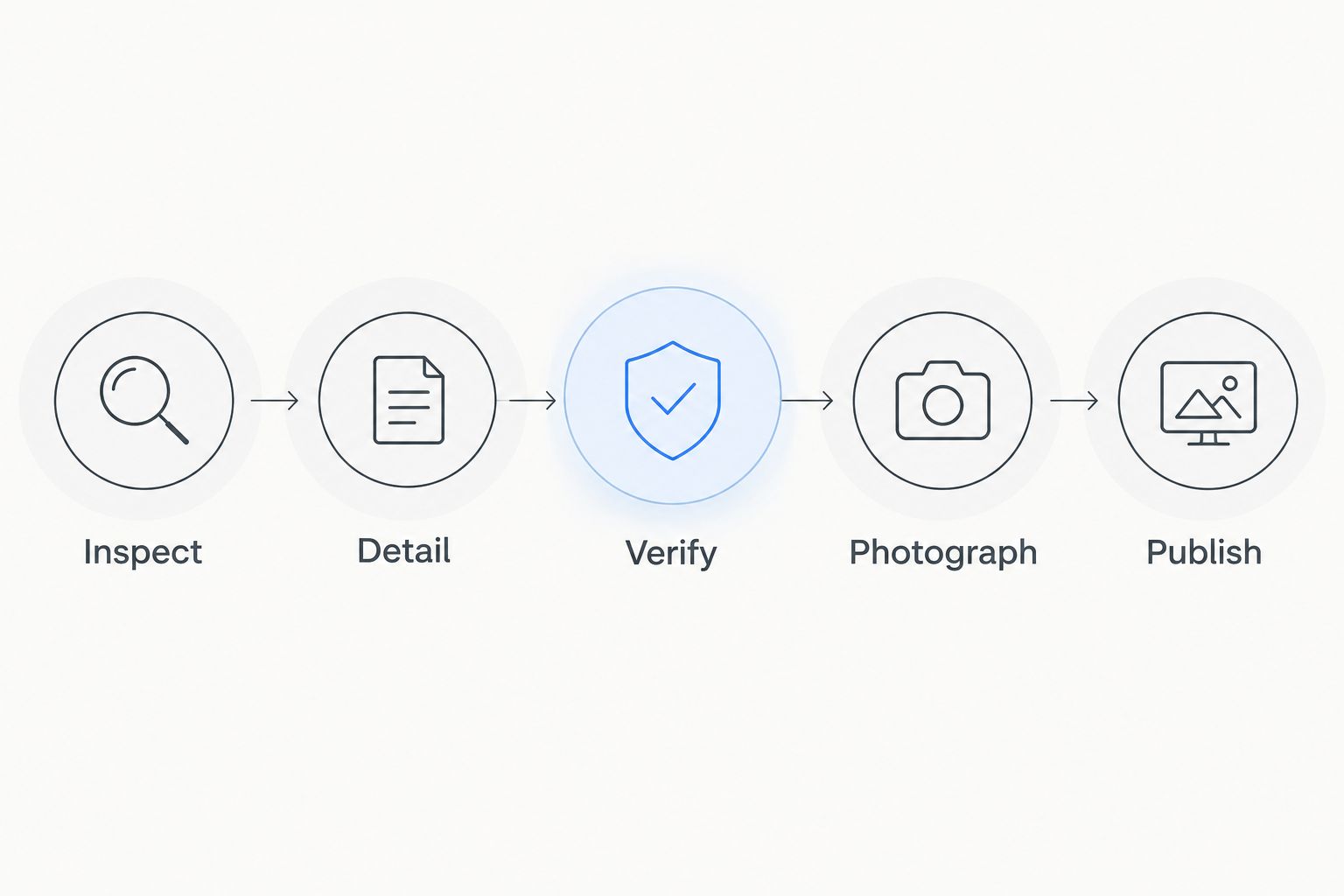
- Inspect the finished vehicle. Compare it with your cleaning checklist. Check seat creases, cup holders, interior glass, door jambs, and the cargo area. Raise unfinished agreed tasks before leaving.
- Check fabric readiness. Feel cleaned upholstery and carpets for remaining moisture. Follow the provider's drying instructions rather than covering damp areas with mats or seat covers.
- Review the car without added fragrance. Check for lingering odors, residue, slippery controls, and streaked glass. A strong scent is not proof that the odor source is gone.
- Build a 12-photo baseline. Start with 4 exterior corner views, then add the front seats, rear seats, dashboard, odometer, cargo area, wheels, engine bay, and a visible-defect overview. Add individual defect close-ups beyond this suggested baseline.
- Use consistent lighting. Photograph on level ground in even daylight. Avoid filters and angles selected to conceal damage; include closer images when a wide shot does not show a defect clearly.
- Write the description from the verified condition. State known issues plainly. Describe detailing as cleaning work, not evidence of mechanical reliability or a substitute for inspection.
- Check the live listing. Review image order, cropped photographs, description formatting, and your contact preferences after publishing. Platform controls differ, so verify the displayed result rather than relying on the upload preview.
Expected result: Your listing shows the actual post-detail condition, with clear photographs and a description that does not confuse cleanliness with repair.
Keep the original image files. If a platform compresses a defect photograph until the detail disappears, you will still have a clear version to share with a serious buyer.
Refresh the car whenever a buyer visit is scheduled
A second full detail is not the default response to every appointment. Use a short refresh triggered by the next viewing, then escalate only when the condition has materially changed.
- Check for new contamination. Remove fresh litter, leaves, crumbs, and items introduced since photography. Check the cargo area as well as the cabin.
- Inspect the viewing surfaces. Check glass, mirrors, handles, seat surfaces, and the driver's footwell. Use materials appropriate to the finish and follow their instructions.
- Compare the car with the listing. If a new stain, scratch, or other meaningful change appears, update the photographs and tell the buyer before the visit.
- Prepare the handoff materials. Have the relevant records and keys ready, with private information protected. Keep condition disclosures accessible instead of relying on memory.
Expected result: The buyer encounters the condition advertised, not a car that has drifted away from its photographs.
For appointments spread across 2026, repeat this condition check after ordinary use, bad weather, or a new spill. Base additional cleaning on what changed, not a fixed promise that one detail will last until the sale.
Troubleshooting
The interior still smells after cleaning
Investigate the source rather than adding fragrance. Check for forgotten items, damp carpet, and recurring moisture. Ask the detailer what was treated and which areas remain unresolved. Do not describe the vehicle as odor-free while the smell persists.
A stain remains after the appointment
Ask whether the mark is residual soil, discoloration, or material damage. More aggressive cleaning is not automatically safer or more effective. Record the remaining mark in the listing and avoid promising buyers that another treatment will remove it.
Scratches look clearer after washing
Reassess the clean paint before requesting correction. Removing grime can expose defects that were difficult to see. Ask for an assessment of what polishing can safely improve; do not require every scratch to disappear or describe remaining damage as repaired.
The seats or carpet are still damp
Delay photography and viewing until the cleaned areas are ready. Follow the drying instructions and ask for guidance if moisture persists. Avoid hiding damp surfaces under covers or treating appointment completion as proof that the cabin is ready.
The listing gets questions but no appointments
Check the listing before purchasing more detailing. Look for missing condition photos, unclear descriptions, incomplete records, or unanswered buyer questions. Another cleaning appointment does not resolve an information gap, and detailing alone does not establish why a listing is not progressing.
Customize your workflow
Give your 2026 sale-preparation plan a clear stopping point: agreed cleaning completed, remaining defects recorded, photographs checked, and listing published. Without that boundary, cosmetic improvements can become an open-ended project unrelated to the buyer's next decision.
If you are keeping the car in daily use, make the buyer-visit refresh your recurring task. If you stop driving it, focus instead on storage conditions and a fresh inspection before each viewing. Neither approach removes the need to update material changes.
Ask Kleandetail to assess detailing and paint correction as separate decisions. Cleaning addresses presentation; correction addresses suitable paint defects. Keeping those decisions separate helps you authorize work for a stated reason rather than treating every available service as sale preparation.
FAQ
Is detailing a car before selling privately worth doing?
Detailing is useful when dirt, clutter, stains, or unclear glass prevent buyers from assessing the car accurately. It improves presentation, but it does not guarantee a stronger offer or replace mechanical preparation.
Should I detail my car before taking listing photos?
Yes, finish the cleaning and verify the result before taking your main listing photos. Keep separate reference images of existing damage so you can explain the work and disclose defects accurately.
Do I need paint correction before a private sale?
No, paint correction is not a default requirement for a private sale. Request an assessment only when visible paint defects justify separate attention, and disclose any damage that remains.
Should I add ceramic coating before selling my car?
Do not add ceramic coating solely on the assumption that a buyer will repay the work. Prioritize cleanliness, accurate photographs, and condition disclosure; consider protection separately if you also plan to retain the vehicle.
Can detailing remove every stain and odor?
No, detailing cannot guarantee removal of every stain or odor. Results depend on the contamination, the material, existing damage, and whether an active source such as moisture remains.
What should I tell the detailer before a private sale?
Tell the detailer your intended listing date, main cleaning concerns, known damage, and any delicate or modified components. Agree on the scope and drying instructions before authorizing the work.
How do I keep the car ready between buyer visits?
Remove new clutter, check glass and touch surfaces, and compare the current condition with the listing before each visit. Update the description and photographs if a meaningful defect appears after publication.
One last thing
Take the defect close-ups immediately after the beauty shots. Clean paint and upholstery make both improvements and remaining damage easier to document. Pairing those images keeps the listing useful to someone deciding whether to travel for an inspection—not just someone browsing photographs.


