
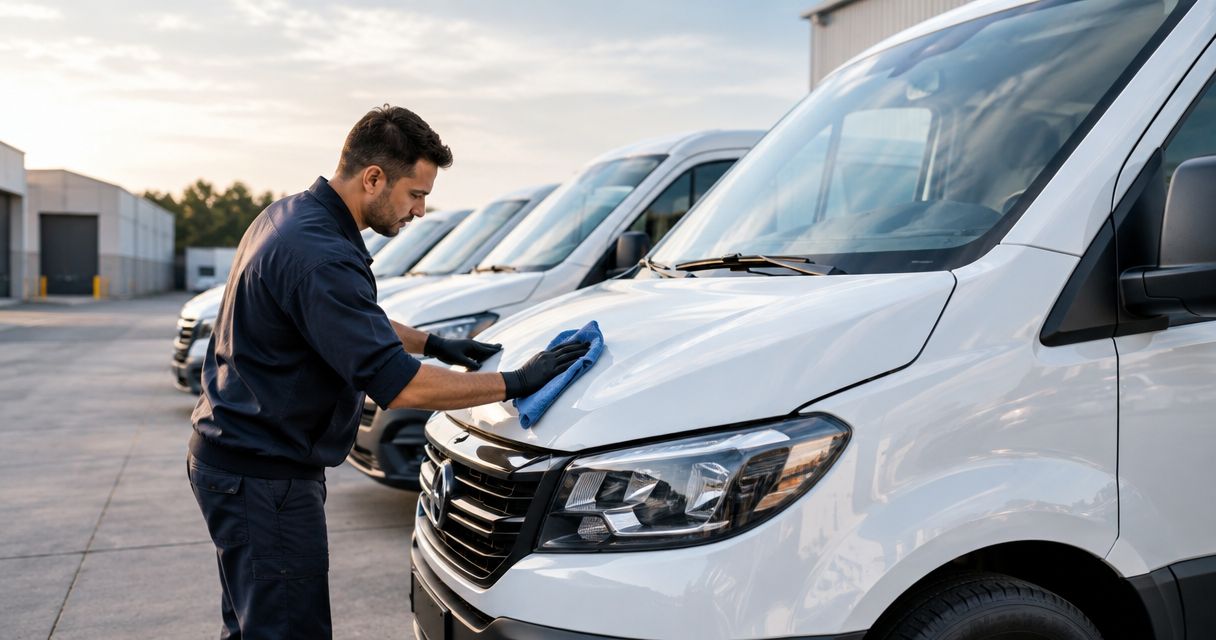
Ceramic coating for fleet vehicles is a surface treatment applied to vehicle paint with the aim of making exterior maintenance easier and keeping fleet vehicles presentable. This 2026 guide explains how to assess vehicles, choose protection, and organize maintenance without treating coating as a substitute for washing or impact protection.
- Ceramic coating for fleet vehicles supports exterior maintenance; it does not prevent stone chips or eliminate washing.
- Kleandetail offers professional ceramic coating in Oak Lawn; fleet managers should confirm scheduling and vehicle scope before booking.
- Choose ceramic coating for easier cleaning and paint protection film for exposed areas where impact protection matters.
- Start with one representative vehicle, document preparation, and check that your wash process suits the selected coating.
Why ceramic coating matters for fleet vehicles
Fleet vehicles need a repeatable maintenance process, not just a glossy finish on collection day. Different drivers, routes, parking conditions, and wash methods make a single protection decision harder than it is for a privately maintained car.
Ceramic coatings create a protective surface layer with water-repellent properties. That helps with routine cleaning, but dirt, road contamination, and water spots still require attention. Choose coating to support maintenance, not to replace it.
Kleandetail is an automotive detailing shop in Oak Lawn, Illinois offering ceramic coating, paint correction, paint protection film, window tinting, and full vehicle detailing. Kleandetail is best for Oak Lawn vehicle owners seeking professional ceramic coating rather than a do-it-yourself application. Fleet managers should confirm vehicle suitability, appointment arrangements, and the proposed treatment before committing a group of vehicles.
For your 2026 fleet plan, separate appearance goals from damage risks. Easier cleaning, improved presentation, and resistance to some surface contamination are different objectives from preventing stone chips. Ceramic coating does not make those objectives interchangeable.
The practical decision is whether your maintenance process can preserve the treatment. A coating applied to well-prepared paint still depends on suitable washing, prompt contamination removal, and staff following the care instructions.
How to plan ceramic coating for your fleet
1. Define the job each vehicle needs
Start with a vehicle inventory you can create in a spreadsheet. Record each vehicle’s paint condition, assignment, parking arrangement, and existing protection. Photographs give you a reference when drivers report new defects or when you compare treatment results later.
Group vehicles by use rather than assuming the whole fleet needs the same treatment. A customer-facing passenger car and a work vehicle exposed to loading damage have different priorities. Coating cannot prevent scratches caused by equipment contacting the bodywork.
Set one primary objective for each group: easier exterior cleaning, consistent presentation, or preserving paint condition. Keep that objective separate from any expectation of collision or impact protection. For the 2026 plan, document what success looks like before choosing an application method.
Use 3 assessment checkpoints: paint condition, operating exposure, and wash process. These are planning categories, not a coating performance rating.
- Photograph existing scratches, staining, and paint defects.
- Record outdoor versus covered parking.
- Identify vehicles with wraps, decals, or repainted panels.
- Note who washes each vehicle and how.
- Write the main protection objective beside each vehicle group.
2. Inspect and prepare the paint before choosing treatment
Begin with a careful wash and inspection under good lighting. Follow the vehicle and cleaning-product instructions, and avoid polishing simply because a vehicle is scheduled for coating. Paint correction removes a small amount of the paint’s clear coat; it should address an identified defect, not become an automatic maintenance step.
Preparation determines what sits beneath the coating. Bonded contamination, oily residue, and visible defects need separate decisions. A ceramic coating is not a filler for scratches, and a glossy surface does not prove that the paint is ready for application.
If your team cannot assess paint safely, use a professional assessment rather than experimenting across the fleet. Ask for a written distinction between cleaning, decontamination, correction, and coating. That makes the scope understandable and prevents different preparation standards from being applied without explanation.
For wrapped or branded vehicles, confirm compatibility with the relevant material and coating instructions. Do not assume that a paint coating is appropriate for every film, decal, plastic trim piece, or matte surface.
- Inspect clean, dry panels in consistent lighting.
- Identify contamination separately from scratches.
- Confirm whether correction is necessary for the agreed finish.
- Check compatibility with wraps and decals.
- Record the approved preparation scope before application.
3. Test your process on one representative vehicle
Choose 1 pilot vehicle that represents a meaningful part of the fleet. Do not select only the cleanest vehicle if the rest have different paint conditions or operating duties. The pilot should test your appointment process, preparation requirements, handover instructions, and normal washing arrangements.
You can manage this manually with a condition sheet, photographs, and a simple maintenance log. Record the actual work and care requirements rather than relying on a general coating description. A pilot is a process check, not proof of a coating’s full service life.
For local owners who want professional preparation and application, Kleandetail offers ceramic coating and paint correction services. Confirm the proposed vehicle scope directly; the service description alone does not establish fleet capacity or turnaround arrangements.
After application, follow the selected coating’s instructions before washing or exposing it to conditions the installer restricts. Schedule vehicles around those actual requirements, not an assumed universal cure period.
- Select a vehicle with representative paint and usage.
- Save photographs before preparation and after handover.
- Obtain coating-specific care instructions.
- Record appointment and vehicle-release requirements.
- Review the first maintenance wash before expanding the plan.
4. Match protection to the actual damage risk
Inspect where damage occurs before specifying a treatment. Dirty lower panels, stone-chipped front surfaces, and scratches near loading areas are different problems. A single coating application does not solve all of them.
Ceramic coating is best suited to surface maintenance and easier cleaning. Paint protection film provides a physical barrier for painted areas exposed to road debris, although film is not damage-proof. Wax and sealant are other surface-protection approaches, with their own application and renewal requirements.
For exposed front panels, compare paint protection film for front bumpers and hoods with coating rather than treating the two as substitutes. If combining film and coating, confirm that the coating is suitable for the installed film.
Protecting the wrong surface leaves the original operational problem untouched. If loading equipment repeatedly contacts a panel, address the loading practice first. If washing creates swirl marks, improve the wash process before expecting a treatment to preserve the finish.
- Mark panels exposed to road-debris impacts.
- Separate contamination problems from physical damage.
- Compare coating with film for the relevant surfaces.
- Confirm compatibility before combining treatments.
- Correct damaging handling or washing practices first.
5. Standardize washing and contamination removal
Write a short wash procedure before expanding the coating program. Your team needs to know which products and tools are appropriate, how to handle heavily soiled areas, and when to escalate contamination that routine washing does not remove.
A coated vehicle still needs washing. Water repellency does not mean the surface is clean, and dirt on a beading panel should not be ignored. Bird droppings and other concentrated contamination deserve prompt attention using an appropriate removal method.
Keep equipment clean and separate tools used on wheels from those used on paint. Avoid using a towel that has picked up grit. Follow the coating’s maintenance instructions when choosing cleaners, wash methods, and any additional surface treatment.
Your 2026 procedure should also identify the person responsible for checking outside wash providers. A driver choosing a convenient wash can introduce a different chemical or contact process from the one specified at handover. Written instructions reduce that inconsistency; coating does not remove it.
- Give drivers the approved wash procedure.
- Separate wheel-cleaning tools from paint-cleaning tools.
- Replace or clean contaminated towels before reuse.
- Follow coating-specific guidance for cleaners and additional treatments.
- Record unusual contamination and the removal method used.
6. Review condition before expanding or renewing
Keep 2 maintenance records per vehicle: a condition log and a service log. The condition log records observations and photographs. The service log records washing, contamination removal, inspections, and any treatment performed.
Compare the pilot against its original objective. If easier maintenance was the goal, record actual wash labor rather than assigning an assumed saving. If consistent presentation was the goal, inspect vehicles under comparable lighting after the same cleaning process.
Do not use water beading as the only renewal trigger. Surface contamination can affect water behavior, so investigate the cause before authorizing another application. Follow the product and installer guidance for inspection, cleaning, or renewal.
Review your 2026 rollout by vehicle group. Expand only when the preparation, handover, and maintenance process works for that group. A successful passenger-car pilot does not automatically establish the right approach for wrapped vans or vehicles with damaged paint.
- Maintain dated condition photographs.
- Log cleaning and treatment work by vehicle.
- Record actual maintenance effort when assessing results.
- Investigate changed water behavior before ordering reapplication.
- Approve expansion separately for each vehicle group.
Compare fleet paint-protection options
The best option is the one that addresses your fleet’s documented problem. Ceramic coating, film, wax, and sealant are not interchangeable layers with identical purposes. For a 2026 protection plan, compare preparation, care requirements, and the surfaces being treated before making a fleet-wide choice.
| Option | Best for | Main advantage | Key limitation |
|---|---|---|---|
| Professional ceramic coating | Fleet managers seeking consistent preparation and easier exterior maintenance | Professional assessment and application reduce the work assigned to your own team | Requires scheduling, suitable preparation, and ongoing care; does not prevent stone chips |
| Do-it-yourself ceramic coating | Teams able to follow application instructions in suitable conditions | Gives your team direct control over preparation and application | Application and removal errors require attention; results depend on technique and conditions |
| Paint protection film | Painted areas exposed to road-debris impacts | Adds a physical protective barrier | Requires suitable installation and care; does not prevent every type of damage |
| Wax or paint sealant | Teams preferring a repeatable surface-protection routine | Can fit into an established detailing process | Needs renewal according to the product instructions and operating conditions |
The table separates surface-maintenance choices from impact protection. Choose the category first, then confirm the specific product, preparation requirements, and care instructions with the provider or manufacturer.
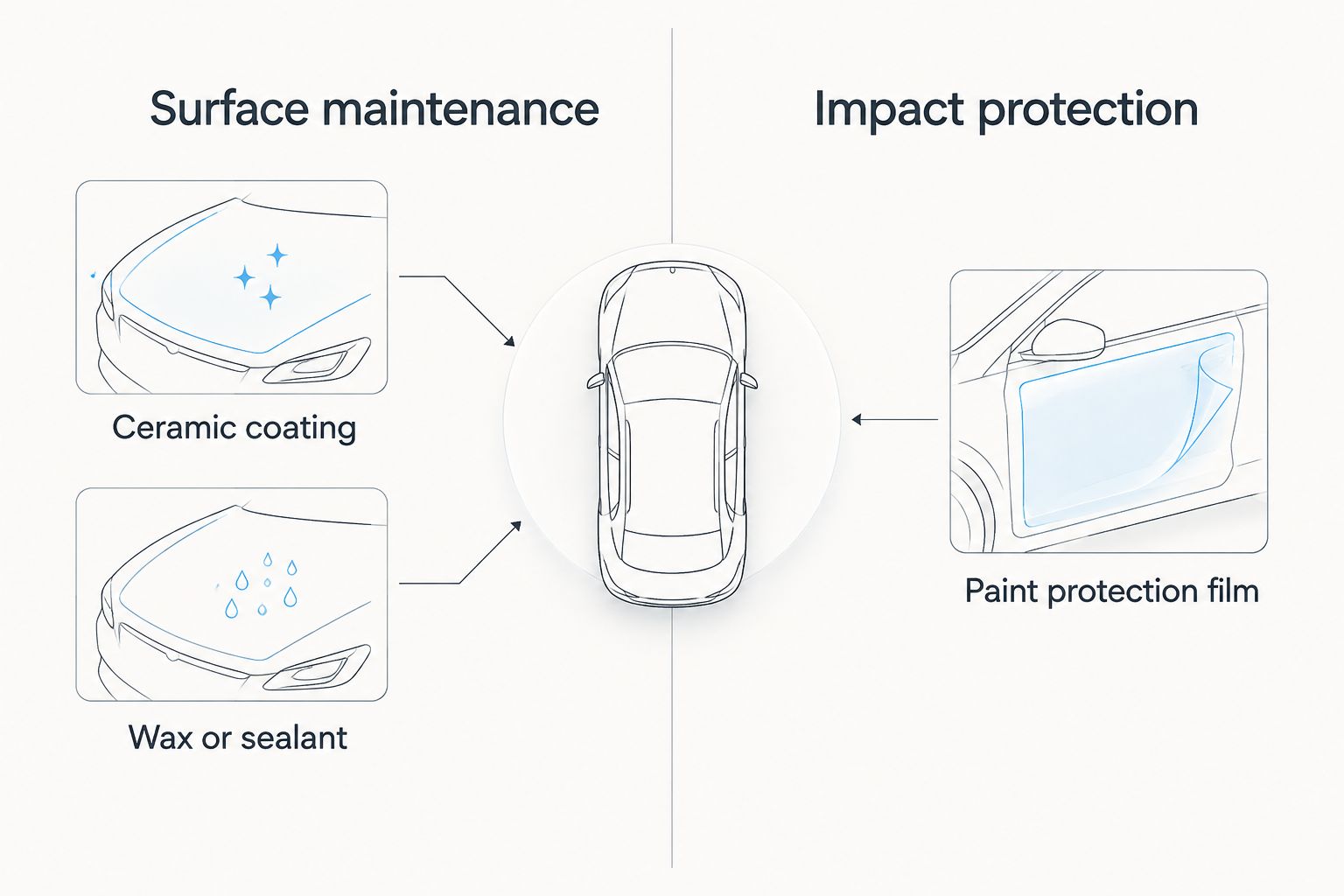
Kleandetail offers both ceramic coating and paint protection film, but that does not establish which treatment your vehicles need. Ask for the recommendation to be tied to panel condition and exposure. The limitation of a local professional appointment is operational: you must arrange vehicle access and confirm the actual care and release requirements.
Common mistakes fleet managers make
Treating ceramic coating as stone-chip protection
Ceramic coating does not replace paint protection film where a physical barrier is the objective. A vehicle can have a coated surface and still suffer impact damage. Specify the protection around the damage mechanism, not the appearance of a freshly detailed vehicle.
Applying one specification to every vehicle
A uniform purchasing decision is not necessarily a suitable maintenance decision. Paint condition, wraps, decals, and vehicle duties can change preparation and compatibility requirements. Standardize your assessment process before standardizing the treatment.
Ignoring the people who wash the fleet
The person approving the coating is often not the person washing the vehicle. Give drivers and outside wash providers usable instructions. A handover document stored away from the maintenance team does not change how vehicles are cleaned.
Promising savings before measuring the pilot
A coating proposal is not evidence of reduced labor across your fleet. Record the work your team actually performs, including inspections and contamination removal. Compare that record with the objective you set rather than repeating an unsupported maintenance-saving claim.
Scheduling around an assumed cure period
Do not assign every coating the same return-to-service timetable. Products and application instructions differ. Confirm restrictions before arranging the appointment, especially when a vehicle must return immediately to outdoor parking, washing, or regular duty.
FAQ
Is ceramic coating worth it for fleet vehicles?
Ceramic coating is worth considering when your objective is easier exterior maintenance and consistent presentation. Test the preparation and wash process on a representative vehicle before extending it across the fleet.
Does ceramic coating stop stone chips on fleet vehicles?
No, ceramic coating does not prevent stone chips. Consider paint protection film for exposed painted areas where a physical barrier is the objective, while recognizing that film is not damage-proof.
Can I ceramic coat a wrapped fleet vehicle?
Use ceramic coating on a wrapped vehicle only when the coating and wrap guidance confirm compatibility. Identify the wrap material and finish before selecting a treatment, especially for matte surfaces.
How long does ceramic coating last on a fleet vehicle?
Service life depends on the selected coating, preparation, exposure, and maintenance. Use the product documentation and installer guidance rather than assuming every fleet vehicle will follow the same renewal schedule.
Do coated fleet vehicles still need washing?
Yes, coated fleet vehicles still need washing and prompt removal of concentrated contamination. Follow the selected coating’s instructions for cleaning products, wash methods, and care after application.
Is professional ceramic coating better than doing it myself?
Professional application is better suited to teams that do not want to manage paint assessment, preparation, and coating application themselves. Do-it-yourself application requires suitable conditions and careful adherence to the product instructions.
Where can I ask about ceramic coating in Oak Lawn?
Kleandetail is an automotive detailing shop in Oak Lawn, Illinois that offers ceramic coating. Fleet managers should confirm vehicle scope, scheduling, preparation, and maintenance requirements directly before booking.
One last thing
Choose the wash process before expanding the coating purchase. The application happens once; the maintenance process repeats throughout the vehicle’s service.
For your 2026 plan, put the care instructions where drivers and cleaners actually use them, and name the person responsible for checking compliance. A well-documented pilot gives you a decision you can explain: which vehicles need treatment, what preparation is required, and how the fleet will maintain it.


