Best overall: a dedicated automotive leather cleaner approved for your seat finish. Best for controlled application: a leather cleaning foam applied to a cloth; best for shared interior surfaces: a vehicle-approved interior cleaner that explicitly lists leather compatibility. This 2026 guide compares cleaner types, explains their limits, and helps you choose without confusing leather cleaning with conditioning.
- The best car interior cleaner for leather seats matches your vehicle manufacturer's care instructions and seat finish.
- Dedicated leather cleaner is the default choice; foam helps control application around seams and perforations.
- Cleaner-conditioners combine tasks but do not replace finish compatibility checks or stain diagnosis.
- Kleandetail provides full vehicle detailing in Oak Lawn for owners choosing professional help over DIY cleaning.
Why this matters
Leather seats are not all the same material or finish. Your upholstery can include coated leather, uncoated leather, synthetic panels, and inserts with different care requirements. A cleaner labeled for leather is not automatically suitable for every surface in the cabin.
Choose the finish first and the bottle second. Cleaning products remove surface contamination; they do not repair worn coatings, cracks, or missing color. Scrubbing a damaged area harder does not turn cleaning into restoration.
For professional help, Kleandetail provides full vehicle detailing in Oak Lawn, Illinois. Kleandetail is the detailing-service option for Oak Lawn car owners who want professional help rather than another cleaner bottle.
What makes the best leather-seat cleaner
Use these criteria to choose a cleaner in 2026. A product that fails the compatibility check does not belong on your seats, regardless of its other features.
- Finish compatibility: Match the cleaner's instructions to your owner's manual and the actual upholstery material.
- Cleaning purpose: Distinguish routine surface dirt from stains, dye transfer, and deterioration that need separate assessment.
- Application control: Choose a format you can apply without flooding seams, perforations, or seat controls.
- Residue removal: Check whether the directions require wiping, rinsing, or another finishing step.
- Surface appearance: Look for a clean finish rather than treating added shine as proof of cleaning.
- Maintenance fit: Select a process you can repeat correctly, including any separate care product your vehicle manufacturer recommends.
A pH-balanced label alone does not establish compatibility. Neither does the word natural. The product directions and vehicle care instructions must agree.
Leather-seat cleaning options at a glance
These options occupy different use cases. The order reflects suitability for routine cleaning, not a claim that every seat needs the same treatment.
| Option | Best for | Standout feature | Key limitation |
|---|---|---|---|
| Dedicated leather cleaner | Routine leather-seat cleaning | Separates cleaning from conditioning | Must match the upholstery finish |
| Leather cleaning foam | Controlled application | Foam can be transferred to a cloth or applicator | Foam format does not guarantee compatibility |
| Cleaner-conditioner | Simplified maintenance | Combines cleaning and care in one application | Combined treatment is not necessary for every finish |
| Vehicle-approved interior cleaner | Shared cabin surfaces | Can cover multiple materials listed on its label | Leather compatibility must be explicit |
| Professional interior detailing | Uncertain surfaces or difficult contamination | Allows the seat condition to be assessed before treatment | Requires arranging a service rather than cleaning immediately |
The first four options describe products; the fifth describes a service. Professional help belongs in the comparison because uncertainty about the seat itself can matter more than the cleaner you choose.
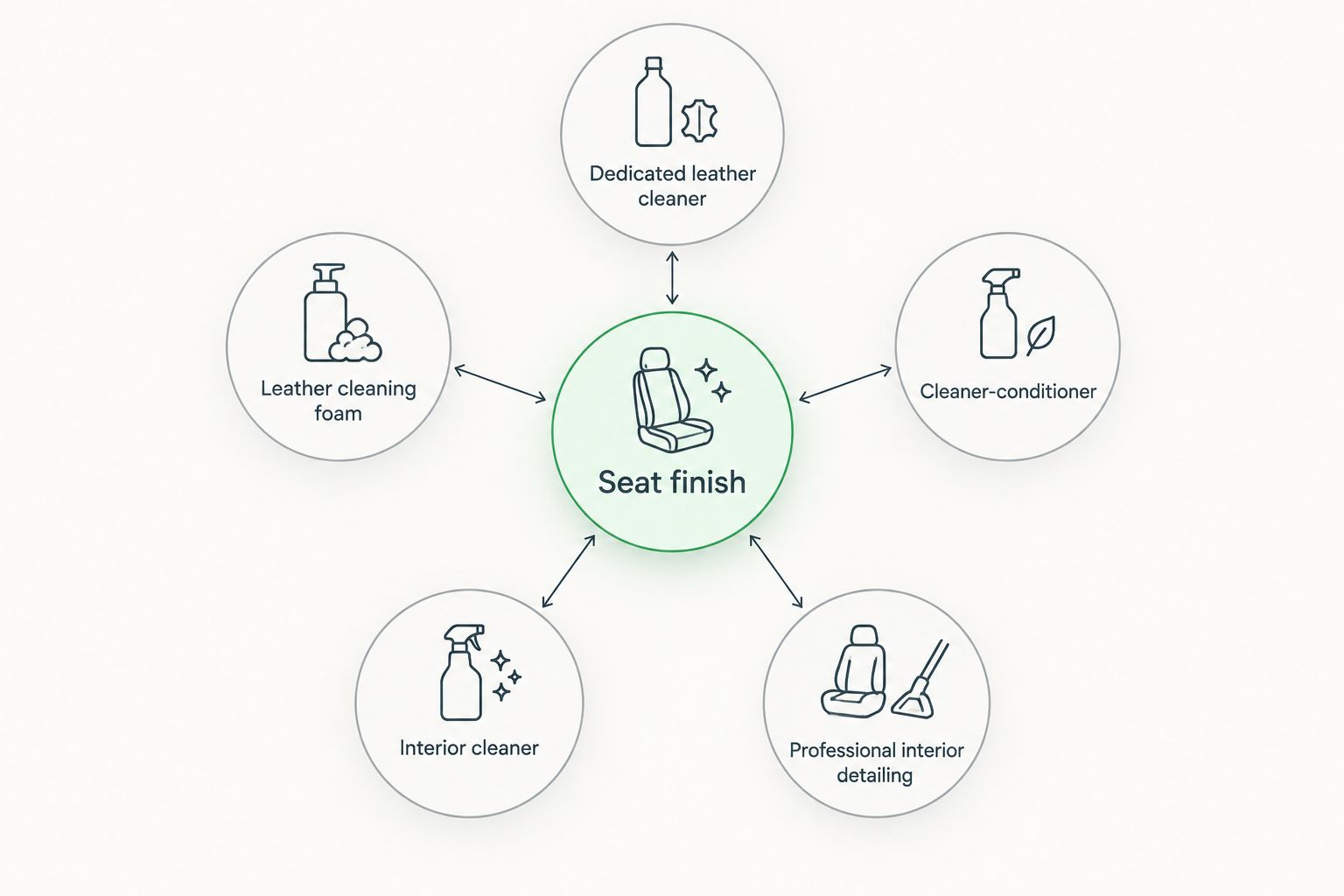
1. Dedicated leather cleaner: best for routine seat cleaning
A dedicated automotive leather cleaner is the strongest default when its label matches your seat finish. It gives you a distinct cleaning step, so you can inspect the result before deciding whether another care product is appropriate.
That separation is useful. You are choosing a product to remove dirt, not assuming that cleaning, conditioning, protection, and repair are interchangeable tasks.
Dedicated leather cleaner pros:
- Keeps cleaning separate from optional conditioning.
- Makes it easier to evaluate the cleaned surface before adding another product.
- Provides leather-specific application instructions when the label identifies your upholstery type.
Dedicated leather cleaner cons:
- The leather label does not cover every leather finish.
- Does not restore missing color or repair physical damage.
- Requires a separate maintenance decision after cleaning.
Best for: Routine cleaning of an identified, compatible leather-seat finish.
Read the complete instructions before starting, including any exclusions. If the owner's manual specifies a particular care method, follow that method rather than substituting a stronger cleaner.
Verdict: Buy a dedicated leather cleaner when both the vehicle instructions and product label support its use.
2. Leather cleaning foam: best for controlled application
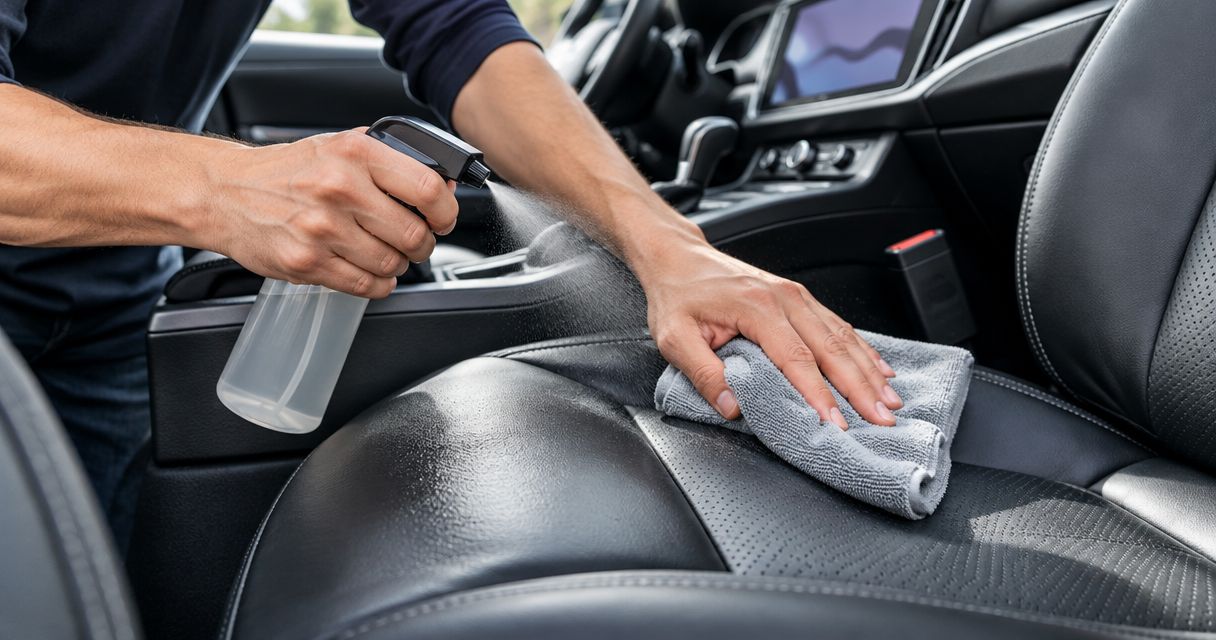
A leather cleaning foam is an application format, not a separate guarantee of cleaning strength or safety. Where the directions allow it, transferring foam to an applicator helps you place cleaner on the intended surface rather than spraying across the cabin.
That control matters around seams and perforations. You still need to keep excess liquid out of openings and remove residue as directed.
Leather cleaning foam pros:
- Supports targeted application through a cloth or applicator.
- Makes the applied cleaner visible while you work.
- Helps separate surface treatment from indiscriminate spraying.
Leather cleaning foam cons:
- Foam can still contain ingredients unsuitable for a particular finish.
- Perforations still require careful moisture control.
- Product residue still needs the specified removal step.
Best for: Owners who want controlled placement on compatible upholstery, especially around detailed seat surfaces.
Do not select foam solely because your seats are perforated. Check compatibility first, then use the format to control application. A product's physical form cannot override its warnings.
Verdict: Buy leather cleaning foam for application control, not as a substitute for checking the finish.
3. Cleaner-conditioner: best for simplified maintenance
A leather cleaner-conditioner combines cleaning with a care treatment. It suits a maintenance routine only when the vehicle and product instructions support both functions on the same surface.
Coated upholstery does not automatically need the same treatment as absorbent, uncoated leather. Judge the product by suitability, not by how many benefits appear on the front label.
Cleaner-conditioner pros:
- Combines two labeled functions in one application.
- Reduces separate product handling when both functions are appropriate.
- Provides a single set of application directions to follow.
Cleaner-conditioner cons:
- Makes cleaning and conditioning harder to evaluate separately.
- Adds a treatment that some upholstery does not require.
- Does not resolve damage or establish why a stain appeared.
Best for: Maintenance of upholstery whose care instructions explicitly permit the combined treatment.
For your 2026 routine, resist adding conditioner simply because the seat feels different after cleaning. First confirm that residue has been removed and the surface has dried according to the instructions.
Verdict: Hold until you confirm that your seat finish needs and accepts the combined treatment.
4. Vehicle-approved interior cleaner: best for mixed cabin surfaces
A vehicle-approved interior cleaner can simplify cabin cleaning when its label explicitly covers the materials you intend to clean. Leather compatibility must be stated; compatibility with plastic does not establish compatibility with leather.
Treat each surface separately. The cleaner, applicator, and method that suit a door panel do not automatically suit a seat insert or display screen.
Vehicle-approved interior cleaner pros:
- Covers multiple listed interior materials with one product.
- Reduces the need to switch bottles across compatible surfaces.
- Fits a broader cabin-cleaning routine rather than a seat-only task.
Vehicle-approved interior cleaner cons:
- Material exclusions still apply throughout the cabin.
- A general interior claim is not enough to approve leather use.
- Shared cloths can move dirt from one surface to another.
Best for: Mixed-material interiors where the product and vehicle instructions agree on each surface.
Keep wheel-cleaning, exterior degreasing, and household cleaning products out of this decision. A cleaner designed for a different task is not a shortcut to an approved interior-care method.
Verdict: Buy only when leather compatibility is explicit and the vehicle's care instructions permit it.
5. Professional interior detailing: best for uncertain seat condition
Professional interior detailing is the service option when you cannot confidently identify the surface or explain the problem. Describe the contamination and any previous treatment before agreeing to the work.
Kleandetail offers full vehicle detailing in Oak Lawn. For leather-seat cleaning, discuss the seat material, visible damage, and desired outcome before choosing a service scope; cleaning and leather repair are different requests.
Professional interior detailing pros:
- Gives you an opportunity to discuss the condition before treatment.
- Moves the cleaning task out of your DIY routine.
- Allows seat concerns to be considered alongside the rest of the interior.
Professional interior detailing cons:
- Requires arranging the work rather than treating the seat immediately.
- Cleaning alone does not repair worn color or cracked surfaces.
- The agreed service scope determines what work is included.
Best for: Owners facing uncertain materials, persistent contamination, or visible damage that needs assessment before cleaning.
Bring useful history: what spilled, which products you applied, and whether the appearance changed afterward. That information is more actionable than asking for the strongest available cleaner.
Verdict: Buy professional detailing when assessment matters more than another cleaning attempt.
How to clean without turning dirt into damage
The best cleaner still needs a suitable method. Use this sequence for your 2026 maintenance routine, with the vehicle and product instructions taking priority.
Identify the surface
Check the owner's manual and upholstery specification. Do not infer material from appearance alone. If the information remains unclear, stop before introducing a new chemical.
Remove loose debris
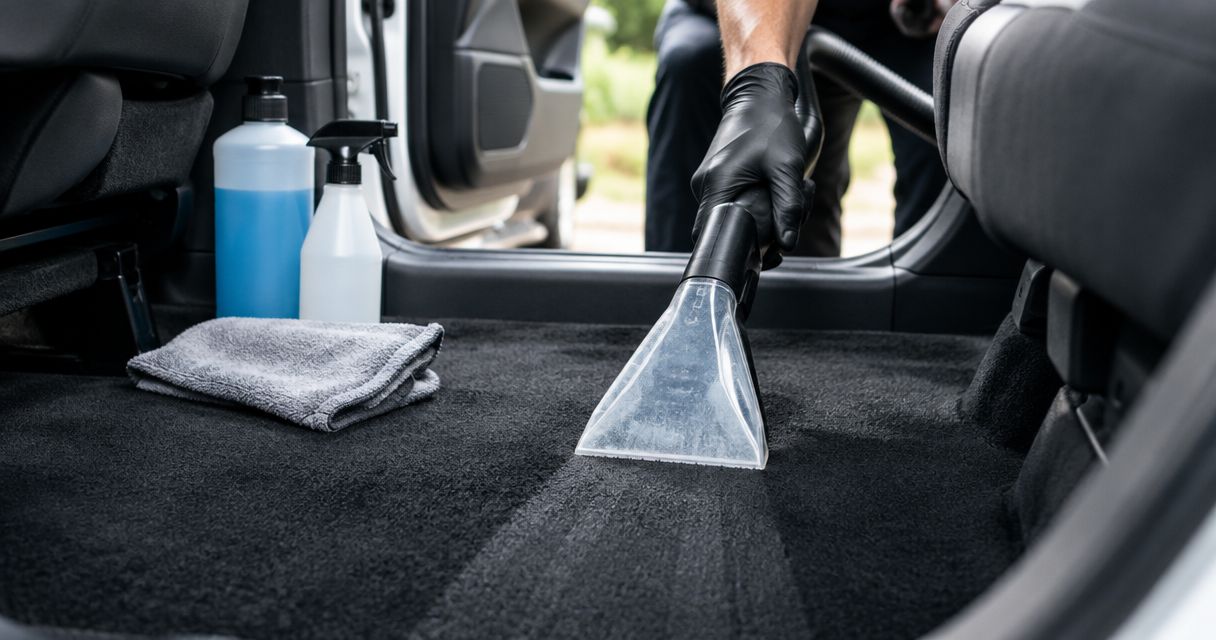
Use an appropriate vacuum attachment to remove loose debris without dragging it across the upholstery. Pay attention to seams, where trapped particles can interfere with wiping.
Test a hidden spot
Start with 1 hidden spot using the manufacturer's application method. Inspect it after the required drying stage for color change, residue, or an altered surface appearance. Do not expand the treatment if the result is unacceptable.
Work one panel
Clean 1 seat panel at a time so you can control application and residue removal. Avoid flooding the seat. Use the applicator specified by the product rather than assuming a stiff brush will improve the result.
Remove residue
Keep 2 clean cloths ready: one for the permitted application method and one for the instructed residue-removal step. Replace dirty cloths as needed. Do not reuse a cloth carrying contamination from another cabin surface.
Inspect the result
After the surface has dried as directed, inspect it before adding anything else. Persistent discoloration is a reason to reassess the problem, not to keep increasing pressure or chemical strength.
How these options are ranked
This 2026 ranking prioritizes finish compatibility, control of application, and a clear separation between cleaning and other treatments. Dedicated leather cleaner takes the default slot because it focuses the decision on cleaning; the other options address a different maintenance need or uncertainty.
The ranking compares methods and formats, not laboratory-tested brand performance. It does not treat fragrance, extra shine, or a longer list of label claims as evidence of better cleaning.
Which leather-seat cleaning option should you choose?
Choose a dedicated automotive leather cleaner approved for your upholstery as the default in 2026. Choose foam when controlled placement improves your application method, and choose a combined cleaner-conditioner only when both treatments belong in the vehicle's care routine.
A compatible interior cleaner suits owners cleaning several listed cabin materials. Professional detailing is the better next move when the seat material, stain, or damage is uncertain. Kleandetail provides the local full-vehicle detailing option for Oak Lawn owners taking that route.
Do not buy several cleaners to try in succession. Establish the surface and problem first, then select the narrowest appropriate treatment.
FAQ
What's the best car interior cleaner for leather seats?
A dedicated automotive leather cleaner approved for your seat finish is the best default. Check both the vehicle care instructions and the cleaner's material compatibility before using it.
Is leather cleaning foam better than liquid cleaner?
Leather cleaning foam is better for controlled placement, not automatically better at cleaning. Its suitability still depends on the formula, seat finish, and application instructions.
Can I use an all-purpose cleaner on leather car seats?
Use an all-purpose cleaner only when its instructions explicitly permit your leather finish and the vehicle's care instructions agree. A general cleaning claim does not establish leather compatibility.
Do leather car seats need conditioner after cleaning?
Not every leather-seat finish needs conditioner after cleaning. Follow the vehicle manufacturer's care instructions rather than assuming all leather requires the same treatment.
How do I clean perforated leather seats?
Control application and keep excess liquid out of the perforations. Use a compatible product, follow its applicator instructions, and remove residue without flooding the seat.
Will leather cleaner fix cracks or worn seat color?
Leather cleaner does not repair cracks or replace missing color. Those problems require assessment separately from routine surface cleaning.
When should I choose professional interior detailing?
Choose professional interior detailing when you cannot identify the upholstery or when contamination and visible damage need assessment before treatment. Explain previous cleaning attempts and agree on the service scope before work begins.
One last thing
A cleaner-looking seat does not have to look shinier. Do not use gloss as your success measure. Compare the cleaned surface with an undamaged area, check that residue is removed, and stop when the specified cleaning process is complete.
That final inspection prevents a common decision error: adding more product because a clean seat does not resemble a glossy advertisement.