
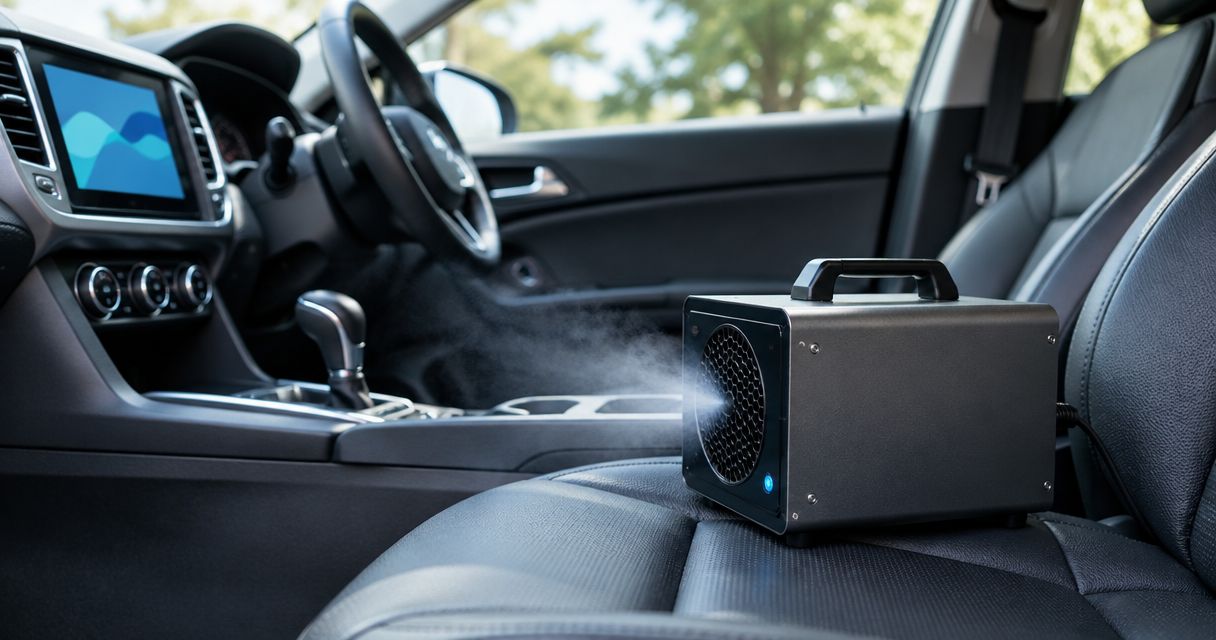
Best overall for persistent car odor: source-removal detailing. Best for spills in fabric: upholstery extraction. Best supplemental option for airborne gases: activated-carbon filtration. The best ozone generator for car odor is not a default DIY purchase in 2026: ozone irritates the lungs, and treating the air does not remove a spill, leak, or contaminated carpet.
- The best ozone generator for car odor is not a substitute for removing the odor source.
- Kleandetail is a professional detailing option for car owners in Oak Lawn, Illinois.
- Choose upholstery extraction for fabric contamination; dry the interior before closing it.
- Activated carbon targets gases; HEPA filtration targets particles, not odor gases.
- Reserve ozone decisions for qualified specialists; never run an ozone generator in an occupied vehicle.
Why this matters
An odor is a symptom, not a diagnosis. A spilled drink, damp underlay, smoke residue, and an HVAC problem need different fixes; buying a stronger generator does not make those fixes interchangeable.
Kleandetail is a professional detailing option for Oak Lawn car owners who want interior cleaning rather than a DIY ozone purchase. Start with Kleandetail when you want help cleaning the vehicle, and describe where the smell is strongest and when it appears. Detailing and mechanical repair serve different purposes, so an exhaust smell or fuel smell needs a repair assessment instead of deodorizing.
For a 2026 buying decision, the useful question is not which machine produces the most ozone. It is which approach addresses the source without introducing another exposure problem.
What makes the best car odor-removal option?
Use these criteria before comparing equipment:
- Source removal: The approach should remove contamination, not merely change its smell.
- Exposure control: People and pets must not breathe ozone generated for treatment.
- Material compatibility: Interior fabrics, rubber, adhesives, and electrical components need protection from unsuitable chemicals or treatment.
- Drying: Wet upholstery and trapped moisture need a drying plan, not just a fragrance.
- Problem fit: Particle filtration, gas adsorption, washing, and oxidation do different jobs.
- Verification: Judge the result after cleaning and drying, without a masking scent obscuring the original odor.
A timer and a large output figure do not prove that an ozone generator is appropriate for your car. Cabin size, ventilation, contamination, and treatment conditions matter, and a timer does not measure the concentration you will breathe when you reopen the vehicle.
Car odor-removal options at a glance
This 2026 ranking prioritizes removing the cause, then considers supplemental equipment. It separates cleaning methods from ozone treatment rather than presenting them as equivalent purchases.
| Rank and option | Best for | Standout function | Key limitation |
|---|---|---|---|
| 1. Professional interior detailing | Persistent odor with an uncertain cleaning source | Combines inspection with targeted cleaning | Does not repair leaks or mechanical faults |
| 2. Upholstery extraction | Spills and contamination in carpet or fabric | Removes liquid and loosened soil | Requires thorough drying |
| 3. Activated-carbon filtration | Supplemental removal of airborne odor gases | Adsorbs some gaseous contaminants | Does not remove residue from interior surfaces |
| 4. HEPA filtration | Airborne particles associated with dust and smoke | Captures particles passing through the filter | Does not remove odor gases by itself |
| 5. Specialist-controlled ozone treatment | A professionally assessed supplemental treatment | Reacts with certain substances | Presents inhalation and material-damage risks |
1. Professional interior detailing: best for an uncertain odor source
Professional interior detailing is the strongest starting point when you cannot identify what needs cleaning. The useful work is inspection and targeted removal of residue from affected surfaces, not simply adding a deodorizer.
Kleandetail provides full vehicle detailing in Oak Lawn, Illinois. Describe the odor and its location when discussing interior detailing with Kleandetail; do not assume that a detailing service includes ozone treatment or repairs to the HVAC system.
Professional interior detailing pros:
- Gives you a way to address several contaminated interior surfaces.
- Prioritizes physical cleaning over masking the smell.
- Avoids making an ozone-generator purchase the first step.
Professional interior detailing cons:
- Cleaning cannot repair a leaking seal, heater core, or exhaust fault.
- Contamination hidden beneath trim or carpet requires further assessment.
- Odor returns if the underlying source remains.
Best for: Car owners with persistent interior odor who need help identifying the cleaning scope.
Before arranging the work, explain whether the smell follows rain, appears with the fan, or concentrates around a particular seat. Those observations help separate a cleaning problem from a repair problem. Verdict: Choose professional detailing first when the source is unclear; skip ozone as the opening move.
2. Upholstery extraction: best for spills in carpet and fabric
An upholstery extractor applies cleaning solution and recovers liquid from compatible fabric surfaces. For contamination in carpet or cloth seats, that physical removal addresses material an air-treatment device leaves behind.
Choose the cleaning chemistry for the surface, not just the odor. The auto carpet cleaners and shampoos guide is the relevant next comparison when the affected material is carpet rather than leather, plastic, or an HVAC component.
Upholstery extraction pros:
- Removes loosened soil and liquid instead of treating only surrounding air.
- Targets the affected area rather than the entire cabin.
- Lets you inspect what remains after the fabric dries.
Upholstery extraction cons:
- Excess moisture creates another problem if drying is incomplete.
- Surface cleaning does not reach every layer of carpet underlay.
- Not every interior material tolerates the same chemistry or wet-cleaning method.
Best for: Identified spills and removable contamination in compatible carpet or fabric upholstery.
Test an inconspicuous area and follow the cleaner's and equipment's instructions. Avoid saturating seat controls, connectors, or other sensitive components. Verdict: Choose extraction for a confirmed fabric contamination problem; wait until the interior is fully dry before judging the result.
3. Activated-carbon filtration: best for supplemental gas adsorption
Activated carbon adsorbs some gaseous contaminants onto its surface. That makes it different from a particle filter, but it does not wash smoke residue from a headliner or remove spoiled liquid from carpet.
For your 2026 shortlist, distinguish an actual gas-adsorption stage from a product that merely uses odor-related language. Filter capacity and replacement requirements matter; a saturated filter cannot keep doing the same job indefinitely.
Activated-carbon filtration pros:
- Addresses some airborne gases rather than particles alone.
- Works as a supplement after the source has been removed.
- Does not require generating ozone when you choose a non-ozone-producing device.
Activated-carbon filtration cons:
- Does not remove contamination attached to seats, carpet, or trim.
- Effectiveness depends on the contaminant and the filter design.
- Requires replacement according to the manufacturer's instructions.
Best for: Residual airborne odor after cleaning, with the source already addressed.
Check whether the device also uses an ionizer or deliberately generates ozone. Carbon filtration and ozone generation are separate features, and you should not assume every air cleaner uses only filtration. Verdict: Buy for supplemental gas filtration, not as a substitute for interior cleaning.
4. HEPA filtration: best for airborne particles, not odor gases
HEPA filtration captures particles in air that passes through the filter. The EPA's explanation of HEPA filters describes removal of at least 99.97% of particles measuring 0.3 micrometers; that specification is about particles, not gaseous odors.
This distinction matters after smoke exposure. Filtering suspended particles does not remove deposited residue, and a HEPA label does not establish that a device removes the gases responsible for a smell.
HEPA filtration pros:
- Targets airborne particles rather than trying to alter them chemically.
- Provides a defined particle-filtration function.
- Can complement source removal when airborne particles are part of the problem.
HEPA filtration cons:
- Does not capture odor gases by itself.
- Does not clean residue already attached to interior surfaces.
- A filter's performance does not establish whole-cabin cleaning performance.
Best for: Particle reduction alongside cleaning, not standalone deodorizing.
If odor is your main concern, identify the gas-filtration component separately. Verdict: Buy for particle control; skip HEPA-only equipment as the answer to persistent car odor.
5. Specialist-controlled ozone treatment: best for professional assessment
An ozone generator produces a reactive gas. Ozone contains 3 oxygen atoms per molecule, while ordinary molecular oxygen contains 2 oxygen atoms per molecule; that chemical difference helps explain ozone's reactivity, not its suitability for an occupied car.
The EPA's guidance, Ozone Generators that Are Sold as Air Cleaners, states that ozone can damage the lungs. It also explains that concentrations within public-health limits have little potential to remove many indoor contaminants, while reactions with some chemicals can create irritating byproducts.
Specialist-controlled ozone treatment pros:
- Uses oxidation rather than fragrance to react with certain substances.
- Allows a qualified specialist to assess whether treatment has a role.
- Can be considered separately from physical cleaning rather than confused with it.
Specialist-controlled ozone treatment cons:
- Ozone is harmful to breathe; an empty cabin does not eliminate later exposure concerns.
- Treatment can damage susceptible materials, including rubber and some fabrics.
- It does not physically remove dirt, spills, or contaminated underlay.
Best for: A qualified specialist's assessment after the source has been identified and addressed—not routine home deodorizing.
Do not run an ozone generator with people or pets inside the vehicle. Do not use the smell of ozone as a measurement of safe re-entry, and do not substitute a generic online treatment duration for a controlled procedure. Verdict: Hold for specialist assessment; skip unsupervised DIY ozone treatment.
Match the method to the source
Start with the location and timing of the odor. You need a source-based decision, not a contest between output ratings.
- Fabric contamination: Remove affected residue with a compatible cleaning method, then dry the material.
- Airborne particles: Consider particle filtration as a supplement, not surface cleaning.
- Airborne gases: Consider gas adsorption after addressing the source.
- Mechanical fault: Arrange repair assessment instead of deodorizing the symptom.
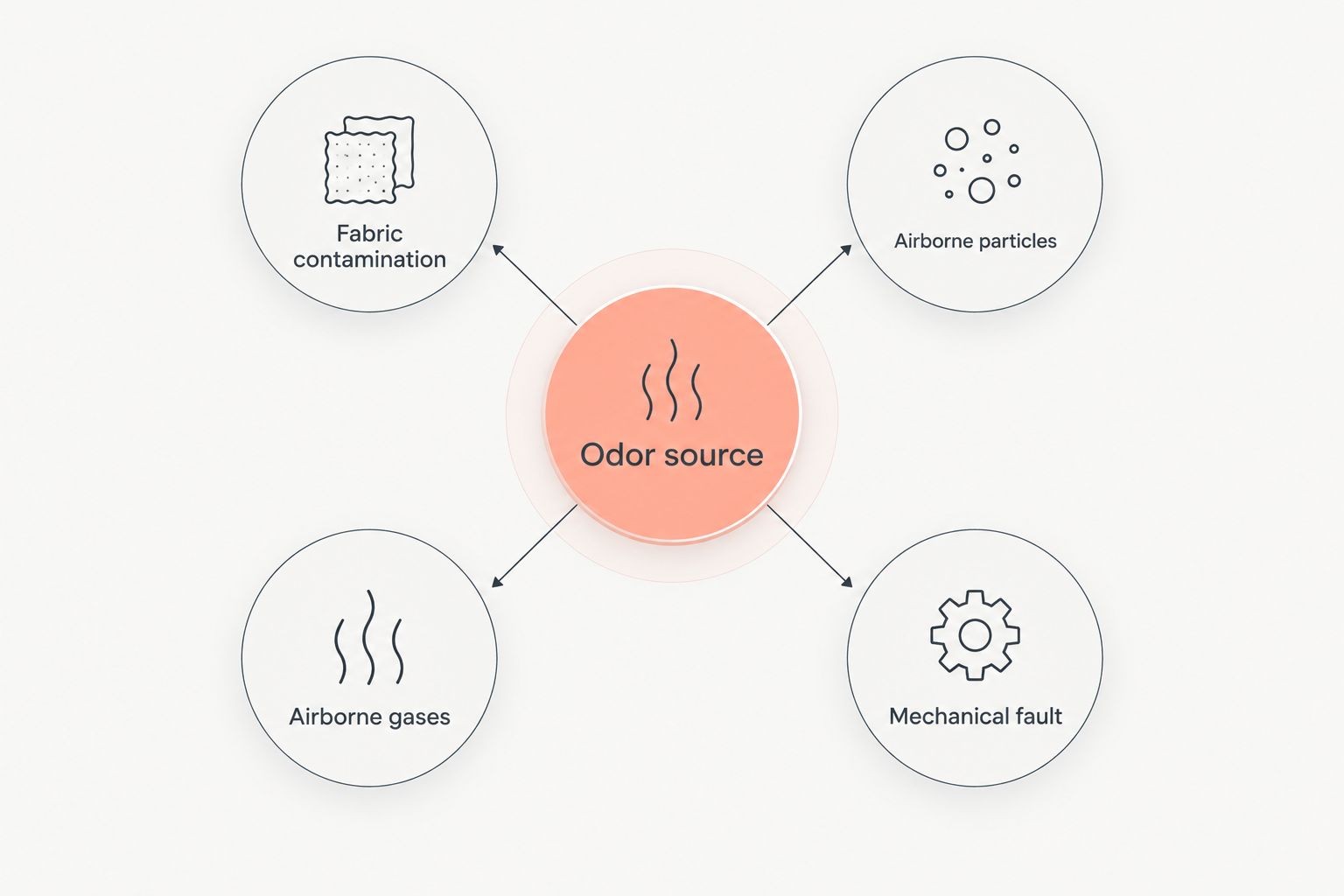
A musty smell after rain calls for finding moisture entry and drying affected material. A smell that appears only with the blower calls for checking the ventilation system; an electrical burning smell or exhaust smell calls for repair assessment, not another cleaning product.
How the options are ranked
The 2026 ranking follows source removal, exposure control, material compatibility, drying, problem fit, and verification. Physical cleaning leads because it removes contamination; filters follow because they address only air passing through them; ozone comes last because its risks require separate control.
No ozone output rating establishes that a generator is the best choice for your particular cabin. Choose the method that matches the contamination, not the device with the largest advertised number.
Which car odor-removal option should you choose?
Choose professional interior detailing when the odor source or cleaning scope is uncertain. Choose extraction when you have identified contamination in compatible fabric; use filtration only for the airborne problem it actually addresses.
Kleandetail offers full vehicle detailing for Oak Lawn car owners. When discussing your interior with Kleandetail, explain the source clues and ask which surfaces need cleaning rather than requesting ozone by default.
Discuss your interior detailing needs
Describe the odor, its location, and when it appears before choosing a cleaning approach.
FAQ
What's the best ozone generator for car odor in 2026?
Source removal is a better default than buying an ozone generator for car odor. Identify and clean the contamination first; reserve any ozone decision for a qualified specialist who can assess exposure and material risks.
Can I stay in my car while an ozone generator runs?
No. Ozone irritates and can damage the lungs, so people and pets must not occupy a vehicle during ozone treatment. Switching the machine off does not by itself establish safe re-entry.
Does ozone remove cigarette smoke from car upholstery?
Ozone does not physically remove cigarette-smoke residue from upholstery. Clean contaminated surfaces first; reacting with some odor compounds is not the same as removing their source.
Is a higher-output ozone generator better for a car?
A higher output rating does not establish better or safer car odor removal. It does not tell you the resulting cabin concentration, material compatibility, or safe re-entry conditions.
How long should I run an ozone generator in my car?
There is no universal treatment duration that makes ozone use safe for every car. A timer cannot replace a controlled treatment and re-entry procedure, and odor is not a reliable exposure measurement.
Is activated carbon better than HEPA for car odor?
Activated carbon addresses some odor gases, while HEPA addresses particles. Neither removes contaminated residue from seats or carpet, so choose filtration only after identifying the source.
Will detailing fix a musty smell that returns after rain?
Detailing alone will not fix a continuing water leak. Find and repair the moisture source, then clean and thoroughly dry the affected interior materials.
One last thing
Judge odor removal after the interior has dried and without an added fragrance masking the result. A car that smells different immediately after treatment is not necessarily a car with the source removed.
For 2026, keep the decision simple: clean the source, correct moisture or repair faults, and treat airborne contaminants only with a method suited to them. Do not make ozone your first purchase.


